
PNW Landscaping Ideas for Washington That Actually Work
Stop fighting the rain and fog. Here are our no-nonsense landscaping ideas that embrace Washington's unique climate, from the Puget Sound to Spokane.
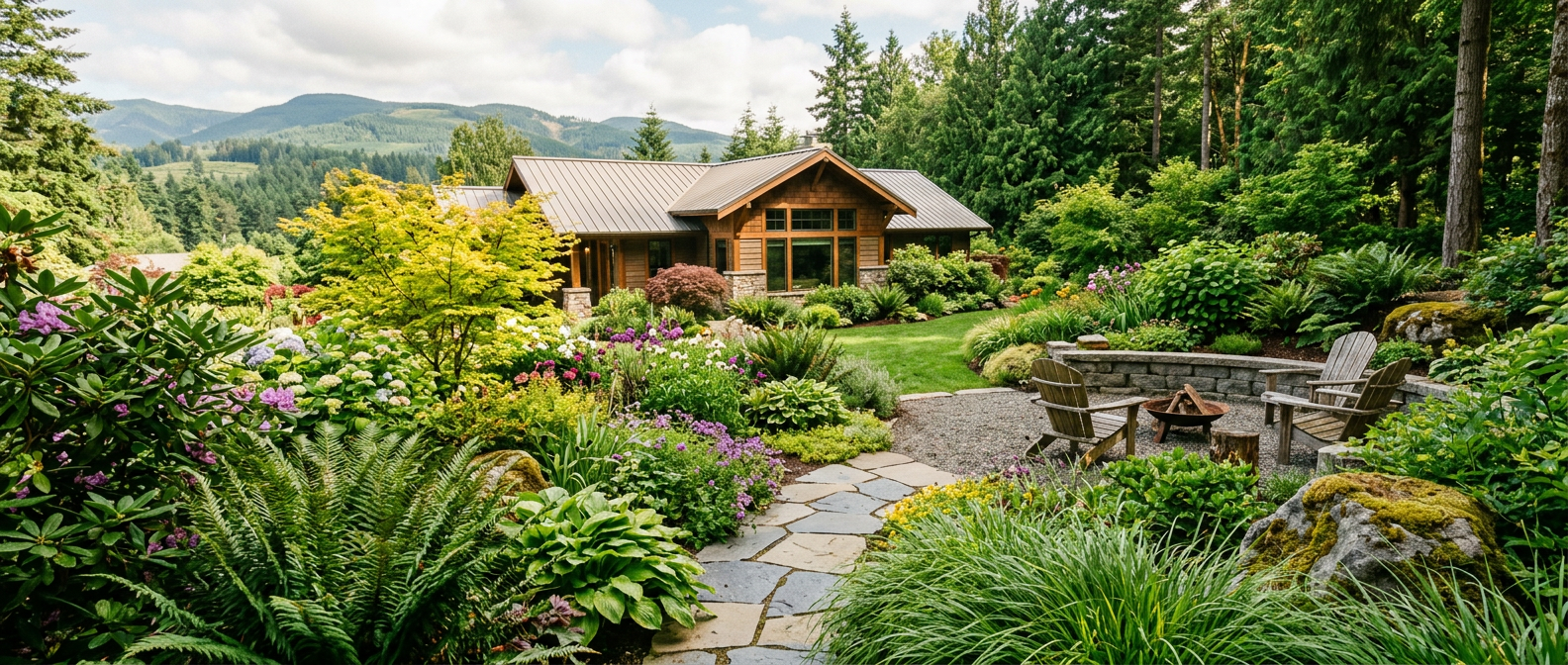
Let's get one thing straight: landscaping in Washington is a different beast. If you're using advice meant for sunny Southern California or the arid Southwest, you're going to have a bad time. Here, we don't just get rain; we have a dozen different kinds of it. We have moss as a secondary national color. We have dry summers that shock our waterlogged winter soil. But when you stop fighting it and start working with it, a Washington yard can be one of the most beautiful, lush, and low-maintenance landscapes on the planet.
We're not here to sell you on finicky, expensive plants that need constant coddling. We're here to give you practical, proven Pacific Northwest landscaping ideas that will make your neighbors jealous and give you your weekends back. This is about creating a yard that looks like it belongs in Washington, because it does.
Go Native: The Washington Plant Palette
Your first, best move is to lean into native plants. These are the trees, shrubs, and perennials that have been thriving here for millennia, long before we showed up with lawnmowers. They're naturally resistant to local pests, adapted to our acidic soil, and know exactly what to do when it rains for 30 straight days.
We've installed countless PNW gardens, and the biggest mistake we see is homeowners trying to force a plant from a completely different climate to work here. It's a constant, expensive battle. Instead, head to a local nursery like Swansons Nursery in Seattle or The Plant Farm in Spokane and look for these winners:
- Sword Fern (Polystichum munitum): The undisputed king of PNW shade. It's evergreen, tough as nails, and provides incredible texture. A 1-gallon plant will run you about $15-$20 and will fill out beautifully.
- Oregon Grape (Mahonia aquifolium): Don't let the name fool you, it's a Washington staple. Bright yellow flowers in spring, edible (but tart) berries in summer, and gorgeous bronze-red foliage in winter. A true four-season plant.
- Salal (Gaultheria shallon): The ultimate evergreen groundcover. Once established, it's incredibly drought-tolerant and will choke out weeds. Great for covering shady slopes.
- Vine Maple (Acer circinatum): Our local answer to the Japanese Maple. It has a beautiful, sculptural form and offers stunning fall color ranging from yellow to brilliant scarlet. Perfect as a small feature tree.
- Red Flowering Currant (Ribes sanguineum): A hummingbird magnet. In early spring, before almost anything else is blooming, this shrub is covered in cascades of pinkish-red flowers.
Designing a Four-Season Garden in Washington
Our mild climate means the garden doesn't have to shut down in October. A truly great Washington landscape has something interesting going on every single month of the year.
- Winter: This is where structure and evergreens shine. Think beyond green blobs. The crimson stems of a Red Twig Dogwood (Cornus sericea) look incredible against a grey sky. The papery, peeling bark of a Paperbark Maple (Acer griseum) adds texture. Hellebores, or 'Lenten Roses,' will bloom right through the snow.
- Spring: This is the explosion. Beyond the obvious tulips and daffodils, consider native bulbs like Camas (Camassia quamash). This is also when the Red Flowering Currant and Oregon Grape do their thing.
- Summer: The challenge here is the seasonal drought. While the rest of the country is getting thunderstorms, our summers can be bone dry. This is where drought-tolerant perennials like Yarrow (Achillea), Coneflower (Echinacea), and Lavender shine. They love the sun and won't demand constant watering once established.
- Fall: While New England gets all the press, Washington has spectacular fall color. The aforementioned Vine Maple is a star. The Oregon Ash (Fraxinus latifolia) turns a beautiful clear yellow. And many ornamental grasses provide color and texture well into the winter.
Hardscaping That Can Handle a Washington Winter
In a place with this much moisture, your choice of patio and walkway material matters. You need materials that provide good traction when wet and can resist the inevitable moss and algae.
- Pavers: Concrete pavers from a local company like Mutual Materials are a workhorse. For a 200 sq. ft. patio, expect to pay between $1,000 and $1,600 for the pavers alone. The key is the installation. Using polymeric sand in the joints will help lock them together and deter weeds, but even better is using larger joints filled with fine gravel. This makes the surface permeable, allowing rain to soak into the ground instead of running off into the storm drain.
- Bluestone or Basalt: These natural stones look fantastic and are native to the region. They have a natural, slightly rough texture that provides good grip. They are more expensive, often running $15-$25 per square foot for the material, but the look is timeless.
- Rain Gardens: This is a core concept for modern Washington landscaping. A rain garden is a shallow depression filled with water-loving plants that is designed to collect runoff from your roof or driveway. It allows water to slowly percolate into the soil, recharging groundwater and filtering pollutants. It's a functional, beautiful solution to our soggy winters. WSU Extension has fantastic, free guides on how to build one.
According to Seattle Public Utilities, the average single-family home has a roof that sheds over 30,000 gallons of water per year. A properly sited rain garden can capture and infiltrate a huge portion of that, reducing strain on municipal sewer systems and preventing runoff pollution in the Puget Sound. (Source: 700gallons.org)
Rethinking the Lawn for Washington's Climate
That perfect, green, weed-free lawn is an import. It requires tons of water in the summer, fertilizer to stay green, and herbicides to fight the moss and clover that naturally want to grow here. We say: work smarter, not harder.
- Shrink It: Do you really need a massive expanse of grass? Convert parts of your lawn into garden beds with native plants and mulch. You'll instantly save time, money, and water.
- Switch It: Instead of a high-maintenance Kentucky Bluegrass blend, consider an 'Eco-Lawn.' These are mixes of fine fescues, ryegrass, and often micro-clover. They are more drought-tolerant, stay greener in the summer with less water, and the clover actually fixes nitrogen in the soil, reducing the need for fertilizer. You can overseed an existing lawn with these mixes. Knowing when to overseed in fall is key to getting good germination before the winter rains set in.
- Embrace Alternatives: For shady, moss-prone areas, stop fighting a losing battle. Let the moss win! A moss lawn can be beautiful, requires no mowing, and is perfectly adapted to the PNW. Or, plant a tough, shade-tolerant groundcover like Sweet Woodruff or native Wild Ginger.
This isn't about having a dead, brown yard like you might see in extreme Southern California drought landscaping. It's about choosing the right kind of green for the right place. Our cool-season grasses are completely different from the varieties needed for, say, a North Carolina lawn, and we should landscape accordingly.
Frequently asked
What is the best low-maintenance ground cover for Washington?+
For shady areas, native Sword Fern or Salal are unbeatable. For sunnier spots, consider Kinnikinnick (Arctostaphylos uva-ursi), a tough, evergreen native that is extremely drought-tolerant once established. It provides year-round interest and requires virtually no care after its first year.
When should I plant new shrubs in the Pacific Northwest?+
Fall is the absolute best time to plant trees and shrubs in Washington. The soil is still warm from the summer, but the returning fall and winter rains will water the plants for you, helping them establish strong root systems before the dry summer arrives. Spring is the second-best time.
How do I deal with moss in my PNW yard?+
First, accept that moss is a natural part of our ecosystem. For lawns, moss indicates shade, acidic soil, or poor drainage. You can address these issues or embrace it. For hardscaping like patios and walkways, a stiff-bristled brush and a vinegar solution or a pressure washer will remove it.
Are raised garden beds a good idea in Washington?+
Yes, they are an excellent idea. Our native soil can be heavy, acidic clay. Raised beds allow you to fill them with a high-quality soil and compost mix, like a 60/40 blend from a local supplier like Cedar Grove, giving you perfect drainage and growing conditions for vegetables and flowers.