
Pacific Northwest Landscaping Ideas for Washington Homes
Stop fighting the rain, the moss, and the summer drought. Here’s how to create a stunning, low-maintenance Washington yard that actually thrives in our unique climate.
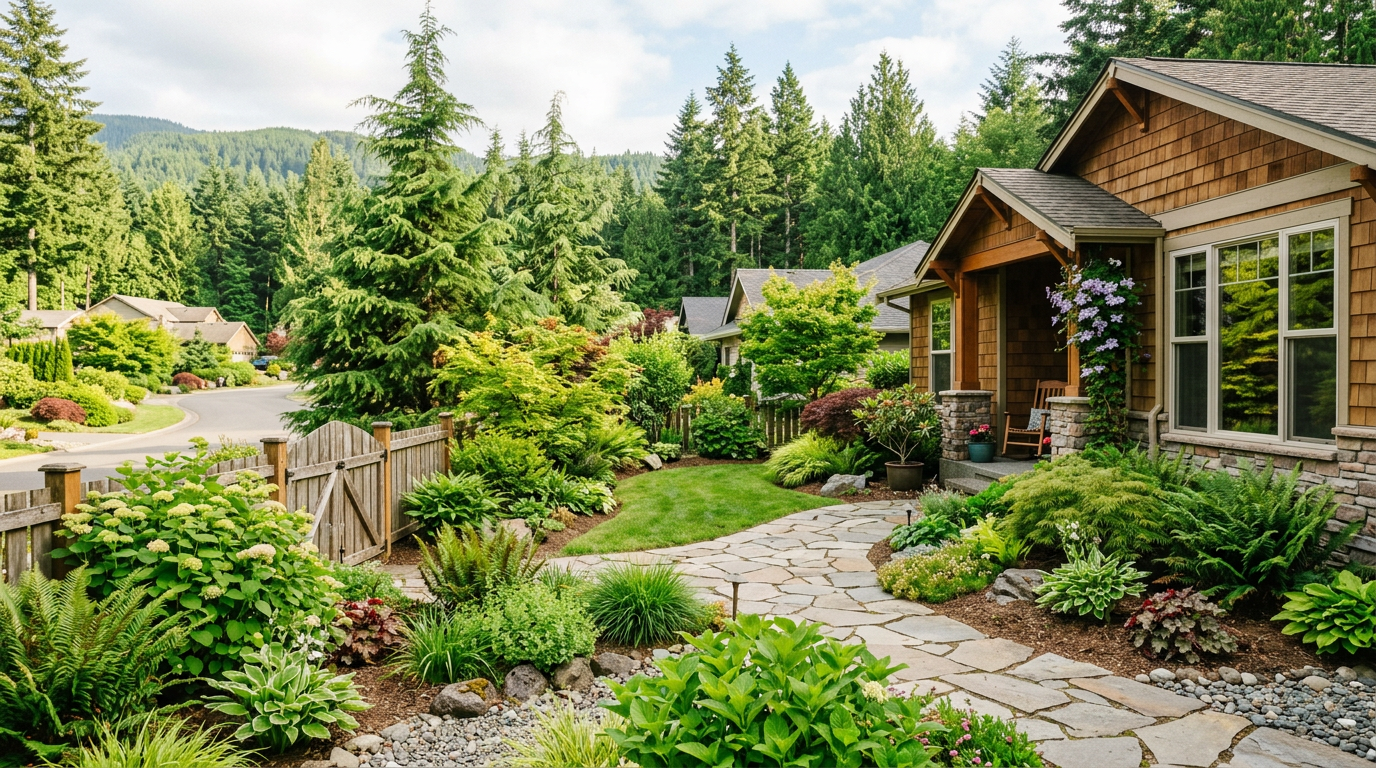
Let's get one thing straight: a perfect, Kentucky bluegrass lawn is a fool's errand in most of Washington. Our state isn't one place; it's two. You've got the damp, mossy, temperate west side and the dry, continental east side. Trying to apply the same landscaping playbook to a yard in Seattle and a yard in Spokane is a recipe for frustration and wasted money. We're here to give you Pacific Northwest landscaping ideas that work with Washington's climate, not against it.
We've spent years helping people create beautiful, functional outdoor spaces from the Puget Sound to the Palouse. The secret isn't a bigger sprinkler system or more chemicals. It's about choosing the right plants and design for your specific corner of the Evergreen State. Let's dig in.
Westside Story: Embrace Rain & Moss in Western Washington
If you live west of the Cascades, you know the drill: gray, drizzly winters and springs, followed by a surprisingly dry summer. The key is managing water. Instead of seeing rain as a problem, see it as a resource.
Rain Gardens: This is a no-brainer. A rain garden is a shallow depression filled with water-loving plants that captures runoff from your roof or driveway. It prevents erosion, filters pollutants, and creates a beautiful, bog-like feature. You can DIY a small one for a few hundred bucks in plants and gravel. Start by digging a basin about 6-12 inches deep. Line the bottom with 3-4 inches of pea gravel for drainage, then fill with a 50/50 mix of native soil and a quality compost like the G&B Organics Soil Building Conditioner, which runs about $12.99 for a 1.5 cu. ft. bag.
Plants for a Western WA Rain Garden:
- Slough Sedge (Carex obnupta): Tough, evergreen, and loves wet feet.
- Red Osier Dogwood (Cornus sericea): Gorgeous red stems provide winter interest.
- Sword Fern (Polystichum munitum): The quintessential PNW plant. Thrives in the shade and damp soil.
And about that moss... stop fighting it in the shady parts of your yard. A lush moss lawn or mossy accents between pavers can be stunning. It's green year-round, needs no mowing, and feels incredible underfoot.
Eastern Washington Landscaping: Go High and Dry
If your home is in Spokane, the Tri-Cities, or anywhere east of the mountains, your challenges are different: hot, dry summers and cold, snowy winters. Your landscaping inspiration shouldn't come from Seattle, but from places like Colorado or even the high desert.
Xeriscaping is your friend. This doesn't mean your yard has to be just rocks and cactus. It means choosing beautiful, hardy plants that can survive on natural rainfall once established.
According to the Washington State Department of Ecology, much of Eastern Washington receives less than 15 inches of precipitation a year. In contrast, parts of the coast receive over 100 inches. This stark difference is why water-wise gardening isn't just a good idea in Eastern Washington—it's essential for a sustainable landscape. (Source: Washington State Department of Ecology, Climate of Washington).
Plants for an Eastern WA Xeriscape:
- Yarrow (Achillea millefolium): Tough, drought-tolerant, and comes in a variety of colors.
- Bluebunch Wheatgrass (Pseudoroegneria spicata): Washington's official state grass for a reason. Creates a beautiful, soft, meadow look.
- Sagebrush (Artemisia tridentata): The iconic scent of the Intermountain West. Its silver foliage is a stunning landscape feature.
Use gravel mulch and flagstone paths to retain soil moisture and reduce weed growth. A visit to a local supplier like The Plant Farm in Spokane can give you great ideas for regional plants that go beyond the usual big-box store selection.
The Un-Lawn: Grass Alternatives for Washington Yards
We get it. Sometimes you just want a patch of green for the kids or dog to play on. But a traditional turf lawn in Washington is a high-input headache. It wants to turn into a mossy sponge in the winter and go dormant brown in August unless you pour water on it.
There's a better way. We've had massive success ripping out tired lawns and replacing them with:
- Microclover Lawns: These mix tiny clover varieties in with fescue grass seed. The clover stays green all summer with minimal water and naturally fertilizes the soil by fixing nitrogen. A 2 lb bag of Scotts Clover Lawn seed, covering 1000 sq ft, costs around $30. It's a game-changer.
- Native Groundcovers: For low-traffic areas, why not plant a carpet of native plants? Kinnikinnick (Arctostaphylos uva-ursi) is a fantastic evergreen choice that's drought-tolerant and gets little pink flowers. Coastal Strawberry (Fragaria chiloensis) is another tough, attractive option.
- Sedge Lawns: Certain sedges, like Carex pansa, can be mown like a lawn but require far less water and fertilizer. They create a more modern, meadow-like feel.
If you must have a traditional lawn, at least choose the right seed mix (a PNW blend of perennial ryegrass and fine fescues) and learn when to overseed in fall to repair summer damage and outcompete weeds.
Must-Have Native Plants for Washington Gardens
Using native plants is the easiest way to guarantee success. They're adapted to our soil, our rainfall patterns, and our local wildlife. Here are a few of our favorites you can find at a good local nursery like Swansons Nursery in Seattle or Sky Nursery in Shoreline.
- Vine Maple (Acer circinatum): A small, multi-stemmed tree or large shrub. It offers delicate spring leaves, can handle sun or shade, and has absolutely knockout fall color in shades of orange, scarlet, and yellow. A 5-gallon plant might run you $60-$80.
- Red Flowering Currant (Ribes sanguineum): One of the first things to bloom in late winter, providing a vital food source for hummingbirds. Its pendulous pink or red flowers are a showstopper.
- Oregon Grape (Mahonia aquifolium): A tough, evergreen shrub with holly-like leaves. It has bright yellow flowers in spring, followed by edible (though tart) blue berries that birds love.
- Salal (Gaultheria shallon): The ultimate PNW groundcover. Shiny evergreen leaves, little white bell-shaped flowers, and edible berries. It will happily fill in a shady, dry spot where nothing else will grow.
Smart Hardscaping for the PNW Climate
Good hardscaping makes your yard usable and beautiful year-round. Given our wet climate, it pays to think about materials and coverage.
- Patios & Decks: A covered patio or deck is almost a necessity for enjoying your yard outside of July and August. Using translucent polycarbonate roofing panels lets light through while keeping the rain off. For decking, cedar is the classic choice, but be prepared to clean and seal it every 2-3 years. Composite decking is lower maintenance but has a higher upfront cost.
- Paths & Pavers: Instead of impermeable concrete, consider flagstone or pavers with permeable gaps. You can fill the gaps with gravel or, even better, a tough groundcover like Corsican Mint or Creeping Thyme. It helps with drainage and softens the look. Expect to pay $15-$25 per square foot for professionally installed flagstone.
- Raised Beds: Our soils, especially west of the mountains, can be heavy and acidic. Raised beds made from cedar or galvanized steel are a fantastic way to control your soil quality for growing vegetables or specific ornamentals. A simple 4x8 cedar raised bed kit will cost about $150-$250.
Frequently asked
What is the best low-maintenance ground cover for Washington?+
For shady, damp areas in Western Washington, Salal and Sword Ferns are excellent, tough natives. For sunnier, drier spots (especially in Eastern WA), Kinnikinnick (Arctostaphylos uva-ursi) and creeping thyme are fantastic, drought-tolerant options that require little care once established.
How can I have a green lawn in a Washington summer without tons of water?+
Ditch traditional turf. A mix of fine fescues and microclover will stay green with significantly less water. The clover fixes nitrogen, fertilizing the soil naturally. It's the smartest 'lawn' choice for the PNW, handling both our wet winters and dry summers better than standard grass.
What is a rain garden and do I need one in Seattle?+
A rain garden is a landscaped depression that collects rainwater from your roof or driveway, allowing it to soak into the ground slowly. It's highly recommended in the Seattle area to manage stormwater runoff, reduce pollution, and recharge groundwater. Plus, they support beautiful, water-loving native plants.
What are good trees for a small Washington yard?+
Vine Maple (Acer circinatum) is a top choice; it's a small, multi-stemmed tree with stunning fall color. Serviceberry (Amelanchier alnifolia) is another great option, offering spring flowers, edible berries, and nice fall foliage. Both are native and well-suited to smaller urban or suburban lots.
Is xeriscaping only for Eastern Washington?+
While essential for dry Eastern Washington, xeriscaping principles are also very useful in Western Washington. Our summers are dry, so choosing drought-tolerant plants for sunny spots reduces your watering bill and creates a more resilient garden that isn't stressed by August.