
Pacific Northwest Landscaping Ideas for Washington Yards
Stop fighting the rain and start designing a landscape that thrives in it. We're breaking down the best Pacific Northwest landscaping ideas for your Washington home, from lush native plants to smart hardscaping.
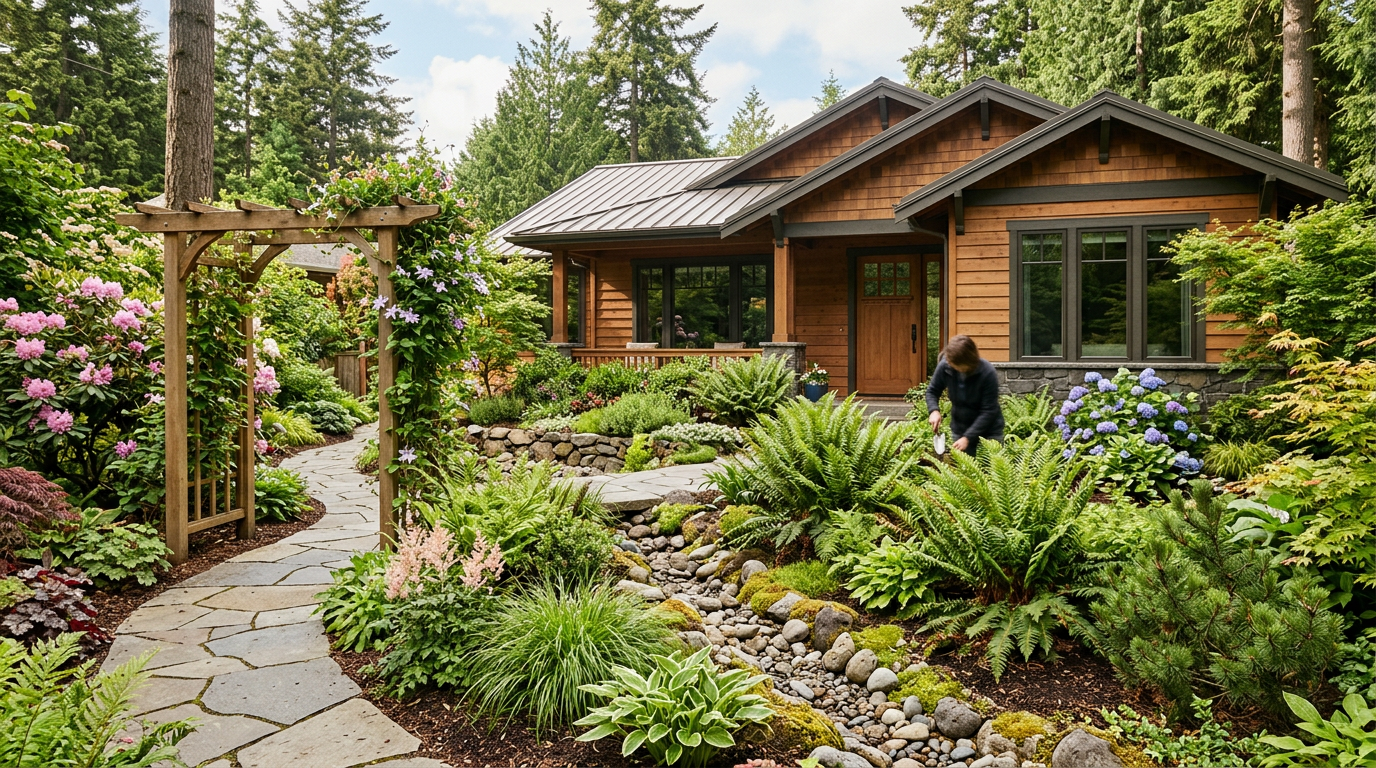
Let's get one thing straight: landscaping in Washington isn't like anywhere else. Forget the sun-baked yards of Southern California drought landscaping or the wide-open prairies of the Midwest. Here, we live under a benevolent gray sky for a good chunk of the year, and our greatest asset is water. The biggest mistake people make is trying to fight it. Don't. Your job is to create a landscape that looks better with a little drizzle. We're talking about a yard that’s lush, green, layered, and interesting all year round, not just during those two perfect weeks in July.
This is your no-nonsense guide to creating a stunning, low-maintenance Pacific Northwest landscape for your Washington home, one that leans into the moss, celebrates the rain, and looks like it truly belongs here.
Lean Into the Rain: Water Management for Washington Yards
In Western Washington, managing stormwater isn't just a good idea; it's practically a civic duty. When a downpour hits, runoff from roofs and driveways can overwhelm city systems. The genius solution? Keep that water on your property. A rain garden is the perfect tool for the job. This isn't just a ditch; it's a shallow, landscaped depression designed to temporarily hold and soak in rainwater runoff from your roof or driveway.
Plant it with water-loving natives like Slough Sedge (Carex obnupta) and Red Twig Dogwood (Cornus sericea), which don't mind getting their feet wet. For a 100-square-foot rain garden, expect to spend around $300-$500 on plants, soil amendments, and mulch if you DIY it. Many municipalities, like the City of Seattle's RainWise program, even offer significant rebates to help cover the cost. Another option is permeable pavers for your patio or walkway. They look sharp and allow water to seep into the ground instead of running off into the street. Brands like Belgard and Mutual Materials offer options starting around $6-$10 per square foot for materials.
Go Native: The Unbeatable Plants for a Washington Landscape
If you want a truly low-maintenance garden, stop trying to grow plants that belong in another state. Washington's native plants are adapted to our acidic soil, wet winters, and dry summers. Once established, they need minimal watering, no fertilizer, and are naturally resistant to local pests and diseases.
Here's our starting lineup for a killer Washington native garden:
- Sword Fern (Polystichum munitum): The absolute icon of the PNW understory. It's evergreen, tough as nails, and provides incredible texture. A 1-gallon pot will run you about $15 at a local nursery like Swansons in Seattle or Molbak's in Woodinville.
- Oregon Grape (Mahonia aquifolium): A fantastic evergreen shrub with holly-like leaves, bright yellow flowers in spring (a bee magnet!), and edible berries that turn a dusty blue in the fall.
- Vine Maple (Acer circinatum): This small, multi-stemmed tree is a showstopper. It offers delicate leaves, thrives in partial shade, and explodes into fiery red and orange in the fall. More of an investment at $80-$150 for a decent-sized specimen.
- Red Flowering Currant (Ribes sanguineum): One of the first plants to bloom in spring, its dangling clusters of pinkish-red flowers are a critical early food source for hummingbirds.
According to the Washington State University Extension, native plants are critical for supporting local pollinators and wildlife. Yards landscaped with at least 50% native species can see a dramatic increase in biodiversity and a significant reduction in water and chemical use compared to traditional turfgrass lawns. They are adapted to our local climate cycles, meaning less work for you and a healthier ecosystem for everyone. (Source: https://extension.wsu.edu/gardening/)
Create Four-Season Interest for Your Washington Garden
One of the best things about gardening in Washington's mild climate (mostly USDA zones 7b-9a west of the Cascades) is the potential for year-round beauty. The goal is to have something interesting happening in every season.
- Winter: This is where evergreens (like the aforementioned Sword Fern and Oregon Grape) shine. But don't stop there. Hellebores, or Lenten Roses, produce gorgeous, downward-facing blooms from late winter to early spring. Sarcococca (Sweet Box) is another winter hero, an unassuming evergreen shrub that produces tiny, intensely fragrant white flowers in January.
- Spring: A riot of bulbs! Plant Daffodils, Tulips, and Crocuses in the fall for a spring explosion. This is also when the Red Flowering Currant and Rhododendrons (our state flower!) take center stage.
- Summer: The season for perennials. Echinacea (Coneflower), Rudbeckia (Black-Eyed Susan), and a huge variety of Salvias thrive in our summer sun. We love 'Hot Lips' Salvia, which can be found for around $12 in a 1-gallon pot and blooms from May until the first frost.
- Fall: Color, color, color. The Vine Maple is king, but also consider Japanese Maples (Acer palmatum) for smaller spaces. Their delicate structure and brilliant autumn foliage are unmatched. Don't forget Asters and Sedums for late-season blooms.
Hardscaping That Works With Washington's Climate
Good hardscaping is the skeleton of your garden design, and in the PNW, it needs to be ready for rain. A covered patio or deck is a non-negotiable for us. It extends your living space and allows you to enjoy your garden with a cup of coffee, even during a classic Washington drizzle. A simple lean-to style roof over an existing patio can be a game-changer.
For paths and patios, we fully endorse leaning into the moss. Instead of perfectly uniform concrete, consider using natural flagstone or bluestone pavers set on a gravel or sand base with wide joints. This allows rainwater to permeate and encourages moss and small groundcovers like Creeping Thyme to grow between the stones. It creates a soft, aged, and quintessentially Pacific Northwest look. We once installed a bluestone patio for a client in Bellevue, and within two years, the moss growing between the stones was the best part of the feature. Materials will run you about $8-$15 per square foot, but the look is priceless.
The 'Un-Lawn': Turf Alternatives for the PNW
Let's be honest: a perfect, Augusta-style lawn is a ton of work in Washington. You're constantly battling moss, drainage issues, and weeds. Our advice? Shrink it or replace it. If you love having some turf, consider an eco-lawn mix that includes clover, yarrow, and English daisy along with fescue grasses. These mixes stay greener with less water and fertilizer and are more resistant to pests.
If you need to reseed patchy spots, timing is everything. Check out our guide on when to overseed your lawn in fall for the best results. Or, even better, replace sections of your lawn with native groundcovers like Kinnikinnick (Arctostaphylos uva-ursi) for sunny, dry spots, or expand your garden beds. Less lawn means less mowing, less watering, and more time to actually enjoy your yard. This approach is very different from what's needed for New England front yard landscaping for Massachusetts homes, where traditional lawns are more common and easier to maintain.
Frequently asked
What is the best low-maintenance landscaping for the Pacific Northwest?+
The best low-maintenance option is a garden focused on Washington native plants like Sword Fern, Oregon Grape, and Salal. They are adapted to our wet winters and dry summers, requiring less water and care once established. Combine these with moss-friendly flagstone paths and reduced lawn area.
How do you deal with so much rain in a PNW yard?+
Embrace it. Install a rain garden to capture runoff from your roof, planted with water-loving natives. Use permeable pavers for patios and walkways to allow water to soak into the ground. A covered patio is also essential for enjoying your yard year-round, even during a drizzle.
Should I get rid of moss in my Washington lawn and garden?+
In lawns, moss often indicates compacted, acidic, or shady soil, so it's a symptom to address. In other areas, like between pavers or on rocks, we say embrace it! Moss adds to the lush, green, established aesthetic that defines Pacific Northwest gardens. Don't fight it, feature it.
What are good trees for a small Washington backyard?+
Vine Maple (Acer circinatum) is an excellent choice, offering beautiful structure and stunning fall color without getting too large. Many varieties of Japanese Maple (Acer palmatum) also stay compact and provide incredible texture and color. For evergreens, consider a dwarf Hinoki Cypress.