
PNW Landscaping Ideas for Your Washington Yard
Tired of fighting the drizzle and dry summers? Here are our no-nonsense landscaping ideas that actually work for Washington yards, from Seattle to Spokane.
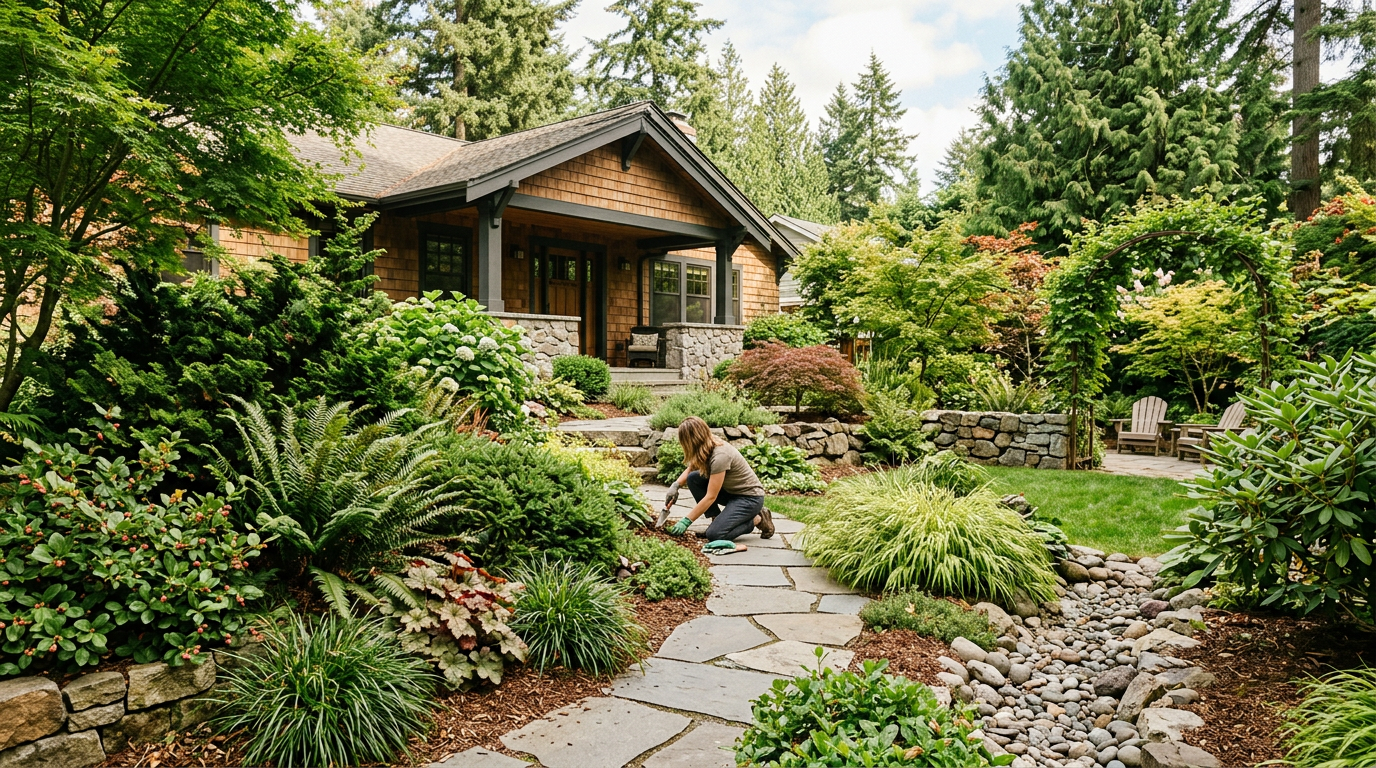
Let's get one thing straight: landscaping in Washington is a different ballgame. If you're using advice meant for New England or Southern California, you're setting yourself up for a world of hurt. Our unique climate—the legendary drizzle from October to June followed by surprisingly dry, warm summers—demands a specific approach. Forget trying to force a perfect turf lawn or planting delicate flowers that will just get waterlogged and rot.
We're here to help you create a quintessentially Pacific Northwest landscape for your Washington home that not only survives, but thrives. It's about working with the environment, not constantly fighting it. The result is a yard that's more beautiful, less work, and perfectly in tune with the majestic scenery around us.
Embrace the Rain: Rain Gardens and Water Management in Washington
Instead of seeing our prodigious rainfall as a problem, let's use it. A rain garden is one of the smartest things you can add to your Washington property. It's essentially a shallow, bowl-shaped garden designed to collect, hold, and filter stormwater runoff from your roof or driveway.
Why is this genius? For starters, it solves drainage issues in soggy parts of your yard. More importantly, it helps protect Puget Sound and our local rivers. The numbers don't lie. According to the Washington State Department of Ecology, polluted stormwater runoff is the number one source of pollution entering Puget Sound (https://ecology.wa.gov/water-shorelines/water-quality/stormwater). Your little rain garden becomes a personal water treatment plant, filtering out pollutants before they reach our waterways. In fact, some cities like Seattle have programs like RainWise that may offer rebates to homeowners who install them.
Our go-to plants for a Washington rain garden:
- Slough Sedge (Carex obnupta): A tough, evergreen-like sedge that loves wet feet.
- Red Osier Dogwood (Cornus sericea): Provides incredible winter interest with its bright red stems.
- Sword Fern (Polystichum munitum): The quintessential PNW fern. It can handle the moisture and provides year-round green.
- Cattails (Typha latifolia): If you have the space and a consistently wet spot, these are dramatic and effective.
Go Native: Our Favorite Low-Maintenance Plants for Washington Yards
The absolute key to successful, low-effort landscaping in Washington is using native plants. These are the plants that evolved here. They're already adapted to our soil, our rainfall patterns, and our pests. They provide food and shelter for local birds and pollinators, and once established, they typically require far less water during our dry summers than non-native species.
A trip to a local nursery like Swansons Nursery in Seattle or The Plant Farm in Spokane will open your eyes to the beauty of natives. Forget boring—these are stunning plants.
Our Native Plant Starter Pack:
- Trees: Instead of a finicky import, plant a Vine Maple (Acer circinatum). It offers gorgeous structure and spectacular fall color. For evergreen structure, a Shore Pine (Pinus contorta var. contorta) is a rugged, beautiful choice that doesn't get overwhelmingly massive.
- Shrubs: Evergreen Huckleberry (Vaccinium ovatum) is a superstar with tasty berries, pretty spring flowers, and bronze new growth. Red-flowering Currant (Ribes sanguineum) is a hummingbird magnet and one of the first things to bloom in late winter. Oregon Grape (Mahonia aquifolium) has holly-like leaves, yellow flowers, and is tough as nails.
- Perennials & Groundcovers: Sword Ferns are a must. We also love Salal (Gaultheria shallon) as a tough, evergreen groundcover that can handle sun or shade. For a touch of delicacy in a shady spot, plant Pacific Bleeding Heart (Dicentra formosa).
Hardscaping with PNW Style: Stone, Wood, and Paths for Your Washington Home
The right hardscaping pulls the whole PNW look together. We're talking about natural, rugged materials that look like they were pulled from the Cascade mountains.
Basalt is King: This dark, volcanic rock is the signature stone of the Pacific Northwest. Use it for everything:
- Retaining Walls: Stacked basalt creates strong, natural-looking walls for our region's many sloped yards.
- Boulder Accents: A few strategically placed basalt boulders can anchor a garden bed and add immense character. A 2-3 foot boulder from a supplier like Marenakos Rock Center in Issaquah might cost $150-$400, and it's an investment that lasts forever.
- Pathways: Use crushed basalt for a simple, permeable path or lay down basalt flagstones for a more formal walkway. Expect to pay $15-$25 per square foot in materials for a flagstone path.
Wood is Good (if it's Cedar): For decks, fences, arbors, and raised beds, Western Red Cedar is the only choice. It's naturally resistant to rot and insects, a critical feature in our damp climate. It will weather to a beautiful silvery-grey or you can stain it to maintain its reddish-brown hue.
The Four-Season Washington Garden: Layering for Year-Round Interest
A common mistake is planting only for summer blooms. Your garden will look amazing for three months and barren for nine. In Washington, we need a garden that looks good even while we're huddled inside with a cup of coffee in November.
We design for four-season interest by layering:
- Structure (The Bones): Start with evergreens. Conifers like Shore Pine and broadleaf evergreens like Oregon Grape and Salal provide the garden's backbone.
- Winter Interest: This is crucial. Think beyond green. The bright red stems of Red Osier Dogwood against a grey sky, the peeling bark of a Paperbark Maple, or the winter flowers of Witch Hazel are what make a PNW garden special.
- Spring Awakening: This is the explosion. Early-blooming bulbs, the electric pink of the Red-flowering Currant, and the sunny yellow of Oregon Grape wake the garden up.
- Summer & Fall: Now your perennials and grasses take center stage. As they fade, the fall color from your Vine Maple and the berries on your huckleberry bushes provide the grand finale.
Ditching the Lawn (or at Least, Making it Washington-Friendly)
Let's be blunt. That pristine, green, Kentucky Bluegrass lawn is a fool's errand in Western Washington. It demands endless fertilizer, moss killer, water during our dry summers, and constant vigilance. It’s a high-maintenance nightmare that doesn't fit the PNW ethos. It's a completely different challenge than maintaining a lawn in a hot, dry climate like Southern California drought landscaping or the unique sands of Florida.
We have two recommendations:
- Lose It: Rip out some (or all) of your lawn and replace it with layered garden beds filled with the native plants we discussed above. You'll drastically cut down on maintenance and water usage.
- Change It: If you want a patch of green for kids or pets to play on, switch to a PNW-specific "eco-lawn." These mixes contain a blend of drought-tolerant fescues, rye grasses, and nitrogen-fixing microclover. They stay greener in the summer with less water, require less fertilizer, and out-compete moss. Overseeding with a quality mix is a great way to transition your existing lawn. The best time to do this is generally early fall, a topic we cover in our guide on when to overseed in fall.
Building a landscape that honors the spirit of Washington isn't about following a rigid set of rules. It's about observing the natural beauty around us—from the forests of the Olympics to the scablands of Eastern Washington—and bringing a piece of that resilient, beautiful spirit into your own yard.
Frequently asked
What is the best low-maintenance landscaping for the Pacific Northwest?+
The best low-maintenance landscaping in the PNW uses native plants adapted to our wet winters and dry summers. Incorporating elements like rain gardens to manage water and natural stone hardscaping like basalt reduces long-term work. Ditching a traditional lawn for groundcovers also cuts maintenance significantly.
What plants grow well in Washington state shade?+
Many native plants thrive in Washington's shady conditions. Sword Fern, Salal, Pacific Bleeding Heart, and Evergreen Huckleberry are excellent choices. For non-natives, Hostas and Astilbes also perform well in the shade with our soil and moisture levels.
How can I make my Washington yard look good in winter?+
Focus on "winter interest." Use a backbone of evergreen plants (conifers and broadleafs like Salal), and add plants with interesting bark or structure, like the bright red stems of Red Osier Dogwood or the peeling bark of a Paperbark Maple. Well-placed boulders also add structure.
When is the best time to plant in Washington?+
Fall is the ideal time to plant most trees, shrubs, and perennials in Washington. Planting in the cool, wet weather allows them to establish strong root systems over the winter before the dry summer arrives. Annuals and vegetables should be planted in spring after the last frost.