
Pacific Northwest Landscaping Ideas for Washington Yards
Stop fighting the rain and moss. Here's how to create a stunning, low-maintenance landscape that actually works in Washington's unique climate.
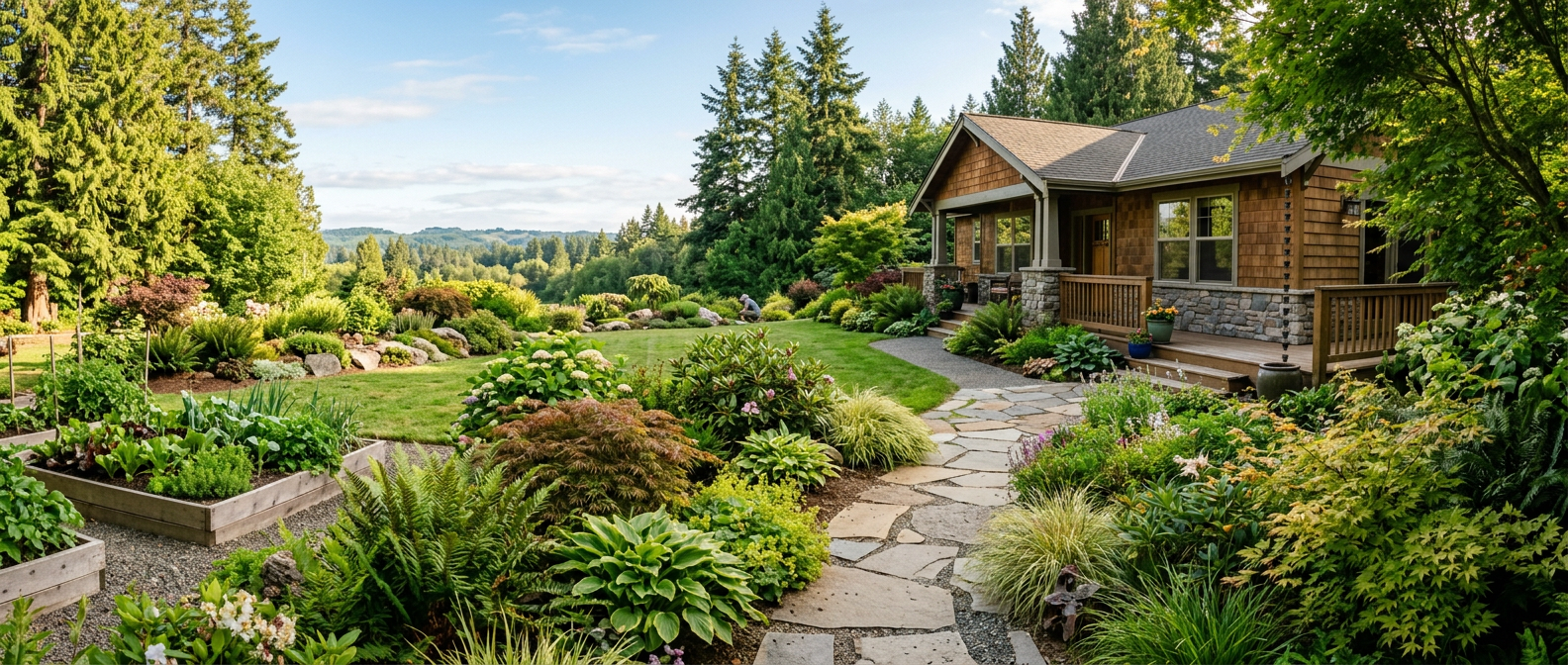
Let's be direct: landscaping in Washington is a different beast. You're not battling relentless sun like in the desert—check out our guide to Arizona Desert Landscaping Ideas That Don't Suck for that particular nightmare. Here, our primary opponent is water. Lots and lots of it. Then, suddenly, none of it for three months. It’s a land of mossy concrete, soggy lawns, and the perpetual gray that can make a garden feel bleak.
But we're not about fighting nature; we're about working with it. A great Pacific Northwest landscape doesn't try to mimic a Tuscan villa or an English cottage garden. It leans into the moody, lush, and rugged beauty of the Evergreen State. It’s about creating a space that feels like it belongs here, from the shores of the Puget Sound to the foothills of the Cascades.
We’re going to walk you through the core concepts that will transform your water-logged, high-effort Washington yard into a low-maintenance, year-round stunner. No gatekeeping, just genius ideas that work.
Stop Fighting the Water: Rain Gardens for Washington Yards
If you live in Western Washington, you know the drill. Gutters overflow, downspouts create moats around your foundation, and your lawn turns into a marsh from November to May. The solution isn't more French drains—it's a rain garden.
A rain garden is just a shallow, depressed garden bed designed to capture, hold, and filter stormwater runoff from your roof or driveway. It’s a miniature wetland that turns a drainage problem into a garden feature.
Why is this critical in Washington? The Puget Sound region gets hammered with over 40 trillion gallons of rain and snowmelt annually. According to the Puget Sound Partnership, stormwater runoff is the number one source of pollution entering the Sound, carrying oil, pesticides, and other junk from our properties into the water (Source: ps.wa.gov). Cities like Seattle are actively encouraging these with programs like RainWise, which offers substantial rebates to homeowners who install them. Look up your local city or county—many have similar incentives.
How to build one:
- Site it: At least 10 feet from your house's foundation, in a naturally low spot if you have one.
- Dig it: Go down about 1-2 feet, creating a bowl shape with a flat bottom.
- Fill it: Use a mix of 60% sand and 40% compost. This allows water to drain quickly while providing nutrients.
- Plant it: Use water-loving plants that don't mind getting their feet wet.
Best Plants for a Washington Rain Garden:
- Wettest Zone (bottom): Slough Sedge (Carex obnupta), Small-fruited Bulrush (Scirpus microcarpus)
- Middle Zone (slopes): Red-Osier Dogwood (Cornus sericea), Pacific Ninebark (Physocarpus capitatus), Douglas Spirea (Spiraea douglasii)
- Driest Zone (edge): Sword Fern (Polystichum munitum), Oregon Grape (Mahonia aquifolium)
You can find these natives at great local nurseries like Swanson's Nursery in Seattle or The Barking Frog in Olympia.
The Native Plant Playbook for a True Washington Landscape
Want a truly low-maintenance garden? The answer is always, always native plants. These are the plants that have spent thousands of years adapting to our specific soil (often acidic and glacial till), our wet winters, and our surprisingly dry summers. After a year or two of getting established, they require almost zero supplemental water.
Compare that to the constant battle of keeping a perfect turf lawn green—a struggle familiar to folks everywhere from the southeast to the southwest. While we have different pests and weeds, the effort is the same. Trying to maintain a perfect lawn here is a full-time job, not unlike managing a Florida Lawn Care Schedule.
Let's build a Washington landscape palette:
- Evergreen Backbone: These provide structure and color through the gray winter. You can't go wrong with Sword Fern (Polystichum munitum), Salal (Gaultheria shallon), and Evergreen Huckleberry (Vaccinium ovatum). They are tough, beautiful, and quintessentially PNW.
- Flowering & Fruiting Shrubs: For seasonal interest and wildlife support. Red Flowering Currant (Ribes sanguineum) is a showstopper in early spring and a hummingbird magnet. Oregon Grape (Mahonia spp.) has bright yellow flowers, holly-like leaves, and edible (though tart) berries.
- Perennials & Groundcovers: To fill in the gaps and suppress weeds. For sun, Kinnikinnick (Arctostaphylos uva-ursi) is a tough, drought-tolerant mat. For shade, nothing beats the delicate look of Western Bleeding Heart (Dicentra formosa) or the glossy leaves of Wild Ginger (Asarum caudatum).
- Trees: If you have the space, a Vine Maple (Acer circinatum) is a must-have for its graceful form and spectacular fall color. It's our answer to the Japanese Maple and thrives in the understory of larger firs and cedars.
Hardscaping with PNW Materials: Basalt, Cedar, and Permeable Pavers
The materials you use for patios, paths, and walls are just as important as the plants. To make a landscape feel right in Washington, use materials that are from here.
Basalt: This dark, volcanic rock is everywhere in the Cascades. It makes for incredible retaining walls, stepping stones, or dramatic columnar features. Its deep gray-to-black color looks fantastic when wet and provides a stunning contrast to bright green ferns and moss.
Cedar: Western Red Cedar is the king of PNW woods. It’s naturally resistant to rot and insects, making it perfect for fences, decks, pergolas, and raised beds. Left untreated, it weathers to a beautiful silver-gray that blends perfectly into the landscape.
Permeable Pavers: A giant concrete patio is a drainage nightmare in this climate. Instead, we champion permeable pavers. These are installed over a bed of gravel, leaving small gaps between them that allow rainwater to pass right through into the ground below. This recharges groundwater and prevents runoff.
After redoing our own shady backyard in Bellevue, we chose permeable pavers from Mutual Materials, a local Washington company. A standard paver might cost $4-$7 per square foot for the material, while their permeable options are closer to $6-$10. It's a bit more upfront, but you save thousands on complex drainage systems and you're doing the Puget Sound a favor.
Creating a Four-Season Garden in the Evergreen State
One of the biggest complaints about landscaping in Washington is the winter gray-out. A garden full of deciduous perennials can look like a sad brown field for five months. The key is planning for year-round interest.
- Winter: This is where your evergreen backbone (ferns, Salal, Mahonia) does the heavy lifting. Add in plants with winter texture or color, like the fiery stems of Red-Osier Dogwood (Cornus sericea), the peeling bark of a Paperbark Maple (Acer griseum), or the spidery blooms of Witch Hazel (Hamamelis).
- Spring: This is the season of explosion. Underplant your shrubs with bulbs like daffodils and camas. Your Red Flowering Currant and Oregon Grape will be buzzing with bees and hummingbirds.
- Summer: When the rain stops, the drought-tolerant natives shine. Salal and Evergreen Huckleberry will hold their deep green color with no water. If you have a sunny spot, you can add PNW-friendly bloomers like Yarrow (Achillea millefolium) and Cone-loving insects.
- Fall: This is Vine Maple's time to shine, turning brilliant shades of orange, scarlet, and yellow. Fall is also a great time for asters and the last blooms before the rain returns.
This isn't like Lawn Care in Texas where you're just trying to survive the summer. Here, every season has its own distinct beauty if you plan for it.
The Woodland Aesthetic for Shady Washington Lots
Many of us don't have wide-open, sunny yards. We have lots dominated by towering Douglas Firs and Western Red Cedars, casting deep shade. Don't fight it—embrace it. A woodland garden is a natural fit for Washington.
This style is about creating a layered, naturalistic look that mimics the forest floor. Use winding paths of mulch or flagstone. Group plants in natural-looking drifts rather than rigid rows. Let leaf litter build up in beds to create natural mulch.
But our most radical tip? Learn to love moss.
Fighting moss on your hardscapes is a losing battle. So stop fighting. Instead of pressure-washing it away (which just sends it airborne to land somewhere else), cultivate it. A moss-covered rock or patches of moss growing between pavers looks intentional and ancient. It provides a velvety green carpet that stays vibrant all winter long. The Japanese have been perfecting this for centuries in gardens like Saihō-ji. You can do it too. Just provide shade, moisture, and slightly acidic conditions, and nature will handle the rest. It's the ultimate in low-maintenance, regional character.
Frequently asked
What is the best low-maintenance landscaping for the Pacific Northwest?+
Focus on native plants like Sword Ferns, Salal, and Oregon Grape. They are adapted to Washington's wet winters and dry summers, requiring less water and care once established. Combine them with natural hardscapes like basalt stone and permeable pavers for a durable, beautiful yard.
How do I landscape a shady yard in Washington?+
Embrace the shade by creating a woodland garden. Use shade-loving native plants like ferns, hostas, bleeding hearts, and wild ginger. Instead of fighting moss, consider cultivating a moss garden on rocks or between pavers for a lush, green look that thrives in low light and moisture.
What are the best ground cover plants for Washington state?+
For sunny areas, try Kinnikinnick (Bearberry). For shady spots, Pacific Bleeding Heart, Wild Ginger, and Bunchberry are excellent choices. These native ground covers help suppress weeds, retain soil moisture, and provide habitat for local wildlife, creating a dense, low-maintenance carpet of green.
Should I have a lawn in the Pacific Northwest?+
Traditional turf lawns can be challenging due to moss, drainage issues, and summer drought stress. Consider reducing your lawn size in favor of native plant beds, rain gardens, or 'eco-lawns' with clover and fescue mixes that stay green with less water and fertilizer.