
Pacific Northwest Landscaping Ideas for Your Washington Yard
Forget the generic advice. We're breaking down the best Pacific Northwest landscaping ideas that actually work for Washington's unique wet-and-dry seasons.
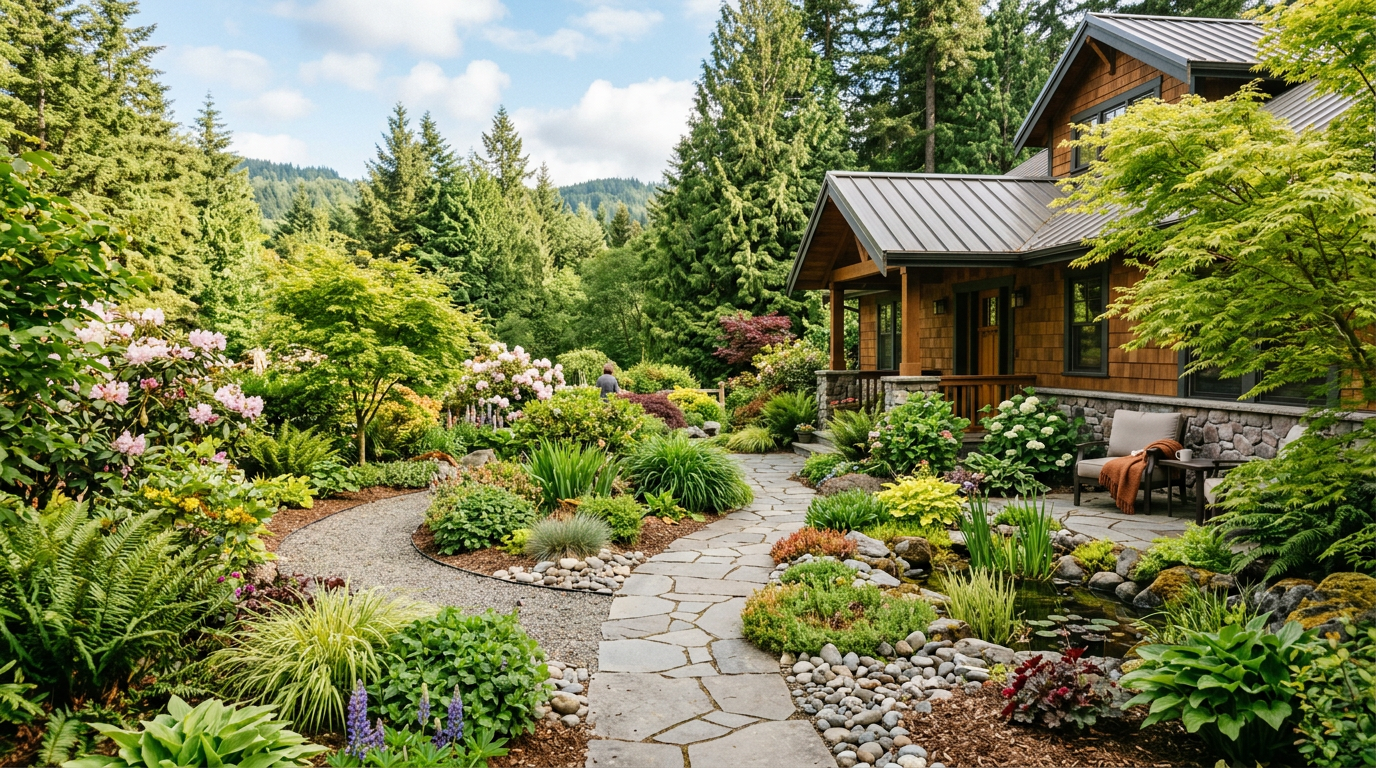
Let's be direct. Landscaping in Washington is a different game. Anyone telling you to copy a design from a glossy magazine based in Southern California is setting you up for a yard full of rot, moss, and disappointment. Here in the Pacific Northwest, we get the 'Big Dark'—months of gray skies and persistent drizzle—followed by surprisingly dry, gorgeous summers. Your landscape has to handle both extremes or it will fail.
We're not here to sell you on a thousand-dollar-a-month maintenance plan. We're here to give you practical, no-nonsense Pacific Northwest landscaping ideas that actually work for a Washington home. It’s about working with our climate, not fighting a losing battle against it. That means celebrating the rain, choosing plants that belong here, and creating a space you can actually use, rain or shine.
Embrace the Rain: Smart Water Management in Washington
Our biggest challenge and greatest asset is water. Instead of seeing winter rain as a problem to be piped away, let's use it. A poorly drained yard in Bellevue or Tacoma becomes a swamp from November to April. A smart yard turns that water into a feature.
Rain Gardens: This is the number one thing you can do. A rain garden is simply a shallow depression filled with water-loving native plants and amended soil that collects runoff from your roof or driveway. It allows water to soak slowly into the ground, filtering pollutants and preventing it from overwhelming storm drains.
- How to: Dig a basin about 6-12 inches deep. Mix the excavated soil with compost (50/50 ratio is a good start) and refill. Plant with natives like Slough Sedge (Carex obnupta) and Red Twig Dogwood (Cornus sericea). King County and WSU Extension have phenomenal free guides on this.
Permeable Surfaces: That giant concrete patio? It's a mini-highway for water, sending it straight to the lowest point in your yard (or your neighbor's). Rip it out. Replace it with permeable pavers or a well-installed flagstone patio with wide, gravel-filled joints.
- The Cost: Expect to pay $15-$30 per square foot for professionally installed permeable pavers. A standard concrete slab might seem cheaper at $8-$18 per square foot, but you'll pay for it with drainage headaches later.
The Ultimate Washington Native Plant Palette
Stop trying to make fussy, water-hogging plants from other climates survive here. Our native plants are tough, beautiful, and require a fraction of the work. They're built for our acidic soil, wet winters, and dry summers. You can find a killer selection at local heroes like Swansons Nursery in Seattle or The Plant Farm in Spokane.
Here’s a starter pack for a bulletproof Washington landscape:
-
Evergreen Structure: These are your year-round workhorses.
- Sword Fern (Polystichum munitum): The quintessential PNW fern. Lush, green, and happy in shade. It provides texture and form when everything else is dormant.
- Salal (Gaultheria shallon): A tough, leathery-leafed shrub that can be a groundcover or a head-high hedge. Edible berries are a bonus.
- Oregon Grape (Mahonia aquifolium): Yellow spring flowers, bronze winter foliage, and tart berries. What's not to love? It's tough as nails in sun or part-shade.
-
Show-Stopping Shrubs & Trees:
- Red Flowering Currant (Ribes sanguineum): One of the first things to bloom, providing a jolt of magenta that feeds early-arriving hummingbirds.
- Vine Maple (Acer circinatum): Our native answer to the Japanese Maple. A beautiful, multi-stemmed small tree with spectacular fall color. Perfect for an understory spot.
According to the Washington Native Plant Society, incorporating native plants can significantly reduce water usage—up to 60% compared to a traditional turf grass lawn once the plants are established. (Source: https://www.wnps.org/gardening) Given that parts of Western Washington can receive over 50 inches of rain annually while also experiencing increasingly dry summers, this dual-benefit is a no-brainer.
Hardscaping That Works for a Washington Climate
Your outdoor living spaces need to be as resilient as your plants. In Washington, that means thinking about drainage and material durability.
- Patios and Walkways: We prefer natural flagstone (like Pennsylvania Bluestone) or hefty pavers set on a proper gravel and sand base. This method allows water to percolate through the joints, eliminating puddles. Stay away from poured concrete slabs unless they are meticulously sloped.
- Paths: For secondary paths, nothing beats a simple gravel or wood chip trail. It's cheap, permeable, and feels right at home in a woodland-style garden. A cubic yard of 1/4-inch clean crushed gravel from a supplier like Mutual Materials will run you about $60-$80 and cover a 100 sq ft path to a depth of about 3 inches. Do the math—it's a massive win.
- Decks: Cedar is the classic PNW choice for a reason; it's naturally rot-resistant. However, it requires annual sealing to keep it from turning gray. We're increasingly using composite decking like Trex or TimberTech. It's more expensive upfront ($15-$35 per sq. ft. for materials vs. $5-$10 for cedar) but has zero required maintenance. You'll thank yourself in five years.
Beyond the Lawn: Groundcover Alternatives for the PNW
The perfect, manicured turf lawn is an uphill battle here. It wants to be moss. It struggles in summer drought. Why fight it? Reclaiming lawn space is the fastest way to a lower-maintenance, more interesting yard.
If you have a traditional lawn and insist on keeping it, you'll need a solid seasonal plan. That includes knowing when to overseed your lawn in fall to choke out weeds and moss before the winter wet sets in.
But we recommend better options:
- Embrace Moss: In deep shade where grass won't grow, stop fighting. Cultivate a moss garden. It's velvety, green year-round, and requires zero mowing.
- Clover Lawns: A mix of grass and micro-clover stays green through summer droughts with less water, fixes its own nitrogen (free fertilizer!), and crowds out weeds.
- Native Groundcovers: For sunny, dry spots, use Kinnikinnick (Arctostaphylos uva-ursi). For shady, moist areas, use Bunchberry (Cornus canadensis). These create a living mulch that supports pollinators and eliminates the need for a mower. This isn't some crazy experiment; it's just smart xeriscaping, adapted for our climate. It's the same principle used in Arizona desert landscaping ideas or Southern California drought landscaping—use what works where you live.
Edible Landscaping in Your Washington Garden
Why waste space on purely ornamental plants when you can eat your yard? Washington is an incredible place to grow food, as long as you account for our seasons.
- Raised Beds Are Your Friend: Our native soil can be heavy clay and slow to warm in the spring. Raised beds, filled with a high-quality soil mix like Cedar Grove's Booster Blend, give you total control over drainage and soil quality. We learned this the hard way at a client's place in Olympia where we tried amending the native soil for three years before finally surrendering and building beds. The difference was night and day.
- What to Grow:
- Cool Season Champs: Kale, chard, lettuces, spinach, broccoli, carrots, and beets thrive in the long, cool springs and mild autumns.
- Summer Stars: For a successful tomato or pepper crop, you need the sunniest spot in your yard and a good head start. But don't expect the same results as your cousin in Atlanta; our timing is completely different. Just check out this guide on when to plant tomatoes in Georgia to see how much it varies by region.
- Berry Paradise: This is where we truly shine. Blueberries (they love our acidic soil), raspberries, marionberries, and tayberries are practically weeds here. Plant them along a fence line and you'll have more than you can eat.
Frequently asked
What is the best low-maintenance landscaping for the Pacific Northwest?+
Focus on native plants like Sword Ferns and Salal, which are adapted to Washington's climate. Incorporate gravel paths and hardscaping to reduce lawn area, and consider a rain garden to manage winter water runoff. This creates a beautiful, resilient yard that requires minimal watering and upkeep.
When should I start landscaping in Washington?+
The best times are fall and spring. Fall planting allows roots to establish during the wet winter, giving plants a head start. Spring is great for planting annuals and vegetables after the last frost, typically in April or May depending on your specific location in Washington.
What flowers grow best in Washington state?+
Native perennials are a great choice. Try Red Flowering Currant for early spring color, Pacific Bleeding Heart for shady spots, and asters for late-season blooms. For sunnier areas, Echinacea and Black-Eyed Susans perform well, provided they have well-drained soil for the wet winters.
How do I deal with moss in my PNW lawn?+
You can fight it with iron-based moss killers, or you can embrace it. Many Washington homeowners are converting shady, damp lawn areas into beautiful moss gardens. If you prefer grass, ensure good drainage, avoid over-watering in summer, and overseed annually to keep turf dense.
What's a good alternative to a grass lawn in Washington?+
Microclover or Dutch white clover lawns are excellent alternatives. They stay green in dry summers, fix nitrogen into the soil, and require less mowing. Native groundcovers like Kinnikinnick or Bunchberry are also fantastic, low-maintenance options that support local ecosystems and handle our climate perfectly.