
Top Midwest Perennials for Full Sun in Illinois Gardens
Stop guessing which plants will survive our brutal seasons. Here are the toughest, most reliable Midwest perennials that absolutely love full sun in Illinois.
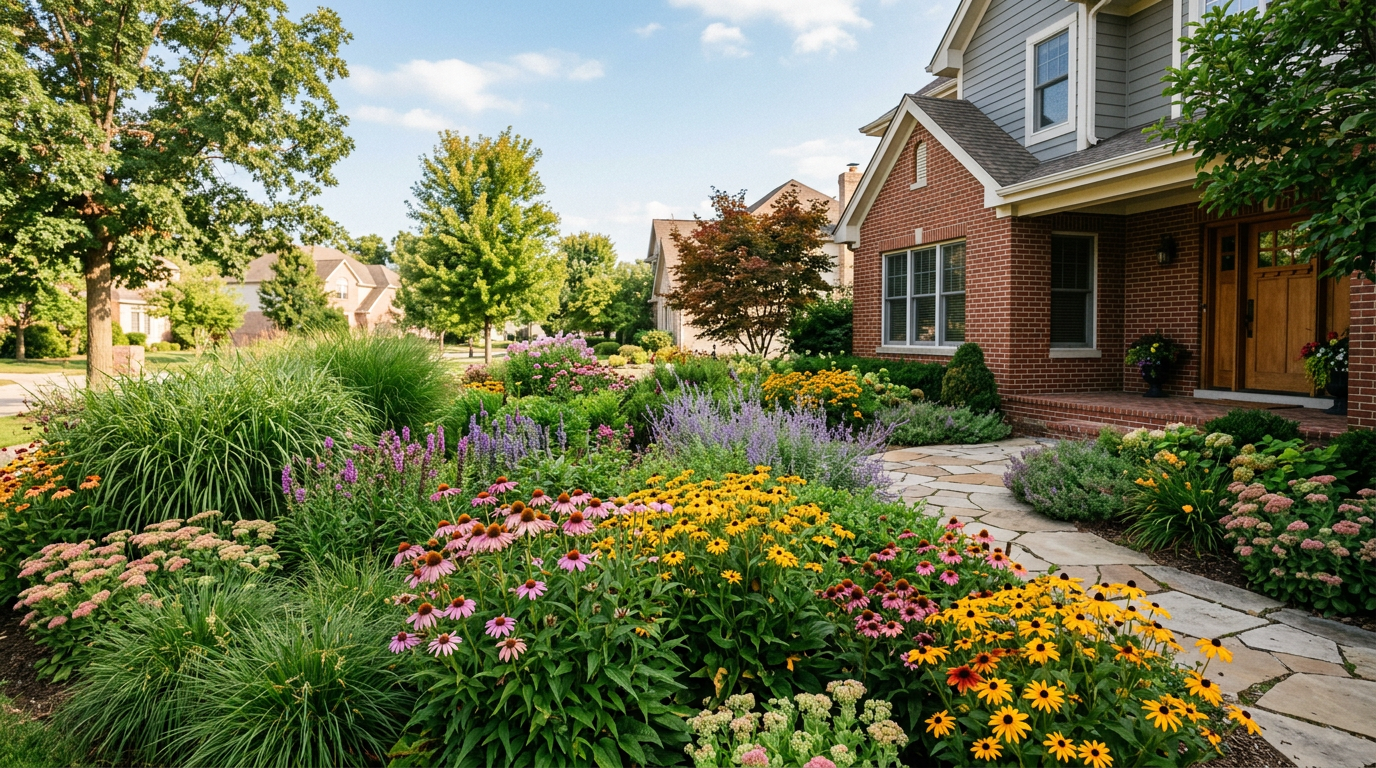
Let's be direct. Gardening in Illinois is a test of character. You've got humid, blazing summers that can fry delicate plants and arctic-blast winters that freeze the ground solid. Finding plants that can handle that rollercoaster is the key to a garden that doesn't make you want to throw your trowel in the air and give up. If you're looking for the toughest Midwest perennials for full sun in Illinois, you've come to the right place. We're not talking about fussy divas that need constant attention. We're talking about bomb-proof, beautiful plants that will come back year after year, bigger and better.
This isn't about gatekeeping garden knowledge. It's about giving you a straight-up list of winners so you can spend less time worrying and more time enjoying your yard, whether you're in Chicago, Peoria, or Carbondale.
Understanding "Full Sun" in Illinois
First, let's define our terms. "Full sun" means an area that gets at least six hours of direct, unfiltered sunlight per day. In Illinois, that sun usually comes with a side of soupy humidity from July through August. The intensity of our summer sun can scorch plants that aren't prepared for it.
This isn't the dry, baking heat you'd find out west. For a look at how different that is, check out our guide to Arizona Desert Landscaping Ideas That Don't Suck. Here, the combination of sun and moisture means we need plants that resist fungal diseases like powdery mildew while also being drought-tolerant enough to handle those weeks when the rain just stops.
Most of Illinois falls into USDA Hardiness Zones 5b and 6a, with the very southern tip creeping into 6b/7a. This means our perennials need to withstand winter temperatures that can plummet to -15°F. The plants on this list are all vetted for these zones.
The Unkillable All-Stars: Top Perennials for Illinois Sun
These are the foundational plants of a low-maintenance Illinois sun garden. They're reliable, widely available, and practically take care of themselves once established.
Purple Coneflower (Echinacea purpurea)
- Why we love it: It's the state prairie grass of Illinois for a reason—it's tough as nails, a pollinator magnet, and instantly recognizable. It laughs at heat, humidity, and less-than-perfect soil.
- Details: Grows 2-4 feet tall. Blooms from early summer until frost. The classic purple is great, but cultivars like 'White Swan' or the shorter 'Kim's Knee High' are fantastic too.
- Illinois Pro-Tip: Don't deadhead all the flowers in the fall. Leave the seed heads for goldfinches to feast on during the winter. They look great covered in a light snow.
- Price Check: A 1-gallon pot at a nursery like The Growing Place in Aurora or Naperville will run you about $16-$22.
Black-Eyed Susan (Rudbeckia hirta)
- Why we love it: Nothing screams "summer" like a massive stand of golden-yellow Black-Eyed Susans. They are cheerful, aggressive spreaders (in a good way), and bloom for months.
- Details: Typically 2-3 feet tall. The hirta species is technically a biennial or short-lived perennial, but it self-seeds so readily that you'll always have a patch of them.
- Illinois Pro-Tip: For a true perennial version that's just as tough, look for Rudbeckia fulgida 'Goldsturm'. It's a slightly more compact, well-behaved version that is a workhorse in any sunny border.
- Price Check: Expect to pay around $15 for a 1-gallon pot. Often sold in cheaper 6-packs in the spring for mass planting.
Ornamental Onion (Allium 'Millenium')
- Why we love it: It was named the 2018 Perennial Plant of the Year for a reason. It forms a tidy clump of grassy foliage and sends up dozens of globe-shaped purple flowers in mid-summer. Deer and rabbits absolutely hate it.
- Details: Grows to about 15-20 inches tall and wide. The flowers are sterile, so it won't seed all over your garden. It's incredibly drought-tolerant.
- Illinois Pro-Tip: This is the perfect plant for the front of the border. It stays neat all season and its bloom time bridges the gap between early summer flowers and the fall asters.
- Price Check: 'Millenium' is very popular. You'll find it at most garden centers, including big box stores, for about $18 a plant.
Adding Height and Drama: Tall Perennials for Your Illinois Backdrop
A great garden has layers. Use these taller plants in the back of your border to create a sense of depth and structure. This concept of layering is universal, whether you're landscaping in the Midwest or planning New England Front Yard Landscaping for Massachusetts Homes.
Joe Pye Weed (Eutrochium purpureum)
- Why we love it: If you want to attract every butterfly in a five-mile radius, plant Joe Pye Weed. This native giant is a showstopper with huge, dusty-rose flower heads in late summer.
- Details: Can reach 5-7 feet tall. Give it space! There are shorter cultivars like 'Little Joe' (4 feet) if you're tight on room.
- Illinois Pro-Tip: It prefers consistently moist soil, making it a great choice for lower-lying spots in your yard or areas with heavy clay that hold water. It's one of the few plants that thrives in those conditions.
- Price Check: Because it's a larger plant, expect to pay $20-$30 for a decent-sized specimen at a local spot like Lurvey Garden Center in Des Plaines.
Culver's Root (Veronicastrum virginicum)
- Why we love it: For elegant, architectural structure, nothing beats Culver's Root. It has unique candelabra-like spikes of white or pale pink flowers in mid-summer and its whorled leaves look good all season.
- Details: Grows 4-6 feet tall but has a narrow footprint, so it doesn't feel bulky.
- Illinois Pro-Tip: This native prairie plant develops a deep taproot, making it very drought-tolerant once established. Don't try to move it after its second year—it won't be happy. Plant it where you want it to stay.
- Price Check: A bit more of a specialty plant, but you can find it at native plant nurseries or online. Expect to pay $18-$25.
The Financials: Budgeting for Your Illinois Perennial Garden
Let's talk money. A beautiful perennial garden doesn't have to break the bank. Your main costs will be plants, soil amendments, and mulch. A typical 1-gallon perennial costs between $15 and $25. For a new 10' x 4' (40 sq ft) garden bed, you might plan for 10-15 plants, putting your plant budget at $150-$375.
We once tried to plant directly into our dense, unamended clay soil at a test plot near Schaumburg. The result was a sad collection of waterlogged, stunted plants that rotted from the root up. Don't be like us. Amending your soil is the single best investment you can make. According to the University of Illinois Extension, working 2 to 4 inches of compost into the top 10 inches of your soil is vital for improving the structure and drainage of our region's heavy clay. (Source: https://web.extension.illinois.edu/soil/SoilAmend/compost.htm). For that 40 sq ft bed, you'll need about 10-14 cubic feet of compost. Bagged compost costs about $6-$8 for a 1.5 cu ft bag, so you're looking at $60-$90. Bulk is cheaper if you can get it.
Finally, mulch. A 2-3 inch layer of hardwood bark mulch is non-negotiable. It keeps moisture in, weeds out, and regulates soil temperature. A cubic yard from a bulk supplier like Midwest Compost in Elgin or West Chicago costs around $35 and will cover over 100 sq ft, making it much more economical than bags. Your total startup for a small but robust perennial bed is realistically in the $250-$500 range, but the year-over-year return is priceless.
Planting and Care Tips for a Thriving Illinois Garden
Getting these plants in the ground correctly sets them up for a long, healthy life.
- When to Plant: Spring (late April-May) or Fall (September-early October) are ideal. Spring planting lets them establish before summer heat, while fall planting gives roots a head start for the next year. Avoid planting in the dead of summer.
- Soil Prep: As mentioned, amend that clay! Till or spade in a generous amount of compost. If your soil is particularly terrible, consider a raised bed. The challenges are different everywhere; our friends working on Landscaping Ideas for Colorado That Actually Work deal with alkaline soil and rapid drainage, the exact opposite of our clay.
- Watering: Water deeply and infrequently. For the first year, give new plants a good soaking once a week if there's no rain. Once established, these tough guys will only need water during prolonged droughts.
- Mulching: Apply a 2-3 inch layer of shredded hardwood or leaf mulch around your plants, but don't pile it up against the stems (the "volcano" method). This can cause the plant's crown to rot.
- Winter Prep: It's simple: do almost nothing. Leaving the stems and seed heads provides crucial food and habitat for birds and beneficial insects. It also helps catch snow, which acts as a natural insulator. In late winter or early spring (think March), you can cut everything back to a few inches from the ground to make way for new growth.
Building a beautiful garden full of Midwest perennials for full sun in Illinois is entirely achievable. The trick is to stop fighting the climate and soil and start working with it. Choose tough, adapted plants like these, and you'll have a landscape that gets better every year with less and less work. For more regional inspiration, see how they tackle different challenges in our guide to Pacific Northwest Landscaping Ideas for Washington Yards.
Now get out there and start digging.
Frequently asked
What's the easiest perennial to grow in full sun in Illinois?+
Purple Coneflower (Echinacea purpurea) is arguably the easiest. It's native, drought-tolerant once established, and beloved by pollinators. It handles our clay soil better than most and comes back reliably year after year with almost zero effort. It's a true 'plant it and forget it' flower.
When should I plant perennials in Illinois?+
The best times are spring (after the last frost, typically late April to May) or early fall (September to early October). Fall planting gives the roots time to establish before the ground freezes, often leading to more robust plants the following spring. Avoid the extreme heat of mid-summer.
Do I need to fertilize my sun perennials in Illinois?+
Generally, no. Most of these tough perennials thrive in average soil and our clay is often nutrient-rich. Amending your soil with compost at planting time is usually enough. Over-fertilizing can lead to weak, floppy growth and fewer flowers. Let them be tough.
How do I prepare my Illinois perennials for winter?+
For most native and hardy perennials, simply leave the spent stems and seed heads standing. They provide winter interest, catch insulating snow, and offer food for birds. You can then cut them back to the ground in early spring just as new growth emerges.
What are some good low-growing perennials for the front of a sunny border in Illinois?+
For the front of your border, look at Creeping Phlox (Phlox subulata) for spectacular spring blooms. Sedum 'Autumn Joy' (or shorter varieties like 'Lidakense') offers great texture and fall color. Ornamental Onion (Allium 'Millenium') is another fantastic choice for a tidy, pest-resistant clump.