
Midwest Perennials for Full Sun in Illinois Gardens
Stop gambling on plants that can't handle the heat. We're cutting through the noise to give you the definitive list of sun-loving perennials that actually survive and thrive in an Illinois garden.
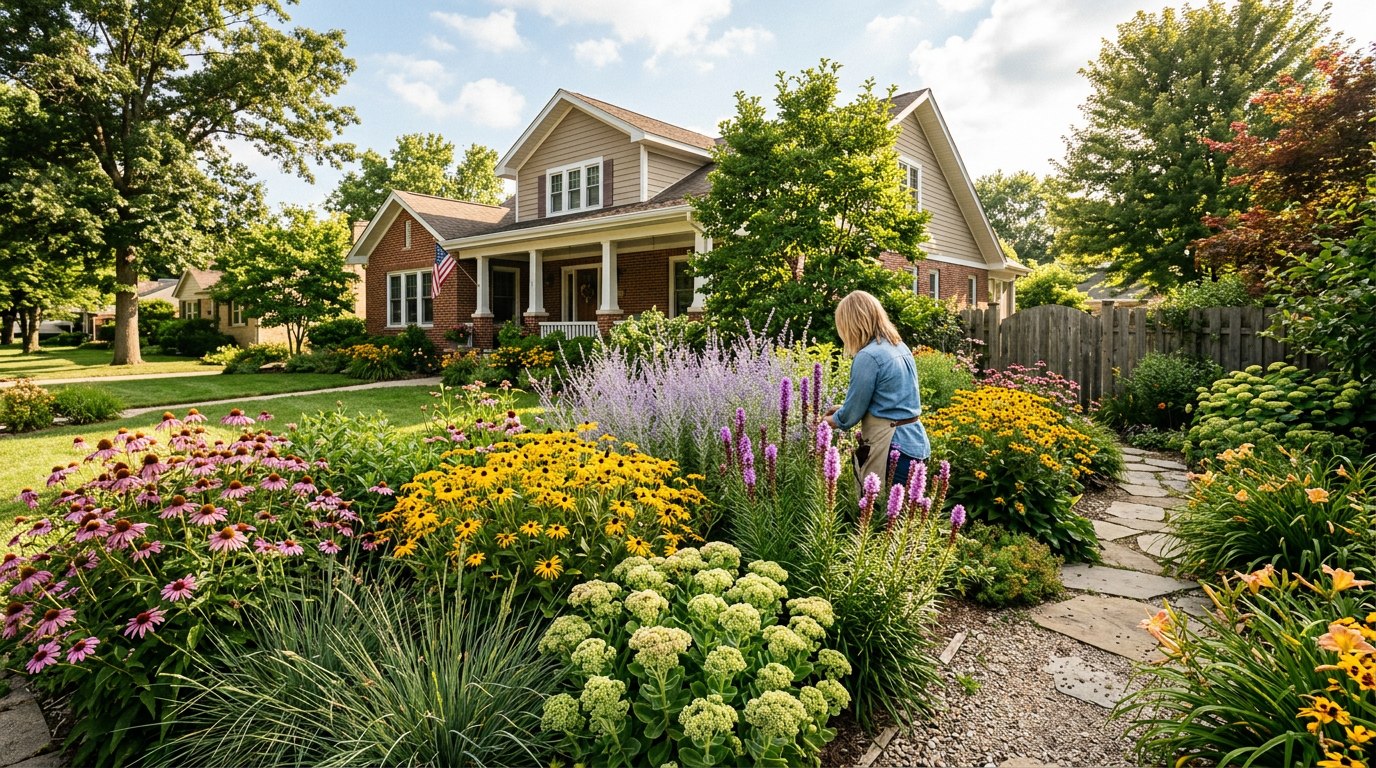
Let's get one thing straight: a "full sun" garden in Illinois is a special kind of beast. It's not the dry, baking heat of the Southwest or the gentle, filtered light of the Pacific Northwest. Here, full sun means a relentless summer assault of heat, humidity, and direct UV rays, followed by a winter that can flash freeze anything not tough enough to handle it. If you're tired of watching your garden investments wither by August, you've come to the right place. We're ditching the delicate, fussy flowers and giving you a battle-tested list of the best Midwest perennials for full sun that will make your Illinois yard look incredible without all the hand-wringing.
What "Full Sun" Really Means in Illinois
Before you spend a dime at a local nursery like Chalet in Wilmette or Platt Hill in Bloomingdale, you need to understand the assignment. "Full Sun" isn't a vague suggestion; it's a specific requirement: at least 6 hours of direct, unobstructed sunlight per day. In Illinois, this usually means the light between 10 AM and 4 PM.
This is the high-noon, peak-intensity sun that will scorch plants not suited for it. The combination of intense light and our famous summer humidity creates a pressure-cooker environment. The perennials on this list are chosen because they can handle that specific challenge. They won't just survive; they'll thrive.
The Unbeatable Champions: Native Illinois Perennials for Sun
When in doubt, go native. These plants evolved right here, so they're genetically programmed to handle everything Illinois throws at them. They're also pollinator magnets.
-
Purple Coneflower (Echinacea purpurea): This is the undisputed king of the Illinois sun garden. It's tough, drought-tolerant once established, and its classic purple-pink blooms are iconic. Birds, especially goldfinches, love the seed heads in the fall. We love classic varieties like 'Magnus', but 'White Swan' is a stunning alternative. Expect to pay about $15-$20 for a healthy 1-gallon pot.
-
Black-Eyed Susan (Rudbeckia fulgida): If you want a wave of gold from mid-summer until frost, this is your plant. The 'Goldsturm' variety is a workhorse, forming a dense clump of cheerful, dark-centered yellow flowers. They are prolific and will happily spread to fill a space. They look fantastic planted in large drifts.
-
Bee Balm (Monarda didyma): A favorite of hummingbirds and, you guessed it, bees. The spiky, unusual flowers come in shades of red, pink, and purple. Look for newer cultivars like 'Jacob Cline' (red) or 'Purple Rooster' that have better resistance to powdery mildew, which can be an issue in humid Illinois summers.
Drought-Tolerant Powerhouses for Illinois Heat Waves
While we don't face the same year-round water challenges as homeowners doing Southern California drought landscaping, an Illinois July and August can be brutal and dry. These plants laugh it off.
-
Salvia (Salvia nemorosa): Specifically, cultivars like 'May Night' and 'Caradonna'. These are absolute rock stars. Last spring, we got a flat of 'May Night' Salvia for a client's brutal south-facing bed in Naperville, and they were blooming within a month and didn't stop until fall. The deep violet-blue flower spikes are stunning, and deer tend to leave them alone. Once established, they barely need supplemental water.
-
Russian Sage (Perovskia atriplicifolia): Don't let the name fool you; this plant loves the Midwest heat. Its silvery-gray foliage provides a beautiful, cool-toned contrast, and the haze of lavender-blue flowers in late summer is breathtaking. The key to success with Russian Sage in Illinois is excellent drainage. It hates wet feet, especially in winter. Amend your clay soil heavily with compost and even some pea gravel if it's really dense.
-
Yarrow (Achillea millefolium): This is one of the toughest, most low-maintenance perennials you can buy. The flat-topped flower clusters come in a rainbow of colors, from the classic yellow ('Coronation Gold') to pinks, reds, and whites. It thrives on neglect and poor soil, making it perfect for that hot, dry strip by the driveway where everything else dies.
According to a study by the University of Minnesota, establishing a diverse perennial garden with native species can dramatically increase pollinator diversity. One project saw the number of bee species jump from 15 to 65 in just three years after converting turf grass to perennial beds. (Source: https://www.beelab.umn.edu/lawn-bees) For Illinois homeowners, this means planting things like Coneflower and Bee Balm isn't just for looks; it's actively supporting the local ecosystem that pollinates our crops and wildlands.
Adding Texture and Movement: Sun-Loving Grasses for Illinois
A perennial bed isn't complete without ornamental grasses. They provide structure in the winter, make beautiful sounds in the wind, and add a soft, modern texture.
-
Switchgrass (Panicum virgatum): A native prairie grass that is as tough as it is beautiful. It has a strongly upright habit that stays neat all season. 'Northwind' is an award-winning cultivar with steel-blue foliage that turns golden in the fall. It's a vertical powerhouse that won't flop over.
-
Little Bluestem (Schizachyrium scoparium): Another prairie native, Little Bluestem offers multi-season interest. It has blue-green foliage during the summer that transforms into a stunning mix of orange, red, and purple in the fall. Fluffy white seed heads add winter interest. It's a perfect choice for a lower-maintenance, naturalistic garden style and pairs beautifully with Black-Eyed Susans.
Your Illinois Planting and Prep Plan
You can't just dig a hole in our notorious clay soil and expect success. Follow these steps.
- Timing is Everything: The best times to plant perennials in Illinois are spring (after the last frost, usually mid-May) or early fall (September to early October). Fall planting gives the roots time to establish before the ground freezes, which is a great strategy similar to the advice for when to overseed your lawn in fall. Avoid planting in the peak heat of July.
- Amend Your Soil: This is the most important step. Most Illinois soil is heavy clay. Dig a hole twice as wide as the plant's pot and amend the backfill soil with a generous amount of compost. We recommend a high-quality compost like Purple Cow Organics Activated Compost, which runs about $15 for a 1-cubic-foot bag. This improves drainage and adds vital organic matter.
- Planting Depth: Place the perennial in the hole so that the top of its root ball is level with the surrounding soil. Planting too deep is a common and fatal mistake.
- Watering: Water deeply and immediately after planting. For the first year, provide consistent water (about 1 inch per week, including rain) to encourage a deep, robust root system. Once established, the drought-tolerant varieties listed here will need very little supplemental water.
Frequently asked
What's the easiest perennial to grow in full sun in Illinois?+
For sheer toughness and reliability in Illinois, it's a tie between Black-Eyed Susan (Rudbeckia) and 'May Night' Salvia. Both handle our sun and humidity, tolerate a range of soils, require minimal water once established, and bloom for months with zero fuss. They are widely available and very forgiving for beginners.
When should I plant perennials in Illinois?+
The ideal times are spring (late April through May) after the threat of hard frost has passed, or in the early fall (September to early October). Fall planting is excellent as it allows the plant's roots to establish in warm soil before winter, giving it a head start for the following spring.
How do I deal with heavy clay soil for my perennials?+
The key is amendment. Don't replace the soil; improve it. When you dig a planting hole, mix the clay you removed with 30-50% compost. This breaks up the dense structure, improves drainage, and adds nutrients. Adding organic matter is the single best thing you can do for Illinois clay.
Do these sun-loving perennials need a lot of fertilizer?+
Generally, no. Most of these tough perennials, especially the native ones like Coneflower and Switchgrass, thrive in average to lean soil. A single application of a slow-release granular fertilizer in the spring is plenty. Over-fertilizing can lead to weak, floppy growth and fewer flowers. Focus on good soil health instead.
How far apart should I space my full-sun perennials?+
Check the plant tag for its mature width. A common mistake is planting too close together. Space them so they have room to grow to their full size without overcrowding, which improves air circulation and reduces the risk of fungal diseases like powdery mildew, a common issue in humid Illinois summers.