
Top Midwest Perennials for Full Sun in Illinois
Stop guessing which plants will survive an Illinois summer. We've got the definitive list of sun-loving perennials that come back bigger and better every year.
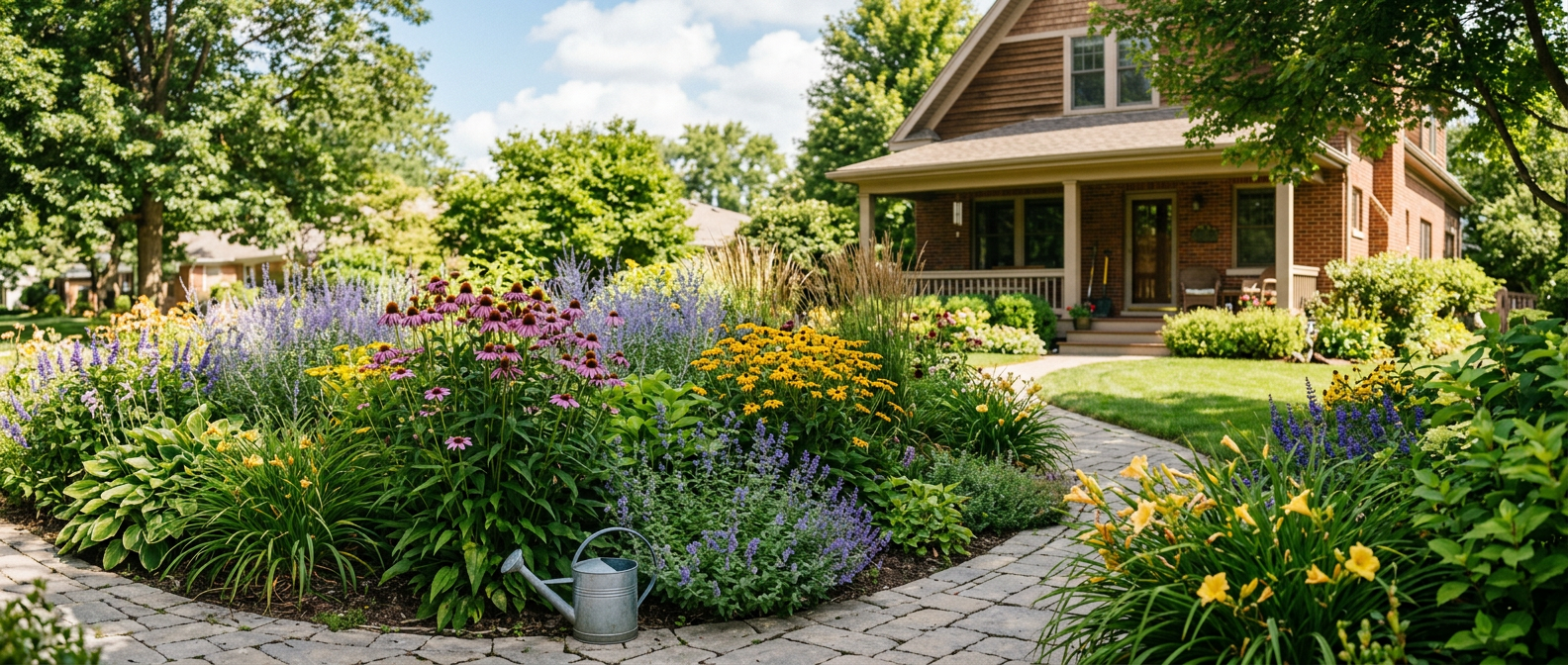
Let's be direct. That spot in your yard that gets blasted by the sun from dawn until dusk is a plant graveyard. You've tried planting things there, and they've either scorched to a crisp by August or failed to return after a brutal Illinois winter. We get it. We've been there. The good news is, you don't need a horticultural degree to fix it. You just need the right plants. We're talking about tough-as-nails, sun-loving, Midwest-proof perennials that will thrive in your Illinois garden, asking for very little in return.
This isn't about fussy, high-maintenance divas. This is the Dirt Cheap Genius guide to bomb-proof color that comes back year after year, even after being buried under a foot of lake-effect snow.
Understanding 'Full Sun' in the Illinois Climate
First, let's define our terms. When a plant tag says "full sun," it means at least six hours of direct, unfiltered sunlight per day. In Illinois, this usually means the south or west-facing side of your house. It's the spot where your AC unit works overtime and the cat loves to nap.
But full sun here isn't like full sun in other places. We have to deal with a specific set of challenges. Most of Illinois falls into USDA Hardiness Zones 5b and 6a, with some pockets of 5a in the north and 6b in the far south. This means our perennials have to withstand winter temperatures that can plummet to -15°F, and then turn around and handle summer highs in the 80s and 90s with soul-crushing humidity.
This one-two punch of extreme heat and cold is what kills the wrong plants. The perennials on this list are all hardy to at least Zone 5, meaning they can take whatever a Chicagoland winter throws at them and still put on a show in July.
The Unkillables: Our Top 5 Perennials for Illinois Sun
We've killed a lot of plants so you don't have to. These five have proven themselves time and again in our own Midwest test gardens. They are the foundation of a bulletproof, sunny perennial bed in Illinois.
-
Coneflower (Echinacea purpurea): If you plant only one thing from this list, make it a Coneflower. This native prairie powerhouse is the state flower of Illinois for a reason. It loves sun, tolerates drought once established, and its daisy-like flowers are magnets for bees and butterflies. The classic Purple Coneflower is fantastic, but you can also find cultivars in shades of white ('White Swan'), orange ('Tiki Torch'), and red. They bloom from mid-summer into fall. Cost: Expect to pay $15-$25 for a healthy one-gallon pot.
-
Black-Eyed Susan (Rudbeckia hirta): Another native champion, Black-Eyed Susans deliver a massive punch of golden-yellow color from summer to the first frost. They are ridiculously easy to grow and will often self-seed, giving you more plants for free over time. 'Goldsturm' is a classic, award-winning variety that forms a neat clump. They are the definition of cheerful and are completely unfazed by Illinois heat.
-
Salvia (Salvia nemorosa): When you want a spike of intense color, you want Salvia. Varieties like 'May Night' and 'Caradonna' produce deep violet-blue flower spikes in late spring. If you shear them back after the first flush of blooms, they'll often rebloom later in the summer. They're deer-resistant, drought-tolerant, and beloved by hummingbirds. What's not to love?
-
Daylily (Hemerocallis): The ultimate workhorse perennial. Daylilies will grow in almost any soil, tolerate full sun without flinching, and come in thousands of colors, shapes, and sizes. While each flower only lasts a day (hence the name), a mature plant produces tons of buds. For non-stop color, look for reblooming varieties like the classic 'Stella de Oro' ($12-$18 per plant), which blooms its head off all summer long. They're as tough as they come.
-
Russian Sage (Perovskia atriplicifolia): Want an airy, silver-and-lavender cloud in your garden? Plant Russian Sage. This plant gives you a cool, Mediterranean vibe that contrasts beautifully with bolder flowers. It thrives in hot, dry spots where other plants fail. It's extremely drought-tolerant, so it's a great choice if you're looking for a low-water garden similar to some of the principles used in landscaping ideas for Colorado. Give it lots of space and well-drained soil, and it will reward you with a haze of purple from mid-summer to fall.
Beyond the Basics: More Great Perennials for Sunny Illinois
Once you have your foundation, you can start adding more texture and variety. These plants are also fantastic choices for a sunny Illinois spot.
- Sedum 'Autumn Joy': This is maybe the most low-maintenance plant on the planet. Its succulent leaves look good all season, the pale pink flowers emerge in late summer and deepen to a coppery red in the fall, and the dried seed heads provide winter interest. It thrives on neglect.
- Catmint (Nepeta x faasseniana): 'Walker's Low' is a superstar. It's a billowy mound of gray-green foliage covered in lavender-blue flowers for months. It's drought-tolerant, deer-resistant, and a fantastic, less-fussy alternative to lavender in our humid climate.
- Peony (Paeonia): A classic for a reason. Peonies need sun to set their massive, fragrant blooms in late spring. They are incredibly long-lived—a single plant can thrive for decades. Plant the roots shallowly and give them support. Their needs are simple, but the payoff is huge.
- Ornamental Grasses: Don't forget grasses! 'Karl Foerster' Feather Reed Grass is an upright, well-behaved grass that provides height and movement. Its wheat-like plumes emerge in summer and last through winter. It's a landscape architect favorite for a reason.
Planting and Prep: Setting Your Illinois Perennial Bed Up for Success
Listen up, because this part is crucial. You can't just dig a hole in our typical Illinois clay, drop a plant in, and expect miracles. We've learned the hard way that a little prep goes a long, long way.
Most soil in Illinois, from the Chicago suburbs down to Springfield, is heavy clay. It holds water in the spring (drowning roots) and bakes into a brick in the summer (strangling them). The fix is simple: compost. For a new bed, spread 2-4 inches of good quality compost over the entire area and till or dig it into the top 8-12 inches of soil. A 1 cubic foot bag of a quality brand like Purple Cow Compost runs about $12-$15 at a local nursery like Platt Hill in Bloomingdale or Wasco Nursery in St. Charles, and it's the best money you'll spend. This one-time task improves drainage and aeration forever.
Planting is best done in the spring (after the risk of frost has passed, usually May) or early fall (September). Fall planting is our preference as it allows the roots to establish in warm soil without the stress of summer heat.
According to the Illinois Department of Natural Resources, over 350 species of bees are native to the state, and planting native perennials like Echinacea and Rudbeckia provides a critical food source for them. With average July temperatures in Springfield hitting 86°F, choosing plants adapted to this heat is non-negotiable for a low-maintenance garden. This approach is similar to how gardeners in other cold climates, like those looking at New England front yard landscaping for Massachusetts homes, rely on hardy natives. (Source: https://www.dnr.illinois.gov/conservation/naturalheritage/nativebees.html)
Care and Maintenance: Keeping Your Sunny Illinois Garden Looking Good
Here's the beauty of choosing the right plants: the long-term care is minimal.
- Watering: For the first year, water your new perennials deeply once a week if it doesn't rain. After that, most of the plants on this list are drought-tolerant and will only need water during prolonged, hot, dry spells.
- Mulching: Apply a 2-inch layer of wood mulch around your plants. This conserves moisture, keeps weeds down, and moderates soil temperature. Don't pile it up against the plant stems.
- Deadheading: This just means snipping off spent flowers. For plants like Salvia and Catmint, a good shearing after their first bloom will encourage a second wave of flowers. For Coneflowers and Black-Eyed Susans, you can leave the late-season seed heads for the birds to eat in winter.
- Fall Cleanup: In late fall, after a few hard frosts, you can cut most perennials back to a few inches above the ground. This keeps the garden looking tidy. However, leaving stems and seed heads up provides winter interest and habitat for beneficial insects. The timing for this cleanup often coincides with lawn tasks; you can learn more about that seasonal rhythm in our guide on when to overseed your lawn in fall.
By choosing from this list of sun-loving, Midwest-tested perennials, you can finally conquer that hot, sunny spot and turn it into a source of pride instead of frustration. Happy planting.
Frequently asked
What's the most low-maintenance perennial for full sun in Illinois?+
For sheer toughness, Sedum 'Autumn Joy' is hard to beat. It thrives on neglect, tolerates drought and our heavy clay soil, and looks good from summer through winter. It requires almost no watering once established and doesn't need deadheading, making it a top choice for busy gardeners.
When is the best time to plant perennials in Illinois?+
The best times are spring (after the last frost, typically late April or May) or early fall (September to early October). Fall planting gives the roots time to establish before the ground freezes, often resulting in a stronger plant the following spring. Avoid planting in the heat of summer.
Do I need to amend my soil for these perennials in Illinois?+
It's highly recommended, especially if you have heavy Illinois clay. Mixing in 2-3 inches of compost improves drainage and adds nutrients. This one-time effort prevents waterlogged roots in the spring and brick-hard soil in the summer, helping your plants thrive for years.
What perennials bloom all summer in Illinois full sun?+
For continuous blooms, choose 'Walker's Low' Catmint, which blooms from late spring to fall if sheared mid-season. Reblooming Daylilies like 'Stella de Oro' and Salvia varieties like 'May Night' also rebloom if deadheaded. Combining plants with different bloom times ensures color all season long.
Are native Illinois perennials better for my garden?+
Native plants like Coneflower and Black-Eyed Susan are fantastic choices because they are perfectly adapted to our local climate and soils. They require less water and fertilizer and provide essential food and habitat for local pollinators like bees and butterflies, making your garden more ecologically friendly.