
Best Midwest Perennials for Full Sun in Illinois
Stop wasting money on plants that can't handle an Illinois summer. Here are the bulletproof, sun-loving perennials that will actually thrive in your yard.
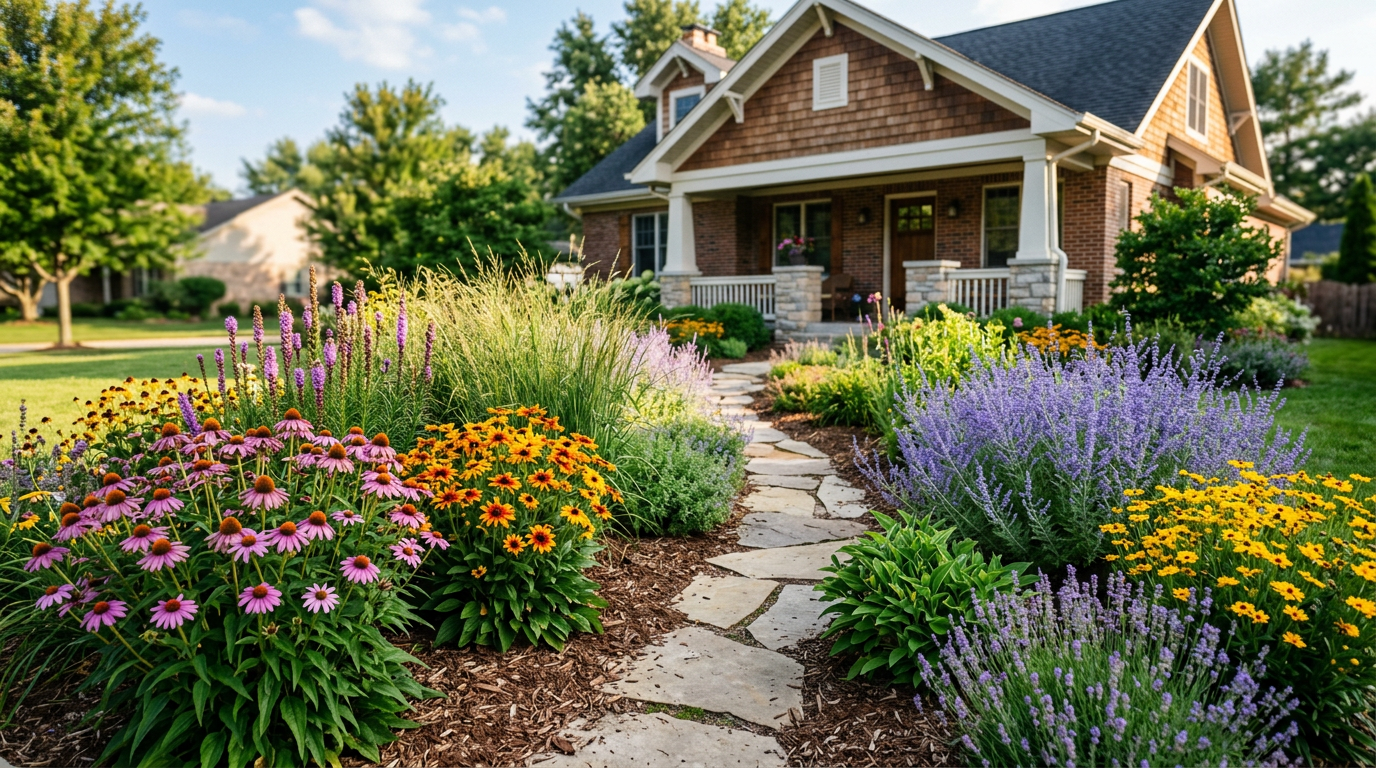
Let's get one thing straight: planting a gorgeous perennial garden in Illinois that can handle full, blistering sun isn't about having a 'green thumb.' It's about choosing the right plants and not fighting Mother Nature. We see it all the time—homeowners dropping hundreds of dollars on delicate flowers that turn to crispy critters by August. Why? Because the tag said 'full sun,' but it didn't specify 'Illinois full sun,' which comes with a side of blast-furnace heat and soul-crushing humidity, followed by a winter that can freeze the bolts off a tractor.
We're here to cut through the noise. Forget the fussy, the finicky, and the frail. This is your no-nonsense guide to the toughest, most reliable Midwest perennials that will give you years of color in your Illinois garden, from the Chicago suburbs down to Carbondale. We're talking plants that thrive in our specific USDA Hardiness Zones (mostly 5b and 6a, with pockets of 4b and 5a up north) and won't flinch at the challenge.
Understanding "Full Sun" in an Illinois Climate
When a plant tag says "full sun," it means a minimum of six hours of direct, unfiltered sunlight per day. But in Illinois, that sun exposure from June to August is intense. It's not the same gentle, filtered light you might find in other regions. Our sun is strong, and when combined with our typical summer humidity, it can be brutal on plants not suited for it. This isn't the dry heat of the Southwest, which you can read about in our Arizona Desert Landscaping Ideas That Don't Suck guide; this is a heavy, wet heat that demands a different kind of toughness.
You need perennials that can handle:
- Intense UV radiation: No delicate petals that scorch easily.
- High Humidity: Plants prone to powdery mildew will suffer.
- Drought and Deluge: Our weather swings wildly. Plants need to tolerate a few weeks of dry spells and also not rot during a week of thunderstorms.
- Winter's Wrath: The ground freezes solid. The plant's crown and roots have to be tough enough to survive it.
Our Top 5 Bulletproof Perennials for Illinois Sun
We've planted, neglected, and stress-tested countless perennials in our own Illinois test gardens. These five are the champs. You can find most of these at local nurseries like Platt Hill Nursery in Bloomingdale or The Growing Place in Aurora for about $15-$30 for a healthy 1-gallon pot.
- Purple Coneflower (Echinacea purpurea): This is the undisputed king of the Illinois sun garden. It's a native prairie plant, so it was literally born for this. It blooms for months, attracts bees and butterflies, and its seed heads provide winter interest and food for goldfinches. It's not picky about soil and, once established, you can basically forget to water it.
- Black-Eyed Susan (Rudbeckia hirta/fulgida): Another native powerhouse. That classic golden-yellow daisy with the dark brown center is a beacon of summer. The 'Goldsturm' variety is a workhorse, forming a dense clump of foliage with a riot of flowers from July through September. They are ridiculously easy to grow and will even self-seed politely.
- Salvia 'May Night' (Salvia nemorosa): If you want a shot of deep, vibrant purple-blue, this is your plant. It sends up spikes of color in early summer, and if you shear it back after the first flush, it will often rebloom. Deer and rabbits tend to leave it alone thanks to its fragrant leaves. It needs good drainage, so amend that clay soil.
- Sedum 'Autumn Joy' (Hylotelephium telephium): This plant is a four-season superstar. It emerges in spring as neat, succulent mounds. By late summer, the broccoli-like heads start turning from pale green to pink, then a deep rusty red in the fall. We leave the dried flower heads up all winter for structure and interest against the snow. It's practically indestructible.
- Russian Sage (Perovskia atriplicifolia): For a soft, hazy, silver-and-lavender effect, nothing beats Russian Sage. It has an airy texture that looks incredible when backlit by the sun. It loves heat, hates wet feet, and is as drought-tolerant as they come. Plant it where you have plenty of space, as it can get big and billowy.
Go Native: Illinois Perennials That Belong Here
For a truly low-maintenance garden, lean into plants that evolved to handle Illinois' specific conditions. Native plants support local pollinators, require less water and fertilizer, and are naturally resistant to local pests and diseases. They are the definition of smart landscaping.
- Butterfly Weed (Asclepias tuberosa): Don't let the "weed" part fool you. This plant explodes with brilliant orange flowers that are an absolute magnet for Monarch butterflies. It has a deep taproot, making it incredibly drought-tolerant once established.
- Rattlesnake Master (Eryngium yuccifolium): Want something weird and wonderful? This is it. With spiky, yucca-like foliage and unique, globe-shaped white flowers, it adds incredible texture. It's a prairie native that thrives in full sun and poor, dry soil.
- Prairie Blazing Star (Liatris pycnostachya): Tall, dramatic purple spikes that bloom from the top down. A fantastic vertical accent in any garden bed and a favorite of butterflies and bees.
Designing Your Full-Sun Illinois Garden
Don't just plop plants in the ground. A little design forethought goes a long way. Use the "Thriller, Filler, Spiller" method:
- Thrillers: Tall, eye-catching plants that provide a vertical element. Think Prairie Blazing Star or a clump of ornamental grass like 'Karl Foerster' Feather Reed Grass.
- Fillers: Mounded, mid-size plants that fill out the space. This is where your Coneflowers, Black-Eyed Susans, and Salvias shine.
- Spillers: Low-growing plants that spill over the edges of the bed or a wall. Creeping Thyme or Ice Plant (Delosperma) work well in hot, dry spots.
Pay attention to bloom times to ensure you have a sequence of color all season long. The design principles are universal, whether you're working on a Midwestern prairie look or the more formal styles seen in our New England Front Yard Landscaping for Massachusetts Homes guide.
The Real Secret: Soil Prep for Illinois Gardens
Here's where many gardeners fail. Much of Illinois is blessed with fertile soil, but it's often heavy clay. Clay holds nutrients and moisture, but it also compacts easily and drains poorly. Many sun-loving perennials, especially those from drier regions, will rot in dense, wet clay over the winter.
According to the Illinois State Museum, the state soil is Drummer silty clay loam, prized for agriculture but challenging for gardeners who need sharp drainage. (Source: http://www.museum.state.il.us/exhibits/symbols/soil.html)
The solution is simple: amend, amend, amend. When digging a new bed or planting a perennial, mix in a generous amount of compost. We recommend a 50/50 mix of your native soil and a good quality compost like Purple Cow or just bagged compost from a local garden center. This improves the soil structure, adds slow-release nutrients, and drastically improves drainage. It's the single most important step you can take.
Essential Care: Watering and Mulching
Even drought-tolerant plants need regular water during their first year to get established. Water deeply once or twice a week, rather than a light sprinkle every day. This encourages deep root growth.
Once established (after the first season), you can back off the water significantly. They will only need supplemental water during prolonged, severe droughts.
Mulch is non-negotiable. Apply a 2-3 inch layer of a good quality, shredded hardwood mulch around your plants, keeping it away from the plant's crown. A bag of mulch from Menards or Lowe's will run you $4-$6 and is worth every penny. Mulch:
- Retains soil moisture, reducing the need to water.
- Suppresses weeds.
- Keeps the soil temperature more even (cooler in summer, warmer in winter).
- Breaks down over time to enrich the soil.
Putting it all together—the right plants, proper soil prep, and smart mulching—is the key to a thriving, low-effort, full-sun perennial garden in Illinois. It's less work than maintaining a perfect lawn, a topic we cover extensively for other regions like in our Texas Lawn Care: Your Seasonal No-Nonsense Guide to a Green Lawn. Now go get your hands dirty.
Frequently asked
What is the easiest perennial to grow in full sun in Illinois?+
The Purple Coneflower (Echinacea purpurea) is arguably the easiest. As an Illinois native, it's perfectly adapted to our sun, soil, and winters. Once established, it's extremely drought-tolerant, attracts pollinators, and requires virtually no care beyond optional deadheading to encourage more blooms.
How do I prepare my Illinois clay soil for sun perennials?+
The key is to improve drainage. When planting, excavate a hole twice as wide as the plant's pot and amend the backfill soil with about 30-50% compost. This breaks up the heavy clay, adds organic matter, and prevents water from pooling around the roots, which causes rot.
Do I need to water full-sun perennials in the summer in Illinois?+
For the first year, yes. Water deeply 1-2 times per week to help them establish strong roots. After the first year, most established, drought-tolerant perennials like Sedum or Russian Sage will only need water during extreme heat waves or droughts lasting more than 2-3 weeks.
What perennials bloom all summer in Illinois?+
For continuous color, choose perennials with long bloom times and plant varieties that bloom in sequence. Black-Eyed Susans (Rudbeckia) and certain Coneeflower varieties bloom for months. Salvia will rebloom if sheared back after its first flowering, extending its color into late summer.
Can I plant these perennials in a container in full sun?+
Yes, but with caveats. Containers dry out much faster than garden beds, so you'll need to water almost daily in peak summer heat. Also, containers offer less insulation in winter, so plants may not survive unless you use a very large pot or provide winter protection.