
Top Midwest Perennials for Full Sun in Illinois Gardens
Stop planting annuals that die every year. Here are the toughest, most beautiful perennials that can handle a full-sun spot in your Illinois garden, year after year.
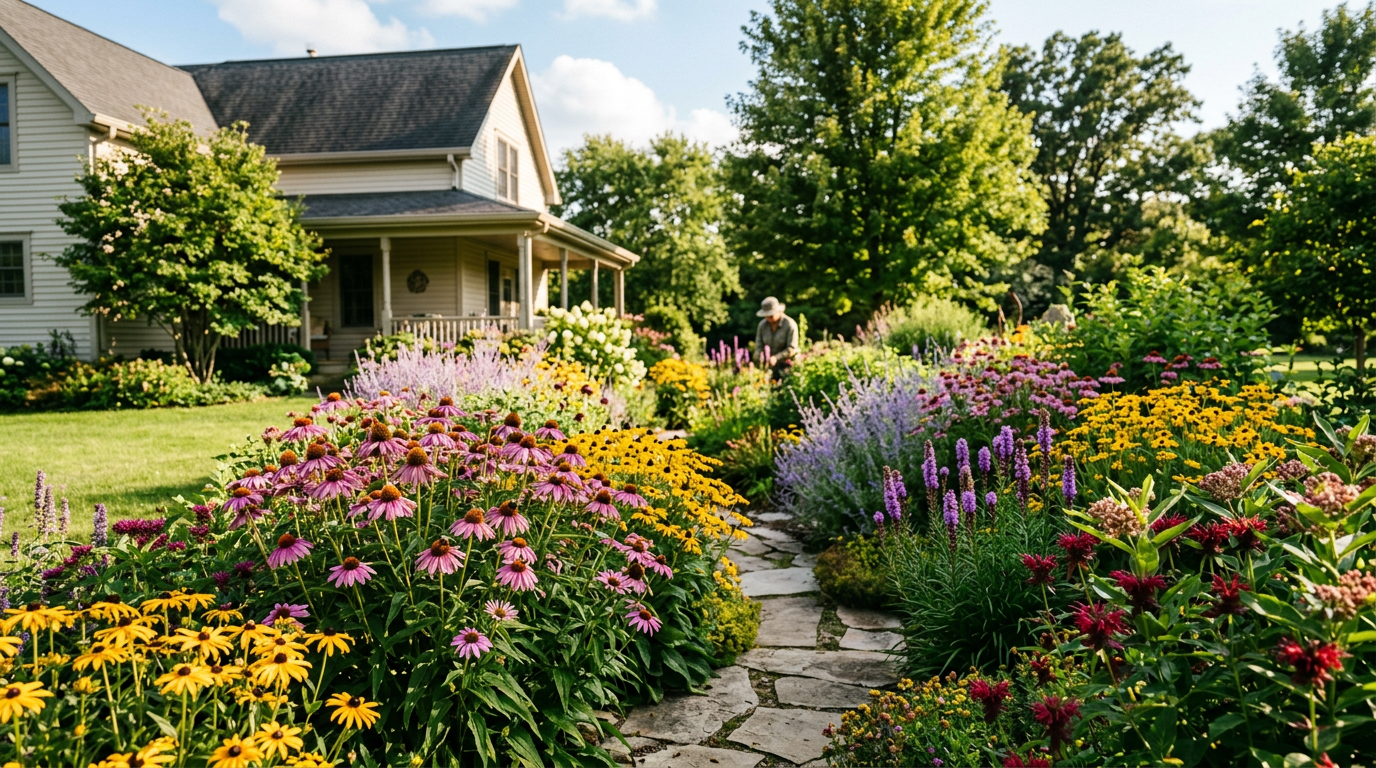
Let's be honest. Creating a beautiful garden in Illinois can feel like a battle against the elements. You've got scorching, humid summers that can wilt the weak, and then brutal winters that freeze the ground solid. If you've ever planted a delicate flower only to watch it get fried to a crisp in a south-facing spot by August, you're not alone. The solution isn't to give up and pave it all over. The solution is to stop fighting the sun and start working with it. This is our definitive guide to the best Midwest perennials for full sun in Illinois gardens.
We're not talking about fussy annuals you have to replace every single year. We're talking about tough, reliable, beautiful perennials—plants that come back bigger and better every spring. These are the workhorses of the garden, the plants that can take a beating from the Illinois sun and still put on a show.
Understanding 'Full Sun' in an Illinois Summer
First, let's get our terms straight. When a plant tag says "full sun," it means it needs a minimum of six hours of direct, unfiltered sunlight per day. In Illinois, this isn't just any sunlight; it's the intense, high-noon-in-July kind of sun. An east-facing bed that gets sun from 7 a.m. to 1 p.m. is very different from a west-facing one that gets blasted from noon until sunset.
The real challenge in Illinois isn't just the sun, it's the combination of heat and humidity followed by deep-freeze winters. This is why knowing your USDA Hardiness Zone is non-negotiable. Illinois spans several zones:
- Zone 4b: Far northwestern corner of the state.
- Zone 5a & 5b: The vast majority of northern and central Illinois, including the Chicago suburbs.
- Zone 6a: The southern tip of the state.
All the plants we're recommending here are hardy to at least Zone 5, meaning they'll survive the winter pretty much anywhere from Chicago to Springfield without much fuss.
Our Top 5 Bulletproof Perennials for Full Sun in Illinois
We've planted, killed, and successfully grown hundreds of plants in Midwest gardens. These five are our champions for reliability, beauty, and sheer toughness in a sunny Illinois spot.
1. Black-Eyed Susan (Rudbeckia hirta)
If Illinois had an official garden mascot, it would be the Black-Eyed Susan. These cheerful, yellow, daisy-like flowers are practically foolproof. They're native, which means they are perfectly adapted to our soils and climate. They bloom their heads off from mid-summer until the first frost, providing a long season of color. Bees and butterflies love them, and they make great cut flowers.
- Cost: A 1-gallon pot usually runs $12-$20 at a local nursery like Lurvey Garden Center in Des Plaines or even big box stores like Home Depot.
- Pro Tip: Let some of the last flowers of the season go to seed. Goldfinches will feast on them all winter, and you'll likely get some free new plants next spring.
2. Purple Coneflower (Echinacea purpurea)
Another native powerhouse, the Purple Coneflower is as tough as it is beautiful. The classic purple-pink variety is stunning, but you can now find cultivars in shades of white, yellow, orange, and red. They have a long bloom time, are incredibly drought-tolerant once established, and are a magnet for pollinators.
We've made the mistake of planting shade-lovers in a sun-baked spot against a south-facing brick wall in a Chicago bungalow garden. They were toast by July. We learned the hard way so you don't have to. Coneflowers, on the other hand, would have thrived there.
- Cost: Expect to pay $15-$25 for a decent-sized plant. Look for sturdy stems and lots of leaves.
- Pro Tip: Don't cut the seed heads back in the fall. Their spiky, architectural forms look fantastic against the snow, and they provide food for birds.
3. Sedum 'Autumn Joy' (Hylotelephium spectabile)
If you want a plant that looks good for four seasons, this is it. In spring, it emerges as neat, blue-green foliage. By summer, it forms broccoli-like heads of green buds. In late summer, these buds open into massive pink flowerheads that bees go crazy for. As fall progresses, the flowers deepen to a rich, coppery red. And in winter, the dried flower heads provide structure and interest. It’s a true set-it-and-forget-it plant.
- Cost: About $15 for a 1-gallon pot.
- Pro Tip: This plant is prone to flopping open in the middle if it's too happy (too much water or rich soil). To prevent this, you can do the "Chelsea Chop" in late May or early June: just cut the entire plant back by about a third.
4. Russian Sage (Perovskia atriplicifolia)
Don't let the name fool you; this plant loves the Midwest. Its silvery, fragrant foliage is a beautiful backdrop for the hazy, lavender-blue flower spikes that appear in mid-summer and last for months. It is incredibly tolerant of heat, drought, and poor soil. Plus, deer and rabbits tend to leave it alone. This isn't a plant native to the prairie, so our climate is a far cry from the drizzly Pacific Northwest, but Russian Sage thrives in our dry, hot summers.
- Cost: Typically $18-$28 for a good-sized plant.
- Pro Tip: Choose a smaller cultivar like 'Little Spire' for smaller gardens, as the standard variety can get quite large (4-5 feet tall and wide).
5. Daylilies (Hemerocallis)
Daylilies are called the "perfect perennial" for a reason. They tolerate a wide range of conditions, including Illinois' heavy clay soil, and come in nearly every color imaginable. Each flower only lasts for a day, but a mature plant produces dozens of flower scapes, ensuring a continuous show for weeks. The re-blooming 'Stella de Oro' variety is ubiquitous for a reason: it's short, tidy, and blooms its little heart out.
- Cost: Varies wildly. A common variety like 'Stella de Oro' might be $10, while a new, fancy hybrid could be $50+ from a specialist grower.
- Pro Tip: Divide your daylilies every 3-4 years to keep them vigorous and to get more free plants.
Planting Your Illinois Sun-Lovers for Success
You can't just dig a hole in our concrete-like clay and expect good results. Success starts with soil prep.
- Dig a Wide Hole: Dig a hole twice as wide as the nursery pot, but no deeper.
- Amend, Amend, Amend: This is the most important step for Illinois gardeners. Our soil is typically heavy clay, which can hold too much water and lead to root rot. Mix the soil you dug out of the hole with an equal amount of compost. We're big fans of Purple Cow Classic Compost, which you can find for about $12 a bag at most independent garden centers like Chalet in Wilmette.
- Planting: Tease the roots at the bottom of the plant's root ball to encourage them to grow outwards. Place the plant in the hole so that the top of its root ball is level with or even slightly above the surrounding soil.
- Backfill and Water: Fill the hole with your amended soil mixture, pressing down gently. Water thoroughly right away to settle the soil and eliminate air pockets.
According to the University of Illinois Extension, native plants are adapted to local soil and climate conditions, requiring less water and fewer chemicals once established. This can save homeowners significant money and time. For instance, a garden filled with native perennials can reduce water usage by up to 50% compared to a traditional lawn, which is a big deal during our hot, often dry, late summers. This isn't just good for your wallet; it's good for the local ecosystem and Lake Michigan water levels. (Source: https://extension.illinois.edu/global/gardening-and-environment)
A Sample Full-Sun Garden Design for an Illinois Yard
Don't overthink it. A simple "Thriller, Filler, Spiller" approach works wonders. For a small 4' x 8' bed:
- Thriller (The tall, dramatic plant in the back): 2 x Russian Sage or 'Karl Foerster' Feather Reed Grass.
- Filler (The main body of the planting): 3 x Purple Coneflower and 3 x Black-Eyed Susan, staggered in the middle.
- Spiller (The low plant at the front edge): 3 x Sedum 'Autumn Joy' along the front.
This simple combination provides height, texture, and blooms from summer through fall. The total plant cost would be around $150-$200, plus another $25 for compost. It's a weekend project that pays you back for a decade.
Caring for Your Perennials Through Illinois Seasons
- Spring: Once the ground thaws, cut back any dead stems from the previous year that you left for winter interest. This is also the best time to divide overgrown clumps of daylilies or sedum.
- Summer: For the first year, water your new perennials deeply once a week if it doesn't rain. Once established, these tough plants will need very little supplemental water, except during a severe drought. Deadhead (remove spent blooms) from plants like Black-Eyed Susan to encourage more flowers.
- Fall: Stop deadheading in early fall to allow seed heads to form for birds. After the first hard frost, you can cut most perennials back to a few inches above the ground. Or, leave them standing for winter interest. If you're tidying up the garden, it's also a great time to evaluate your lawn and consider when to overseed in the fall for a healthier turf next year. While some guides might have you go full Arizona desert landscaping with gravel and succulents, a bit of fall cleanup and mulching is all our Midwest perennials need.
- Winter: A 2-3 inch layer of shredded bark mulch applied in late fall helps insulate the soil, protect plant roots from the freeze-thaw cycle, and conserve moisture.
Frequently asked
What are the easiest perennials to grow in full sun in Illinois?+
The easiest and most reliable full-sun perennials for Illinois are native or well-adapted plants like Black-Eyed Susan (Rudbeckia), Purple Coneflower (Echinacea), and Daylilies (Hemerocallis). They are drought-tolerant, handle Illinois clay soil well, and require minimal care once established, providing color year after year.
When is the best time to plant perennials in Illinois?+
The two best times to plant perennials in Illinois are spring (after the last frost, typically May) and early fall (September to early October). Planting in fall gives roots time to establish before winter, while spring planting avoids the intense summer heat stress for new plants.
Do I need to fertilize my sun-loving perennials in Illinois?+
Generally, no. Most of the tough perennials recommended for Illinois thrive in average or even poor soil. Adding a layer of compost to the soil at planting time is usually sufficient. Over-fertilizing can lead to weak, leggy growth and fewer flowers, especially for plants like Russian Sage and Coneflower.
How do I prepare my Illinois perennial garden for winter?+
After the first hard frost, you can cut back most perennials to about 4-6 inches. However, leaving seed heads from plants like Coneflower and Sedum provides winter food for birds and adds visual interest. Applying a 2-3 inch layer of mulch after the ground freezes helps insulate roots.
What perennials bloom all summer in Illinois?+
For continuous summer blooms in Illinois, choose plants with long or repeating bloom cycles. Black-Eyed Susan and certain Coneflower varieties bloom from mid-summer to frost. Re-blooming Daylilies like 'Stella de Oro' and Salvias like 'May Night' will also provide color for most of the season.