
Top Midwest Perennials for Full Sun in Illinois
Forget finicky flowers. We're breaking down the toughest, most reliable perennials that will thrive in your sun-drenched Illinois garden, year after year.
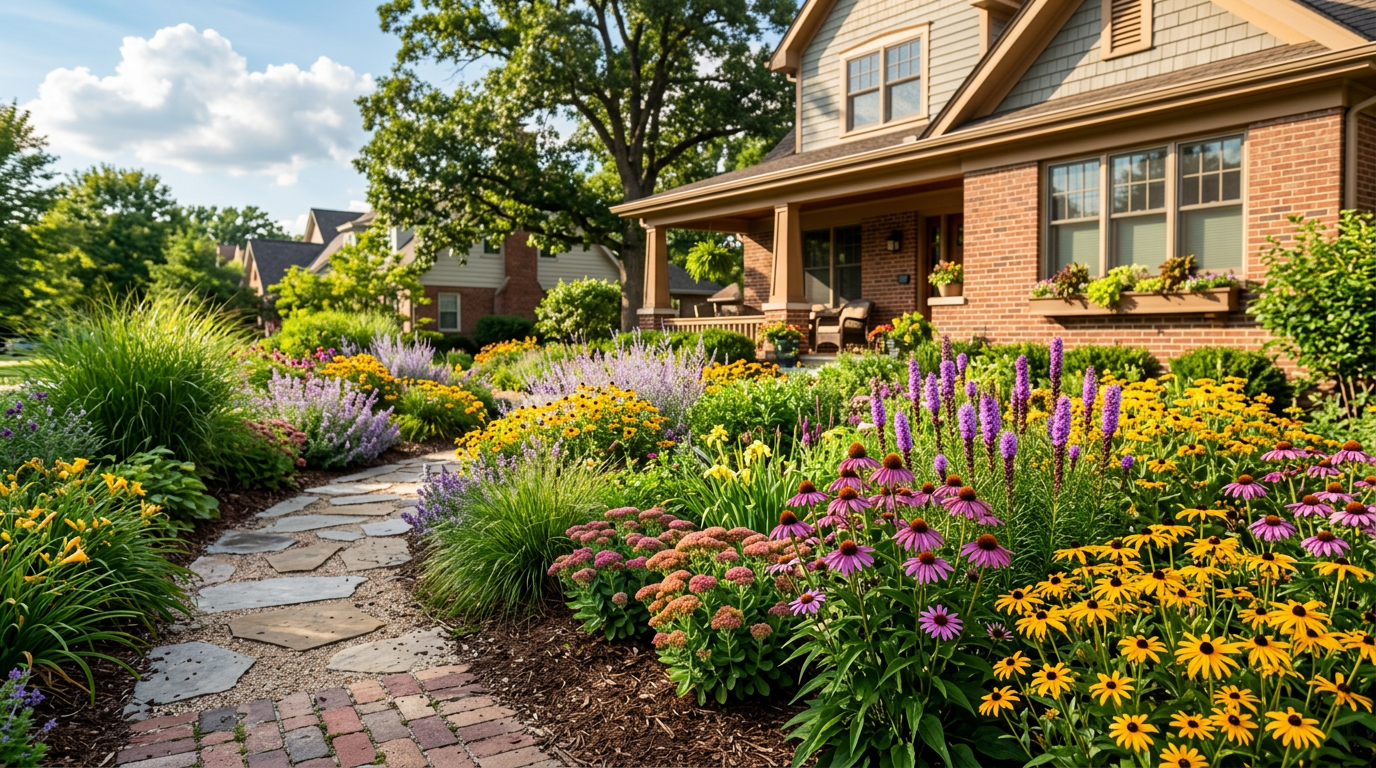
Let's be direct. Gardening in Illinois is a special kind of challenge. We've got brutal, sub-zero winters that can heave plants right out of the ground, and sweltering, humid summers that feel like you're gardening in a swamp. If you have a spot that gets baked by the sun all day, you've probably wasted good money on plants that looked great at the nursery but shriveled into expensive compost by August. No more. We're going to give you a bulletproof list of Midwest perennials for full sun that actually work here in Illinois, from Chicagoland down to Carbondale.
These aren't delicate, fussy plants that require a sermon and three different fertilizers. These are the tried-and-true workhorses that will give you years of color with minimal complaining.
What "Full Sun" Really Means for Illinois Gardeners
First, let's clear up the terminology. "Full sun" on a plant tag isn't a vague suggestion. It means that plant needs at least six hours of direct, unfiltered sunlight every day. In Illinois, this is usually the harsh afternoon sun from about 11 AM to 5 PM. A spot that gets morning sun and afternoon shade is "part sun," a completely different ballgame.
Illinois straddles USDA Hardiness Zones 4b in the far north, 5a/5b through the central region (including Chicago), and 6a in the southern tip. This means your plants need to survive winter temperatures that can plummet to -25°F. All the plants we list here are hardy to at least Zone 4, so they'll work anywhere in the state.
The other big Illinois factor? Soil. Much of the state, especially around new construction, is blessed with heavy, dense clay. It holds water (sometimes too well) and can bake into a brick in the summer. The key to success is amending that soil with compost to improve its structure and drainage.
The Unkillables: 5 Perennials for Full Sun in Illinois
We've planted thousands of perennials across Illinois. These are the ones we stake our reputation on. They look great, they're low-maintenance, and they survive.
-
Purple Coneflower (Echinacea purpurea): If you plant one thing from this list, make it a coneflower. This native prairie powerhouse is the definition of tough. It loves the heat, isn't picky about soil, and is drought-tolerant once established. Bonus: birds love the seed heads in the fall.
- Cultivars to try: 'Magnus' (classic pink/purple), 'White Swan' (creamy white), or the vibrant PowWow® series.
- Price: Expect to pay $15-$25 for a healthy 1-gallon plant at a local nursery like The Growing Place in Naperville or Chalet in Wilmette.
-
Black-Eyed Susan (Rudbeckia fulgida): This is the cheerful, yellow-flowered workhorse of the summer garden. 'Goldsturm' is the most popular variety for a reason: it's a blooming machine from July until frost. It forms a nice, dense clump that helps crowd out weeds. We've planted hundreds of 'Goldsturm' in Chicagoland projects, and they never, ever fail.
- Price: Around $12-$20 for a 1-gallon pot. It spreads, so you get a lot of bang for your buck over time.
-
'May Night' Salvia (Salvia nemorosa): Looking for a shot of intense, deep blue/purple? This is your plant. Salvia sends up spikes of color in early summer. If you shear it back after the first flush of blooms, it will often rebloom later in the season. It's deer-resistant and pollinators go absolutely wild for it.
- Price: Typically $14-$22 per gallon. A must-have for an early summer color punch.
-
Autumn Joy Sedum (Hylotelephium 'Herbstfreude'): This plant is a four-season star. It emerges in spring as neat green mounds, forms broccoli-like flower heads in summer that open to a dusty pink in late August, and age to a beautiful rusty red in the fall. We leave the dried seed heads up for winter interest. It's incredibly drought-tolerant and thrives on neglect. Seriously, don't overwater or over-fertilize this one.
- Price: A bargain at $10-$18 for a gallon container. It's also super easy to divide and make more plants for free.
-
Peony (Paeonia lactiflora): An old-fashioned classic for a reason. Peonies are practically immortal. Plant one in a sunny, well-drained spot, and it could outlive you. They offer huge, fragrant blooms for a few weeks in late spring/early summer and then serve as a handsome green shrub-like backdrop for the rest of the season. They do require good air circulation to avoid powdery mildew in our humid air.
- Cultivars to try: 'Sarah Bernhardt' (classic pink), 'Karl Rosenfield' (deep red), 'Festiva Maxima' (white with red flecks).
- Price: Can range from $25 for a potted plant to $50+ for a more mature specimen.
Designing Your Illinois Sun-Soaked Perennial Bed
Don't just dig holes and plop plants in. Think like a designer. Use the "Thriller, Filler, Spiller" method. Your 'thriller' is a tall, dramatic plant (like a Karl Foerster Feather Reed Grass). Your 'fillers' are mid-sized mounding plants like Coneflower and Salvia. Your 'spillers' are low-growing plants that spill over the edge, like creeping sedum or thyme.
The best times to plant perennials in Illinois are in the spring (after the last frost, usually mid-May) or early fall (September to early October). Fall planting gives the roots time to establish before the ground freezes, which is a great strategy. In fact, fall is also the perfect time to give your lawn some attention—check out our guide on when to overseed your lawn in fall for more tips.
Before you plant, amend your soil. Dig out the area and mix in 3-4 inches of good quality compost or a bagged soil amendment like Bumper Crop. This is the single most important step for success in heavy clay.
The Critical Role of Water and Mulch in Illinois
Our summers can swing between rainy spells and drought. For perennials, the rule is deep, infrequent watering. When you do water, soak the soil thoroughly to encourage deep root growth. A soaker hose is better than a sprinkler, which wastes water and can promote fungal diseases.
After planting, apply a 2-3 inch layer of mulch. We prefer shredded hardwood bark. It breaks down slowly, improves the soil, and stays put. Mulch is your best friend—it holds moisture in the soil, keeps roots cool, and dramatically reduces weeding. Reapply a fresh layer each spring.
Landscaping in Illinois is nothing like the bone-dry xeriscaping you might see in the southwest. While we don't have to follow the same strict water rules, our approach to sun and heat is different. It's less about surviving with no water and more about managing humidity and soil moisture. If you're curious about the contrast, see how they do it in our guide to Arizona desert landscaping ideas that don't suck.
Don't Forget Illinois Native Perennials
While the plants above are tough, incorporating true Illinois natives is even better for the local ecosystem. According to the University of Illinois Extension, native plants support a significantly higher number of native pollinators and beneficial insects than non-native ornamentals. For example, a native oak tree can support over 500 species of caterpillars, while a non-native ginkgo supports just a handful. (Source: University of Illinois Extension, "Why Native Plants Matter").
For full sun, consider these native champions:
- Prairie Blazing Star (Liatris pycnostachya): Tall purple spikes that are monarch butterfly magnets.
- Compass Plant (Silphium laciniatum): A massive, architectural plant with yellow, sunflower-like blooms. A true prairie giant.
- Wild Bergamot (Monarda fistulosa): A beautiful, lavender-colored flower in the mint family that bees adore.
Mixing these into your garden not only looks great but also helps restore a piece of the original Illinois prairie. While the design principles may differ, creating a sense of place is universal, whether you're working on New England front yard landscaping for Massachusetts homes or a backyard in Bloomington. The goal is a landscape that works with its environment, not against it.
Frequently asked
What are the best low-maintenance perennials for full sun in Illinois?+
The best low-maintenance options for sunny Illinois spots are Sedum 'Autumn Joy', Purple Coneflower (Echinacea), and Black-Eyed Susan (Rudbeckia). Once established, they are drought-tolerant, require no fussy fertilizing, and handle both our winter cold and summer humidity with ease. They provide months of color for minimal effort.
How do I prepare my Illinois perennial bed for winter?+
After the first hard frost, you can cut back most perennials to about 3-4 inches. However, leaving seed heads from plants like Coneflower and Sedum provides winter interest and food for birds. Ensure a 2-3 inch layer of mulch is present to insulate roots from freeze/thaw cycles.
Are these perennials deer resistant?+
Of the plants listed, Salvia, Coneflower, and Peonies are generally considered deer-resistant. Deer will avoid plants with fuzzy or fragrant leaves. However, no plant is completely deer-proof. If deer pressure is high in your area, you may need to use repellents, especially on new growth.
Do I need to fertilize my sun perennials every year?+
Generally, no. Most of these tough perennials thrive in average soil. Over-fertilizing can lead to weak, floppy growth and fewer flowers. A top-dressing of compost each spring is usually all they need. If your soil is very poor, a single application of a slow-release granular fertilizer like Espoma Plant-tone in spring is sufficient.
When is the best time to plant perennials in Illinois?+
The two best windows for planting perennials in Illinois are spring (late April to early June) after the threat of hard frost has passed, and early fall (September through mid-October). Fall planting is excellent as it allows roots to establish in warm soil before winter dormancy.