
Top Midwest Perennials for Full Sun in Illinois Gardens
Tired of planting annuals every year? We've got the lowdown on tough, beautiful perennials that can take the full Illinois sun and come back for more.
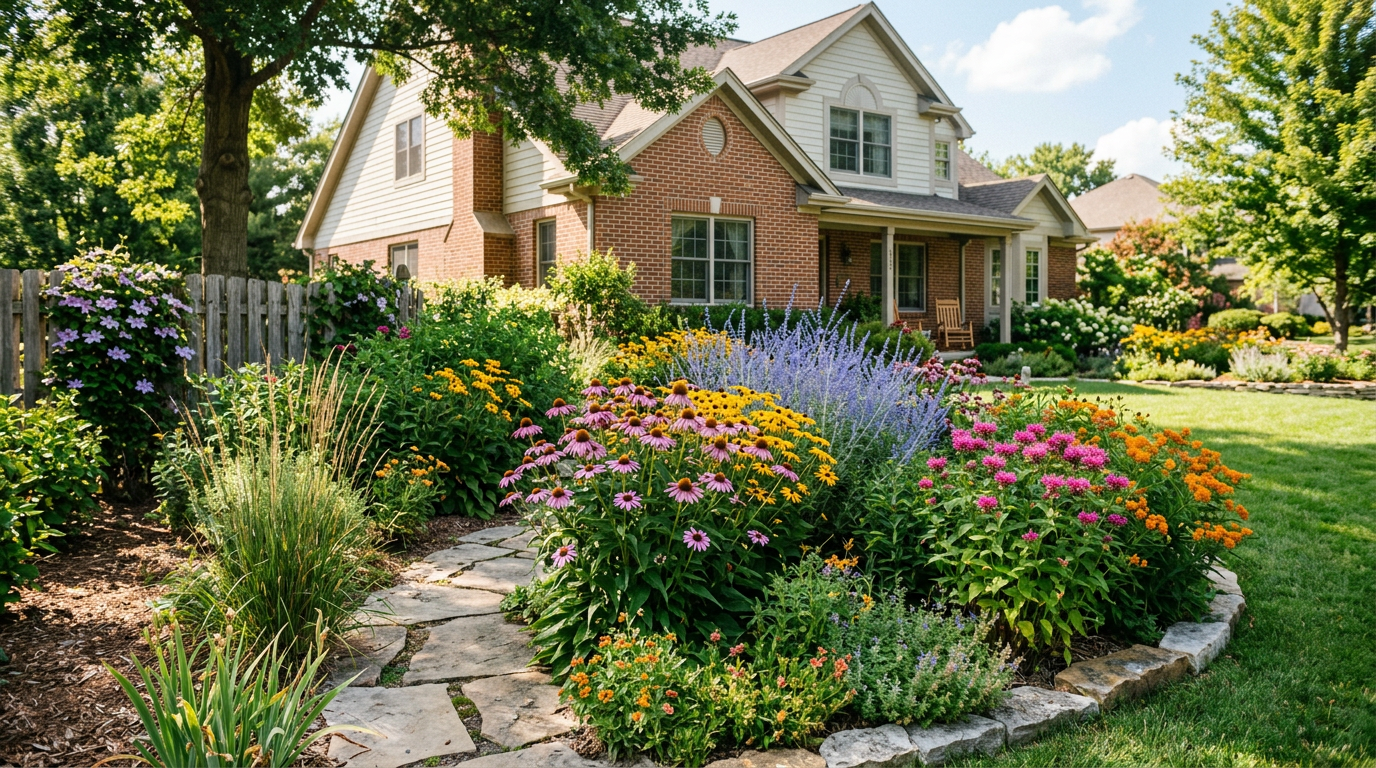
We’ve all been there. You buy a gorgeous plant labeled 'full sun' at the big box store, you stick it in that scorching spot by the driveway in your Illinois yard, and you watch it crisp up in a week. It’s a landscaping tragedy in three acts. Here’s the deal: 'full sun' in Illinois isn’t just about sunshine. It's a package deal that includes brutal summer humidity, soil that can be either baked concrete or sticky clay, and winters that send a shiver down your spine.
But that doesn't mean your sun-drenched spots are doomed to be barren wastelands of mulch. Forget the finicky annuals you have to replace every May. We're talking about perennials—the tough, reliable plants that come back year after year. We're going to give you a no-nonsense list of the best Midwest perennials for full sun that actually thrive here in Illinois, from Chicago suburbs to the Shawnee National Forest.
What 'Full Sun' Really Means in Illinois
First, let's get on the same page. In landscaping, 'full sun' universally means a location that receives at least six hours of direct, unfiltered sunlight per day. But as any Illinois gardener knows, our sun hits different.
Our summers bring a combination of high heat and oppressive humidity that can stress plants out. This isn't the dry heat our friends contend with when planning Arizona desert landscapes that don't suck; our plants need to be able to breathe when the air feels like soup. Then there's the soil. Unlike the rocky ground you might find in a New England front yard, our biggest battle in Illinois is often with heavy, dense clay that holds too much water in the spring and bakes into a brick in August.
Finally, our plants have to survive the winter. We sit squarely in USDA Hardiness Zones 5a to 7a, meaning winter temperatures can plummet well below zero. A good sun perennial for Illinois has to be able to handle a deep freeze, thawing cycles, and then get ready to do it all over again. The plants on this list check all those boxes.
Illinois's Native Champions for Full Sun
When in doubt, go native. These plants evolved here. They're built for our soil, our weather, and to support our local pollinators. Planting these is the easiest win you can get.
-
Purple Coneflower (Echinacea purpurea): This is the undisputed champion of the Illinois sun garden. It’s tough, drought-tolerant once established, and its classic pinkish-purple, daisy-like flowers are a magnet for bees and butterflies. They bloom from mid-summer into fall. Don't just stick to the classic; varieties like 'Magnus' offer huge blooms, and 'White Swan' provides a crisp, white alternative. They ask for nothing but sun and reasonably well-drained soil.
-
Black-Eyed Susan (Rudbeckia): If you see a field of gold in Illinois in late summer, it’s probably Rudbeckia. These things are bulletproof. The 'Goldsturm' variety is a classic for a reason, forming a tidy clump and producing a ridiculous number of golden-yellow flowers with a dark brown center. They provide a long season of color and are ridiculously easy to grow from seed or starts.
-
Prairie Blazing Star (Liatris spicata): Want to add some vertical drama? Liatris is your plant. It sends up tall spikes of fuzzy, purple flowers that, unlike most plants, bloom from the top down. This makes them a fascinating spectacle and a buffet for monarch butterflies. They love full sun and are surprisingly tolerant of both moist and dry conditions, making them a great fit for our unpredictable climate.
The Indestructibles: Bombproof Perennials for Illinois
These plants may not all be Illinois natives, but they've proven their mettle in Midwestern gardens for decades. They are the definition of low-maintenance.
-
Daylily (Hemerocallis): If you can kill a daylily, we're almost impressed. These are the ultimate 'plant-it-and-forget-it' perennials. While each flower only lasts a day, they produce a succession of blooms for weeks. For maximum impact, go for a reblooming variety like 'Stella de Oro'. This compact workhorse will give you waves of golden-yellow flowers from late spring until fall. It’s the perfect plant for lining a hot, sunny walkway.
-
Sedum 'Autumn Joy' (Hylotelephium spectabile): This is a plant with four-season interest. It emerges in spring as a neat clump of succulent, light green foliage. By late summer, it forms large broccoli-like heads that open into massive pink flowers, attracting every late-season bee in the county. As fall progresses, the flowers deepen to a beautiful copper-red and persist through winter, providing structure in the snow. It thrives on neglect and hates wet feet, making it perfect for a sunny, dry spot.
-
Russian Sage (Perovskia atriplicifolia): For a cool, airy texture, nothing beats Russian Sage. Its silvery-gray foliage and long wands of lavender-blue flowers create a haze of color from mid-summer to fall. It's incredibly drought-tolerant and deer-resistant. The only catch? Give it space. It likes to spread out and can get floppy if the soil is too rich. Just as a specific Texas lawn care plan is needed for intense heat, Russian Sage is the answer for our sun-baked spots that need a tough-as-nails plant.
How to Prep Your Illinois Clay Soil (This is Not Optional)
Here’s the single most important piece of advice for growing perennials in Illinois: you have to deal with your soil. Most of us are gardening on compacted, heavy clay left behind after construction. This stuff suffocates roots and drains poorly.
Don't fight it; amend it. The magic ingredient is compost. Before planting, spread a 2-to-4-inch layer of good quality compost over your new garden bed and work it into the top 6-8 inches of soil with a spade or tiller. This one-time effort will permanently improve soil structure, aeration, and drainage.
According to the University of Illinois Extension, much of our state's native soil is rich, but residential development often leaves us with compacted subsoil. Improving this requires adding organic matter like compost, which dramatically increases water infiltration and gives perennial roots the oxygen and drainage they need to thrive. For a small fee, you can even send a soil sample to the U of I Extension for a detailed analysis of what your specific yard needs. (Source: https://extension.illinois.edu/soil/soil-testing)
You can buy bags of compost at any garden center, but for a new bed, it’s more economical to get it in bulk. A local supplier like Lurvey Garden Center in the Chicago area or a landscape supply yard near you can deliver a cubic yard (enough for about 100 sq. ft.) for roughly $50-$70. It is the best money you will ever spend on your garden.
A No-Nonsense Perennial Bed Design for an Illinois Yard
Let's put this all together. Here’s a simple, can't-miss design for a 10-foot by 4-foot full-sun border that will look great all season.
-
Back Row (Tallest): Plant 2 Russian Sage plants, spaced about 3-4 feet apart. In between them, plant 3 Prairie Blazing Star (Liatris) corms or plants for vertical summer fireworks.
-
Middle Row (Medium): In front of the back row, stagger 3 Purple Coneflowers and 3 Black-Eyed Susans. Mix them up! This will create a full, naturalistic look and provide blooms from early summer to the first frost.
-
Front Row (Shortest): Create a solid border with 5 'Stella de Oro' Daylilies, spaced about 18 inches apart. Their grassy foliage will look great all season, and they'll rebloom consistently. Tuck in 2-3 'Autumn Joy' Sedum plants along the front edge for that crucial late-season punch.
You can find all these plants at a quality local nursery like The Growing Place (Aurora/Naperville) or Gethsemane Garden Center (Chicago). Expect to pay between $15 and $25 for a 1-gallon perennial. It’s an investment, but unlike annuals, this is a one-time purchase.
Fall is a fantastic time to build this bed and plant, right around the time you might be thinking about when to overseed your lawn. The soil is still warm, and the cooler air is less stressful on new transplants, allowing them to establish roots before winter.
Frequently asked
What is the easiest perennial to grow in full sun in Illinois?+
Daylilies (Hemerocallis 'Stella de Oro') or Black-Eyed Susans (Rudbeckia) are your best bets. Both are extremely forgiving of soil conditions, drought-tolerant once established, and require almost no care to put on a brilliant show year after year. They're the definition of 'plant it and forget it'.
When is the best time to plant perennials in Illinois?+
The best times are spring (after the last frost, typically mid-April to mid-May) and early fall (September to early October). Fall planting gives roots time to establish before the ground freezes, while spring planting allows them a full season to grow before winter.
Do I need to fertilize my sun perennials in Illinois?+
Generally, no. Most of these tough perennials, especially the natives, thrive in average soil. Adding too much fertilizer can lead to weak, floppy growth and fewer flowers. A top-dressing of compost in the spring is all the nutrient boost they'll ever need.
How do I water new perennials in full sun?+
For the first season, water new plants deeply once or twice a week, especially during hot, dry spells. The goal is to encourage deep root growth. After the first year, most of these recommended plants will be quite drought-tolerant and only need water during extreme drought.
What are some good companion plants for these sun lovers?+
Ornamental grasses like Little Bluestem (Schizachyrium scoparium) or Prairie Dropseed (Sporobolus heterolepis) are fantastic companions. They add texture, movement, and four-season interest, and they share the same sun and soil requirements as the perennials on our list.