
Midwest Perennials for Full Sun in Illinois Gardens
Stop wasting money on annuals that can't handle the heat. We're breaking down the toughest, sun-loving perennials that will actually survive and thrive in your Illinois garden, year after year.
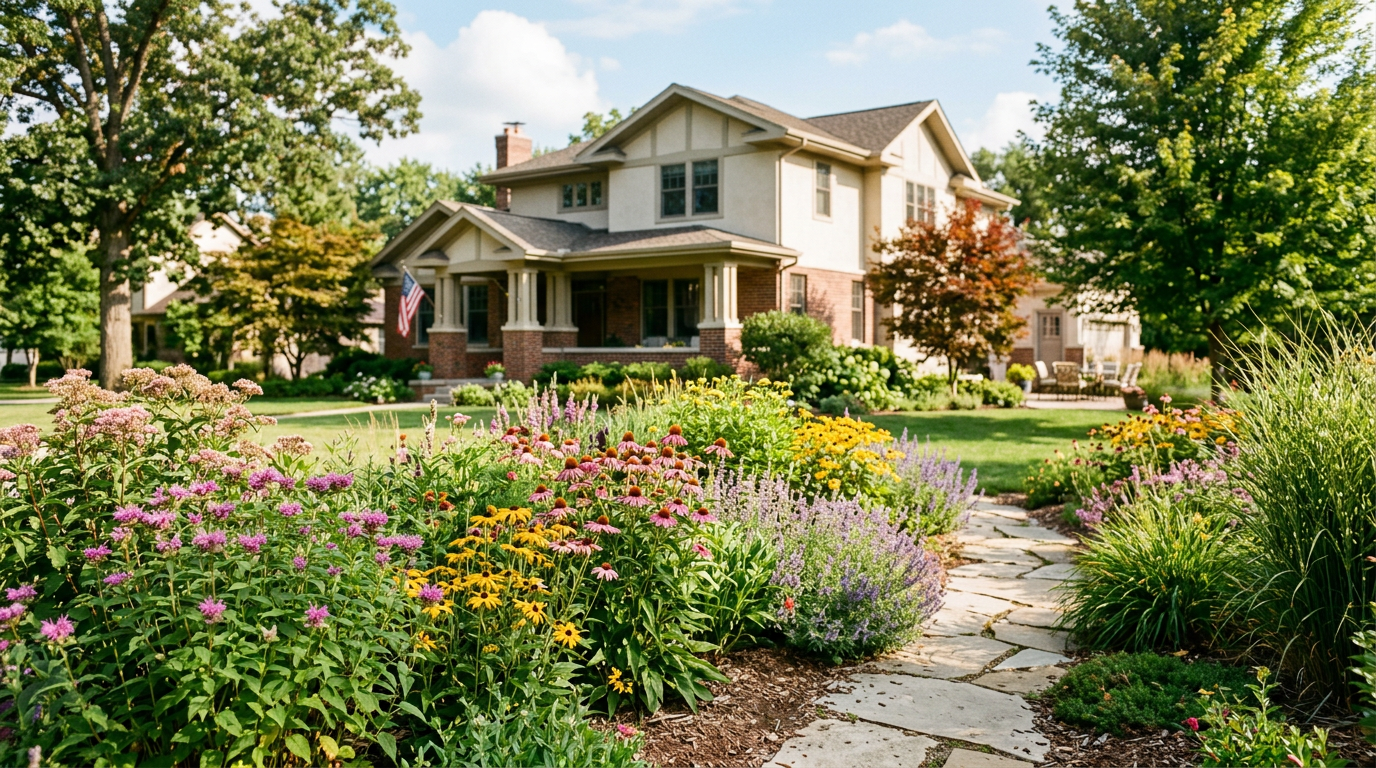
Let's be honest. Planting a full-sun garden in Illinois can feel like a gamble. You spend a beautiful May weekend digging, planting, and mulching, only to watch half your investment wither into sad, crispy stalks by mid-August. We've been there. The combination of scorching sun, thick humidity, and our infamous clay soil is a triple-threat that sends lesser plants to an early grave. But it doesn't have to be this way. The secret isn't more water or more fertilizer; it's choosing the right plants from the start. We're talking about tough-as-nails Midwest perennials for full sun that look at an Illinois summer and ask, "Is that all you've got?"
This isn't a list of delicate, fussy flowers. This is a battle-tested roster of plants that will give you years of color, texture, and beauty without demanding your constant attention. Welcome to the no-nonsense guide to a thriving full-sun perennial garden in the Prairie State.
Understanding "Full Sun" in Illinois
When a plant tag says "full sun," it means at least six hours of direct, unfiltered sunlight per day. But in Illinois, those six hours are different. It's not the dry, baking heat you'd find with Arizona desert landscaping ideas. Our sun comes with a side of oppressive humidity, which can be just as stressful for plants. The sun in June is intense; the sun in August is a blowtorch.
Your garden's soil is the other half of the equation. From the heavy clay around Chicagoland to the richer loam downstate, Illinois soil varies. Most of us, however, are dealing with some level of clay. It holds moisture, which is great during a dry spell, but it drains poorly, which can lead to root rot during a wet spring. The best perennials for our area can handle both extremes.
The Unkillables: 5 Bulletproof Perennials for Illinois Sun
We call these the "unkillables" for a reason. They're reliable, widely available at Illinois garden centers like Platt Hill Nursery or Chalet, and they perform beautifully. If you're starting a new bed, start here.
-
Purple Coneflower (Echinacea purpurea)
- Why it Works: This is the quintessential prairie native. It loves sun, tolerates drought once established, and its deep taproot punches right through clay soil. Butterflies and bees go nuts for it, and the seed heads provide winter interest for birds.
- Details: Blooms mid-summer to fall. Grows 2-4 feet tall. Cultivars like 'Magnus' are classics, but 'PowWow Wild Berry' offers intense color on a more compact plant.
- Price Check: Expect to pay $18-$25 for a healthy 1-gallon plant.
-
Black-Eyed Susan (Rudbeckia hirta/fulgida)
- Why it Works: Nothing screams "summer" like a mass of golden-yellow Black-Eyed Susans. They are ridiculously cheerful and equally tough. The 'Goldsturm' variety is a workhorse that spreads to form a dense, weed-suppressing clump.
- Details: Blooms summer through early fall. Reaches 2-3 feet tall. They self-seed politely, giving you more plants for free over time.
- Price Check: Around $15-$22 for a 1-gallon pot.
-
'May Night' Salvia (Salvia nemorosa 'Mainacht')
- Why it Works: If you want a shot of deep, intense violet-blue, this is your plant. It's drought-tolerant, deer-resistant, and if you shear it back after its first flush of blooms in early summer, it will often re-bloom for you in the fall.
- Details: Blooms late spring to early summer. Grows 18-24 inches tall. It forms a tidy clump that doesn't get floppy.
- Price Check: A 1-gallon 'May Night' will run you about $16-$24.
-
'Autumn Joy' Sedum (Hylotelephium 'Herbstfreude')
- Why it Works: This is the ultimate four-season perennial. It emerges in spring as neat clusters of fleshy green leaves, forms broccoli-like heads in summer that bloom pink in late summer, and age to a beautiful rusty red in fall. We leave the dried seed heads up all winter for structure in the snow.
- Details: Blooms late summer to fall. About 2 feet tall and wide. It needs good drainage, so it's perfect for a sunny slope or a bed amended with compost.
- Price Check: Typically $15-$20 for a 1-gallon plant.
-
Catmint (Nepeta x faasseniana 'Walker's Low')
- Why it Works: Don't let the delicate look fool you; this plant is ironclad. It produces a cloud of lavender-blue flowers for months on end. It's drought-tolerant, pest-free, and deer and rabbits ignore it. It's a fantastic, soft-textured plant to edge a border.
- Details: Blooms from late spring through summer. Despite the name 'Walker's Low', it can get 2-3 feet tall and wide. Shear it by a third in mid-summer to keep it compact and encourage more blooms.
- Price Check: Around $14-$20 per gallon.
Planting for Success in Your Illinois Garden
You can't just dig a hole in our concrete-like clay and expect great results. You need to give your new plants a fighting chance. Here’s our foolproof method:
- Amend, Amend, Amend: For every hole you dig, you should be adding about 30% compost. We're big fans of Purple Cow Classic Compost, which you can find at local suppliers like Lurvey Garden Center. This improves drainage, adds nutrients, and breaks up the heavy clay structure over time.
- Plant High: Dig a hole that's just as deep as the pot, but twice as wide. Place the plant in the hole so that the top of its root ball is about an inch above the surrounding soil level. Then, mound your amended soil up to meet it. This prevents water from pooling around the crown of the plant and causing rot.
- Mulch is Mandatory: Apply a 2-3 inch layer of hardwood mulch around your plants, but don't pile it up against the stems (no "volcano mulching"). Mulch conserves water, keeps the soil temperature even, and suppresses weeds.
- Water Smart: New perennials need consistent water for their first season. Water deeply once or twice a week, rather than a light sprinkle every day. This encourages deep roots, which is the key to drought tolerance later on.
Supporting Local Ecosystems in Illinois
Choosing the right perennials isn't just about aesthetics; it's about supporting our local environment. Many of the toughest sun-lovers are also native to the Illinois prairie. According to the Illinois Department of Natural Resources, native plant gardens provide crucial food and habitat for pollinators like bees, butterflies, and birds, whose populations are under stress. Planting natives like Coneflower, Bee Balm (Monarda), and Blazing Star (Liatris) is a direct investment in the health of our local ecosystem. Your yard becomes a beautiful, living part of the Prairie State. (Source: https://www2.illinois.gov/dnr/education/Pages/ILNatives.aspx)
A Year in the Life: Seasonal Care for Illinois Perennials
Unlike the year-round demands of a Florida lawn care schedule, perennial care in Illinois is concentrated in a few key moments.
- Spring: As soon as the ground thaws and you see new growth, cut back all the old, dead stems from last year. This is also a good time to apply a top-dressing of compost and divide any overgrown clumps of plants like Hostas or Daylilies.
- Summer: The main job is deadheading—snipping off spent flowers from plants like Salvia and Catmint to encourage a second wave of blooms. Water deeply during any extended dry spells, typically once a week is plenty for established plants.
- Fall: Stop deadheading plants like Coneflower and Sedum to allow them to form seed heads for winter interest and bird food. After a few hard frosts, you can cut back most perennials to about 4-6 inches. Deciding when to overseed your lawn in fall is a key task, and as you're doing that, take a few minutes to assess your perennial beds for the year ahead.
- Winter: Relax. The garden is sleeping. Enjoy the structural beauty of the grasses and seed heads against the snow.
One year, we tried to create a formal English cottage garden in a full-sun bed in Naperville. Big mistake. We planted delphiniums and lupines that require cool summers and rich, moist soil. They looked great in May and were completely fried by July. We learned the hard way: don't fight the climate, work with it. By switching to the tough Midwestern perennials on this list, we created a garden that was not only more beautiful but about 80% less work. Choose the right plants, and your Illinois garden will be the envy of the neighborhood, not a source of frustration.
Frequently asked
What is the lowest maintenance perennial for full sun in Illinois?+
'Autumn Joy' Sedum is a top contender. Once established, it needs virtually no care. It's drought-tolerant, doesn't need deadheading, isn't bothered by pests, and provides visual interest in all four seasons. Just plant it in a sunny spot with decent drainage and leave it alone.
When is the best time to plant perennials in Illinois?+
The two best windows for planting perennials in Illinois are spring (after the last frost, typically May) and early fall (September to early October). Fall planting allows the roots to establish in warm soil before winter, giving them a strong start for the following spring.
Do I need to water these full-sun perennials every day?+
No, and you shouldn't. For the first season, water deeply 1-2 times per week. Once established (after one year), these drought-tolerant perennials only need supplemental water during prolonged heatwaves with no rain for 2+ weeks. Frequent, shallow watering encourages weak root systems.
How can I improve heavy clay soil for perennials?+
The best way to improve clay soil is to amend it with organic matter. Mix a generous amount of compost into the top 6-8 inches of your garden bed. Over time, this improves drainage, aeration, and nutrient content. Avoid adding sand, which can create a concrete-like substance.
What are some good companion plants for Coneflowers and Black-Eyed Susans?+
Ornamental grasses like Little Bluestem (Schizachyrium scoparium) or Prairie Dropseed (Sporobolus heterolepis) are fantastic companions. Their fine texture contrasts beautifully with the bold flowers. Catmint (Nepeta) and 'May Night' Salvia also pair well, adding a cool blue/purple contrast to the warm yellows and pinks.