
Top Midwest Perennials for Full Sun in Illinois Gardens
Don't gamble on plants that can't handle a hot Illinois summer. Here are the bulletproof, full-sun perennials that will actually thrive in your garden, from Chicago to Carbondale.
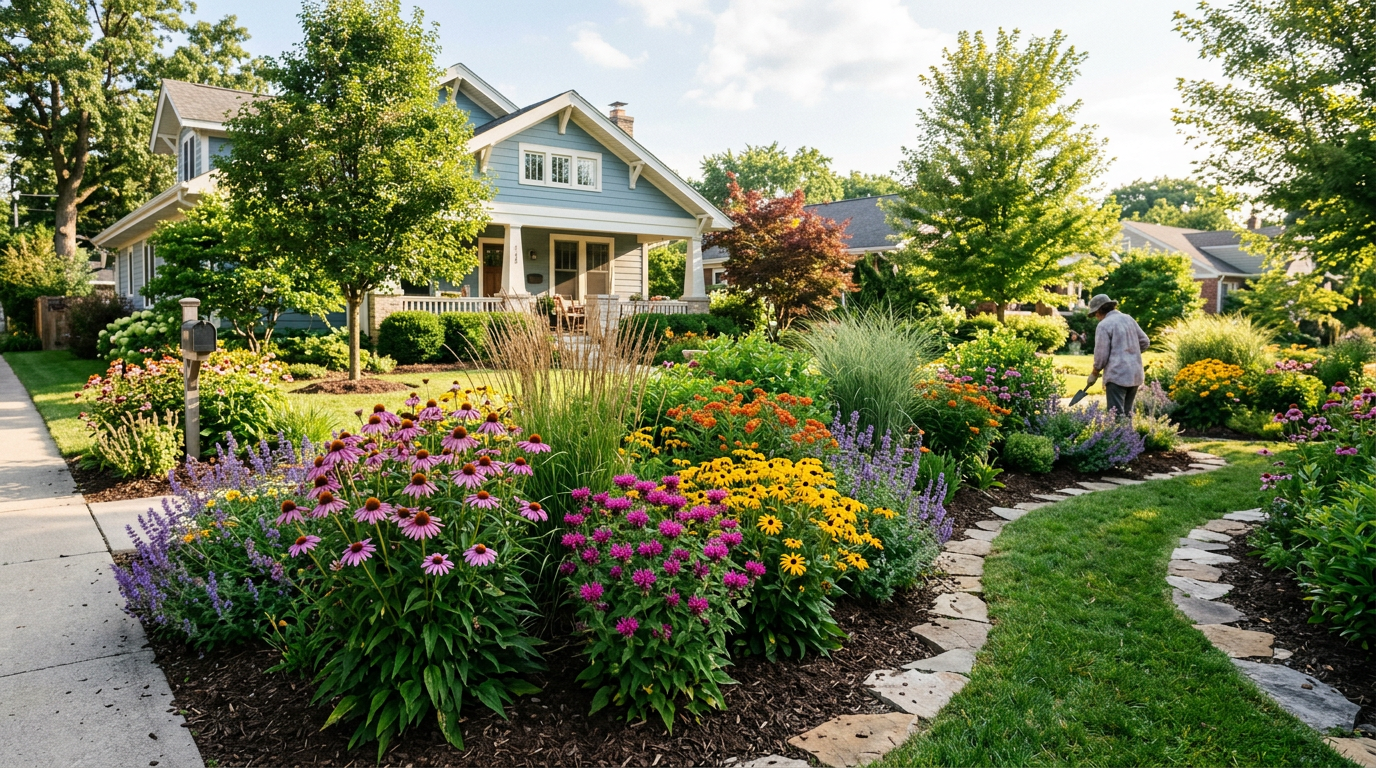
Let's get one thing straight: finding Midwest perennials for full sun isn't the hard part. The challenge is finding plants that can survive the specific brand of punishment we dish out here in Illinois. We're talking about soupy humidity in August, bone-chilling polar vortexes in January, and soil that's often more clay brick than loam. If you've ever planted a 'full sun' perennial from a big box store only to watch it wither by July 4th, you know the pain. We're here to stop that.
We're not gatekeeping the good stuff. This is your definitive guide to perennials that will not only survive but actually put on a show in a full-sun Illinois garden, year after year.
Understanding Full Sun & Illinois's Climate Challenges
First, let's define our terms. "Full sun" isn't a vague suggestion; it means a spot in your yard that gets a minimum of 6, and ideally 8+, hours of direct, unfiltered sunlight every day. The time of day matters, too—afternoon sun is way more intense than morning sun. Before you spend a dime, watch the spot you want to plant for a full day and time it.
Now, for the Illinois-specific hurdles:
- USDA Hardiness Zones: Most of Illinois falls into Zone 5b (northern half, including Chicago) and Zone 6a (southern half). A sliver of the far south hits 6b. This means our plants need to tolerate winter temperatures dipping as low as -15°F. All our recommendations are hardy to at least Zone 5.
- The Soil: Unless you're blessed with loamy river-bottom soil, you're probably dealing with heavy clay. It holds water (leading to root rot) and gets hard as concrete when dry. Amending is not optional; it's mandatory for success.
- Heat & Humidity: Our summers are no joke. That thick, humid air can be tough on plants susceptible to fungal diseases like powdery mildew. Choosing disease-resistant varieties is key.
According to the Illinois State Climatologist Office, the average Illinois summer (June-August) temperature is 73.6°F, but that number is misleading. It doesn't account for the brutal heat index, with many days feeling well into the 90s or over 100°F, combined with high humidity. This is the real test for our plants, making drought and heat tolerance a top priority. Unlike the dry heat you might find in the Southwest, which calls for its own set of rules you'd see in Arizona desert landscaping ideas, our plants have to handle both heat and moisture.
The Unkillables: Top 5 Full-Sun Perennials for Illinois
We've planted, neglected, and stress-tested countless perennials in our own Central Illinois test beds. These are the ones that consistently come back stronger, demanding little more than a spot in the sun. For pricing, expect to pay around $14 to $25 for a healthy 1-gallon pot at a quality local nursery like Platt Hill Nursery in Bloomingdale or The Growing Place in Naperville.
-
Coneflower (Echinacea purpurea): This is the undisputed champion of the Illinois prairie. Native, tough as nails, and beloved by pollinators. The classic Purple Coneflower is fantastic, but cultivars like 'Magnus' offer bigger blooms, and 'White Swan' provides a crisp, clean look. They bloom from mid-summer through fall and their seed heads provide winter interest and food for finches.
-
Black-Eyed Susan (Rudbeckia fulgida 'Goldsturm'): If you want a massive burst of golden yellow from late summer into fall, this is your plant. 'Goldsturm' is a legendary variety for a reason—it's a reliable, uniform performer that spreads politely to form a beautiful clump. Absolutely zero babying required.
-
Salvia (Salvia 'May Night'): For early season color, nothing beats 'May Night' Salvia. It sends up deep indigo-blue flower spikes in late spring. If you shear it back after the first flush of blooms, you'll often get a second, smaller show later in the summer. It's deer-resistant and shrugs off drought once it's settled in.
-
Russian Sage (Perovskia atriplicifolia): Looking for an airy, silvery-blue haze in the hottest part of the summer? This is it. Russian Sage loves heat and despises wet feet, making it perfect for a sun-baked spot with well-drained soil. It has a wonderful fragrance when you brush past it and requires literally no care other than an early spring chop.
-
Sedum (Hylotelephium 'Autumn Joy'): This plant is a four-season superstar. It emerges in spring with fleshy, succulent-like leaves. By late summer, it forms broccoli-like heads that open into dusty pink flowers, aging to a deep copper-red in the fall. We leave the dried seed heads up all winter for structure in the snow. It's the definition of a set-it-and-forget-it plant.
Planting and Soil Prep: The Secret Sauce for Illinois Gardens
You can buy the best plants in the world, but if you stick them directly into unamended Illinois clay, you're setting them up for failure. Clay soil has poor drainage, and perennial crowns will rot if they sit in cold, wet soil all winter.
Here’s our no-nonsense method:
- Dig a Wide Hole: Don't just dig a hole the size of the pot. Go at least twice as wide and about the same depth. You want to give the roots an easier time spreading out.
- Amend, Amend, Amend: For every shovel of clay you remove, mix it 50/50 with a quality compost. We swear by products like Bumper Crop Soil Builder (~$12 a bag) or a good local mushroom compost. This improves drainage and adds vital organic matter.
- Check the Depth: Place the plant in the hole. The top of the root ball should be level with, or even slightly higher than, the surrounding soil. Planting too deep is a death sentence for most perennials.
- Backfill & Water: Fill the hole with your amended soil mix, pressing gently to remove air pockets. Water it in thoroughly to settle the soil around the roots.
- Mulch: Apply a 2-inch layer of hardwood mulch around the plant, but don't pile it up against the stem. Mulch helps retain moisture, suppress weeds, and keep the soil temperature even.
Long-Season Bloomers for Color All Summer in Illinois
While the 'Unkillables' are your foundation, you'll want to layer in other plants for continuous color. The goal is to plan for a sequence of blooms so something is always the star of the show. The watering needs for these are similar to what you might see in a hot, humid climate like one requiring a Florida lawn care schedule, where you water deeply but infrequently to avoid fungus.
- Yarrow (Achillea millefolium): Cultivars like 'Moonshine' (yellow) or 'Paprika' (red) are long-blooming and unfazed by heat. Their feathery foliage is a great texture contrast.
- Catmint (Nepeta x faassenii 'Walker's Low'): An absolute workhorse. It starts blooming in late spring with lavender-blue flowers and will re-bloom all summer if you give it a mid-season haircut. It's soft, billowy, and pollinators go nuts for it.
- Coreopsis (Coreopsis verticillata 'Moonbeam'): For a delicate texture and pale yellow flowers that bloom for months, 'Moonbeam' is a classic. It's airy and plays well with others, filling in gaps beautifully.
- Blazing Star (Liatris spicata): A native Illinois prairie plant with unique, bottle-brush spikes of purple flowers that bloom from the top down. It's a vertical accent that attracts butterflies like a magnet.
A Note on Watering and Midwest Humidity
"Drought-tolerant" is the most misunderstood term in gardening. It means the plant can survive periods of drought once its root system is fully established. This takes a full season, sometimes two.
Year 1: Water your new perennials deeply once or twice a week, more if it's exceptionally hot and dry. Let the soil dry out slightly between waterings. The goal is to encourage deep root growth.
Year 2 and beyond: You can relax. A healthy, established perennial bed will likely only need supplemental water during prolonged droughts (2+ weeks with no rain). Watering established plants too often in our humid climate is a recipe for powdery mildew and root rot.
Managing water in a hot climate is a skill. While our soils are different, the principles of deep, infrequent watering are shared with gardeners following a lawn care guide for Texas, who also battle extreme heat.
Frequently asked
When is the best time to plant perennials in Illinois?+
The two best windows for planting perennials in Illinois are spring (after the last frost, typically May) and early fall (September to early October). Fall planting gives the roots time to establish before the ground freezes, often leading to more robust plants the following spring.
How do I amend heavy clay soil for perennials?+
The best way to amend Illinois clay is to incorporate organic matter. Mix the excavated soil 50/50 with compost, leaf mold, or other well-rotted organic material. This improves drainage and aeration, preventing root rot and making it easier for roots to grow.
What are some full-sun perennials native to Illinois?+
Illinois has many beautiful native perennials for full sun. Top choices include Purple Coneflower (Echinacea purpurea), Blazing Star (Liatris spicata), Black-Eyed Susan (Rudbeckia hirta), and native grasses like Prairie Dropseed (Sporobolus heterolepis). These are perfectly adapted to our climate and support local pollinators.
How often should I water new full-sun perennials in their first year?+
For the first season, water newly planted perennials deeply 1-2 times per week. Check the soil first; if the top couple of inches are dry, it's time to water. This consistent moisture is crucial for establishing a strong root system that will sustain the plant for years.
Do I need to fertilize my full-sun perennials in Illinois?+
Generally, no. If you amend your soil with compost at planting time, that's usually enough. Most of these tough perennials thrive in lean soil and fertilizing can lead to weak, floppy growth and fewer flowers. A top-dressing of compost every few years is all they need.