
Lawn Care in Texas: A No-Nonsense Seasonal Guide
Keeping a lawn alive in Texas isn't for the faint of heart. Here's our brutally honest, season-by-season playbook for a yard that doesn't quit, even when the heat does.
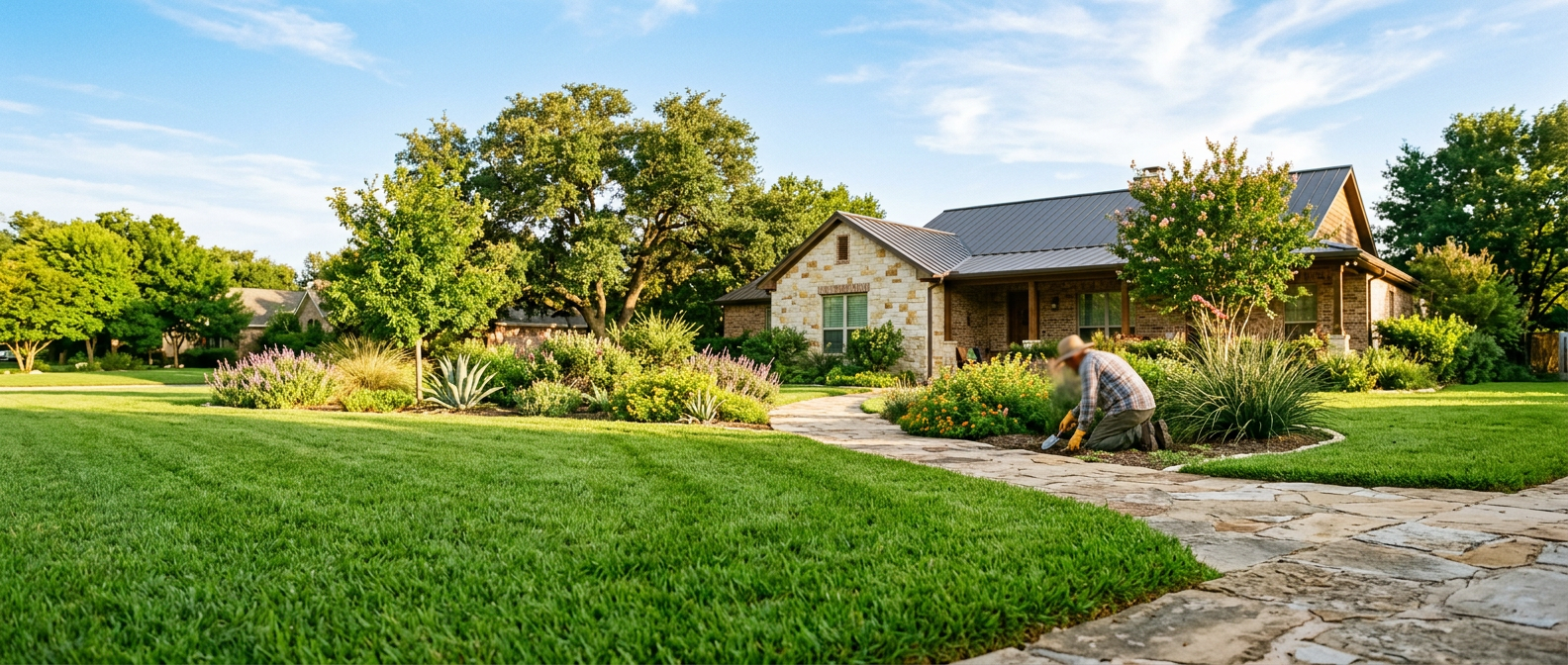
Let's be blunt: managing lawn care in Texas is a special kind of challenge. It’s a state where the sun can cook your grass to a crisp in July and a surprise freeze can zap it in February. Your neighbor’s perfect green carpet isn't magic—it's a combination of strategy, timing, and knowing when to fight and when to let the lawn sleep.
Forget the generic advice you read on national blogs. We're here to give you the specific, season-by-season game plan for a Texas-tough lawn that actually survives, and even thrives. We’re talking about the right grass, the right schedule, and the right products to win the war against heat, drought, and weeds.
First, Pick Your Fighter: Best Grass Types for Texas
Your success starts with what's actually growing in your yard. Trying to grow the wrong grass in the wrong place is like trying to nail jell-o to a tree. In Texas, you're almost certainly dealing with one of these two champions, so identify yours and treat it right.
- St. Augustine: This is the king of classic Texas lawns, especially in established neighborhoods with big trees. It has broad, flat blades and a coarse texture.
- Pros: It's the most shade-tolerant of the warm-season grasses. If you have large oak or pecan trees, this is your guy. It creates a thick, dense turf that can crowd out weeds.
- Cons: It's thirsty and needs consistent watering to stay green. It's also susceptible to chinch bugs and fungal diseases like gray leaf spot, especially in the humid regions around Houston and the Gulf Coast.
- Bermuda: If your yard is a sun-drenched patch of Lone Star real estate, you probably have Bermuda grass. It has fine blades and spreads aggressively via runners (stolons and rhizomes).
- Pros: It's extremely drought-tolerant and loves the heat and full sun. It can handle heavy traffic, making it great for families with kids and pets.
- Cons: It has zero shade tolerance. It will thin out and die under a tree. It’s also an aggressive grower, which means it can easily invade flower beds if not edged properly.
There's also Zoysia, which is a premium option gaining popularity. It has good drought and shade tolerance, but it's slow to establish and can be more expensive. For most of us, it's a battle between St. Augustine and Bermuda.
The Texas Lawn Care Calendar: A Seasonal Breakdown
Timing is everything. Doing the right thing at the wrong time can do more harm than good. Here's your year-round schedule.
Spring (March - May)
This is the wake-up call. As soil temperatures climb into the 60s, your dormant lawn starts to stir.
- The First Mow: Once the threat of a hard frost is gone, give your lawn a low mow to remove dead winter thatch. For Bermuda, you can "scalp" it down to the dirt to encourage fresh, green growth. Do not scalp St. Augustine; just mow it at a normal-to-low height.
- Pre-Emergent Herbicides: This is non-negotiable. Before soil temps hit 55°F consistently, apply a pre-emergent to prevent crabgrass and other summer weeds. Products containing Prodiamine (like
Prodiamine 65 WDG) or Dithiopyr (Dimension 2EW) are what the pros use. A 5 lb bag of granularLesco Stonewall 0-0-7from Home Depot runs about $25 and will cover 5,000 sq ft, stopping weeds before they even start. - Fertilize: Wait until the grass is actively growing (i.e., you've mowed it at least twice) before you fertilize. Applying too early just feeds the weeds. Use a slow-release fertilizer with a 3-1-2 or 4-1-2 ratio. We've had great results with
Lesco 30-0-10 Texas Turf Fertilizer.
Summer (June - August)
Welcome to survival mode. Your goal isn't necessarily a golf-course-green lawn; it's keeping the grass alive until fall.
- Raise Mower Height: Mow high. For St. Augustine, aim for 3-4 inches. For Bermuda, 2-2.5 inches. The taller blades shade the soil, keeping it cooler and reducing water evaporation. This is one of the most critical summer-lawn-survival tips we can offer.
- Water Deeply: Water is the main event. We cover this more below, but the key is deep and infrequent watering to encourage deep roots that can withstand the brutal Texas heat.
- Pest Control: Be vigilant. In St. Augustine, look for dry, yellowing patches, especially near concrete. This is a classic sign of chinch bugs. For Bermuda, watch out for grub worms. A broad-spectrum insecticide like
Spectracide Triazicide Insect Killer for Lawns(about $15 for a concentrate bottle) is a good weapon to have in your garage. - Hold the Fertilizer: Don't push new growth with high-nitrogen fertilizers in the peak of summer. It stresses the grass. If you must fertilize, use a very light application or an organic product like
Milorganite 6-4-0.
Fall (September - November)
This is the most important season for lawn care in Texas. The heat breaks, and the grass uses this time to recover and store energy for winter.
- Fertilize (Again): Apply a fall-focused fertilizer around October. This is the most important feeding of the year. It helps the roots recover from summer stress and prepare for winter dormancy. The same spring fertilizer works fine here.
- Second Pre-Emergent: Yes, again. Around mid-September to early October, apply a pre-emergent to stop winter weeds like poa annua (annual bluegrass) and henbit. Use the same product you used in the spring.
- Overseeding (Bermuda only): If you have Bermuda grass and want a green lawn all winter, you can overseed with perennial ryegrass in October. Be warned: ryegrass competes with your Bermuda for resources in the spring green-up, so many purists skip this.
Winter (December - February)
The lawn is sleeping. Let it rest.
- Mow Less: You may only need to mow once a month, if at all, just to keep things tidy and mulch any fallen leaves.
- Spot-Treat Weeds: Winter is a great time to spot-treat broadleaf weeds like clover and dandelions that your pre-emergent might have missed. A simple 2,4-D based liquid herbicide works wonders on a mild winter day.
- Plan Ahead: This is the perfect time to get a soil test from the Texas A&M AgriLife Extension Service. For about $15, they'll tell you exactly what your soil needs, so you can stop guessing with fertilizers. It's the smartest money you'll spend on your lawn all year.
Watering a Lawn in Texas Without Going Broke
Water bills in Texas can be shocking. Forget watering every day. It's wasteful and creates weak, shallow-rooted grass.
The Rule: Water 1 inch per week, delivered in one or two sessions. That's it.
How do you measure an inch? The tuna can test. Place a few empty tuna or cat food cans around your yard and turn on the sprinklers. Time how long it takes to fill them to the 1-inch mark. That's your watering time.
Water in the early morning (4 AM to 8 AM) to minimize evaporation and prevent fungus. And always check local water restrictions. Cities like Austin, San Antonio, and those in the DFW metroplex often have strict 1-day-a-week watering schedules during the summer. Your city's website has the final say.
Mowing for Health, Not Just for Looks in Texas
Your mower can be a tool for health or a weapon of destruction. Proper mowing technique is crucial.
- The 1/3 Rule: Never remove more than one-third of the grass blade at a time. If your target is 3 inches, mow when the grass hits 4.5 inches.
- Sharpen Your Blades: Dull blades tear grass, leaving it with ragged edges that invite disease. We sharpen our mower blades every 10-12 hours of use. A simple file or a bench grinder gets it done.
- Mulch, Don't Bag: Mulching the clippings returns nutrients to the soil. Only bag if you're dealing with a disease outbreak or have let the lawn get way too long.
According to the Texas Water Development Board, outdoor landscape irrigation can account for 30 to 60 percent of a household's total water consumption, especially in the hotter months. A typical sprinkler system uses about 1,000 to 2,500 gallons of water per watering session. By following the deep-and-infrequent method and cutting back from three shallow waterings a week to one deep one, a homeowner with an average-sized lawn can save over 50,000 gallons of water per year. That's hundreds of dollars back in your pocket. (Source: https://www.twdb.texas.gov/conservation/education/doc/Home_Water_Works-English.pdf)
Lawn care in Texas is a marathon, not a sprint. Follow this seasonal guide, pay attention to what your specific lawn is telling you, and you'll have a yard that not only survives the Texas climate but stands out as the best on the block. It just takes a little bit of know-how and a willingness to do the right work at the right time.
Frequently asked
How often should you water your lawn in Texas?+
Water deeply 1-2 times per week during the hot growing season, providing a total of 1 inch of water. Check for local restrictions. Watering in the early morning minimizes evaporation and prevents fungal growth. Avoid frequent, shallow watering which creates weak roots.
When should I fertilize my lawn in Texas?+
The best times are mid-spring (after the lawn is actively growing) and fall (to recover from summer stress). Use a slow-release nitrogen fertilizer. Avoid heavy fertilization in the peak of summer heat, as it can burn the lawn and encourage disease.
What is the best grass for a lawn in Texas?+
Bermuda grass is excellent for full-sun areas due to its superior drought and heat tolerance. St. Augustine is the top choice for lawns with partial shade from trees. Zoysia is a premium, durable option that balances sun and shade tolerance.
How much does professional lawn care cost in Texas?+
Basic mowing services typically range from $40-$70 per visit for an average-sized yard. Comprehensive plans including fertilization and weed control from companies like TruGreen or local Texas pros can cost $50-$90 per month. Prices vary by lawn size and specific services.
What's the most important thing to do for a Texas lawn in the fall?+
The two most critical fall tasks are applying a balanced fertilizer to help the roots recover and prepare for winter, and putting down a pre-emergent herbicide to prevent winter weeds like poa annua from taking over your dormant lawn.