
Landscaping Ideas for Desert Climates: A Pro's Guide
Stop fighting your environment and start working with it. We're breaking down the essential landscaping ideas for desert climates that deliver huge results with less water and less work.
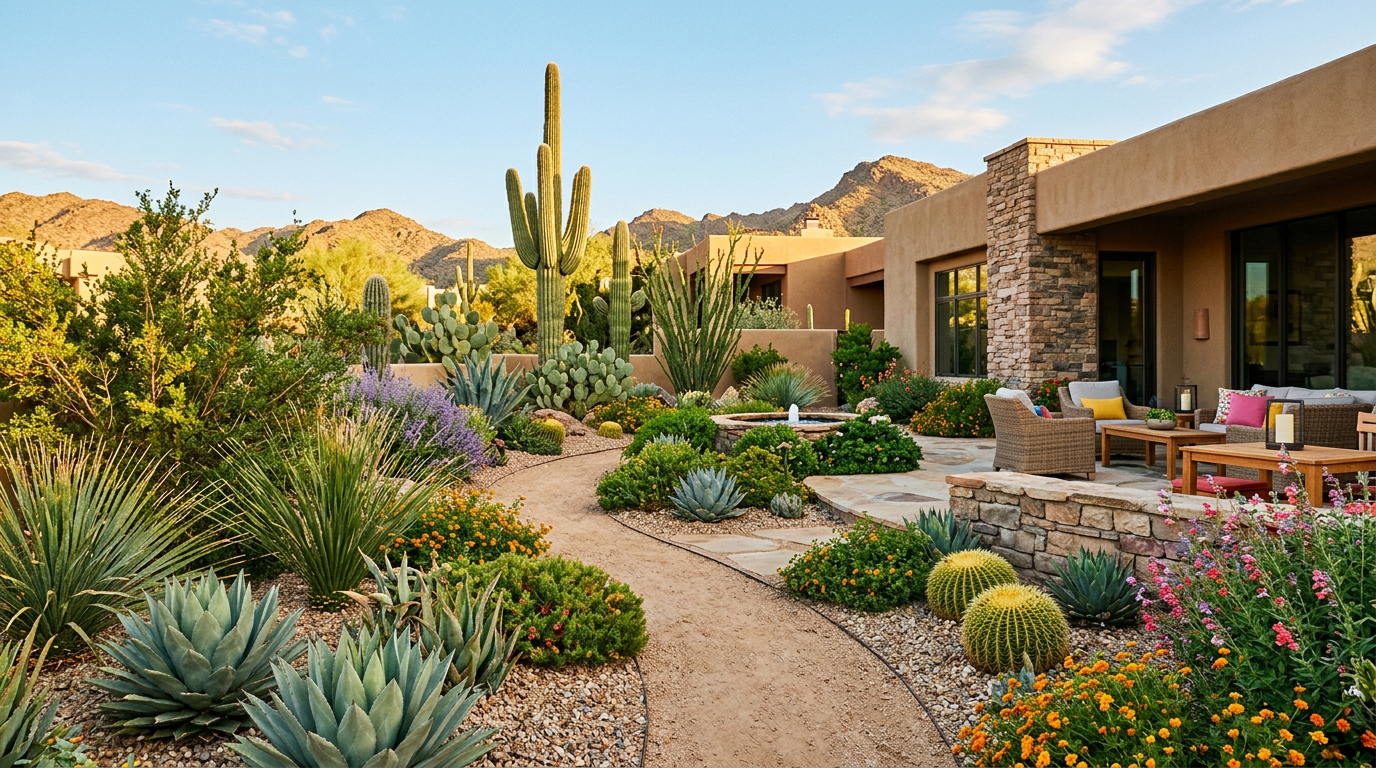
Let's get one thing straight: a desert landscape is not a punishment. It's not a dusty, barren wasteland where all your gardening dreams go to die. Frankly, we're tired of people thinking their only option is a sea of beige rocks and one sad, lonely cactus. That's gatekeeping, and it's nonsense.
A vibrant, stunning, and low-maintenance yard in a desert climate is 100% achievable. The secret is to stop fighting the sun and heat and start working with it. You have to unlearn everything you see in soggy, temperate climates and embrace a whole new set of rules.
This is your no-nonsense guide to creating a desert landscape that looks like a million bucks without costing that much in water bills.
Ditch the Turf, Embrace the Texture
The single biggest mistake we see in desert landscaping is the stubborn devotion to a traditional grass lawn. A lush, green carpet of Kentucky Bluegrass in a place that gets 8 inches of rain a year is an act of war against nature. And you will lose.
You'll lose money on water, lose weekends to fertilizing and mowing, and lose your mind trying to keep it from turning into a crispy, brown mat. There are better ways.
Xeriscaping isn't a scary word; it just means landscaping with low-water methods. Instead of a lawn, consider:
- Gravel & Decomposed Granite (DG): These materials create a clean, modern base for your landscape. They come in a range of colors, from warm golds to cool grays, and provide a perfect backdrop for specimen plants.
- Native Groundcovers: If you crave a bit of green, choose something that belongs. Silver Carpet (Dymondia margaretae) is a super-tough, silvery-green carpet that needs a fraction of the water of turf. Creeping Thyme is another great option that releases a wonderful scent when walked on.
- A Smaller "Lawn": If you absolutely need a patch of grass for kids or pets, keep it small and strategic. Use a tough, drought-tolerant variety like Buffalo Grass. Some folks in arid parts of Texas have had success with specific Zoysia cultivars, but it still requires a commitment. You can read more in our Texas lawn care guide.
Giving up the lawn is the first, most important step. It frees up water, time, and money for things that actually look good in the desert. For a deep dive into this approach, our guide to Southern California drought landscaping has you covered.
The Plant Palette: Tough as Nails, Pretty as a Picture
Your new motto is: "Right Plant, Right Place." Stop trying to force hydrangeas to survive a 110-degree afternoon. Choose plants that evolved to thrive in these exact conditions. They'll reward you by, well, not dying.
Here are our go-to categories for a killer desert plant palette:
- Structural Icons: These are the big, bold plants that create your landscape's architecture. Think Ocotillo with its whip-like wands that burst into fiery orange flowers, or a sculptural Joshua Tree if your climate is right. A multi-trunk Palo Verde tree offers incredible filtered shade and a spectacular spring show of yellow flowers.
- Flowering Beauties: Yes, you can have color! Masses of Desert Marigold provide waves of cheerful yellow. Penstemons, especially the 'Firecracker' variety, send up spikes of brilliant red that hummingbirds love. And don't forget Bougainvillea—while it needs a bit more water, its explosion of color against a stucco wall is iconic for a reason.
- Succulents & Agaves: This is where desert gardens really shine. Instead of a dozen delicate annuals, invest in one magnificent Whale's Tongue Agave (Agave ovatifolia). It's a living sculpture. A 5-gallon specimen might set you back $75 at a specialty nursery, but it will anchor your garden bed for years. Mix in smaller succulents like Echeveria and Sedum for variety.
- Grasses: Ornamental grasses like Deer Grass (Muhlenbergia rigens) add soft texture and movement to the garden, beautifully contrasting with the sharp lines of agaves and cacti.
Building a plant list can feel overwhelming. A great place to start is by seeing what works in a specific region, like we outline in our guide to Arizona desert landscaping ideas.
Hardscaping: Your New Best Friend
In a desert garden, hardscape—the non-living elements—is just as important as the plants. It provides the bones of your design.
- Paths & Patios: Use flagstone, concrete pavers, or decomposed granite to create usable outdoor spaces. A well-placed patio extends your living area and gives you a place to enjoy those cool desert evenings.
- Boulders & Rocks: A few strategically placed boulders can add immense character and a sense of permanence. We once spent a whole Saturday maneuvering three basalt columns into a client's yard. It was brutal work, but the result was a Stonehenge-level focal point. Group them in odd numbers (1, 3, 5) for a more natural look.
- Walls & Raised Beds: Retaining walls made from stacked stone or steel can turn a boring slope into a multi-level terraced garden. Raised beds are also great for controlling soil and drainage, especially if you want to try growing vegetables.
- Dry River Beds: A classic desert design trick. Create a meandering path with smooth, gray river rock of various sizes. It looks fantastic and provides a channel for water to flow during those rare but intense monsoon downpours.
A ton of 3/8" pea gravel costs about $70-$100 and will cover roughly 100 sq ft at a 2-inch depth. It's one of the most cost-effective ways to cover ground.
Water Wisely: The Art of Desert Irrigation
Your hose is not a fire hydrant. Blasting your plants every day with a shower of water is wasteful and ineffective. Deep, infrequent watering is the key. This encourages plants to send their roots deep into the soil in search of moisture, making them tougher and more resilient.
There is only one gold standard for desert irrigation: drip systems.
A drip system consists of flexible tubing with small emitters that release water slowly and directly onto the soil at the base of each plant. This eliminates runoff and minimizes evaporation. According to the EPA, a properly installed drip irrigation system can be over 90% efficient, compared to traditional sprinklers which can waste up to 50% of the water they use to wind and evaporation (Source: https://www.epa.gov/watersense/watering-tips).
Setting up a system is a great DIY project. A starter kit like the Rain Bird Drip Irrigation Gardener's Kit (Model DVGKIT) costs around $50 and has everything you need to get going. Pair it with a smart timer, and you can set a “deep soak” schedule for your plants to run in the early morning hours, once or twice a week, depending on the season.
The Unsung Hero: Rock Mulch
In wetter climates, people use wood chips as mulch. In the desert, that's a recipe for fast decomposition and a potential fire hazard. The undisputed champion of desert mulch is rock.
Spreading a 2-3 inch layer of gravel or crushed rock over your planting beds does several amazing things:
- Suppresses Weeds: No light, no weeds.
- Conserves Moisture: It acts as a barrier, dramatically slowing soil moisture evaporation.
- Reduces Maintenance: It doesn't break down, so you don't have to re-apply it every year.
Pro Tip: Always lay down a high-quality landscape fabric before you put down the rock. Don't cheap out here. We swear by DeWitt's 20-Year 4.1 oz. Weed Barrier Fabric. A 3' x 100' roll is about $45, and it will save you hundreds of hours of future weeding. Trust us on this. Even high desert climates like those found in the Rockies benefit from this principle, which we touch on in our landscaping ideas for Colorado guide.
By combining smart plant choices, functional hardscaping, and efficient watering, you can create a desert landscape that's not just surviving, but thriving. It'll be more beautiful, more sustainable, and infinitely more interesting than the sad patch of grass you were fighting to keep alive.
Frequently asked
What is the cheapest way to landscape a desert yard?+
The cheapest method is to embrace xeriscaping. Start by removing the lawn, laying down weed fabric, and covering large areas with affordable decomposed granite or pea gravel. Then, slowly add young, native plants and succulents over time. Propagating existing succulents is also a free way to get more plants.
Can I have a green lawn in the desert?+
You can, but we strongly advise against it as it's incredibly resource-intensive and expensive. If you must have green, consider a small patch of synthetic turf for a play area or a tough, drought-tolerant grass like Buffalo Grass. But accepting a lawn-free life is the better path.
What's the best ground cover for a desert climate?+
The best 'living' groundcovers are tough, low-water plants like Creeping Thyme, Silver Carpet (Dymondia margaretae), or certain types of Verbena. For non-living groundcover, decomposed granite (DG) or 3/8" pea gravel provides excellent coverage, suppresses weeds, and comes in various natural colors.
How do I add color to my desert landscape?+
Use flowering perennials and shrubs that thrive in heat. Plants like Red Yucca, Bougainvillea, Penstemon, and Desert Marigold provide stunning seasonal blooms. You can also add color with painted walls, vibrant outdoor pottery, and choosing colorful gravels or decorative rock for your hardscaping.
What is a 'dry river bed' in landscaping?+
A dry river bed is a landscape feature made of smooth, rounded stones of various sizes arranged to mimic a natural creek bed. It adds visual interest, helps direct drainage during heavy rains, and breaks up large expanses of gravel or planting areas, adding a professional design touch.