
Landscaping Ideas for Colorado That Actually Work
Let's be honest: landscaping in Colorado is a challenge. Here are the no-nonsense ideas for creating a gorgeous, water-wise yard that can handle the wild weather, from the Front Range to the Western Slope.
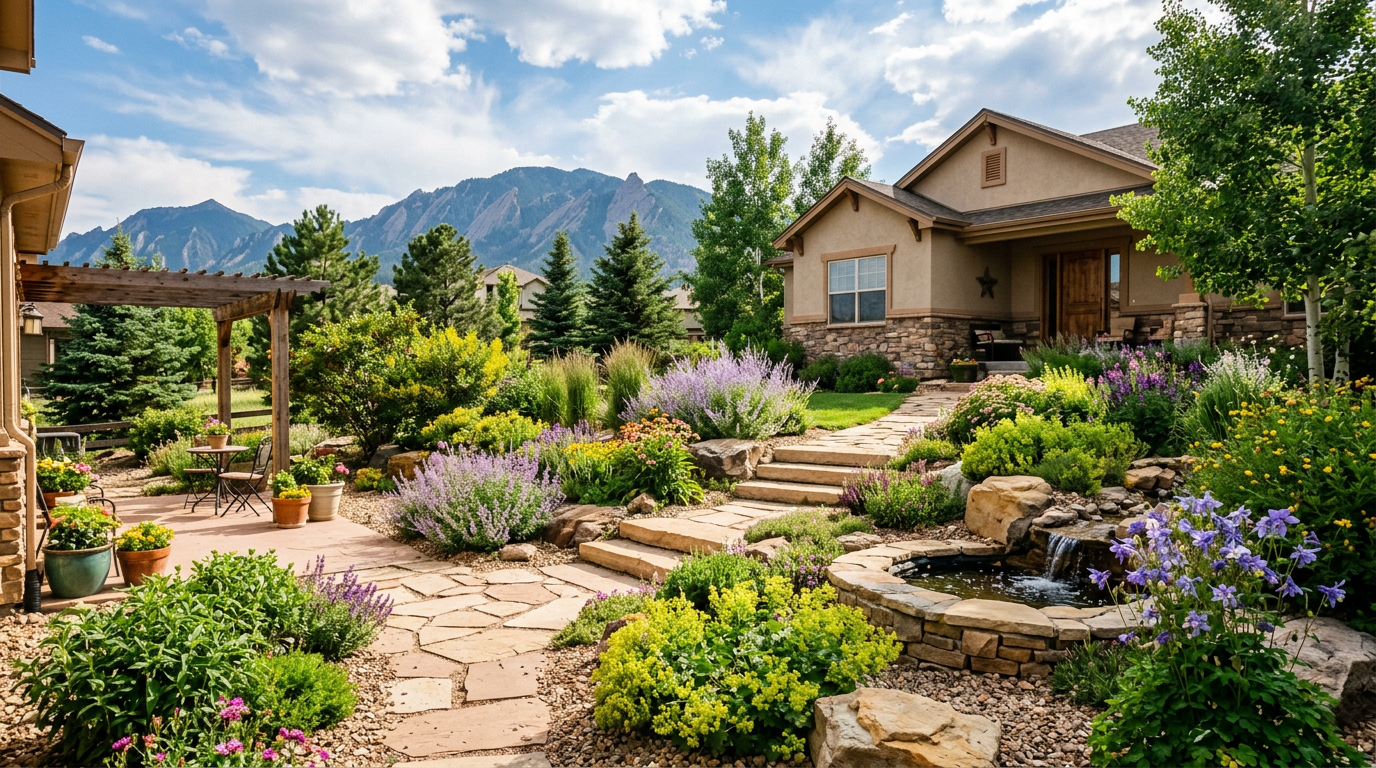
Let’s get one thing straight: a lush, East Coast-style garden in Colorado is a recipe for heartache and a sky-high water bill. Between the mile-high sun that acts like a giant magnifying glass, the wild temperature swings that can give a plant whiplash, and the chronically dry air, our state is beautifully brutal. But that doesn't mean you're doomed to a yard of gravel and a single, sad-looking juniper.
We're here to give you practical, battle-tested landscaping ideas for Colorado that work with our unique climate, not against it. The goal is a landscape that's not just surviving, but thriving—and one that doesn't require you to empty your bank account watering it.
Xeriscaping in Colorado: It's Not Just a Rock Garden
When we say "xeriscape," you might picture a sad expanse of hot, grey rocks. Let's kill that myth right now. Xeriscaping, a term actually coined right here in Denver, is simply a smart, water-conserving approach to landscaping. It can be lush, colorful, and full of life. It’s about choosing the right plants and using the right techniques.
Most a-ha moments for Colorado gardeners come when they embrace its seven principles:
- Good Planning: Zone your yard by water needs.
- Soil Improvement: Add compost to help our clay or sandy soils hold water.
- Smart Plant Selection: Use native and low-water plants (more on this below).
- Practical Turf Areas: Limit lawn to functional spaces, not just as a default filler.
- Efficient Irrigation: Drip lines for beds, smart controllers for grass.
- Use of Mulches: Cover bare soil to hold in moisture.
- Appropriate Maintenance: Less water, less fertilizer, less mowing.
Local water providers are all-in on this. Denver Water's Turf Replacement Program will literally pay you up to $2,000 to tear out your thirsty lawn and replace it with water-wise landscaping. Check with your local municipality; chances are they have a similar rebate program.
The Best Colorado-Tough Perennials and Shrubs
Plant selection is where the magic happens. We've seen too many homeowners try to plant a classic English garden in Commerce City only to watch it get fried by August. You need plants that can handle our intense sun, dry winds, and alkaline soil. Here are some of our go-to, nearly indestructible favorites.
Full-Sun Superstars
- Russian Sage (Perovskia atriplicifolia): This isn't a wimpy herb. It’s a tough-as-nails perennial with silvery foliage and spires of purple flowers that bloom all summer. It loves heat and shrugs off drought.
- Ice Plant (Delosperma): A fantastic, low-growing groundcover with iridescent flowers in magenta, yellow, and orange. It thrives in hot, dry spots where nothing else will grow.
- Penstemon (Beardtongue): A huge family of native plants with tubular flowers that hummingbirds adore. 'Rocky Mountain' Penstemon is a classic blue, but there are hundreds of varieties.
- Agastache (Hummingbird Mint): Another pollinator magnet that smells fantastic and blooms for months. It wants full sun and well-drained soil.
For inspiration on what thrives in dry climates, you might even look at some strategies from our neighbors. While we're not a true desert, the principles in our Arizona desert landscaping guide have a lot of crossover value.
For Those Rare Spots of Shade
- Colorado Blue Columbine (Aquilegia caerulea): Our state flower! It prefers a little afternoon shade and moderate water. A true Colorado classic.
- Coral Bells (Heuchera): Valued more for their stunning foliage in shades of purple, lime green, and bronze than their dainty flowers. They are perfect for brightening up a shady border.
- Serviceberry (Amelanchier alnifolia): A fantastic large shrub or small tree that offers four-season interest. It has white flowers in spring, edible berries in summer (if you can beat the birds), and brilliant red-orange fall color.
For the best selection of locally adapted plants, skip the big box stores and head to a specialist like Harlequin's Gardens in Boulder, which focuses on sustainable and native plants, or Tagawa Gardens in Centennial for an enormous selection.
Hardscaping Ideas for the Colorado Lifestyle
Coloradans live outdoors. A good landscape design includes functional, beautiful hardscaping that extends your living space.
- Patios: While concrete pavers are common, nothing says "Colorado" like natural flagstone. We are blessed with gorgeous local stone like Lyons Red Sandstone and Colorado Buff Sandstone. They create a rugged, natural look that feels right at home. A pro-installed paver patio might run $20-$35 per square foot, while local flagstone will be on the higher end, closer to $25-$45 per square foot.
- Pathways: Decomposed granite (DG) is a cheap and attractive option for informal paths. It provides a soft, crunchy texture underfoot and comes in various earth tones for about $70-$90 per ton.
- Fire Pits: A fire pit is practically mandatory, but be smart about it. Wood-burning fire pits are great, but with seasonal fire bans becoming the norm in many counties, a natural gas or propane-fueled fire pit is often a more reliable, safer investment.
Rethinking Your Colorado Lawn
That wall-to-wall carpet of Kentucky Bluegrass? It's the single thirstiest thing in your yard. It's an anachronism from wetter climates. In Colorado, it's a battle.
Outdoor watering, primarily for lawns, accounts for about 50 percent of the residential water use in the Denver metro area, according to Denver Water. This climbs even higher in drier-than-average years, putting immense strain on our reservoirs from the South Platte to the Colorado River. (Source: https://www.denverwater.org/your-water/water-use-and-conservation/conserve-at-home)
Instead of fighting this losing battle, consider these alternatives:
- Better Grasses: If you must have a lawn for kids or pets, switch to a more drought-tolerant variety. Dog Tuff™ Grass (Cynodon 'PWIN04S') is a sterile Bermuda grass developed in Colorado that uses up to 75% less water than bluegrass once established. Water-wise fescue blends are also a major improvement. If you do overseed, be sure you understand the right timing for our climate in our guide for when to overseed in the fall.
- Native Meadows: Rip out a section of lawn and seed it with a native wildflower mix. It's beautiful, supports pollinators, and needs almost no water after its first year.
- Groundcovers: For areas with light foot traffic, planting creeping thyme, veronica, or winecups (Callirhoe involucrata) creates a living green carpet that needs a fraction of the water.
Designing for a Four-Season Colorado Landscape
A common mistake is designing a yard that only looks good from June to August. A great Colorado landscape has structure and interest all year long.
- Winter: This is where structure shines. The peeling bark of a River Birch, the bright red stems of a Red Twig Dogwood, and the dried seed heads of ornamental grasses like 'Karl Foerster' Feather Reed Grass provide stunning visual appeal against a backdrop of snow.
- Spring: This is the season for bulbs like daffodils and tulips, and the spectacular show of flowering trees like crabapples and the aforementioned Serviceberry.
- Summer: The full-on party for all the perennials we mentioned earlier.
- Fall: Beyond the iconic Aspen, look to shrubs like the Three-Leaf Sumac (Rhus trilobata) for fiery fall color on a tough, low-water plant.
Even in vastly different climates like the Pacific Northwest, the principle of four-season design is universal. See how they do it in our Pacific Northwest landscaping guide for more ideas on creating year-round beauty.
The Unsexy Heroes: Irrigation & Mulch
This is the stuff that isn't glamorous but makes the biggest difference. Get this right, and you're 90% of the way there.
-
Irrigation: Ditch the oscillating sprinkler that sprays your driveway. For garden beds, there is no substitute for drip irrigation. It delivers water directly to the plant roots with almost zero evaporative loss. For any remaining lawn, use the "Cycle and Soak" method: water for a few short cycles with an hour in between to allow our hard clay soil to absorb it, preventing runoff. A smart controller like the Rachio 3 (around $229) uses local weather data to water only when needed and will pay for itself in water savings.
-
Mulch: Bare soil is your enemy. It loses moisture to the sun and wind and invites weeds. Apply a 3 to 4-inch layer of wood mulch (shredded cedar is great) over all your planting beds. It keeps the soil cool, retains moisture, and breaks down over time to improve soil structure. A cubic yard from a local supplier like Pioneer Sand costs about $60-$70 and will cover roughly 100 square feet. Rock mulch has its place in true desert gardens, but for most plantings, it acts like a heat sink and cooks plant roots.
Landscaping in Colorado is a rewarding puzzle. By ditching outdated ideas and embracing plants and techniques that are actually suited for our climate, you can create a beautiful, sustainable outdoor space that you'll love for years to come—without the constant stress and wasted water.
Frequently asked
What is the best low-maintenance landscaping for Colorado?+
The best low-maintenance option for Colorado is xeriscaping. This involves using drought-tolerant native perennials like Penstemon and Russian Sage, replacing thirsty lawns with hardscaping or groundcovers, and installing drip irrigation. A thick layer of wood mulch is also key to reducing watering and weeding.
What can I plant in my front yard in Colorado instead of grass?+
Great lawn alternatives for a Colorado front yard include drought-tolerant groundcovers like creeping thyme or Ice Plant, low-water ornamental grasses, or a native wildflower meadow. Converting lawn to a garden bed with water-wise shrubs and perennials surrounded by mulch is also a beautiful and popular option.
How can I add color to my Colorado landscape?+
Add vibrant, lasting color with drought-tolerant perennials. Ice Plant offers brilliant magenta and yellow flowers. Russian Sage provides spires of purple all summer. Agastache (Hummingbird Mint) comes in shades of orange, pink, and purple. For fall, plant a Serviceberry or Three-Leaf Sumac for fiery foliage.
What is the cheapest way to landscape a yard in Colorado?+
The cheapest method is a phased DIY approach. Start by smothering your lawn with cardboard and a thick layer of free or cheap wood chip mulch from a local arborist. Then, slowly add small, inexpensive perennials over time. Decomposed granite makes for a very affordable pathway material.
What kind of rock is best for Colorado landscaping?+
For patios and walls, local options like Lyons Red Sandstone or Colorado Buff Sandstone look most natural. For pathways, crushed rock or decomposed granite are cost-effective. Use rock mulch sparingly around plants, as it can overheat the soil in Colorado's intense sun.