
Landscaping Ideas for Colorado That Actually Work
Forget what works elsewhere. We're breaking down the landscaping ideas for Colorado that can handle everything from hail to high-desert sun without costing a fortune in water.
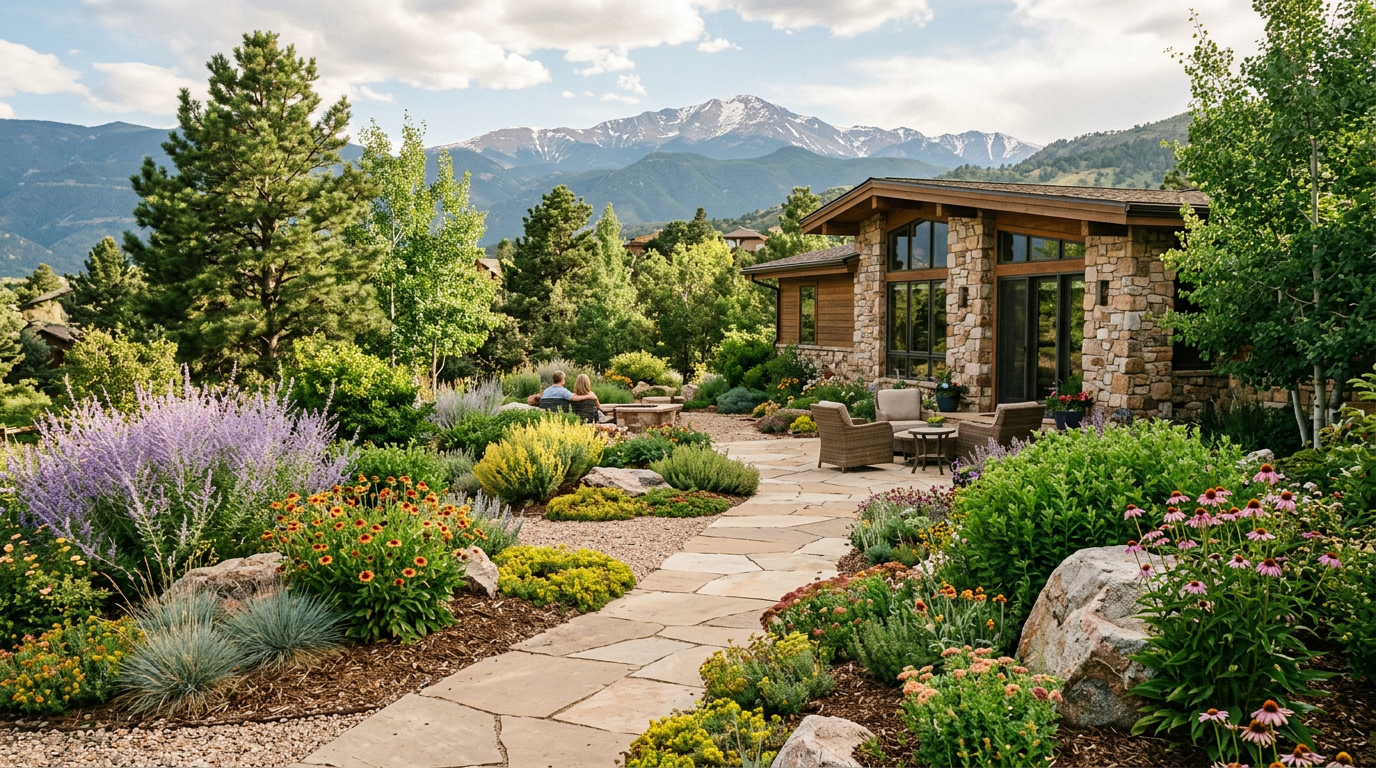
Welcome to landscaping on hard mode. If you’re trying to create a beautiful yard in Colorado, you already know the rules are different here. We have intense UV rays, soil that's basically concrete, surprise blizzards in May, and hail the size of golf balls. Copying landscape designs from a national magazine is a recipe for a sad, expensive, and very dead garden. These aren't just landscaping ideas for Colorado; they are survival strategies.
We're not here to gatekeep. We're here to give you the no-nonsense playbook for a yard that doesn't just survive but actually thrives in the Centennial State, from the Front Range cities to the mountain towns and the Western Slope.
Embrace Xeriscaping: The Smart Colorado Default
Let's get this out of the way first. When we say "xeriscape," we don't mean a sad, scorching landscape of red rock and three lonely cacti. That’s zero-scaping. True xeriscaping is a smart, water-wise design philosophy that results in a lush, vibrant, and surprisingly low-maintenance garden. In a state where water is liquid gold, it’s not an option; it's the foundation.
The core principles are simple:
- Smart Planning: Group plants with similar water needs together. Don't put a thirsty rose next to a drought-tolerant lavender. This is called hydrozoning, and it's the key to not driving yourself crazy with a watering can.
- Limited Turf: Shrink your traditional lawn to an area you actually use. That vast expanse of Kentucky Bluegrass is the thirstiest plant in your entire yard.
- Water-Wise Plants: Choose native or adapted plants that laugh in the face of our-dry climate. More on this below.
- Efficient Irrigation: Ditch the sprinklers that water the sidewalk. Use drip lines and soaker hoses to deliver water directly to plant roots.
- Soil Improvement: Our native clay soil repels water. Amending it with compost helps it act like a sponge.
- Mulch is Your Friend: A 2-3 inch layer of wood chip mulch conserves moisture, suppresses weeds, and keeps soil temperatures stable.
Many local water utilities, like Denver Water, offer rebates and programs to help you convert your yard. Check out resources like Resource Central's "Garden In A Box" for pre-planned, water-wise gardens that take the guesswork out of it.
Indestructible Plants for Colorado's Climate
We've learned the hard way that a plant that thrives in a mild, coastal climate will get absolutely torched by a July afternoon in Denver, then flash-frozen in a September cold snap. We've replaced more delicate perennials than we care to admit. Save yourself the pain. Start with plants that are built for this.
Visit a local nursery that specializes in natives and climate-adapted plants, like Harlequins Gardens in Boulder or Tagawa Gardens in Centennial. Their staff knows what survives.
Here are some of our top picks that won't give up on you:
-
Tough-as-Nails Perennials:
- Rocky Mountain Penstemon (Penstemon strictus): Gorgeous spikes of purple-blue flowers in early summer. A pollinator magnet that asks for nothing but sun.
- Yarrow (Achillea millefolium): Comes in yellow, pink, white, and red. Ferny foliage and flat-topped flowers that bloom all summer. It's so tough, it's often considered a weed elsewhere. Here, it's a hero.
- Catmint (Nepeta x faassenii 'Walker's Low'): A cloud of lavender-blue flowers from spring to fall. Deer and rabbits hate it, bees love it, and it thrives on neglect.
- Russian Sage (Perovskia atriplicifolia): Silvery foliage and a haze of purple flowers in late summer. It loves heat, sun, and dry soil.
- Ice Plant (Delosperma cooperi): A groundcover that explodes with neon-purple, daisy-like flowers. Perfect for hot, dry slopes.
-
Reliable Shrubs:
- Three-Leaf Sumac (Rhus trilobata): A native powerhouse. It's not flashy, but it provides great structure, has nice fall color, and is virtually indestructible once established.
- Serviceberry (Amelanchier alnifolia): A four-season superstar with white spring flowers, edible summer berries (if you can beat the birds), brilliant fall color, and nice winter structure.
- Rabbitbrush (Ericameria nauseosa): In late summer, when everything else is looking tired, this native shrub bursts into a spectacular display of golden-yellow flowers.
Comparing our choices to those in other regions shows just how different our needs are. While folks in the Midwest might be planting Hostas in full sun, here they'd be crispy in an hour. Even our full-sun choices are different from the Top Midwest Perennials for Full Sun in Illinois Gardens because our sun is just more. It's a high-altitude, low-humidity kind of intense.
Building a "Hail-Proof" Garden in Colorado
There's nothing more soul-crushing than seeing your beautiful garden shredded by a 10-minute hailstorm in June. While nothing is truly hail-proof, you can design for resilience.
- Plant Choice: Plants with small, narrow leaves (like ornamental grasses, yarrow, Russian sage) or very flexible stems tend to bounce back better than plants with large, tender leaves (goodbye, Hostas and Cannas). Plants with a woody structure, like shrubs and subshrubs, also fare better.
- Hail Cloth: For your prized vegetable beds or cutting gardens, hail netting is a non-negotiable investment. You can buy a roll of something like DeWitt's Hail Netting for around $0.50-$1.00 per square foot and build a simple PVC or wood frame to go over your beds. It’s a lifesaver.
- Strategic Hardscaping: A pergola over a patio, a covered porch, or even the overhang of your house can provide a protected zone for your more sensitive container plants.
Lawn Alternatives & Smarter Turf for Your Colorado Yard
That pristine, emerald-green Kentucky Bluegrass lawn is an East-Coast dream that becomes a high-maintenance, water-guzzling nightmare in Colorado. It's time to get smarter about turf.
First, ask yourself how much lawn you really need. If it's just a strip of green no one ever walks on, get rid of it. Replace it with a water-wise perennial bed or a seating area.
For the lawn areas you do want, consider these options:
- Water-Wise Turf: Grass blends like Dog Tuff™ Grass are a game-changer. It's a type of Bermuda grass that uses up to 75% less water, thrives in full sun, and stands up to foot traffic and dog urine. Other options include native grass mixes from suppliers like Pawnee Buttes Seed Inc., which may include Blue Grama and Buffalo Grass.
- Overseeding for Health: Even for a cool-season fescue/bluegrass lawn, keeping it healthy is key. We find that learning When to Overseed Your Lawn in Fall is the single best thing you can do to improve its density and drought tolerance for the following year.
- Clover & Microclover: Mixing Dutch white clover or microclover into your lawn is a classic "old school" trick that's coming back in a big way. Clover is drought-tolerant and it's a nitrogen-fixer, meaning it fertilizes the soil for free. Your lawn will stay greener with less water and no fertilizer.
Master Your Soil and Water in Colorado
Two things define gardening here: our soil and our water. The soil is often heavy clay, alkaline, and nutrient-poor. The water is precious. You have to manage both.
According to the Colorado State University Extension, landscape irrigation can account for approximately 50% of a household's annual residential water use, a figure that can climb even higher in peak summer months along the Front Range. (Source: https://extension.colostate.edu/topic-areas/yard-garden/watering-a-home-lawn-7-202/). This is exactly why we can't afford to be careless.
- Amend, Amend, Amend: Get a soil test from CSU Extension to see what you're working with. But it’s a safe bet you need to add organic matter. Compost is the answer. For a new bed, work 3-4 inches of good quality compost into the top 8-10 inches of soil. For top-dressing, an inch a year is great. You can get quality compost delivered by the cubic yard from places like A1 Organics for around $40-$60 per yard—way more cost-effective than bags from the big box store.
- Water Deeply and Infrequently: This encourages deep, resilient root growth. A weekly deep soak is far better than a light sprinkle every day. A simple 6-inch screwdriver is your best tool; if you can't push it easily into the soil a day after watering, you're not watering deeply enough.
- Use Drip Irrigation: This is the single most efficient way to water gardens. It puts water right at the root zone, with almost no evaporation loss. It takes some setup, but it pays for itself in water savings and healthier plants. The principles are similar to those used in other arid climates, like the ones we cover in our guides to Arizona Desert Landscaping Ideas That Don't Suck and Southern California Drought Landscaping.
- Install a Rain Barrel: As of a few years ago, it's legal for most Colorado homeowners to have up to two 55-gallon rain barrels. This is free, high-quality water for your container plants and vegetable garden.
Hardscaping to Extend Your Seasons
With our 300+ days of sunshine, Colorado is perfect for outdoor living—as long as you can handle the temperature swings. Smart hardscaping makes your yard more usable and beautiful.
- Fire Pits: A gas or wood-burning fire pit is practically a requirement here. It turns a chilly evening into a cozy gathering and extends your patio season by months in both spring and fall.
- Patios and Decks: Choose materials that can handle our intense freeze-thaw cycles. Pavers set on a proper base are fantastic. For decks, composite materials like Trex withstand the sun and snow better than wood, with less maintenance.
- Raised Beds: For vegetable gardening, raised beds are a huge advantage. They solve the clay soil problem, drain better, and warm up faster in the spring, giving you a head start on our short growing season.
Building a beautiful, sustainable Colorado landscape is a marathon, not a sprint. Work with our unique climate, not against it. By choosing the right plants, managing your water, and building for resilience, you can create a stunning outdoor space that you'll actually have time to enjoy.
Frequently asked
What is the best low-maintenance landscaping for Colorado?+
The best low-maintenance option is xeriscaping. Use native perennials, shrubs, and ornamental grasses grouped by their water needs. Incorporate mulch and durable hardscaping like a paver patio. This drastically reduces watering, weeding, and mowing, fitting Colorado's climate perfectly.
What can I plant in Colorado instead of grass?+
Instead of a traditional lawn, consider planting a creeping groundcover like thyme or veronica, installing a native wildflower meadow, or using a low-water turf alternative like Dog Tuff™ Grass. Gravel paths, mulch beds, and paver patios are also excellent, water-free options.
How much does landscaping cost in Colorado?+
Costs vary widely. A simple DIY project with plants and mulch might be $500-$2,000. Professional installation of a patio, plants, and irrigation can easily range from $10,000 to $30,000+. A mature tree installation alone can cost $500-$1,500 in the Denver area.
When should I start landscaping in Colorado?+
The best time to plant perennials, shrubs, and trees in Colorado is spring (after the last frost, typically mid-May) or early fall (September). This allows roots to establish before summer heat or winter cold. Hardscaping can be done anytime the ground isn't frozen solid.