
Landscaping Ideas for Colorado That Actually Work
Stop fighting Colorado's climate and start working with it. Here are our proven landscaping ideas for a beautiful, resilient yard that thrives from the Front Range to the Western Slope.
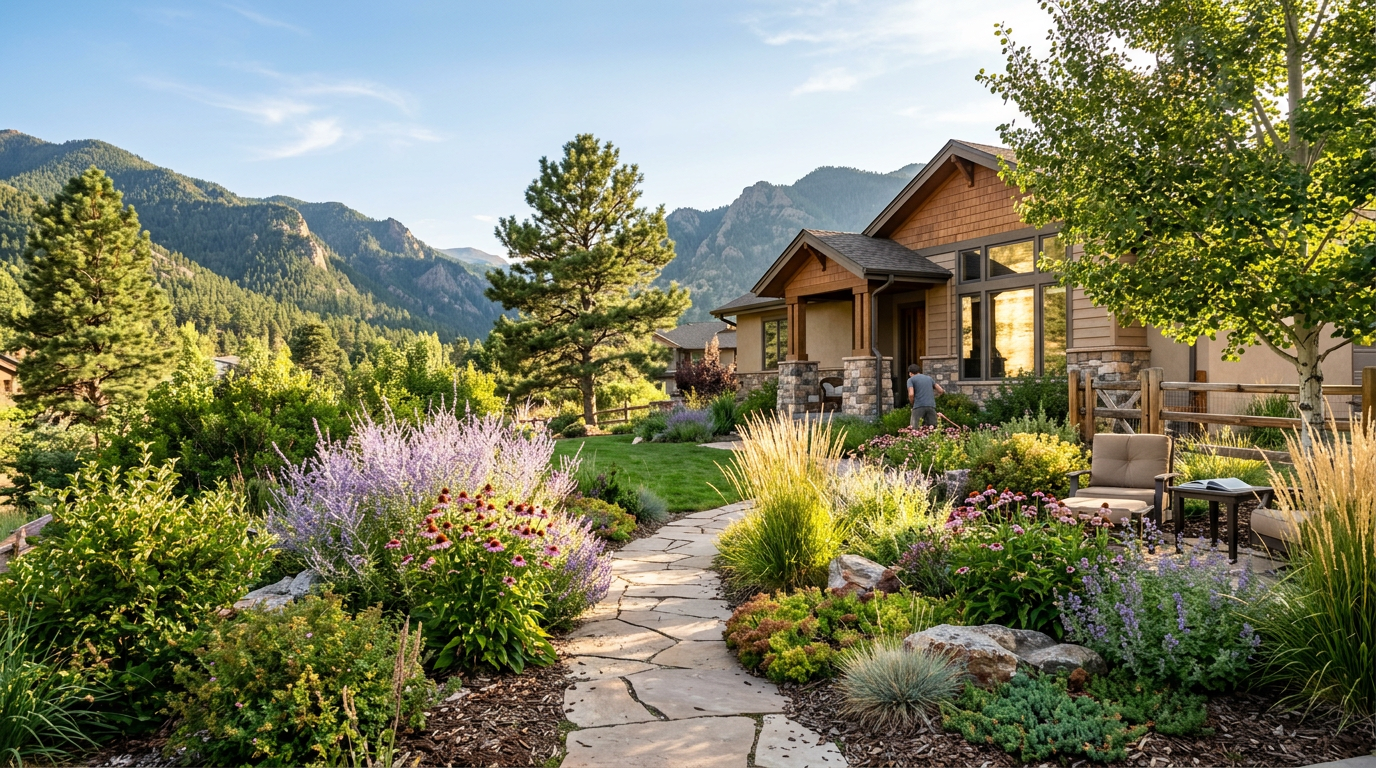
Welcome to landscaping in Colorado, where you can get a sunburn and frostbite in the same afternoon, and a surprise May blizzard is just another Tuesday. If you're tired of watching your expensive nursery plants shrivel under the intense sun or get flattened by hail, you've come to the right place. We're not about fighting Colorado's challenging climate; we're about embracing it with smart, tough, and beautiful landscaping ideas that actually work.
Forget what you've seen in wetter, more forgiving climates. Here, success is about water-wise choices, bulletproof plants, and creating outdoor spaces you can enjoy in all four (often unpredictable) seasons. Let's dig in.
Embrace Xeriscaping: A Smart Mandate for Colorado Yards
First things first: let's clear up a misconception. Xeriscaping is not a sad landscape of gravel and a single, lonely cactus. That's zero-scaping. Xeriscaping is the art of creating a lush, vibrant garden that uses very little water. In a state like Colorado, it’s not just a good idea—it’s pretty much essential.
Outdoor watering accounts for up to 50% of residential water use in the summer across the Front Range, according to Denver Water. That's a massive drain on a precious resource and your wallet. Many municipalities now have watering restrictions and even offer 'cash for grass' programs, paying you to replace thirsty turf. The City of Aurora, for example, offers up to $2,000 for turf removal projects.
So, what does good xeriscaping look like?
- Smart Plant Groupings: Group plants with similar water needs together. Don't put a thirsty Rose of Sharon next to a drought-loving Agastache.
- Dense Plantings: Once established, densely planted beds shade the soil, reducing evaporation and out-competing weeds.
- Water-Wise Natives: Focus on plants that evolved here. They're already adapted to the soil, sun intensity, and dry air.
- Strategic Mulch: A 3-inch layer of wood mulch (not rock, which cooks your plant roots) is your best friend. It retains moisture, suppresses weeds, and moderates soil temperature.
For inspiration on creating beautiful, dry landscapes, check out some principles that also work in other arid climates, like our guides to Arizona desert landscaping and drought-tolerant yards in Southern California.
Our Favorite Colorado-Proof Perennials and Shrubs
You need plants that can handle a 40-degree temperature swing in 12 hours, alkaline clay soil, and UV rays that are no joke at 6,000 feet. In our years landscaping across the Front Range, we've developed a list of absolute winners that deliver color and texture without constant fuss.
Bulletproof Perennials:
- Rocky Mountain Columbine (Aquilegia caerulea): Our state flower for a reason. It thrives in sun or part-shade and comes back year after year. A 1-gallon pot will run you about $15 at a local spot like Nick's Garden Center in Aurora.
- Red Hot Poker (Kniphofia): These dramatic, torch-like flowers are hummingbird magnets and couldn't care less about heat and drought once established.
- Penstemon (Penstemon spp.): With dozens of native varieties like the Rocky Mountain Penstemon, these tubular flowers are tough, beautiful, and a crucial food source for native bees.
- Ice Plant (Delosperma cooperi): A groundcover superstar. This succulent explodes with brilliant purple or yellow flowers and forms a dense mat that chokes out weeds. Perfect for hot, dry slopes.
- Russian Sage (Perovskia atriplicifolia): Its silvery foliage and clouds of purple flowers are a staple of late-summer Colorado gardens. It loves to be ignored.
Hardy Shrubs:
- Three-Leaf Sumac (Rhus trilobata): A native powerhouse that offers fuzzy spring flowers, glossy green leaves, and brilliant red fall color. Incredibly drought-tolerant.
- Serviceberry (Amelanchier alnifolia): A four-season star. It has beautiful white spring flowers, edible summer berries (if you can beat the birds), and stunning orange-red fall color. It works as a large shrub or small tree.
- Potentilla (Potentilla fruticosa): One of the longest-blooming shrubs you can buy, covered in cheery yellow, pink, or white flowers from June until frost. Prefers full sun.
While some full-sun perennials can cross over between regions, Colorado's altitude and dry air create unique challenges not seen elsewhere. Plants that thrive in the rich, moist soils of the Midwest might struggle here, which is why a locally-focused plant list is more useful than a generic one like this list for Midwest full-sun gardens.
Hardscaping Ideas for Colorado's Four-Season Fun
Given our 300+ days of sunshine, a solid hardscape—the patios, walkways, and walls of your landscape—is a non-negotiable investment. It creates usable outdoor 'rooms' that don't need watering and look great year-round.
- Patios: A well-built patio is the heart of a Colorado backyard. Given our freeze-thaw cycles, a professional installation with a deep, compacted base of 6-8 inches is critical to prevent heaving. Lyons Red or Colorado Buff Flagstone provides a classic mountain look, while concrete pavers offer a more uniform style. Cost: Expect to pay a pro $25-$45 per square foot for a paver or flagstone patio in the Denver metro.
- Fire Pits: Nothing extends patio season like a fire pit. A simple steel wood-burning ring is cheap (under $200), but check local fire bans before you light up. A built-in natural gas pit offers instant ambiance with the flick of a switch but is a much larger investment ($4,000-$8,000+).
- Pergolas: The Colorado sun is intense. A pergola provides essential shade, making your patio usable in the middle of a July afternoon. A simple 10x10 wood pergola kit starts around $1,500, with custom builds costing much more.
- Retaining Walls: Many Colorado properties have slopes. Retaining walls made from local stone or segmental blocks can turn a difficult hill into beautiful, functional terraces for planting or seating.
Lawn Alternatives for a Realistic Colorado Yard
Let's be blunt: a lush, green, Kentucky Bluegrass lawn is an uphill battle in Colorado. It's a water hog developed for a completely different environment. Keeping one alive here means high water bills, constant fertilization, and endless frustration. It's time for a smarter lawn.
- Buffalo Grass: A warm-season native grass that uses about 75% less water than Kentucky Bluegrass. It has a finer texture and soft, gray-green color. It goes dormant and brown in the winter but is incredibly tough in the summer heat.
- Dog Tuff™ Grass: Developed by CSU, a sterile hybrid of African Dogtooth grass that is ridiculously tough, low-water, and resistant to dog urine spots. It spreads via runners to create a dense, durable turf.
- Clover & Bee Lawns: Mixing Dutch White Clover or other low-growing flowering plants into your lawn (or replacing it entirely) fixes nitrogen in the soil, stays greener longer with less water, and provides food for pollinators. Companies like 'Resource Central' in Boulder offer pre-made low-water Garden In A Box kits which often include these mixes.
What works in other states simply won't work here. The cool-season grasses we might recommend in our guide to the best grass for North Carolina would be a disaster in our arid climate. Choose a grass meant for the High Plains.
Creating Microclimates: Your Secret Landscaping Weapon in Colorado
This is the next-level trick that separates the frustrated gardener from the seasoned Colorado pro. A microclimate is a small area in your yard where the conditions (sun, wind, temperature) are different from the surrounding area. By creating them intentionally, you can successfully grow plants that might not otherwise survive.
- Harnessing Heat: A south-facing brick or stone wall absorbs solar radiation all day and releases it at night. This can create a pocket of warmth equivalent to a full hardiness zone warmer, allowing you to plant things like certain ornamental figs or rosemary.
- Blocking Wind: A well-placed fence, hedge of hardy shrubs (like Juniper), or lattice screen can protect more delicate plants from our drying winds, especially in winter.
- Creating Shade: Use a pergola, a shade sail, or the north side of your house to create a cool, moist refuge for plants like Heuchera, Hosta, and Ferns that would fry in open sun.
- Using Boulders: Large boulders not only provide a great natural aesthetic but also create pockets of shade, shelter from wind, and retain warmth.
By thinking strategically about placement, you can push the boundaries of what's possible in a Colorado garden, creating a diverse and resilient landscape that's uniquely yours.
Frequently asked
What is the best low-maintenance landscaping for Colorado?+
The best low-maintenance landscaping for Colorado is xeriscaping. Use drought-tolerant native perennials and shrubs like Russian Sage, Penstemon, and Buffalo Grass, grouped by water need and mulched heavily. Incorporate hardscaping like a paver patio or flagstone walkway to reduce lawn area and water use.
How can I add color to my Colorado yard?+
Add vibrant, lasting color with drought-tolerant perennials. Ice Plant provides a stunning groundcover of purple or yellow. Red Hot Poker adds dramatic spikes of red and orange. Gaillardia (Blanket Flower) blooms all summer in fiery shades. For shrubs, Potentilla offers season-long yellow, white, or pink flowers.
What shrubs do well in Colorado?+
Hardy, water-wise shrubs are best. Serviceberry offers four-season interest with spring flowers, summer berries, and fall color. Three-Leaf Sumac is incredibly tough and has brilliant autumn foliage. Potentilla and Russian Sage are excellent choices for long-lasting flowers with minimal care in full sun.
When should I start landscaping in Colorado?+
The best time to start planting is in the spring (late April to early June) after the last frost, or in the fall (September to early October). Fall planting gives plant roots time to establish before winter. Hardscaping projects like patios and walls can be done anytime the ground isn't frozen.
What is wrong with a rock mulch landscape in Colorado?+
While rock mulch conserves water, it acts like a convection oven, super-heating the soil and baking plant roots. This extreme heat stress can kill many plants. It also reflects intense sunlight, making outdoor spaces hotter. Wood mulch is a better choice as it moderates soil temperature and retains moisture.