
Landscaping Ideas for Colorado That Actually Work
Stop fighting the climate and start working with it. Here are our no-nonsense, field-tested landscaping ideas for creating a stunning, durable Colorado yard.
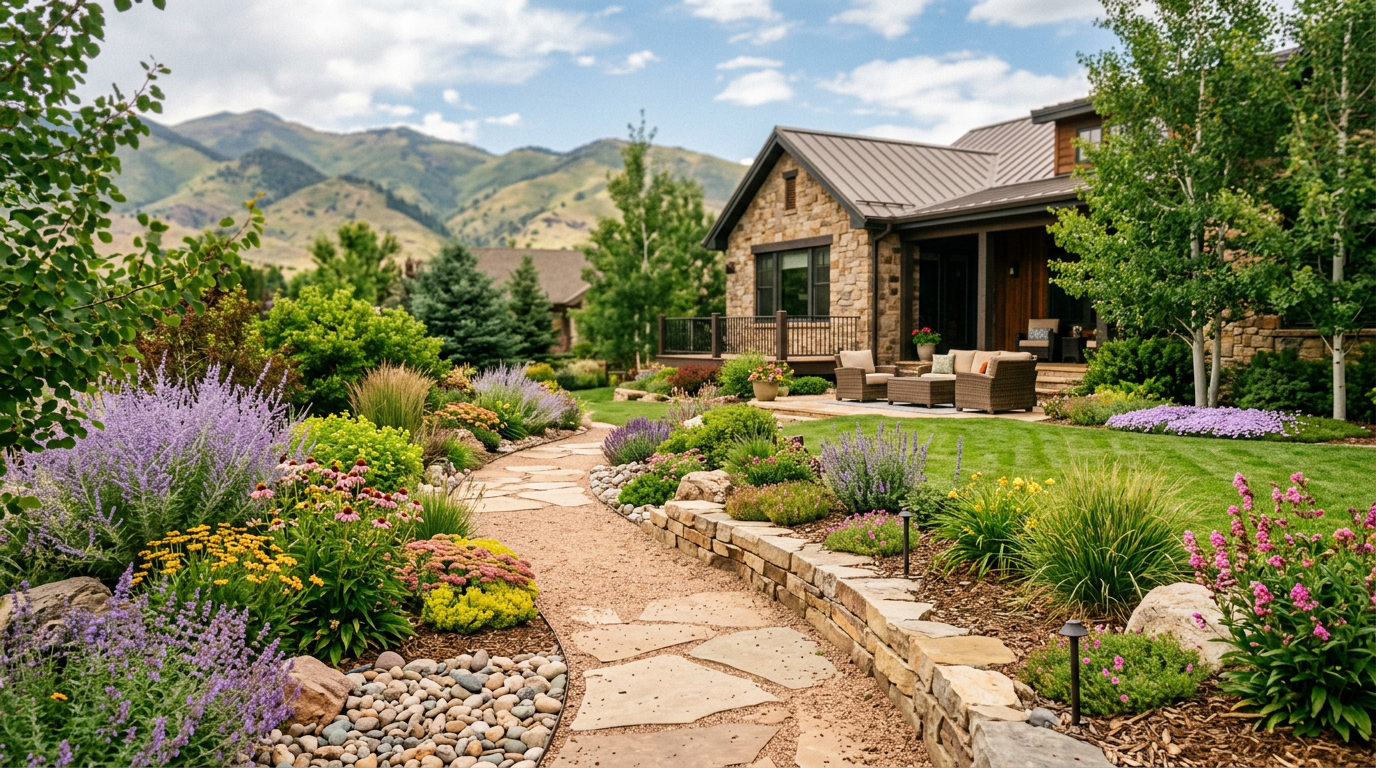
Let's get one thing straight: landscaping in Colorado is a different beast. If you just moved from a place with black soil and regular rain, your old bag of tricks won't work here. The combination of high altitude, intense UV radiation, low humidity, alkaline clay soil, and wild temperature swings (sometimes 40 degrees in a day) is a recipe for dead plants and a broken spirit. But we're not about gatekeeping secrets. We're here to give you practical, tested landscaping ideas for your Colorado home that will save you water, money, and a ton of frustration.
We're talking about creating a yard that looks good from the first spring thaw through the last autumn sunset, and even provides some structure and beauty in the snow. It's about being smart, not just working hard.
Unlocking Your Colorado Microclimate
Before you buy a single plant, you need to understand your specific patch of Colorado. "Colorado landscaping" isn't a monolith. A yard in a shaded Boulder canyon is vastly different from a windswept lawn in Aurora or a high-alpine garden in Breckenridge.
Get to know your yard like the back of your hand:
- Sun Mapping: Where does the sun hit, and for how long? That south-facing wall will bake anything not adapted to full, brutal sun. The north side of your house might be a shady oasis perfect for different species.
- Soil Test: Most Front Range soil is heavy clay and alkaline (high pH). This is non-negotiable. You can't fight it, but you can work with it. A simple soil test kit tells you what you're dealing with. The solution is almost always amending with organic compost to improve drainage and add nutrients. We mix in at least 3-4 inches of a good quality compost like A1 Organics Eco-Gro into our garden beds before planting anything.
- Wind & Water: Where does the wind whip around the corner of your house? Where does snow pile up in the winter? Where does water run off your roof and driveway? These are all clues for where to plant, and where not to plant delicate species.
Ignoring these factors is the #1 mistake we see homeowners make. A $10 sun-tracking exercise saves you $500 in dead perennials.
The Best Drought-Tolerant Plants for Colorado Yards
Xeriscaping is the name of the game in Colorado. But forget sad-looking gravel pits. Modern xeriscaping is lush, colorful, and full of life. The key is using plants that are either native to the region or adapted to similar high, dry climates. They're built for this.
Here are some of our go-to winners that provide color and texture without demanding a gallon of water every 10 minutes:
-
Perennials:
- Rocky Mountain Penstemon (Penstemon strictus): Gorgeous spikes of purple-blue flowers in early summer. A magnet for hummingbirds. Once established, it needs almost no supplemental water.
- Ice Plant (Delosperma cooperi): Don't let the name fool you. This groundcover explodes with vibrant, shimmering magenta flowers all summer long. Thrives in heat and poor soil. Perfect for hot spots along a driveway.
- Red Birds in a Tree (Scrophularia macrantha): Unique, fascinating red flowers that look just like the name suggests. It's a showstopper that loves the sun and laughs at drought.
- Chocolate Flower (Berlandiera lyrata): Smells like a Hershey's bar in the morning. Cheerful yellow, daisy-like flowers. Incredibly tough.
-
Grasses:
- Blue Grama Grass (Bouteloua gracilis): Our state grass for a reason! Fine-textured, low-growing, with unique "eyelash" seed heads. Leave it unmowed for a beautiful, natural meadow look.
- Karl Foerster' Feather Reed Grass (Calamagrostis x acutiflora 'Karl Foerster'): A landscaper's favorite for its tall, upright form that provides vertical interest all year, even in winter.
-
Shrubs & Trees:
- Three-Leaf Sumac (Rhus trilobata): A tough native shrub with glossy green leaves that turn fiery red and orange in the fall.
- Gambel Oak (Quercus gambelii): A slow-growing, rugged native oak that provides critical habitat and structure. It's the backbone of many foothills ecosystems.
This isn't like finding Midwest Perennials for Full Sun in Illinois Gardens; our sun is more intense and our air is drier. These plants are specifically chosen for our unique conditions.
Creating Year-Round Appeal with Colorado Hardscaping
Given our climate, your outdoor living space is just as important as your garden beds. Hardscaping—the patios, walkways, walls, and fire pits—is what makes your yard usable and beautiful when plants are dormant. In Colorado, this investment pays off huge dividends.
We installed a simple paver patio with a built-in fire pit at a project in Highlands Ranch, and the client told us it fundamentally changed how they use their home. They're outside from March through November now.
Here are some ideas:
- Patios: Flagstone is a classic Colorado choice, especially the reddish Lyons Sandstone. It creates a natural, rustic feel. For a more modern look, large-format concrete pavers are clean and durable. A 12'x12' paver patio will run you about $2,500 - $4,500 professionally installed, or you can DIY for about $800 in materials.
- Fire Pits: Essential for cool Colorado evenings. You can get a simple steel fire bowl for $150, or build a permanent gas or wood-burning pit from a kit (like those from Belgard) for $1,000 and up.
- Retaining Walls: If your yard has any slope (and most here do), low retaining walls can create level terraces for planting or patios. Dry-stacking stone is a great DIY project, or use segmental blocks for ease of installation.
- Mulch & Rock: Use wood mulch (like shredded cedar or bark) in your plant beds. It retains moisture, suppresses weeds, and breaks down to improve the soil. A good 3-inch layer is key. Use decorative rock or gravel for pathways and areas where you don't want plants to grow. Just avoid using rock as a mulch around plants—it gets incredibly hot and cooks their roots.
The principles of good hardscaping are universal, but the materials and the need for it feel more urgent here than in, say, a lush New England Front Yard Landscaping for Massachusetts Homes.
Smart Water Use: The Foundation of Colorado Landscaping
Outdoor water use is a huge deal here. According to Colorado WaterWise, outdoor landscaping can account for about 55% of a typical household's annual water consumption. (Source: https://coloradowaterwise.org/Watering_Guides) That's a massive opportunity for savings. Doing this part right isn't just eco-friendly; it's wallet-friendly.
- Ditch the Kentucky Bluegrass (Mostly): A huge, thirsty bluegrass lawn is a relic of the past. If you must have turf, shrink it. Use lawn for intentional play areas, not just as a default filler. Consider drought-tolerant turf varieties like Dog Tuff™ grass or a fescue blend. It will look less like a putting green and more like a natural meadow, which fits the Colorado aesthetic perfectly.
- Install Drip Irrigation: For your garden beds, trees, and shrubs, drip irrigation is non-negotiable. It delivers water directly to the roots, with minimal loss to evaporation. A basic DIY drip kit from Rain Bird costs under $50.
- Upgrade Your Sprinkler Controller: Get a Wi-Fi-enabled, weather-based "smart" controller like the Rachio 3. We use it on almost all our projects. It costs around $200 but pays for itself in 1-2 seasons. It automatically adjusts watering schedules based on local weather forecasts, saving up to 30-50% of your landscape water. Many local water utilities, like Denver Water and Colorado Springs Utilities, even offer rebates for these devices.
For more inspiration on water-wise landscaping, check out what folks are doing in even tougher climates with Arizona Desert Landscaping Ideas That Don't Suck. The same principles apply.
Sourcing Your Plants and Materials in Colorado
Don't go to a big box store and expect to find a great selection of plants that will thrive here. You need to go to a dedicated local nursery where the staff actually knows the difference between a plains plant and an alpine plant.
Here are a few of our trusted favorites along the Front Range:
- Tagawa Gardens (Centennial): Massive selection, knowledgeable staff, and great community classes.
- Nick's Garden Center & Farm Market (Aurora): A family-owned institution with a huge variety of annuals, perennials, and veggies adapted for our climate.
- Echter's Nursery & Garden Center (Arvada): Another long-standing local favorite with a strong focus on water-wise and native plants.
- Harlequin's Gardens (Boulder): Specializes in sustainable, organic gardening with an incredible selection of hardy, unusual, and native plants.
When buying, look for smaller, one-gallon pots instead of massive, expensive ones. Younger plants establish faster and are more resilient. For soil amendments, mulch, and rock, buy in bulk from a landscape supplier like Pioneer Sand or Rocky Mountain Bio Products. A cubic yard of mulch delivered for $80 is far cheaper than buying 14 individual bags for $10 each at a home center. Do the math. It always works out.
Frequently asked
What is the best low-maintenance landscaping for Colorado?+
The best low-maintenance option is xeriscaping. It uses native and drought-tolerant plants like Penstemon and ornamental grasses, drip irrigation to save water, and mulch to suppress weeds. Paired with hardscaping like a paver patio, it creates a beautiful yard that requires minimal watering and upkeep once established.
How can I add color to my Colorado landscape?+
Use a succession of hardy perennials. Plant spring bulbs like daffodils, followed by early summer bloomers like Rocky Mountain Penstemon and Salvia. Add all-summer color with Ice Plant and Black-Eyed Susans, and finish with fall interest from asters and the changing foliage of shrubs like Three-Leaf Sumac.
What's the cheapest way to landscape in Colorado?+
Start small and focus on a single area. Use smaller, younger plants which are cheaper and establish better. Buy materials like mulch and soil in bulk from a landscape supplier, not in bags. The most impactful, cheapest first step is amending your soil with compost to ensure plant survival.
Can I have a green lawn in Colorado without using a ton of water?+
Yes, but you need to be smart about it. Reduce the total size of your lawn to only what you need. Choose a drought-tolerant turf variety like a tall fescue blend or Dog Tuff™ grass. Water deeply and infrequently, and use a smart sprinkler controller to avoid waste.
What are the best trees for a small Colorado yard?+
For smaller yards, consider Hawthorns (like the 'Crimson Cloud' variety), Serviceberry (Amelanchier) for four-season interest, or the 'Hot Wings' Tatarian Maple for its brilliant red summer seeds. These trees are generally more compact and better suited for tight urban or suburban spaces than a huge Blue Spruce.