
How to Grow Grass in Florida Sand: A No-Nonsense Guide
Stop fighting with your sandy Florida lot. We'll show you exactly how to amend your soil and choose the right grass to grow a lawn that’s the envy of the cul-de-sac.
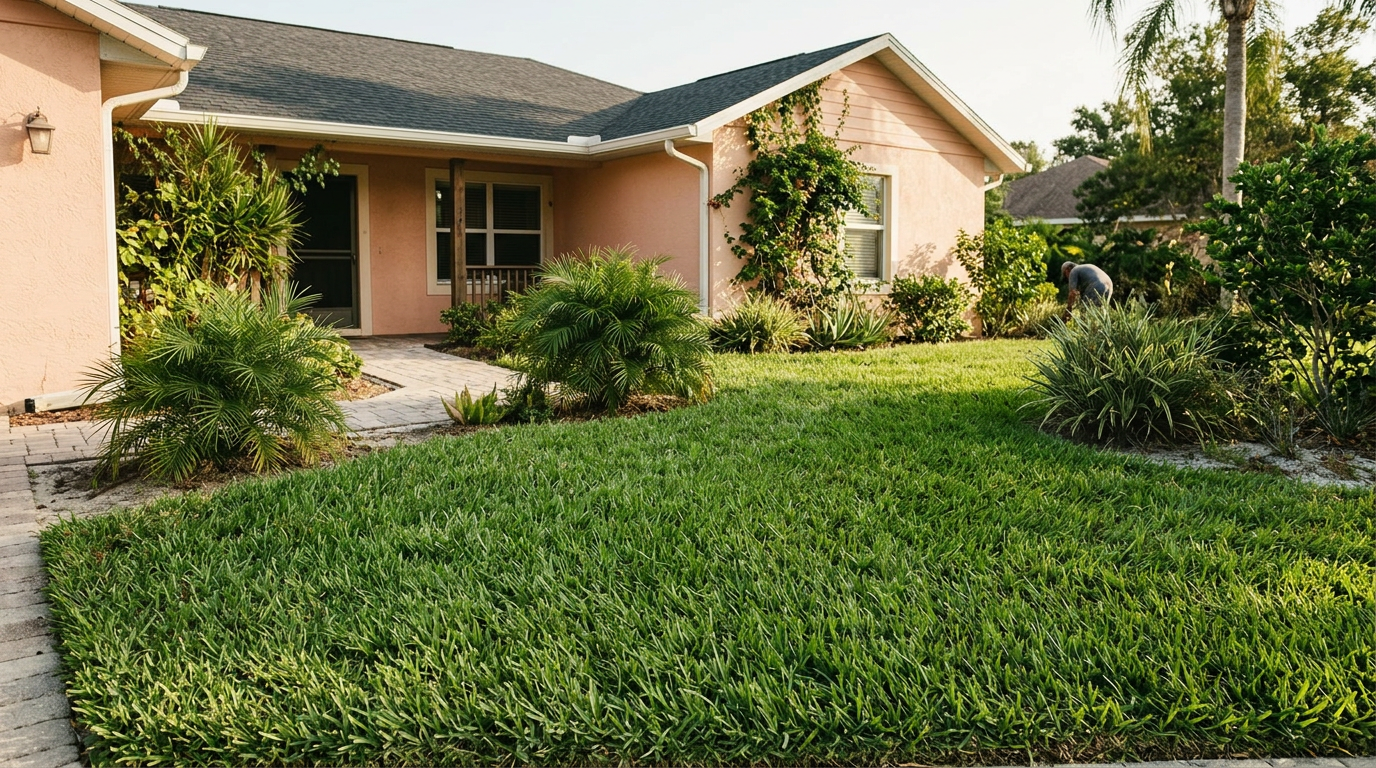
Let's be direct: trying to grow a lush, green lawn in most of Florida is like trying to build a sandcastle during high tide. The 'soil' under your feet is often little more than nutrient-poor, water-repellent sand. We've seen countless Central Florida and coastal homeowners throw down expensive seed or sod onto bare sand, only to watch it wither under the brutal sun. It’s a frustrating and expensive cycle.
But here’s the good news: it's not impossible. You just can't treat your Florida yard like one in Ohio or Massachusetts. You have to work with the sand, not against it. We're going to break down the exact, no-gatekeeping process to turn your sandy lot into a respectable lawn.
Understanding Florida's Sandy 'Soil'
First, let's get one thing straight. Most native Florida soil isn't soil in the traditional sense; it's sand. Geologically, much of the state is a marine sand deposit. This has a few key implications for your lawn dreams:
- Poor Water Retention: Water pours through sand like a colander. This means the grass roots can dry out incredibly fast, even if it just rained.
- Low Nutrient Content: Sand doesn't hold onto nutrients. Whatever fertilizer you apply can be washed away (leached) by rain or irrigation before the grass can even use it. This is not only bad for your wallet, but it's also a major contributor to algae blooms in Florida's bays and springs.
- Minimal Organic Matter: Healthy soil is teeming with life, microbes, and decaying organic material. Sand is basically inert mineral particles. It has no substance.
Ignoring these three facts is the #1 reason Florida lawns fail. You cannot just throw seed on sand and expect a miracle.
Step 1: Choose the Right Grass for Florida Sand
Your next critical decision is grass selection. Fighting the climate and soil with the wrong species is a losing battle. You need a warm-season grass that can handle heat, humidity, and—with a little help—sandy conditions. Comparing to what works in other climates, like the varieties in our guide to North Carolina grass, shows just how specific this choice is.
Here are your top contenders for a Florida lawn:
- Bahiagrass: This is our top recommendation for a low-maintenance lawn on sandy soil. It's not the plushest, greenest grass, but it's tough as nails. Bahia establishes a deep, extensive root system that makes it incredibly drought-tolerant once established. 'Argentine' Bahiagrass is a popular cultivar with a slightly denser look than the pasture-grade 'Pensacola' variety. It's established by seed, which keeps costs down.
- Zoysia Grass: If you want a finer, denser, more 'barefoot-friendly' lawn, Zoysia is a fantastic option. Cultivars like 'Empire' are known for good drought tolerance. However, Zoysia generally requires more water, fertilizer, and maintenance than Bahia to look its best. It's also much slower to establish.
- St. Augustine Grass: This is the classic, coarse-bladed Florida grass you see everywhere. 'Floratam' is the most common cultivar. It spreads via thick, above-ground runners (stolons), which helps it fill in areas. Its weakness? It's a water hog and needs regular fertilizer to stay green in sand. It also can't be grown from seed; you have to use sod or plugs.
- Bermuda Grass: If you have full, unrelenting sun and want a turf that can handle traffic and repair itself quickly, Bermuda is your pick. It's used on golf courses and athletic fields for a reason. The downside is that it requires high inputs (water, fertilizer, frequent mowing) and can be very invasive, creeping into landscape beds.
Step 2: The Most Important Step for Florida Soil - Amendment
If you remember one thing from this article, make it this: you must amend your sand. This is a non-negotiable step.
The goal is to add organic matter to the top 4 to 6 inches of your yard. This organic material will act like a sponge, holding water and nutrients at the root zone where the grass can use them. We’re not just sprinkling a little something on top; we are fundamentally changing the structure of your soil profile.
Your Shopping List:
- Composted Manure: A product like Black Kow composted cow manure is wildly popular in Florida for a reason. It's cheap, effective, and available everywhere. A 50-lb bag costs about $8-$10 at any big box store.
- Mushroom Compost: Another excellent, nutrient-rich option.
- Local Compost: Check with your municipality or local landscape suppliers like SiteOne or Ewing. Buying in bulk (by the cubic yard) is far cheaper for large areas. A yard of compost can cost $30-$50 and is a better value than dozens of bags.
The Process:
- Clear the Area: Remove all existing weeds and debris.
- Spread the Amendment: Lay down a solid 2 to 4-inch layer of your chosen compost over the entire area.
- TILL IT IN: This is the crucial part. Use a rototiller (you can rent one from Home Depot for about $70/day) to mix the compost into the top 4 to 6 inches of sand. You want a uniform, blended mixture, not a layered cake. For smaller areas, a sturdy garden rake and a lot of elbow grease can work.
This single step will do more for your lawn's success than anything else. You are creating a foundation for life.
Step 3: Seeding vs. Sodding Your Florida Lawn
Once the soil is prepped, it's time to plant. Your two choices are seed or sod.
- Sodding: This gives you an 'instant lawn.' It's great for preventing erosion on slopes and provides immediate results. It's the only option for St. Augustine grass. The cost is the main drawback, typically running $0.60 to $1.20 per square foot delivered from Florida farms like Duda Sod or Lake Jem Farms. For a 2,000 sq. ft. lawn, that's $1,200 - $2,400.
- Seeding: This is much more budget-friendly. It's the primary method for Bahiagrass. A 50 lb. bag of 'Argentine' Bahia seed costs around $200 and can cover up to 10,000 sq. ft. (or 5,000 sq. ft. for a new lawn). The downside is that it takes longer to establish, requires more diligent watering at first, and is susceptible to being washed out by heavy Florida downpours.
The best time to plant warm-season grass in Florida is during the late spring and early summer (April through July), when the weather is hot and humid, promoting rapid germination and growth.
Step 4: Watering and Fertilizing a Sandy Florida Lawn
Your amended soil will help, but you're still dealing with sand. Your maintenance practices need to reflect that. This is where our Florida Lawn Care Schedule comes in handy for a month-by-month plan.
Watering: The key is 'frequent and light' rather than 'deep and infrequent'. Water can't penetrate 6-8 inches in sand; it just flows past.
- New Seed/Sod: Mist the area lightly 2-4 times per day for the first 2 weeks to keep the top inch constantly moist.
- Established Lawn: Water 2-3 times per week, applying about 1/2 to 3/4 inch of water each time. Water in the early morning to reduce evaporation and disease risk.
Fertilizing: This is where Florida's regulations come into play. To protect waterways, many counties (especially coastal ones like Pinellas, Sarasota, and Miami-Dade) have fertilizer blackout periods, typically from June 1st to September 30th. During this time, you cannot apply nitrogen or phosphorus. Always check your local county ordinance.
Because sand leaches nutrients so quickly, slow-release fertilizers are your best friend. A product like Milorganite or a slow-release blend from brands like Sunniland or Lesco is ideal. Apply in the spring (April/May) and fall (October), following the blackout rules. The stats prove why this matters: according to the University of Florida's IFAS Extension, typical Florida sandy soils can only hold about 0.7 inches of water per foot of soil depth, a fraction of the 2.0+ inches a healthy loam can hold. (Source: UF/IFAS Publication SL153/SS-SOS-22). This means water and any dissolved fertilizer move through the profile incredibly fast.
For those questioning the need for a high-input lawn, looking at sustainable options from other hot climates, like the ones in our guide to Southern California drought landscaping, can provide excellent ideas for reducing your turfgrass footprint.
Building a beautiful lawn on Florida sand is a marathon, not a sprint. But by fundamentally improving your soil and choosing the right grass, you can break the cycle of failure. You're not just planting grass; you're building an ecosystem from the ground up.
Frequently asked
What is the cheapest way to grow grass in Florida sand?+
The most budget-friendly method is to thoroughly amend the sand with compost, then plant Bahiagrass seed. Bahiagrass is drought-tolerant and less expensive than sod, and preparing the soil yourself saves significant labor costs. This approach prioritizes soil health for long-term success.
Can you just put topsoil over sand to grow grass?+
While you can, it's not the best practice. Simply layering topsoil over sand creates distinct layers that can impede water movement and root growth. For far better results, till 3-4 inches of quality compost or topsoil *into* the top 4-6 inches of existing sand.
How often should I water new grass in Florida sand?+
For the first two to three weeks, new seed or sod in sandy soil needs to be kept consistently moist. This means watering lightly 2-4 times a day for short durations (5-10 minutes). After establishment, you can transition to watering 2-3 times per week.
Is St. Augustine grass good for sandy soil in Florida?+
St. Augustine can grow in amended sandy soil but it is not as drought-tolerant as Bahiagrass. It requires significantly more water and fertilizer to stay healthy and green in sand, making it a higher-maintenance and more expensive option for sandy lots.