
How to Grow Grass in Florida Sand: A No-Nonsense Guide
Tired of a patchy, sandy mess? We'll show you exactly how to establish a thriving lawn on Florida's notoriously difficult soil, from seed selection to long-term care.
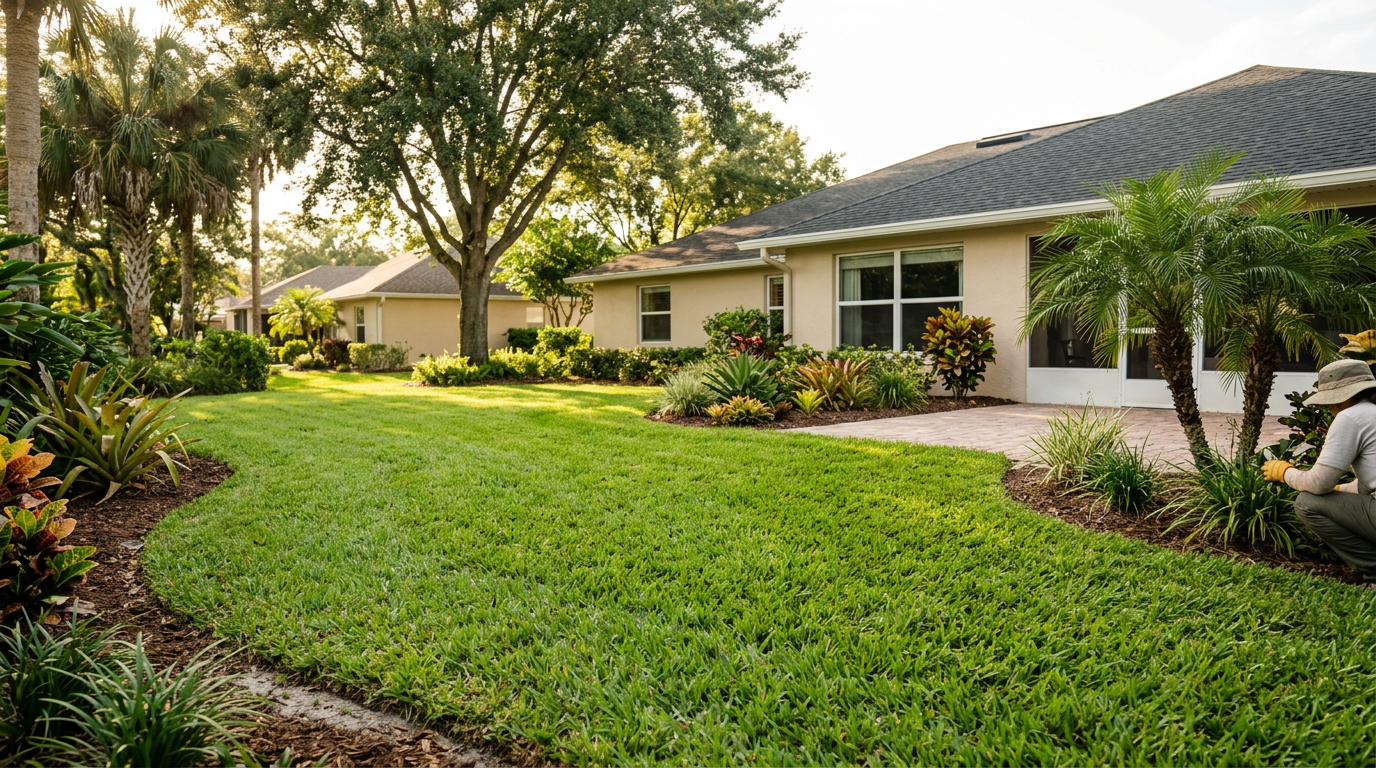
So you want to grow a lawn in Florida. Welcome to the club. And welcome to the number one challenge every homeowner faces from Jacksonville to the Keys: our soil is basically a beach. That fine, white 'sugar sand' is great for tourism, but it's terrible at holding water and nutrients. It’s the reason so many Florida lawns look patchy, stressed, and generally unhappy.
But here’s the good news: growing a great lawn on sand is not only possible, it’s completely manageable if you stop fighting the sand and start working with it. Forget what you've heard about needing some secret, expensive formula. We're going to break down the exact process, from choosing the right grass to amending the soil, so you can have a lawn that doesn't suck.
Why is Growing Grass in Florida Sand So Frustrating?
Before we get to the fix, let's quickly diagnose the problem. Understanding why sand is difficult is key to solving the issue.
- Poor Water Retention: Sand particles are large and round compared to clay or loam. Water rushes right through them. This is called low water-holding capacity. Your lawn can go from soaked to bone-dry in a matter of hours under the hot Florida sun.
- Low Nutrient Retention: The same reason sand can't hold water means it can't hold nutrients. When you fertilize, a significant portion of those minerals washes straight past the root zone before the grass can absorb them. This is a low Cation Exchange Capacity (CEC), a term soil nerds love, but it just means your soil can't hang onto the good stuff.
- Compaction & Temperature: While loose when dry, sand can become compacted when wet and driven on. It also heats up incredibly fast, stressing shallow grass roots.
Trying to grow a regular cool-season grass like Kentucky Bluegrass here is like trying to ski on I-95. You need the right tool for the job.
The Best Grass Types for Florida's Sandy Soil
Your first and most important decision is your grass type. Choose the wrong one, and you're in for a world of pain and wasted money. Here are the champions of Florida sand.
-
Bahiagrass (Especially 'Argentine' Bahia): This is the undisputed king of low-maintenance Florida lawns. Why? Two words: deep roots. Bahia sends its roots down many feet into the sand, searching for water. It’s extremely drought-tolerant once established. It’s not the most picturesque “golf course” grass, but it's tough as nails. You can find a 50 lb. bag of quality Argentine Bahiagrass seed from Pensacolan seed companies or statewide distributors like SiteOne Landscape Supply for roughly $180 - $250. It's the most common choice for a reason.
-
Zoysiagrass ('Empire' or 'Innovation'): If you want something a bit more refined-looking than Bahia, Zoysia is your answer. It has excellent drought and heat tolerance and feels great underfoot. It spreads via runners to create a dense turf that chokes out weeds. The catch? It's more expensive and is almost always installed as sod or plugs. A pallet of Empire Zoysia from a Florida grower like Duda Sod or King Ranch will cover 400-450 sq. ft. and run you $250 - $550, depending on your location and the season.
-
St. Augustinegrass ('Floratam'): This is the classic, wide-bladed grass you see everywhere in Florida. It's less drought-tolerant than Bahia or Zoysia but handles partial shade better than most. Its main enemy is the chinch bug. If you have sandy soil AND full, relentless sun, Floratam can get stressed, making it vulnerable. It’s only available as sod.
Don't even think about Fescue or Ryegrass unless you're overseeding for temporary winter color. Our Florida Lawn Care Schedule has more on seasonal tasks.
Step-by-Step: Prepping Your Sandy Soil in Florida
You can't just throw seed on sand and hope for the best. Soil preparation is where the magic happens. This is the step that 90% of people get wrong.
-
Soil Test: Before you do anything, get a soil test. We are not guessing here. Your local UF/IFAS Extension office provides soil testing kits for about $10. This will tell you your soil's pH and which specific nutrients you're missing. Florida sand is often slightly acidic, but you won’t know for sure without a test.
-
Clear and Excavate: Kill off all existing weeds and old, dead grass. A non-selective herbicide or solarization can work. Rake away all the debris. If your grade is a mess, now is the time to fix it, ensuring water flows away from your house.
-
AMEND, AMEND, AMEND: This is the most important step. You must add organic matter. Your goal is to create a 4- to 6-inch layer of living soil on top of the sterile sand. We recommend tilling in 3 inches of high-quality, screened compost. Products like Black Kow Composted Cow Manure (around $7 per 50 lb bag at Lowe's or Home Depot) or mushroom compost are perfect. For a 1,000 sq. ft. area, you'd want to spread and till in about 6 cubic yards of compost. Yes, it's an investment and a lot of work, but it's the only way to get a great lawn.
-
Level and Roll: After you've tilled the compost into the top 4-6 inches of sand, rake it perfectly smooth. Use a lawn roller (you can rent one) to lightly compact the surface to prevent major settling later.
Planting Grass in Florida: Seed, Sod, or Plugs?
With your soil prepped, it's time to plant.
- Seeding: This is the most cost-effective method and works wonderfully for Bahiagrass. The best time to seed in Florida is during the rainy season, from late spring to early summer (April-July). This gives the seeds consistent warmth and moisture. Follow the application rate on the bag precisely.
- Sodding: This gives you an “instant lawn.” It's the standard for St. Augustine and Zoysia. Lay the sod pieces tightly together, staggering the seams like bricks. Water it immediately. It's more expensive upfront but provides immediate erosion control and visual impact.
- Plugging: This is a middle-ground approach for Zoysia and St. Augustine. You plant individual grass plugs every 6-12 inches. They will slowly spread to fill in the gaps. It takes longer (a full season or more) but is much cheaper than sod.
Watering Your New Lawn on Florida Sand
How you water is critical, especially on sand. There are two phases:
-
Establishment Phase (First 2-4 weeks): During this period, your job is to keep the top inch of soil consistently moist, but not waterlogged. This might mean watering lightly once or twice a day. The goal is to get the new seeds or sod roots to take hold.
-
Long-Term Phase (Established Lawn): This is where people mess up. Once the lawn is established, you must switch to deep and infrequent watering. We've seen it a hundred times on our own projects: people who water for 10 minutes every day end up with shallow-rooted, weak grass that dies the second a drought hits. Instead, water only 1-2 times per week, but for a long duration (45-60 minutes per zone), to deliver 0.75 inches of water. This forces the roots to dive deep into the sand searching for moisture, making the plant incredibly drought-tolerant. Be sure to check your local county's watering restrictions (e.g., Orange, Miami-Dade, and Hillsborough counties all have specific days you're allowed to water).
According to the University of Florida's IFAS Extension, sandy soils in Florida can have an available water-holding capacity as low as 3-5% by volume, compared to over 20% for soils with more clay and organic matter. This means for every foot of soil, sand can only hold about half an inch of water usable by plants. This statistic underscores why adding compost and watering deeply is not just a suggestion—it's a requirement for success. (Source: https://edis.ifas.ufl.edu/publication/SS554)
Fertilization Plan for Florida's Leaky Sand
Because sand doesn't hold nutrients, you have to fertilize differently. We use a method called 'spoon-feeding.' Instead of dumping a huge amount of fertilizer 2-3 times a year, you apply smaller amounts more frequently. Look for a quality slow-release nitrogen fertilizer. A good local choice is Sunniland Lawn Fertilizer 29-0-5. Critically, most Florida municipalities have restrictions on using phosphorus (the 'P' in N-P-K) to protect our waterways, so always choose a low- or no-phosphorus blend unless your soil test specifically calls for it.
For a detailed breakdown of when to fertilize, refer to our Florida Lawn Care Schedule. Comparing the needs of our warm-season grasses to other regions, like in this guide to What's the Best Grass for North Carolina? or even Texas Lawn Care, really highlights how unique our sandy soil challenges are. The principles of drought tolerance, however, are universal, whether you're looking at Southern California Drought Landscaping or a Florida backyard.
Building a beautiful lawn on Florida sand isn't a mystery; it's a science. By choosing the right grass, investing in soil amendment, and adopting smart watering and feeding habits, you can create a durable, green oasis that thrives in the Sunshine State.
Frequently asked
Can you just put topsoil over sand and plant grass?+
It's better to till at least 3-4 inches of topsoil or compost into the top 6 inches of existing sand. Simply layering it on top can create a water barrier and prevent deep root growth, which is essential for drought tolerance in Florida.
What is the fastest-growing grass for Florida sand?+
Bahiagrass from seed establishes relatively quickly during the warm, rainy season (April-July) and is exceptionally well-suited for sandy soils. For an 'instant' lawn, laying St. Augustine or Zoysia sod is the fastest method, though more expensive.
How much compost do I need to add to my sandy soil?+
The rule of thumb is to add a 2- to 4-inch layer of compost over the entire area and till it into the top 6-8 inches of sand. For a 1,000 sq. ft. lawn, this equates to roughly 6 to 12 cubic yards of compost.
Is Centennial a good grass for Florida sand?+
Centipedegrass can handle sandy, acidic soils and is low-maintenance, but it's less drought-tolerant than Bahiagrass or Zoysia. It has a very shallow root system, making it susceptible to stress during Florida's dry periods without consistent moisture.
How often should you fertilize a lawn on sandy soil in Florida?+
Because sandy soil leaches nutrients quickly, 'spoon-feeding' is best. Use a slow-release, low-phosphorus fertilizer and apply smaller amounts every 6-8 weeks during the growing season, rather than heavy applications a few times a year. Always follow local fertilizer blackout ordinances.