
Florida Lawn Care Schedule: A Month-by-Month Guide
Stop guessing and start dominating your Florida yard. This is the no-nonsense, month-by-month lawn care schedule built for our unique climate.
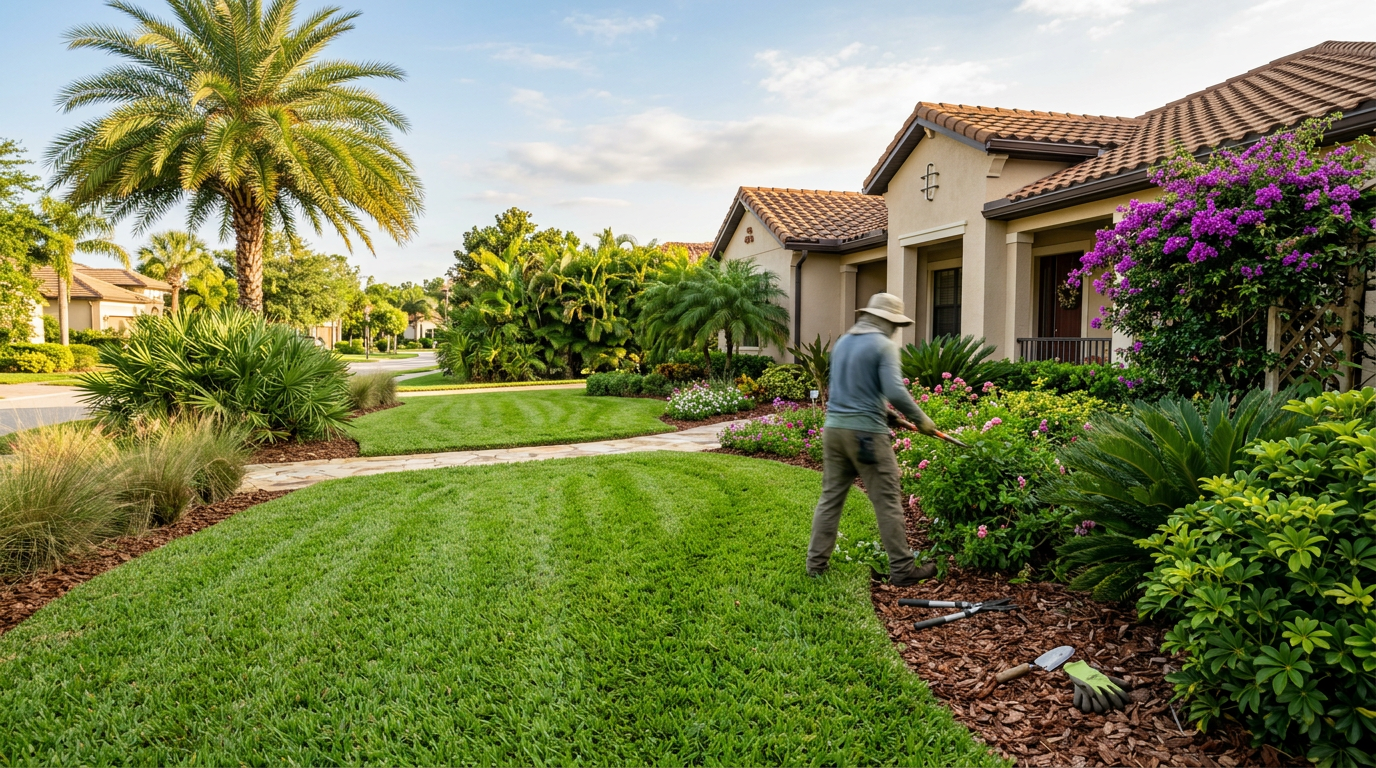
Let's get one thing straight: taking care of a lawn in Florida is a different beast entirely. Your cousin in Ohio mows, fertilizes twice a year, and gets a perfect green carpet. You do that here, and you'll have a sad, sandy patch of dollarweed by August. Why? Because Florida is basically a subtropical science experiment with intense sun, swamp-level humidity, hurricane season, and soil that can barely be called soil.
But here's the good news. We've managed lawns from Jacksonville to the Keys, and we've cracked the code. A gorgeous Florida lawn isn't about working harder; it's about working smarter. It's about having a plan. This is that plan: the definitive, no-nonsense Florida lawn care schedule.
Understanding Florida's Unique Lawn Challenges
Before we dive into the calendar, you need to respect the opponent. Florida's environment dictates everything.
- The Heat and Humidity: This is a breeding ground for fungal diseases like Brown Patch (also called Large Patch) in St. Augustine and Zoysia grasses. The heat also stresses your turf, making it vulnerable.
- The Rain (or Lack Thereof): We have a distinct wet season (roughly June-October) and dry season. Your watering schedule needs to adapt, not just be a "twice a week" setting on the timer. During the dry season, you'll water. During the wet season, you'll mostly just watch for flooding and turn your sprinklers off.
- The Soil: Most of Florida is built on sand. Water and nutrients pass right through it like a sieve. This means you can't just dump fertilizer once and forget it. It also means you need to know how to grow grass in Florida sand from the get-go; it's a different skill set.
- The Bugs: Chinch bugs, sod webworms, mole crickets... it's a bug-eat-grass world out there. Proactive monitoring is non-negotiable.
According to the University of Florida IFAS Extension, a typical Florida household can use 50% or more of its water on landscape irrigation. Following a proper lawn care and watering schedule can cut this usage by 30-50%, saving you hundreds on your water bill and protecting our aquifers. (Source: edis.ifas.ufl.edu/publication/AE496)
The Core Florida Lawn Care Schedule (By Season)
Think of the year in four phases. Your specific tasks will shift based on whether you're in North, Central, or South Florida, but the general rhythm is the same.
- Spring (March-May): The Grand Awakening. Your lawn is coming out of its short winter nap (if it ever took one) and is ready to grow. This is prime time for your first real feeding and getting ahead of summer weeds.
- Summer (June-August): The Gauntlet. This is survival mode. It's hot, it's wet, and the pests and diseases are throwing a party. Your job is to manage stress, mow high, and absolutely, positively follow fertilizer blackout rules.
- Fall (September-November): The Recovery. The heat starts to break, and the blackout periods end. This is the most important time to fertilize in Florida. The lawn is actively growing and storing energy to survive the (mild) winter and fend off spring weeds.
- Winter (December-February): The Respite. Growth slows way down. Mowing is infrequent. It’s the best time to control existing weeds and plan your attack for the upcoming spring.
A Month-by-Month Breakdown for Your Florida Lawn
Alright, let's get granular. We've seen too many Florida lawns get nuked by a mid-summer fertilizer application during a blackout. Don't be that neighbor. Follow this schedule.
January - February (Late Winter)
- Weed Control: This is the best time to spot-treat winter weeds like poa annua and clover. A liquid post-emergent herbicide like Ortho Weed B Gon for Lawns is your friend. Read the label to ensure it's safe for your grass type.
- Mower Maintenance: Sharpen your mower blades. Dull blades tear grass, leaving it open to disease. This is the single most overlooked task that has a huge impact.
- Soil Test: If you haven't done one in a couple of years, now is the time. A simple kit from a big box store or your local UF/IFAS Extension office will tell you your soil's pH and nutrient deficiencies. It costs about $10-$20 and saves you hundreds in guessing.
March - May (Spring)
- Pre-Emergent: In early March (or when temperatures consistently hit 65°F), apply a pre-emergent herbicide like Scott's Halts Crabgrass & Grassy Weed Preventer. This creates a barrier that stops weed seeds from germinating. It is CRITICAL for preventing crabgrass.
- First Fertilization: After you've mowed the lawn twice (proving it's actively growing), it's time to feed. Use a slow-release nitrogen fertilizer. We're fans of Florida-based brands like Sunniland. Their Lawn and Plant Food 20-0-6 is a solid choice. Apply it according to the bag's directions for your lawn size.
- Mowing: Start your regular mowing routine. For St. Augustine, mow high at 3.5-4 inches. For Zoysia, 2-3 inches. For Bahia, 3-4 inches. Never remove more than 1/3 of the blade at a time.
June - September (Summer & Blackout Season)
- FERTILIZER BLACKOUT: This is not a suggestion. Most counties in Florida, from Miami-Dade to Pinellas to Sarasota, have ordinances that ban the use of nitrogen and phosphorus fertilizers from June 1st to September 30th. This is to prevent nutrient runoff into our waterways during the rainy season. Check your specific county's rules. Violating them can result in fines.
- Go Green with Iron: So how do you keep your lawn green? Iron. A liquid iron supplement like Southern Ag's Chelated Liquid Iron ($20 for a quart) will give you a deep green color without stimulating growth that the lawn can't handle in the heat. It's the pro secret to a green summer lawn.
- Pest & Disease Watch: Walk your lawn weekly. Look for the tell-tale signs of chinch bugs in the hottest, sunniest parts of your St. Augustine lawn (yellowing, dying patches). Look for large, irregular brown patches, a sign of fungus. Treat immediately with a product like Bonide Infuse Systemic Disease Control ($25).
- Water Wisely: Water early in the morning (4 AM - 7 AM) to reduce evaporation and fungal growth. Water deeply but infrequently to encourage deep roots. Most of the time, the rain will do the job for you. Turn off your automatic sprinklers if rain is in the forecast.
October - November (Fall)
- THE MOST IMPORTANT FERTILIZATION: As soon as the blackout lifts on October 1st, get ready to feed. This application helps the lawn recover from summer stress and prepares it for winter. Use a balanced fertilizer like Scotts Turf Builder WinterGuard Fall Lawn Food. This is the meal that matters most.
- Address Damage: If you lost some areas to pests or fungus, now is the time to plug or sod. The cooler temperatures reduce stress on new grass.
- Overseeding (North Florida Only): If you live in the Panhandle and have a warm-season grass, you can overseed with ryegrass for a green winter lawn. Folks in Central and South Florida should skip this. For those up north, our guide to the best grass for North Carolina has some pointers on cool-season grasses that can apply to the Panhandle climate.
- Heat Comparison: While we're all about humidity, if you're curious how lawn care differs in a dry heat environment, our Texas lawn care guide offers an interesting comparison.
December
- Relax: Your lawn is slowing down. Mow only as needed. Keep an eye out for winter weeds and spot-treat them. Clean your tools and enjoy the holidays.
Essential Tools and Products for Florida Lawn Dominance
Don't go crazy at the garden center. Here's what you actually need:
- A Good Mower: With sharpened blades. That's it.
- A Broadcast Spreader: The Scotts Turf Builder EdgeGuard Mini is perfect for most suburban lots and costs about $40. It prevents you from throwing fertilizer all over your driveway.
- A Pump Sprayer: For spot-treating weeds and applying liquid iron or fungicides. A 2-gallon sprayer is around $25.
- Core Products:
- Pre-emergent: Halts or Dimension-based product.
- Slow-Release Fertilizer: Sunniland, Scotts, or Lesco.
- Liquid Iron: Southern Ag Chelated Liquid Iron.
- Broad-Spectrum Fungicide: Bonide Infuse or Spectracide Immunox.
- Broad-Spectrum Insecticide: Spectracide Triazicide Insect Killer for Lawns.
That's it. You don't need a dozen different bottles. Get the right stuff for the right time, and you're set.
Frequently asked
What is the best time to fertilize my lawn in Florida?+
The two most important times to fertilize in Florida are mid-spring (April/May) after the lawn is actively growing, and early fall (October) as soon as fertilizer blackouts lift. The fall feeding is crucial for storing nutrients for winter and ensuring a healthy spring green-up.
How often should I water my lawn in Florida?+
Water 1-2 times per week during dry periods, applying about 3/4 inch of water each time. During the summer rainy season, you may not need to water at all. Always water in the early morning to reduce evaporation and prevent fungal growth. Let rainfall be your primary guide.
What do I do during Florida's summer fertilizer blackout?+
During the blackout period (typically June 1 - Sept 30), do not apply nitrogen or phosphorus. To keep your lawn green, use an iron-only product, like Southern Ag Chelated Liquid Iron or Scott's Green Max. This will provide color without the growth that's harmful during peak heat.
How do I get rid of chinch bugs in my Florida lawn?+
Confirm you have chinch bugs by checking the border of yellowing and healthy grass. Part the grass and look for small black bugs. Treat affected areas and a 5-foot buffer zone with a liquid or granular insecticide containing bifenthrin, like Spectracide Triazicide. Water it in well.
What is the best grass for a Florida lawn?+
St. Augustine is the most popular choice for its shade tolerance and lush look, but it's high-maintenance. Bahia is extremely drought-tolerant and low-maintenance, ideal for large, sunny areas. Zoysia offers a dense, beautiful turf but requires more specific care, including reel mowing for best results.