
Florida Lawn Care Schedule: A Month-by-Month Guide
Stop guessing and get the ultimate seasonal schedule for a lush Florida lawn. Here's our no-nonsense, month-by-month guide to conquering the heat, humidity, and pests.
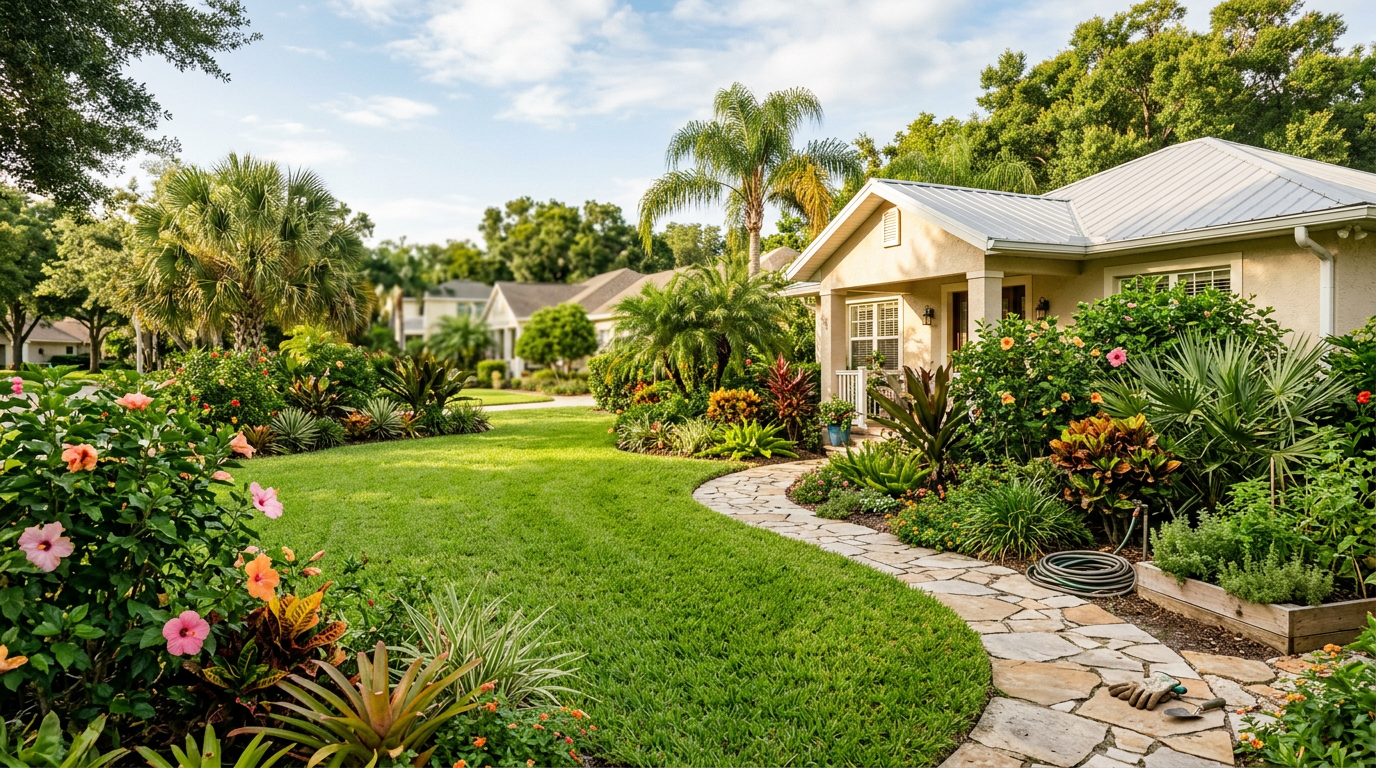
Let’s get one thing straight: taking care of a lawn in Florida is a different beast entirely. You’re not just cutting grass; you’re fighting a year-round battle against biblical humidity, sandy soil, invasive weeds that laugh at herbicides, and a sun that seems personally offended by lush, green turf. Forget what your cousin in Ohio does. Your lawn is playing by a different set of rules, and you need a Florida-specific game plan. This is it. We're giving you the month-by-month, no-nonsense Florida lawn care schedule to get your yard looking less like a sad, crunchy patch and more like the envy of the block.
Know Your Florida Turf: The Main Players
Before you do anything, you need to know what you're working with. Most Florida lawns are one of four warm-season grass types. What works for one will kill another.
- St. Augustine: The undisputed king of Florida lawns. It's lush and shade-tolerant but thirsty and susceptible to chinch bugs and fungus. If you have a classic Florida lawn, it's probably this.
- Zoysia: The upscale cousin. It’s dense, drought-tolerant, and feels great underfoot, but it's a slower grower and can be expensive to install.
- Bahia: The tough, low-maintenance option. Often seen on roadsides, it's incredibly drought-resistant but has a coarser texture and produces tall, unsightly seed heads.
- Bermuda: The athlete. Loves full sun, handles traffic well (think golf courses), but requires a lot of maintenance (fertilizer, water, frequent mowing) to look its best.
Trying to get any of these to grow from scratch can be a challenge. If you're starting with a patch of dirt, our guide on How to Grow Grass in Florida Sand is required reading.
Spring Lawn Care Schedule for Florida (March - May)
Spring is when your lawn wakes up and starts chugging caffeine. It's go-time.
- Mowing: Start your engines. Begin mowing every 1-2 weeks as growth picks up. Keep St. Augustine at 3.5-4 inches, Zoysia at 2-3 inches, and Bahia at 3-4 inches. Never remove more than one-third of the blade at a time.
- Fertilizing (The Green-Up): Once the chance of frost has passed (usually early March for South FL, late March for Central/North FL), it’s time for the first feeding. Use a quality slow-release fertilizer with iron. We like Scotts Southern Turf Builder, which you can find at any Home Depot or Lowe's for about $75 for a 14,000 sq. ft. bag. This is your main feeding before the summer blackout.
- Weed Control: Apply a pre-emergent herbicide like The Andersons Pro Turf Barricade (~$60) in early March to stop crabgrass before it starts. Spot-treat any existing broadleaf weeds like dollarweed with a post-emergent safe for your grass type.
- Pest Watch: Chinch bugs are waking up and getting hungry. Check for yellowish, patchy areas that look drought-stressed, especially near hot concrete. If you see them, apply a targeted insecticide like BioAdvanced Complete Insect Killer.
Summer Lawn Care in Florida (June - August): Survival Mode
Welcome to The Gauntlet. Summer in Florida is about survival, not winning beauty pageants. Your goal is to keep the lawn alive through extreme heat, humidity, and either drought or deluge.
- Fertilizer Blackout: THIS IS CRITICAL. Many Florida counties—including Miami-Dade, Pinellas, Sarasota, and Orange—have ordinances that ban the use of nitrogen and phosphorus fertilizers from roughly June 1st to September 30th. Check your local county's regulations! The ban is in place to prevent fertilizer runoff from fueling toxic algae blooms in our waterways during the rainy season. Don't be the person who pollutes the bay for a slightly greener lawn. If you must fertilize, use compliant products with iron or micronutrients only, like Ironite Mineral Supplement (~$25).
- Watering: Water deeply and infrequently to encourage deep root growth. This means 1-2 times per week, delivering about 0.5 to 0.75 inches of water each time. Water in the early morning (4 AM - 8 AM) to reduce evaporation and prevent fungus. According to the University of Florida IFAS Extension, a poorly managed irrigation system can waste up to 50% of the water applied, so check your sprinkler heads for breaks and proper aim. (Source: https://edis.ifas.ufl.edu/publication/LH025)
- Mowing: Mow high! Raise your mower deck to the highest recommended setting for your grass type. Taller grass blades shade the soil, keep roots cooler, and conserve moisture.
- Fungus & Pests: This is prime time for gray leaf spot on St. Augustine and dollar spot on Zoysia. The combination of heat and moisture is a petri dish. Be proactive. Apply a systemic fungicide like Scotts DiseaseEx (~$25) at the first sign of trouble. Keep an eye out for sod webworms, which chew grass blades down to the nub.
Fall Lawn Care Schedule for Florida (September - November)
Fall is Florida’s “second spring.” The oppressive heat breaks, the rainy season ends, and the lawn has a chance to recover and thrive before its brief winter nap.
- Fertilizing: Once the fertilizer blackout lifts (usually October 1st), it's time for the most important feeding of the year. This application helps the lawn recover from summer stress and store energy for winter. Use another round of a balanced, slow-release fertilizer. This is the meal that carries it through the cooler months.
- Weed Control: As temperatures drop, winter weeds like poa annua (annual bluegrass) and chickweed will try to get a foothold. Apply another round of pre-emergent in late October or early November.
- Aeration: If your soil is compacted from summer traffic, now is a good time to core aerate. This is especially true for clay-heavy soils. This process pulls plugs of soil from the lawn, allowing water, air, and nutrients to reach the root zone. You can rent a machine for about $100/day or hire a service.
- Overseeding? Don't Bother: We see people ask this all the time. Unlike cool-season grasses up north, you do not overseed St. Augustine, Zoysia, or Bahia. It doesn't work and can damage the existing turf. If you're curious about when this practice is appropriate, you can read our general guide on When to Overseed Your Lawn in Fall, but know it's not for your Florida lawn.
Winter Lawn Care in Florida (December - February): The Cool Down
For much of Florida, especially South Florida, there isn't a true winter dormancy. Growth just slows way, way down. In North Florida, your lawn might turn brown and go fully dormant.
- Mowing & Watering: You can back off significantly. Mow only as needed, maybe once every 3-4 weeks. Water only if you see signs of drought stress; a freeze can do more damage to a wet lawn than a dry one.
- Soil Test: Winter is the perfect time to get a soil test from the University of Florida's Extension Soil Testing Laboratory. For a small fee (around $10), they'll tell you your soil's pH and nutrient levels, so you can tailor your fertilizer plan for the spring. Stop guessing, start testing.
- Equipment Maintenance: We've fixed more lawnmowers caked with last season's wet grass than we can count. Don't be that person. Use the downtime to clean your mower, sharpen the blade, change the oil, and get it ready for spring. A little winter maintenance saves you a $200 repair bill in April. This approach is universal, whether you're in the humid swamps of Florida or the arid plains of the Lone Star State. It's a core principle of our Texas Lawn Care guide too.
Managing a Florida lawn is a commitment, but it's not impossible. By following this schedule and paying attention to what your lawn is telling you, you can win the war. You just have to respect the local rules and the unique Florida climate—a lesson that applies to many regions, from North Carolina to the Pacific Northwest.
Frequently asked
What is the best month to fertilize my lawn in Florida?+
The best months are spring (March/April) and fall (October/November). This schedule avoids the summer fertilizer blackout periods common in many Florida counties and feeds the grass during its most active growth phases. Always use a slow-release formula and follow a soil test for best results.
How often should I water my Florida lawn?+
Aim for 1-2 times per week, delivering about 0.5 to 0.75 inches of water each time. Water in the early morning. This deep and infrequent method encourages strong root growth and is more effective than shallow, daily watering. Adjust based on rainfall.
What are the black, tiny bugs in my Florida grass?+
Those are likely chinch bugs, a major pest of St. Augustine grass. They suck the sap from grass blades, causing yellow, drought-like patches. You can confirm by parting the grass at the edge of a dead patch and looking for them near the soil.
Why is there a fertilizer ban in Florida during the summer?+
Many Florida counties ban nitrogen and phosphorus fertilizers from June to September. This is to prevent nutrient runoff during the heavy summer rains, which can flow into lakes, rivers, and bays, causing harmful algae blooms that kill marine life and impact water quality.
Should I put new sod down in the summer in Florida?+
While you can, it's challenging. The intense heat and heavy rains create a high-stress environment for new sod, making it prone to fungus and disease. The best times to lay sod in Florida are spring and fall when temperatures are more moderate.