
Florida Lawn Care Schedule: A Month-by-Month Guide
Tired of a sad, patchy yard? We're breaking down the exact Florida lawn care schedule you need for a lush, green carpet year-round, no gatekeeping allowed.
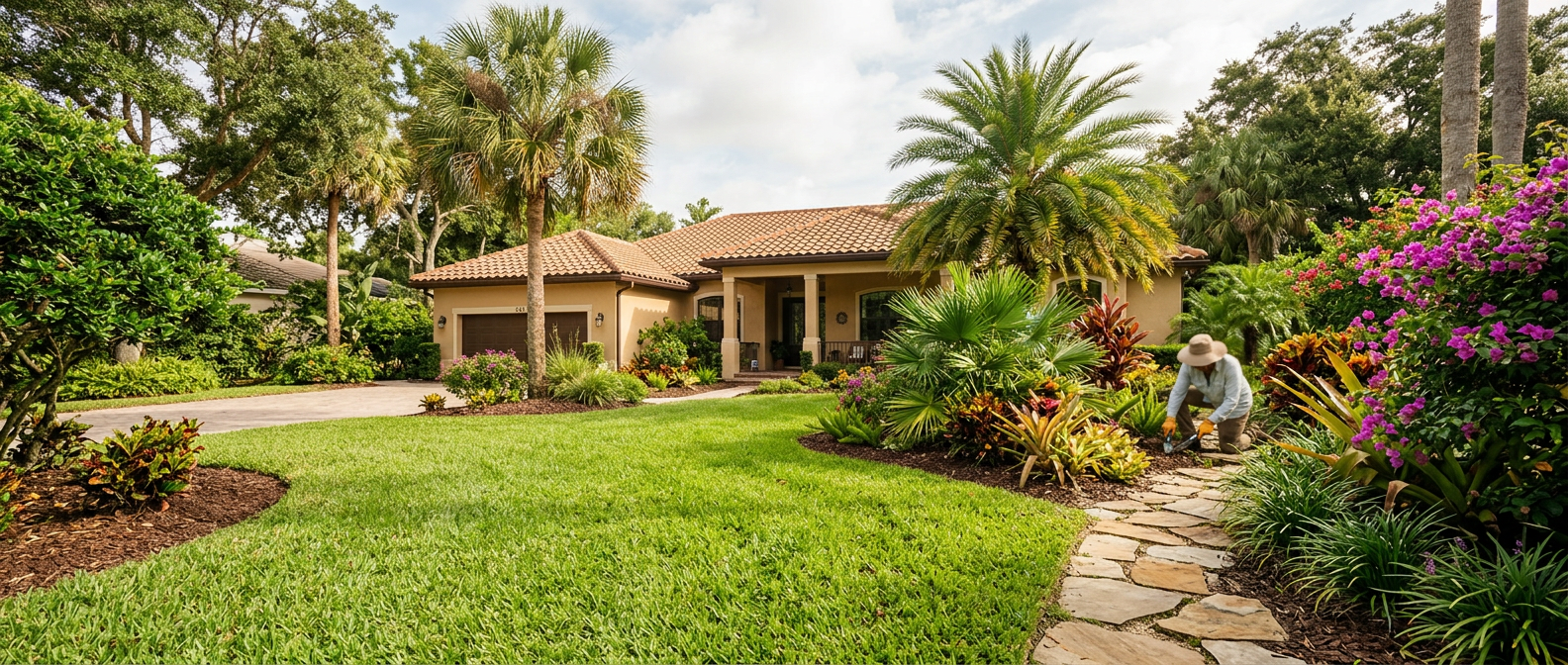
Let's be direct: keeping a lawn green in Florida is a special kind of challenge. You're not in Ohio. You're in a subtropical theme park of intense sun, torrential rain, sandy soil, and bugs that want to eat your grass for breakfast. Forget everything you've read about cool-season turf. The Florida lawn care schedule is a year-round commitment, but it’s not as complicated (or expensive) as the lawn service companies want you to believe.
We’re here to give you the no-nonsense, month-by-month playbook. We'll tell you what to do, when to do it, and what to buy without breaking the bank. This is how you get a lawn that makes your neighbors jealous, even in the brutal August heat.
Understanding Your Florida Lawn: Grass & Soil
First, you need to know what you're working with. Most Florida lawns are one of three warm-season grass types:
- St. Augustinegrass: The undisputed king of Florida. It's lush, shade-tolerant, and handles the salt spray if you're near the coast. Its downsides? It's thirsty and a favorite meal for chinch bugs.
- Zoysiagrass: The barefoot grass. It's dense, feels great underfoot, and has good drought tolerance once established. It's a bit slower to grow and can be prone to thatch.
- Bahiagrass: The low-maintenance option. Often seen on roadsides, it's extremely drought-tolerant and requires less fertilizer. It's not as dense or dark green as the others and produces tall, V-shaped seed heads.
The second piece of the puzzle is your soil. Most of the state is sitting on what is essentially sand. This means it drains lightning-fast and doesn't hold nutrients well. This is why our approach to watering and fertilizing is so specific. If you're struggling with this, our guide on how to grow grass in Florida sand is required reading.
Spring (March-May): The Florida Lawn Wake-Up Call
As the temperatures climb and the days get longer, your lawn starts waking up from its short winter nap. This is go time.
- Mowing: Start mowing every 7-10 days. The rule is to never remove more than one-third of the grass blade at a time. For St. Augustine and Zoysia, aim for a mowing height of 3-4 inches. Taller grass develops deeper roots and shades out weeds. For Bahia, you can go a bit lower, around 2.5-3 inches.
- Fertilizing: Wait until mid-April when the chance of a late frost is zero (especially in North/Central Florida) and the grass is actively growing. This first meal is crucial. Use a balanced, slow-release fertilizer. We like Scotts Southern Turf Builder, which costs about $55 for a 14-lb bag that covers 5,000 sq. ft. at Home Depot.
- Weed Control: Now is the time to spot-treat any broadleaf weeds that popped up over winter with a liquid herbicide like Spectracide Weed Stop for Lawns. Read the label—some products can damage St. Augustinegrass if applied when it's over 85°F.
- Insect Control: Do a quick inspection for pests. If you had grub problems last year, applying a preventative treatment like BioAdvanced 24 Hour Grub Killer Plus (~$25) in late spring can save you a world of hurt later.
Summer (June-August): The Florida Growing Season Grind
Welcome to the jungle. This is peak growing season, driven by heat, humidity, and daily rain. Your job is to manage the chaos.
- Mowing: You'll be mowing at least once a week, maybe twice during rainy periods. Keep that mower deck high! Mowing tall is your best defense against the summer sun.
- Watering: This is where most people go wrong. Do not water every day. Water deeply but infrequently. Aim for 1-2 times per week, applying about 3/4 inch of water each time. How do you measure? Place a few empty tuna cans on the lawn before you water; when they're full, you're done. Always water in the early morning (4 AM to 8 AM) to reduce evaporation and prevent fungus. Be aware of local restrictions—many counties, like those under the South Florida Water Management District, have specific watering days.
- Fertilizing: Your lawn is hungry. Feed it with a slow-release formula in June and again in August. CRITICAL: Many Florida counties ban the application of nitrogen and phosphorus from June 1st to September 30th to prevent runoff into waterways. Check your local county ordinance! If you're in a restricted area, use a phosphorus-free, iron-heavy product like Ironite Mineral Supplement to keep your lawn green without violating the rules. This approach to handling summer stress is similar to what we recommend for other hot climates in our Texas lawn care guide.
- Pest Control: Summer is chinch bug season for St. Augustine and sod webworm season for all grass types. Walk your lawn every few days. Look for yellowing, drought-stressed areas that don't respond to water. That's the sign. Treat immediately with a product labeled for the specific pest.
The University of Florida reports that homeowners apply, on average, 35% more fertilizer and 50% more water than their lawns actually need, often leading to nutrient runoff and wasted money. Following a smart schedule prevents this, saving you cash and protecting Florida's environment. (https://edis.ifas.ufl.edu/publication/LH025)
Fall (September-November): Prepping for Less-Humid Days in Florida
Fall is arguably the most important season for a successful Florida lawn. The weather is gorgeous, and the work you do now sets you up for success next spring.
- Fertilizing: Apply your most important feeding of the year in October. This is your "winterizer" application. Use a fertilizer with higher potassium (the 'K' in N-P-K) to promote root health and disease resistance. Sunniland's Winterizer Weed & Feed is a popular choice found at local Florida stores like Lowes or Ace Hardware for about $30, but we prefer separating feeding and weed control.
- Weed Control: THIS IS CRITICAL. In late October or early November, apply a pre-emergent herbicide. This creates a barrier that stops winter weeds like poa annua (annual bluegrass) before they even start. A granular product like Lesco's Stonewall from a SiteOne Landscape Supply is what the pros use, but Scotts Turf Builder Halts Crabgrass Preventer works well too.
- Watering: As temperatures drop, you can reduce watering frequency to once a week or even less if you're getting rain.
- Mowing: Growth will slow down. Adjust your mowing schedule accordingly, but maintain that 3-4 inch height.
Winter (December-February): Rest, Recharge, and Light Duty
Your lawn is mostly dormant, especially in North and Central Florida. South Florida lawns may stay semi-green but growth slows to a crawl.
- Mowing: You might only need to mow once or twice a month to keep things tidy and mulch any fallen leaves.
- Watering: Turn off your automatic sprinklers. Only water manually if the lawn looks stressed after a prolonged dry spell (2-3 weeks with no rain).
- Weed Control: This is the best time to spot-treat persistent broadleaf weeds. Since the grass is dormant, the weeds stand out, and herbicides are very effective. Look for dollarweed, clover, and dandelions.
- Get Ready: Winter is the perfect time to perform maintenance on your mower—sharpen the blade, change the oil. We've seen more lawns ruined by dull mower blades than by almost anything else. A clean cut helps the grass heal quickly; a dull blade rips and tears it, inviting disease.
Florida-Specific Lawn Nightmares
Even with a perfect schedule, Florida will throw curveballs. Knowing your enemy is half the battle. While other regions deal with drought, Florida's challenges are often a mix of too much water followed by not enough. It's a different beast than the dry-climate strategies we discuss for Southern California drought landscaping.
- Pests: Learn to identify Chinch Bugs (St. Augustine), Sod Webworms (all grasses), and Grubs (all grasses). Early detection is everything.
- Fungus: Brown Patch and Dollar Spot are the main culprits. They almost always appear in areas that are overwatered or where air circulation is poor. The solution is almost always to water less and more deeply.
- Weeds: Dollarweed (also called pennywort) loves wet feet; if you have it, you're overwatering. Nutsedge is a spiky, light-green weed that grows faster than your grass; it requires a specific nutsedge-killer. Knowing your grass type is key, as some herbicides safe for Bahia will torch St. Augustine. This is why having the best grass for your region is so important.
Stick to this Florida lawn care schedule, and you’ll spend less time fighting your yard and more time enjoying it. You’ve got this.
Frequently asked
What is the best month to fertilize my lawn in Florida?+
The best time to start fertilizing your Florida lawn is in spring (April) after the last frost. Continue every 6-8 weeks through the growing season, stopping in late fall (October). Use a slow-release, low-phosphorus fertilizer to comply with local ordinances.
How often should I water my lawn in Florida?+
Water your Florida lawn 1-2 times per week during summer, and less during cooler months. Apply about 3/4 inch of water each time, preferably in the early morning (before 8 AM) to reduce evaporation and prevent fungus growth.
What is the best type of grass for a Florida lawn?+
St. Augustinegrass is the most popular choice for its shade and salt tolerance. Zoysiagrass is a close second, prized for its dense growth and drought resistance. Bahiagrass is also common, especially in North Florida, for its low-maintenance needs.
When should I apply weed and feed in Florida?+
We generally advise against combination 'weed and feed' products. For best results, apply pre-emergent herbicides in the fall (October) and spring (February) to prevent weeds. Fertilize separately according to the seasonal schedule for better control and lawn health.
What height should I mow my Florida lawn?+
For the most common Florida grasses like St. Augustine and Zoysia, mow at a height of 3 to 4 inches. Mowing high encourages deep root growth, helps the lawn retain moisture, and naturally shades out potential weeds.