
Florida Lawn Care Schedule: A Month-by-Month Guide
Keeping a Florida lawn green year-round isn't about luck; it's about timing. Here's the exact schedule we use for fertilizing, mowing, and pest control in the Sunshine State.
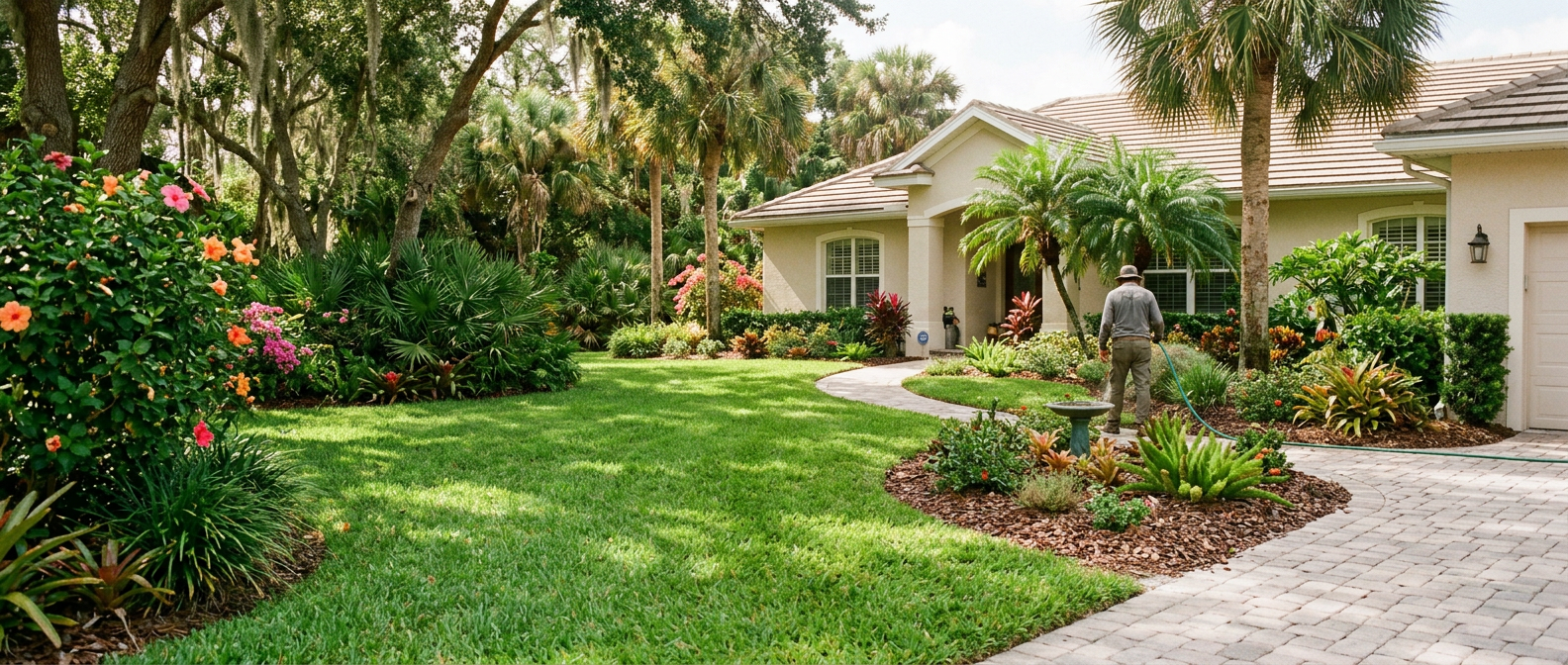
Let's be direct: keeping a lawn alive in Florida is a different ballgame. Between the blistering sun, the biblical humidity, the sandy soil that holds nutrients like a sieve, and bugs that could star in a horror movie, you can't just throw down some seed and hope for the best. We've managed lawns from the Panhandle down to the Keys, and the one thing that separates a lush, green carpet from a patchy, brown mess is a calendar. This isn't about vague advice; this is your exact, month-by-month Florida lawn care schedule.
Forget what your neighbor who just moved from Ohio tells you. Your St. Augustine, Zoysia, or Bahia grass has its own set of rules. We're here to translate them for you, no gatekeeping allowed.
Understanding Florida's Unique Lawn Challenges
Your lawn isn't just grass; it's an ecosystem fighting a constant battle. The main challenges in Florida are:
- Year-Round Growing Season: Unlike northern states, our lawns don't truly go dormant. They slow down, but they're always a little active, meaning the work never completely stops.
- Sandy Soil: Most of Florida is built on sand. While great for beaches, it's terrible for holding water and nutrients. What you put down can literally wash away in a single thunderstorm. This is why timing and product choice are critical. If you're starting from scratch, learning how to grow grass in Florida sand is step one.
- Pests & Fungus: The heat and humidity are a breeding ground for chinch bugs (the mortal enemy of St. Augustine grass), mole crickets, armyworms, and fungal diseases like brown patch. Proactive treatment isn't optional; it's mandatory.
- Watering Rules: Droughts and population density mean nearly every county in Florida has watering restrictions. You can't just run your sprinklers whenever you feel like it. You need a strategy.
Most Florida lawns are one of three warm-season grass types: St. Augustine (the wide-bladed king), Zoysia (the dense, fine-bladed luxury model), or Bahia (the tough, low-maintenance workhorse). This guide works for all three, with minor adjustments.
Spring Kickoff: Your Florida Lawn Care Plan (March - May)
As the temperatures consistently stay above 70°F, your lawn starts waking up and getting hungry. This is go-time.
- Mowing (March-May): Start mowing weekly. The most important rule for Southern lawns: MOW HIGH. Set your mower to 3.5-4 inches for St. Augustine and Zoysia, and 3-4 inches for Bahia. This promotes deep roots and shades out weeds. Never remove more than one-third of the blade at a time.
- Fertilizing (April): Apply your first round of fertilizer in mid-April. Do not be tempted to fertilize earlier. A late frost on freshly fertilized, tender new growth can wreck your lawn for months. We recommend a slow-release, high-nitrogen formula. Scotts Southern Turf Builder is a reliable choice, costing around $50 for a 10,000 sq. ft. bag. If you see local brands like Sunniland, their products are formulated specifically for our soil.
- Weed Control (February/March): The most important thing you can do for weed control all year happens now. Apply a pre-emergent herbicide (crabgrass preventer) in mid-to-late February. This creates a barrier that stops weed seeds from germinating. You're preventing problems instead of chasing them. A bag of Lesco Stonewall Crabgrass Preventer from a local SiteOne Landscape Supply or a big box store will run you about $40 and is worth every penny.
- Watering: Water as needed, following local restrictions. Aim for 1 inch of water per week, delivered in one or two deep waterings. Early morning is the best time.
Summer Survival: Florida Lawn Maintenance (June - August)
Welcome to the jungle. This is peak growing season, which means it's also peak mowing, pest, and fungus season.
- Mowing (June-August): You'll likely be mowing every 5-7 days. Keep that mower deck high! It's the best defense against heat stress. The lawn care schedule in Texas has similar challenges with heat, and the advice is the same: don't scalp your lawn. Check out our Texas lawn care guide for more on summer heat survival.
- Fertilizing (June & August): Feed your lawn again in June and late August. It's growing aggressively and needs the fuel. If your county has a fertilizer blackout period during the summer rainy season (many do, like Pinellas, Sarasota, and Miami-Dade), your June application will be your last until it lifts in the fall. Check your local ordinances!
- Pest Control (All Summer): Be vigilant. Look for irregular yellow or brown patches in the hottest, sunniest parts of your lawn. This is a classic sign of chinch bugs in St. Augustine. Part the grass at the edge of the patch and look for tiny black bugs. Treat immediately with a product containing bifenthrin, like BioAdvanced Complete Insect Killer, which costs about $20 for a concentrate bottle.
- Fungus Control: Heavy summer rains plus high humidity equals fungus. Brown patch and gray leaf spot are common. Apply a systemic fungicide like Scotts DiseaseEx ($25/bag) as a preventative measure, especially if you've had issues before.
According to the South Florida Water Management District (SFWMD), landscape irrigation can account for over half of a household's total water consumption. This has led to year-round watering restrictions in most counties, typically limiting homeowners to watering just two days a week, often based on odd/even street addresses. Fines for violations can start at $50 and go up significantly for repeat offenders. Always check your city or county website for the current rules. (Source: https://www.sfwmd.gov/community-residents/water-conservation)
Fall Prep: The Most Important Season for Florida Lawns (September - November)
Fall is the most critical season for your lawn's long-term health. What you do now determines how well it will survive the (mild) winter and how strong it will be next spring.
- Fertilizing (October): Apply your last major feeding of the year around early October. This is the most important application. The lawn will use these nutrients to store energy in its roots for the winter. You can use a balanced fertilizer or one slightly higher in potassium (the 'K' in N-P-K) to promote root health.
- Weed Control (October): Just as you did in the spring, it's time for another round of pre-emergent herbicide in mid-October. This one is to prevent winter weeds like poa annua (annual bluegrass) and assorted broadleaf weeds. Don't skip this. It's the secret to a clean lawn in February.
- Overseeding? (Don't!): People moving from up north often ask about overseeding. In Florida, we generally do NOT overseed our warm-season grasses. They don't go fully dormant, and trying to grow ryegrass in them creates a competition that can weaken your primary turf. If you want to understand the concept for cool-season lawns, you can read up on when to overseed in the fall, but don't apply it to your St. Augustine.
- Mowing: As growth slows, you can reduce mowing frequency to every 10-14 days. Keep the height the same.
Winter "Downtime": Your Florida Lawn To-Do List (December - February)
Winter in Florida is a period of slow growth and maintenance, not hibernation.
- Fertilizing (DO NOT DO IT): This is the #1 rule of Florida winter lawn care. Do not fertilize. It forces weak, tender growth that is extremely vulnerable to the occasional frost we get, and it promotes disease.
- Mowing: You might only need to mow once a month, mainly just to clean up leaves or knock down the occasional winter weed that broke through your pre-emergent barrier. Do not stop mowing entirely.
- Weed Control: This is your main winter job. Spot-treat any broadleaf weeds that appear with a liquid herbicide safe for your grass type. Remember, February is when you'll apply the first pre-emergent for the coming year, getting a jump on summer crabgrass.
- Watering: Your lawn needs very little water in the winter. The occasional rainfall is often enough. Only water if you go 2-3 weeks without rain and the grass shows signs of wilt (blades folding in half). Even then, water deeply but just once.
This schedule might seem like a lot, but it quickly becomes second nature. By aligning your tasks with the seasons, you're working with your Florida lawn, not against it. It saves you money, time, and the headache of trying to revive a lawn that's been nuked by chinch bugs or fried by the summer sun. Now go enjoy that green grass.
Frequently asked
What is the best month to fertilize my lawn in Florida?+
The best time to start fertilizing your Florida lawn is in the spring, around April, after the last frost danger has passed. Continue fertilizing every 6-8 weeks until October. Avoid fertilizing during the winter dormant months (December-February) to prevent weak growth and disease.
How often should I water my lawn in Florida?+
Water your Florida lawn 1-2 times per week, applying about 0.75 inches of water each time. Water in the early morning to reduce evaporation and prevent fungus. Always check your local county's watering restrictions, as they are common and strictly enforced throughout the state.
When should I apply weed and feed in Florida?+
Apply a 'weed and feed' product in the spring (April/May) when weeds are actively growing. For superior control, use a dedicated pre-emergent herbicide in February to stop summer weeds and in October to prevent winter weeds. Don't rely solely on weed and feed products for prevention.
How high should I cut my St. Augustine grass in Florida?+
You should mow St. Augustine grass at one of the highest settings on your mower, typically 3.5 to 4 inches. Mowing high encourages a deep root system, helps the grass tolerate heat and drought, and naturally shades out potential weeds, reducing your workload.
What is the biggest mistake in Florida lawn care?+
The biggest mistake is fertilizing in the winter. It encourages weak, spindly growth that is highly susceptible to frost damage and disease. The second biggest error is cutting the grass too short, which stresses the lawn and invites weeds, pests, and heat damage.