
Florida Lawn Care Schedule: A Month-by-Month Guide
Stop guessing and start dominating your tropical turf. Here's the no-nonsense, month-by-month lawn care schedule specifically for Florida's unique climate.
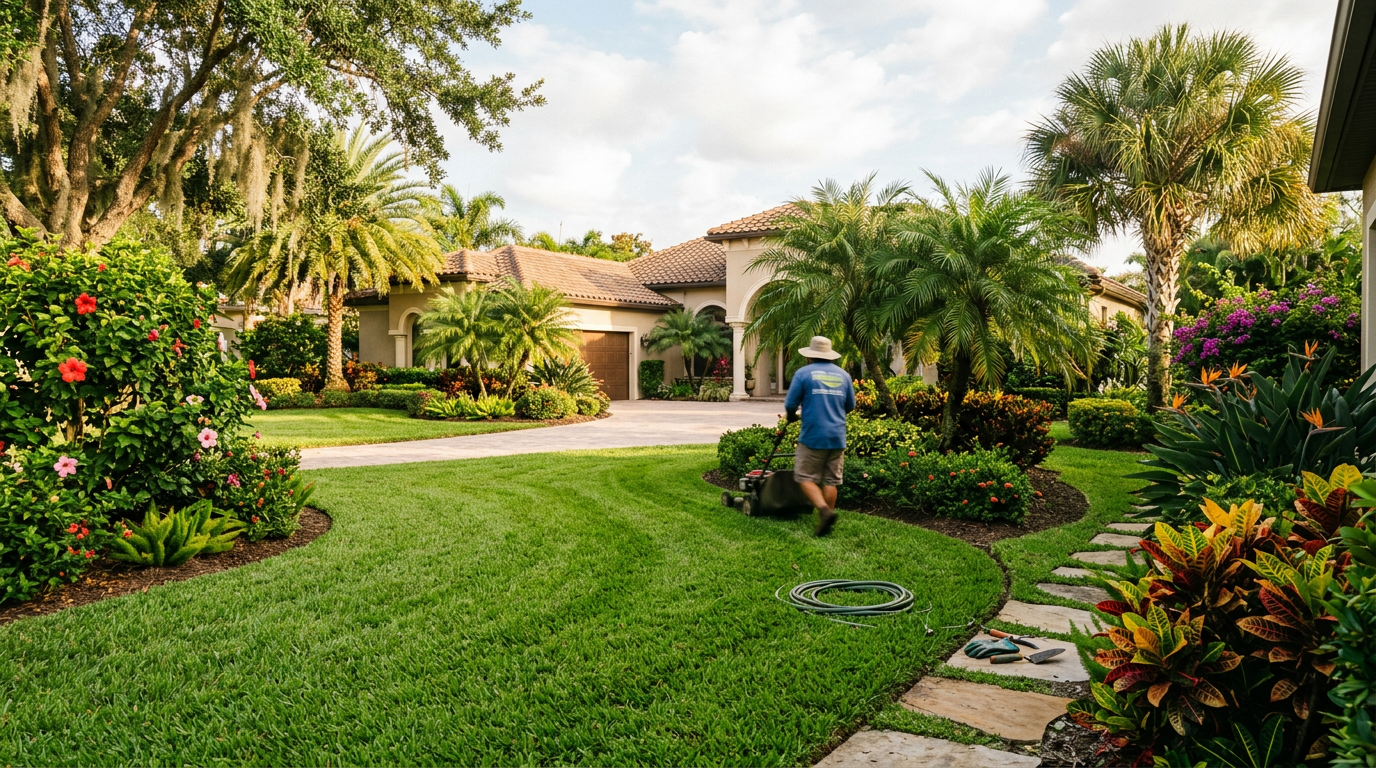
Let's get one thing straight: a Florida lawn is not like a lawn anywhere else. It’s a year-round battle against heat, humidity, torrential rain, sudden drought, and pests that look like they were designed in a lab to destroy your weekend. Trying to follow a generic national lawn care guide here is a recipe for a patchy, brown, fungus-ridden disaster. That's why we built this no-nonsense Florida lawn care schedule, broken down by season and month, so you can finally get the upper hand on your tropical turf.
Whether you're in North, Central, or South Florida, the principles are the same, but the timing shifts. We'll cover the big three grass types—St. Augustine, Zoysia, and Bahia—and tell you exactly what to do, and when.
First, Know Your Florida Grass
Before you do anything, you need to know what you're working with. The wrong move on the wrong grass can cause serious damage. Florida's holy trinity of turfgrass is:
- St. Augustine: The undisputed king of Florida lawns. It's the wide-bladed, dense green stuff you see everywhere. It loves sun but is susceptible to chinch bugs and fungus. It also requires the most water and fertilizer.
- Zoysia: A beautiful, dense, finer-bladed grass that feels great underfoot. It's more drought and wear-tolerant than St. Augustine but can be slow to recover from damage.
- Bahia: The most drought-tolerant of the three. It has a more open, weedy look and produces distinctive 'Y'-shaped seed heads. It's a low-maintenance option often found in pastures and along roadsides, but many homeowners love its durability. If you're starting from scratch, learning how to grow grass in Florida sand is a crucial first step, and Bahia is often a good candidate.
Spring Lawn Care Schedule for Florida (March-May)
Spring is when your lawn wakes up and starts growing aggressively. It's time to set the stage for the rest of the year.
- Mowing: Start mowing regularly, removing no more than one-third of the blade height at a time. For St. Augustine and Zoysia, aim for a height of 3-4 inches. Taller grass encourages deeper roots, which is critical for surviving the summer.
- Fertilizing: This is your main feeding window. Around mid-April, after the last frost danger has passed (even in North Florida), apply a quality slow-release fertilizer. Look for something like Scotts Southern Turf Builder. A 43.9 lb bag runs about $89 and will cover up to 15,000 sq. ft. Your goal is to apply 1 pound of nitrogen per 1,000 square feet.
- Weed Control: If you didn't in late winter, apply a pre-emergent herbicide in early March to prevent summer weeds like crabgrass. If you see broadleaf weeds like dollarweed, spot-treat with a post-emergent herbicide safe for your grass type.
- Watering: Water only when the grass shows signs of stress (folded blades, bluish-gray color). Water deeply (1/2 to 3/4 inch) once or twice a week, always following local restrictions.
Summer Lawn Care Schedule for Florida (June-September)
Welcome to the danger zone. This is Florida's rainy season, defined by brutal heat, suffocating humidity, and daily downpours. This combination is a paradise for fungus and pests.
- Mowing: Keep mowing high and frequently! The growth will be explosive. Bagging your clippings during this time can help reduce the spread of fungal diseases.
- Fertilizing: DO NOT FERTILIZE. We can't say this enough. Fertilizing in the summer stresses the grass and fuels diseases like brown patch and gray leaf spot. There's a reason many local ordinances, like those in Pinellas County, ban nitrogen fertilizer application from June 1 to September 30. Your spring feeding is all it needs.
- Pest & Disease Control: This is your primary job all summer. Be vigilant. At the first sign of chinch bug damage (yellowing, drought-like patches) or brown patch fungus (circular brown areas), treat immediately. We keep a bottle of BioAdvanced Fungus Control for Lawns (about $22) and BioAdvanced Complete Insect Killer on hand at all times. It's not if, but when you'll need them.
- Watering: Turn off your automatic sprinklers. Let the rain do the work. Only turn the system on for a deep watering if you go 4-5 days without a significant shower and the lawn shows stress. The constant moisture is your enemy right now.
Fall Lawn Care Schedule for Florida (October-November)
As the humidity breaks and temperatures cool, the lawn begins to recover from summer stress. This is a critical time to strengthen it for the (mild) winter ahead.
- Mowing: Continue mowing at summer heights. As growth slows in late November, you can gradually lower the height slightly, but never scalp it.
- Fertilizing: This is your second, and last, feeding window. Apply another round of slow-release fertilizer in October. This helps the grass store nutrients for winter and encourages a strong spring green-up. This is often called the 'winterizer' application, though our winters are a joke compared to other regions. If you're in the Panhandle with a different grass type, you might wonder when to overseed in the fall, but for most Florida lawns, this is not a recommended practice.
- Weed Control: Spot-treat any remaining summer weeds and watch for winter annuals like poa annua to pop up. A pre-emergent application in October can help prevent them.
- Aeration: Fall is the best time to aerate your lawn if the soil is compacted. Renting a core aerator from a big box store for about $70 for four hours is a great investment for long-term lawn health.
According to the University of Florida IFAS Extension, lawns in Florida typically need about 1 inch of water per week, either from rain or irrigation. However, they also note that outdoor irrigation can account for 60% or more of total residential water use, much of which is wasted due to inefficiency (Source: https://edis.ifas.ufl.edu/publication/LH025). This is why turning off automatic systems during the rainy season is not just good for your lawn, it's a huge water saver.
Winter Lawn Care Schedule for Florida (December-February)
Winter in Florida varies wildly. In South Florida, the grass may not go dormant at all. In North Florida, it will likely turn brown and stop growing. Adjust accordingly.
- Mowing: Drastically reduce frequency. In South Florida, you might mow every 3-4 weeks. In North Florida, you might not mow at all from December to February. We once had a client in Jacksonville who didn't touch their mower for ten weeks straight.
- Fertilizing: Absolutely no fertilizer. The grass is either dormant or not actively growing, and it cannot use the nutrients.
- Watering: Water only as needed, which may be as little as once every 2-3 weeks, if at all. Dormant grass still needs some moisture to keep its roots alive.
- Weed Control: Winter is prime time for broadleaf weeds. This is the easiest time to spot and treat them, as they'll be green in a field of dormant brown grass. Use a post-emergent herbicide labeled for your grass type. Applying a pre-emergent in late February is key to stopping spring weeds before they even start.
The Florida lawn care schedule is less about a rigid calendar and more about responding to what the climate—and your lawn—is telling you. It's a different world from the lawn care challenges in Texas or North Carolina, where seasons are more defined. Here, it's a year-round job, but with this schedule, it's one you can win.
Frequently asked
When should I fertilize my lawn in Florida?+
Fertilize your Florida lawn twice a year: once in the spring (around April) and once in the fall (around October). Avoid fertilizing during the summer rainy season (June-September), as it promotes disease and is often banned by local ordinances to protect waterways.
How often should I water my lawn in Florida?+
Water only when the grass shows signs of stress, typically 1-2 times per week during dry seasons. Apply 1/2 to 3/4 inch of water per session. During the summer rainy season, turn off your automatic sprinklers and let nature handle it to prevent fungus.
What is the best mowing height for St. Augustine grass in Florida?+
The best mowing height for St. Augustine grass is 3.5 to 4 inches. Mowing high encourages a deep root system, helps the grass withstand drought and heat stress, and shades out potential weeds. Never remove more than one-third of the blade at a time.
How do I get rid of dollarweed in my Florida lawn?+
Dollarweed thrives in overly wet conditions, so the first step is to reduce watering. For removal, you can hand-pull small patches or use a post-emergent herbicide containing Atrazine (for St. Augustine and Zoysia) or metsulfuron, which is effective and safer on more grass types.
What are the most common lawn pests in Florida?+
The most common and destructive lawn pests in Florida are chinch bugs (in St. Augustine grass), mole crickets (in Bahia grass), and sod webworms. Regular monitoring during the warm, wet summer months and prompt treatment with a broad-spectrum insecticide is crucial for control.