
Florida Lawn Care Schedule: A Month-by-Month Guide
Stop guessing and start growing. We're breaking down the exact Florida lawn care schedule you need for a yard that's the envy of the cul-de-sac, from the Panhandle to the Keys.
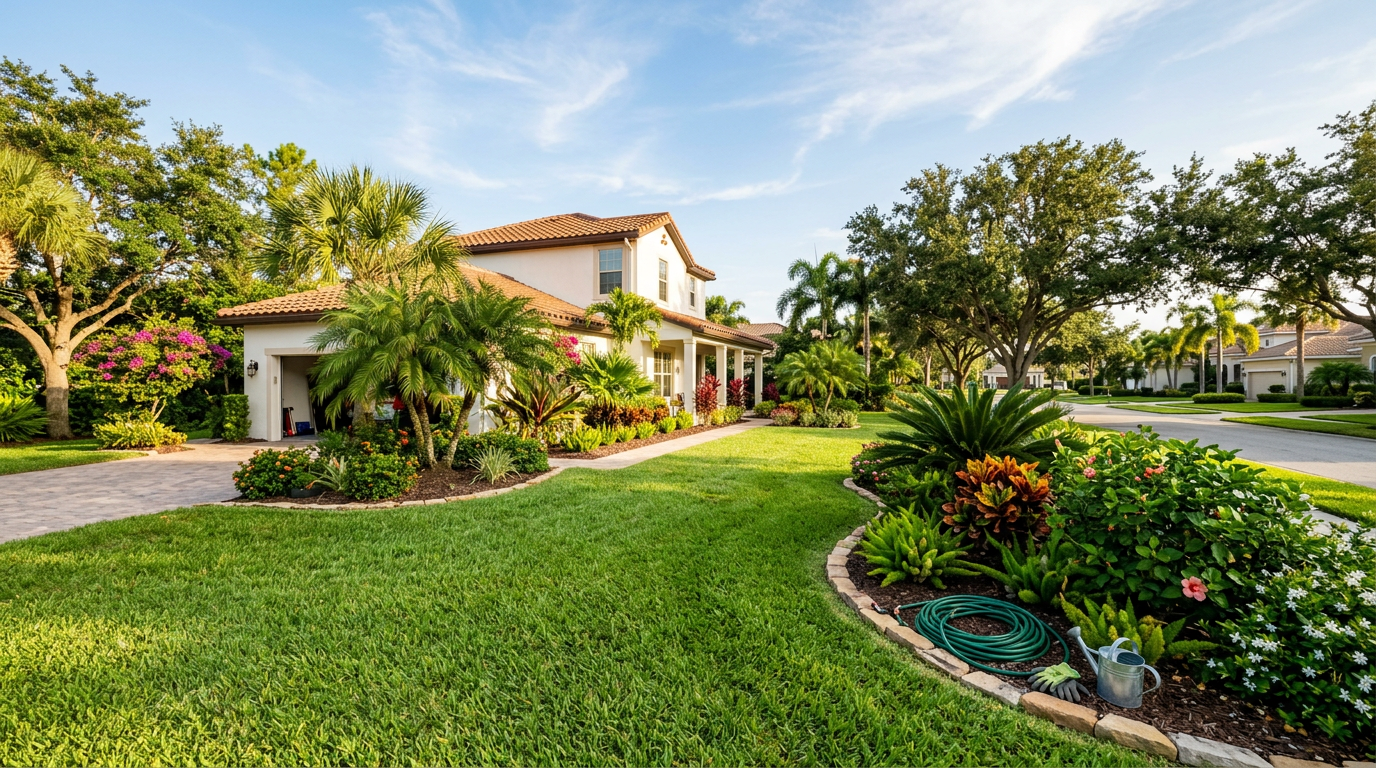
Let’s be direct. Keeping a lawn green in Florida is a special kind of fight. You're not just cutting grass; you're battling 98% humidity, sandy soil that holds nutrients like a sieve, and insects that could carry away a small dog. Forget what you know about lawn care from anywhere else. This is Florida. And you need a Florida-specific plan.
We’re here to give you that plan. This is the no-nonsense, month-by-month Florida lawn care schedule that actually works, whether you're in Jacksonville, Orlando, or Miami. No gatekeeping, no vague advice. Just the facts you need for a lawn that doesn't look like a sad, beige carpet.
Know Your Florida Turf: The Big Three
Before you do anything, you need to know what you’re working with. Most Florida lawns are one of three main warm-season grass types. Your entire strategy depends on this.
- St. Augustine: The undisputed king of Florida lawns. It's lush, dense, and loves the heat. It’s also thirsty, prone to chinch bugs, and needs a lot of fertilizer. If you have a classic, thick, green suburban lawn, it's probably St. Augustine.
- Zoysia: The upscale cousin. It's finer-bladed, incredibly dense, and feels great underfoot. It’s more drought and shade-tolerant than St. Augustine but grows slower and can be susceptible to fungus.
- Bahia: The workhorse. If you're in a more rural area or have a large lot, you might have Bahia. It’s known for its deep roots, incredible drought tolerance, and for being relatively low-maintenance. Its main downside is its open growth habit and the tall, V-shaped seed heads it shoots up constantly.
Getting grass to establish in the first place is its own challenge. If you're starting from scratch, we have a guide on how to grow grass in Florida sand that will save you a lot of heartache.
Spring Kickoff in Florida (March - May)
As the temperatures consistently stay above 70°F, your lawn is waking up and getting hungry. This is go-time.
- Mowing: Start mowing weekly. Keep your mower blade high! For St. Augustine, aim for 3.5-4 inches. For Zoysia, 2-3 inches. For Bahia, 3-4 inches. Mowing high encourages deep roots and shades out weeds.
- Fertilizing: This is the first major feeding of the year. Once you're mowing weekly (a sign of active growth), apply a slow-release fertilizer. Look for something like a 15-0-15 or 20-0-10. Sunniland Pro Weed & Feed from a local Florida nursery or Lesco's 16-4-8 from SiteOne Landscape Supply are solid choices. Expect to pay about $40-$50 for a bag that covers 5,000 sq. ft.
- Weed Control: Now is the time for a pre-emergent herbicide. This creates a barrier that stops weed seeds (hello, crabgrass) from ever germinating. Apply it in early March. If you miss the window, you'll be spot-treating weeds all summer.
- Watering: Your lawn needs about 0.75 inches of water per session. As it gets hotter, you may need to water once or twice a week. Water in the early morning to reduce evaporation.
The Florida Summer Grind (June - August)
Welcome to the jungle. This is peak season for heat, humidity, rain, and bugs. Your job is to keep the lawn alive and fighting.
- Mowing: Keep mowing weekly at the highest recommended height for your grass type. Never remove more than one-third of the grass blade at a time. Bagging clippings can help reduce the spread of fungus during the intensely humid rainy season.
- Watering: This is critical. The goal is deep, infrequent watering to encourage drought-resistant roots. Your lawn needs 1 to 1.5 inches of water per week, either from rain or irrigation. According to the University of Florida IFAS Extension, a typical Florida lawn requires about 0.75 inches of water per application. During the summer, this means watering 1-2 times per week in the absence of significant rainfall. This can total over 6,000 gallons per week for a 5,000 sq. ft. lawn, so efficient watering isn't just good for the grass, it's good for your water bill. (Source: https://edis.ifas.ufl.edu/publication/LH025). Always check local rules—most municipalities, like those under the South Florida Water Management District (SFWMD), have strict watering day restrictions.
- Pest Control: This is primetime for chinch bugs in St. Augustine and sod webworms in all grass types. Look for yellowing, drought-stressed patches that don't respond to water. That’s the chinch bugs. Get down on your hands and knees and look for them at the edge of the dead patches. Treat immediately with a product containing bifenthrin, like BioAdvanced Complete Insect Killer, which costs around $20 for a hose-end sprayer bottle.
- Fertilizing: Apply another round of slow-release fertilizer in June/July. Don't use fast-release, high-nitrogen fertilizer in the summer heat; it will just stress the lawn.
Fall Transition in Florida (September - November)
The intense heat is breaking, but the growing season isn't over. This is about preparing the lawn for the (mild) winter.
- Mowing: You can continue mowing weekly through September and October, then start tapering off to every 10-14 days as growth slows.
- Fertilizing: Apply your final fertilizer of the year in late September or early October. This is the most important feeding. The lawn will use these nutrients to store energy for the winter and for a quick green-up next spring. After this, no more fertilizer until March.
- Overseeding: Fall is generally the best time for this. If you have bare patches, you can consider overseeding, though it's less common for the spreading grasses we have here. If you're curious, check out our general guide on when to overseed your lawn in fall, but be aware that Florida's timing is a bit different.
- Disease Watch: As temperatures cool slightly but humidity remains, brown patch and dollar spot fungus can flare up. Look for circular brown patches. Treat with a fungicide like Scott’s DiseaseEx if you see it spreading. A bag costs about $25.
The Mild Florida Winter (December - February)
Your lawn isn't truly dormant like a Fescue lawn in North Carolina, but it's taking a much-needed break. Your job is to let it rest.
- Mowing: Drastically reduce frequency. You might only need to mow every 3-4 weeks, mostly just to keep winter weeds in check.
- Fertilizing: DO NOT FERTILIZE. Many counties and municipalities, particularly in Central and South Florida, have fertilizer blackout dates during the winter to prevent nutrient runoff into waterways. Fertilizing now only promotes weak growth that will be vulnerable to pests and fungus.
- Watering: Only water if there's an extended dry spell (2-3 weeks with no rain). The lawn doesn't need much when it's not actively growing.
- Soil Testing: Winter is the absolute best time to get a soil test. For about $10 plus shipping, you can send a soil sample to the University of Florida's IFAS Extension Soil Testing Laboratory. They'll send you back a detailed report telling you your soil's pH and exactly which nutrients it's missing. This takes all the guesswork out of fertilizing next year. It's the single best investment you can make for your lawn.
Caring for a lawn in Florida is a year-round commitment, not a seasonal hobby. It's a different game than landscaping in Texas or anywhere else. By following this schedule, you can stop fighting your lawn and start enjoying it.
Frequently asked
How often should I mow my lawn in Florida?+
Mow weekly during the summer growing season (April-October). Reduce to every 2-3 weeks in the cooler winter months (November-February) when growth slows. Always keep St. Augustine grass tall, around 3.5-4 inches, to promote health and choke out weeds.
When is the best time to fertilize my lawn in Florida?+
Fertilize during the active growing season, from spring through early fall. A good schedule is to apply slow-release fertilizer in April, June, and late September/early October. Avoid fertilizing from November to February to prevent weak growth and harmful runoff.
What is the best fertilizer for Florida lawns?+
Use a slow-release fertilizer with a high nitrogen and potassium content. Look for ratios like 15-0-15 or 20-0-10. Products like Sunniland's and Lesco's formulas are popular choices available at local Florida stores like Lowe's or SiteOne Landscape Supply.
How do I get rid of weeds in my Florida lawn?+
Apply a pre-emergent herbicide in February or March to prevent summer weeds like crabgrass. For existing broadleaf weeds, use a post-emergent herbicide containing Atrazine (for St. Augustine/Zoysia), but read the label carefully to avoid damaging your grass type.
How much should I water my Florida lawn?+
Water deeply but infrequently. Aim for 0.75 inches of water 1-2 times per week, depending on rainfall. Water in the early morning (before 10 AM) to minimize evaporation and fungal risk. Always follow your local municipality's watering restrictions.