
Florida Lawn Care Schedule: A Month-by-Month Guide
Forget generic advice. This is your no-nonsense, month-by-month lawn care schedule built specifically for Florida's unique climate, grasses, and challenges.
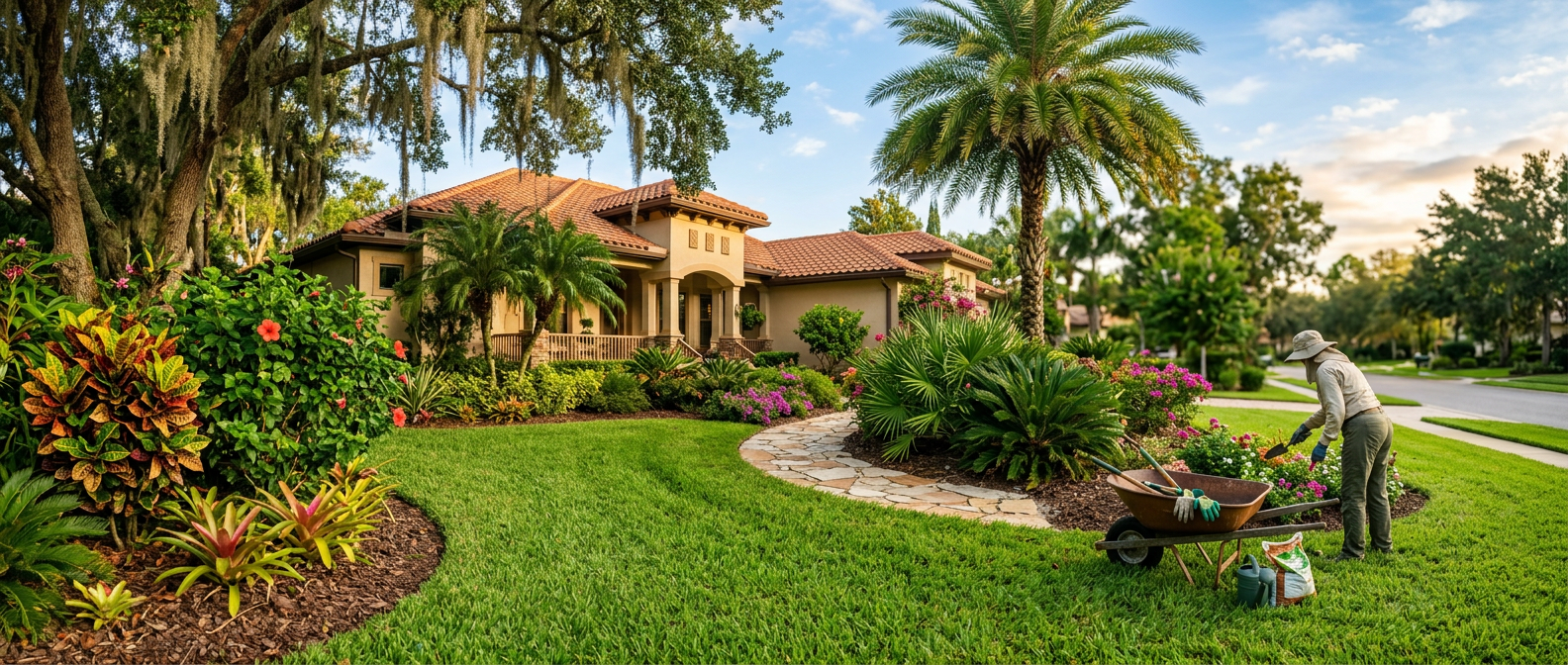
Let's be direct: your lawn care schedule in Florida is nothing like one for the rest of the country. We're dealing with a subtropical climate, intense sun, sandy soil, near-constant humidity, and a whole different cast of grasses, weeds, and pests. Throwing down fertilizer in July like your cousin in Ohio will get you a fine from the county, not a green lawn. We've managed turf from Pensacola to the Keys, and we're here to give you the real, no-nonsense Florida lawn care schedule that actually works.
This guide is built for the common warm-season grasses that thrive here: St. Augustine, Zoysia, Bahia, and Bermuda. If you're starting from scratch with that classic sugar sand, check out our guide on how to grow grass in Florida sand first. For everyone else, let's get your calendar synced up.
Spring (March - May): The Great Green-Up
As the temperatures consistently stay above 70°F, your lawn is waking up and getting hungry. This is go-time for setting up a successful summer.
- Fertilizing: This is your most important feeding of the year. Apply a quality, slow-release nitrogen fertilizer once the grass is actively growing (usually late March or early April). We like Sunniland All Natural Lawn Fertilizer 16-0-8, which runs about $50-60 for a 50lb bag at stores like SiteOne or local garden centers. The numbers matter: the '16' is nitrogen for green growth, the '0' is phosphorus (often restricted anyway), and the '8' is potassium for overall health. Apply at the bag rate, never more.
- Mowing: Start mowing as needed, which may be every 1-2 weeks. Keep the height high! For St. Augustine, aim for 3.5-4 inches. Zoysia can be a bit lower at 2-3 inches. Mowing high encourages deep root growth, which is your lawn's best defense against the coming summer heat and drought. Never scalp your lawn by cutting more than one-third of the grass blade at a time.
- Weed Control: You should have applied a pre-emergent in February. If you missed it, now is the time to spot-treat for broadleaf weeds like dollarweed and clover. A liquid product like Spectracide Weed Stop for Lawns (around $12 for a bottle that attaches to your hose) works well, but read the label carefully—St. Augustine grass is sensitive to some herbicides.
- Irrigation: Water only when the lawn shows signs of stress (folded blades, bluish-gray color). When you do water, do it deeply—about ¾ inch per session—to encourage deep roots. Early morning is the best time.
Summer in Florida (June - September): Survival Mode & Blackouts
Summer in Florida means heat, humidity, and rain. Your lawn is growing fast, but it's also under immense stress from disease and pests. And most importantly, this is the season for fertilizer blackouts.
- FERTILIZER BLACKOUTS: This is critical. Many Florida counties (over 100 municipalities, including Pinellas, Miami-Dade, Sarasota, and Orange) prohibit the application of nitrogen and phosphorus fertilizers from June 1st to September 30th. This is to prevent nutrient runoff into our bays and estuaries during the rainy season. Check your local county ordinance! Fines can be hundreds of dollars. If your lawn looks pale, you can apply iron-only products like Ironite Mineral Supplement 1-0-1 (about $25 a bag). It greens up the lawn without the nitrogen.
- Mowing: You'll be mowing weekly now. Keep that mower deck high. Mowing a wet lawn can spread fungus, so try to mow when it's dry.
- Pest Control: Summer is prime time for chinch bugs in St. Augustine and mole crickets in Bahia. Look for yellowish, drought-like patches that don't recover with water. We've battled more chinch bugs in a single Tampa summer than most folks see in a lifetime. Part the grass at the edge of the yellowing area and look for tiny black bugs. Apply a targeted insecticide like BioAdvanced Complete Insect Killer ($20-25) if you confirm their presence.
- Disease Control: All this rain and humidity is a recipe for fungal disease. Brown patch and dollar spot are rampant. The best defense is proper watering (early morning, only when needed). If you see circular brown patches, apply a fungicide like Scott's DiseaseEx or BioAdvanced Fungus Control for Lawns (approx $25).
Your Florida Watering Schedule By the Numbers
Watering correctly is half the battle in Florida, where it's either monsoon season or a desert. According to the University of Florida IFAS Extension, a typical Florida lawn requires 0.75 to 1 inch of water per application to saturate the root zone. You should only water when about 30-50% of the lawn shows signs of drought stress. This usually translates to 1-2 times per week in the spring and fall, and potentially less in the summer if you're getting regular afternoon thunderstorms. An easy way to measure is to place a few empty tuna cans on the lawn before you run your sprinklers; time how long it takes to fill them to ¾ inch. That's your run time per zone. Overwatering is the #1 cause of fungus and weak roots, so let the soil dry out between waterings. (Source: https://edis.ifas.ufl.edu/publication/LH025)
Fall (October - November): Prep for the 'Cold'
Fall is Florida's second growing season and the best time to prepare your lawn for the (mild) winter dormancy. The goal is to encourage root health, not tender top growth.
- Fertilizing: Once the fertilizer blackout lifts in October, apply your final feeding of the year. Use a low-nitrogen, high-potassium formula, often called a "winterizer." Something with numbers like 5-0-20 or 8-0-12 is perfect. This potassium boost helps the lawn with cold tolerance and disease resistance. Lesco 5-0-20 Turf Fertilizer is a great pro-grade choice if you can find it.
- Weed Control: This is your second window for pre-emergent herbicide. Applying it in mid-October will prevent winter weeds like poa annua (annual bluegrass) and various broadleaf weeds from sprouting.
- Overseeding (Optional): Some Floridians, particularly in the northern part of the state, like to overseed their dormant Bermuda or Bahia lawns with annual ryegrass for a green winter lawn. This is a purely cosmetic choice that requires more water and mowing through winter. If you do it, follow a guide like When to Overseed Your Lawn in Fall, but understand it's a temporary green.
- Watering: As temperatures and rainfall decrease, you'll need to water less. Continue to water only as needed.
Winter in Florida (December - February): The 'Easy' Season
For most of Florida, the lawn isn't truly dormant, but its growth slows to a crawl. This is your break.
- Mowing: You might only need to mow once or twice a month, just to keep things tidy. Don't stop completely.
- Fertilizing: Do not fertilize. The grass can't use it, and you'll just be feeding winter weeds or letting it wash away.
- Watering: This is Florida's dry season. While the lawn isn't growing much, it still needs water to survive. A deep watering every 2-3 weeks during dry spells is usually sufficient. This is a very different approach than the one needed for something like Southern California drought landscaping, but water conservation is still key.
- Weed Control: This is the best time to spot-treat persistent weeds you see, as the grass is less likely to be injured by herbicides. Use a liquid weed killer on a warmer day.
- Pre-Emergent: Get ready for the most important application of the year. Apply a pre-emergent herbicide, like a granular product containing Dithiopyr or Prodiamine, around mid-February (or when soil temps hit 55°F) to prevent the germination of summer crabgrass. This single step will save you countless headaches.
Following this Florida-specific schedule—especially respecting the fertilizer blackouts and mowing high—will put you miles ahead of your neighbors and on your way to a lawn that can handle whatever the Sunshine State throws at it.
Frequently asked
When should I fertilize my lawn in Florida?+
Fertilize your Florida lawn two to three times per year. The key times are spring (March-April) for growth and fall (October-November) for health. Crucially, avoid fertilizing with nitrogen or phosphorus between June 1st and September 30th in many counties due to local fertilizer blackout ordinances.
How often should I water my lawn in Florida?+
Water deeply but infrequently, about 1-2 times per week. Apply about 3/4 inch of water per session. Water only when the grass shows signs of thirst, like folded blades. In the rainy summer season, you may not need to run your irrigation system at all. Always water in the early morning.
What is the best height to mow my Florida lawn?+
Mow at the highest recommended setting for your grass type. For St. Augustine, this is 3.5 to 4 inches. For Zoysia and Bahia, 2 to 3 inches is good. Mowing high promotes a deep, healthy root system that is more resilient to drought, pests, and weeds.
What are the fertilizer blackout dates in Florida?+
Fertilizer blackout periods vary by county but generally run from June 1st to September 30th. These ordinances restrict the use of nitrogen and phosphorus to prevent nutrient runoff into waterways during the rainy season. Always check your specific local county or city regulations before applying fertilizer in summer.
How do I get rid of weeds in my Florida lawn for good?+
The best long-term strategy is prevention. Apply a pre-emergent herbicide in mid-February and again in mid-October. For existing weeds, spot-treat with a liquid herbicide safe for your grass type. A healthy, thick lawn mowed at the proper height is the best defense as it will naturally crowd out most weeds.