
Florida Lawn Care Schedule: A Month-by-Month Guide
Keeping a lawn green in the Sunshine State isn't about following a typical four-season calendar. This is your month-by-month, no-BS guide to Florida lawn care.
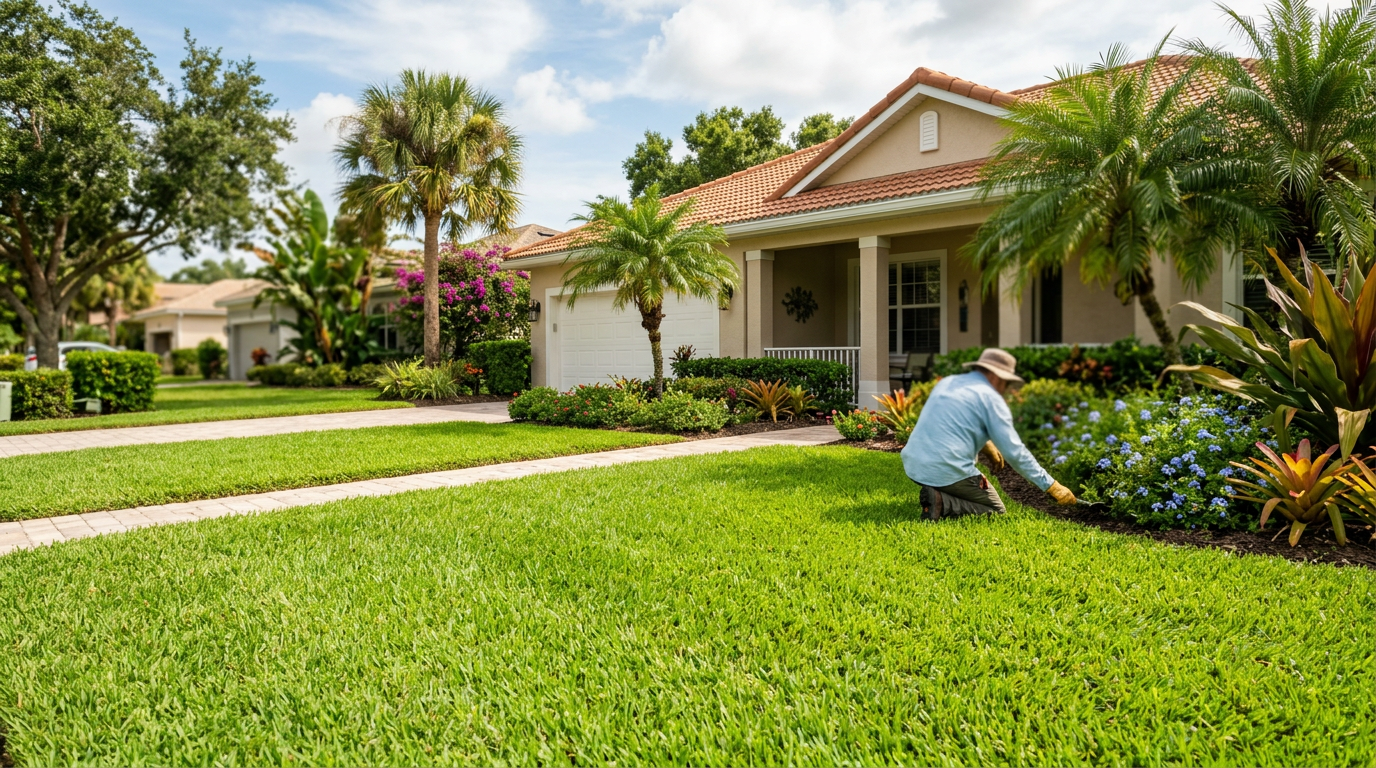
Let's get one thing straight: a lawn care schedule from anywhere else is useless in Florida. Your buddy in Ohio is worried about frost while you're fighting off fungi that could swallow a small dog. The Sunshine State doesn't play by the normal rules. It's a subtropical cage match between you, the sun, the sand, and a million things that want to eat your grass. But you can win. We're here to give you the year-round battle plan for a killer Florida lawn, whether you're in the Panhandle, Orlando, or down in the Keys.
This isn't a vague list of 'maybes.' This is your month-by-month, no-nonsense Florida lawn care schedule.
The Real Florida Seasons: Wet & Dry
Forget spring, summer, fall, and winter. In Florida, your lawn primarily operates on two seasons:
- The Long, Hot, Wet Growing Season (roughly April through October): This is when your lawn is exploding. It's growing, it's green, and it's getting hammered by rain, heat, humidity, pests, and disease. Your job is to manage the chaos.
- The Mild, Drier, 'Dormant' Season (roughly November through March): Growth slows way down, especially in North and Central Florida. South Florida lawns barely slow at all. This is the time for prevention, recovery, and planning your attack for the summer ahead.
Your specific location matters. North Florida might get a freeze or two, requiring different tactics than Miami, where the 'cold' is a brisk 65°F.
Your Month-by-Month Florida Lawn Care Schedule
We're breaking this down by task and season. Stick to this, and you'll be miles ahead of your neighbors who think watering at 2 PM is a good idea.
Late Winter / Early Spring (February - April)
This is the wake-up call. As temperatures consistently stay above 70°F, your warm-season grass starts coming out of its slumber.
- Mowing: Start mowing as needed. Your first few mows can be slightly lower to remove any dead winter blades, but bring the height right back up. For St. Augustine, aim for 3.5-4 inches. For Zoysia, 2-3 inches.
- Weed Control: This is your last, best chance to apply a pre-emergent herbicide to stop summer weeds like crabgrass before they sprout. Look for a product with dithiopyr or prodiamine. A bag of Scott's Halts Crabgrass & Grassy Weed Preventer runs about $25 and is worth its weight in gold.
- Fertilizing: Apply your first dose of fertilizer for the year around mid-April. This is crucial. You want to feed the lawn before the summer fertilizer blackouts kick in. Use a slow-release formula. We're fans of Sunniland's Pro All-Purpose 10-10-10, which you can find at most big-box stores for around $35 for a 40lb bag.
The Summer Gauntlet (May - September)
Welcome to the jungle. Your lawn is growing an inch a day, it rains every afternoon, and the bugs are having a party. Your goal is survival.
- MOWING: This is your #1 job. Mow at least weekly, maybe every 5 days at peak growth. Never remove more than one-third of the grass blade at a time. Mowing high with sharp blades is your best defense against weeds and stress.
- FERTILIZER BLACKOUTS: STOP FERTILIZING. Most Florida counties, from Miami-Dade to Pinellas to Duval, have ordinances banning nitrogen and phosphorus fertilizers from June 1st to September 30th. These are not suggestions. Fines can be hundreds of dollars. The lawn you fed in April will carry it through.
- Pest Control: BE VIGILANT. Walk your lawn every few days. Look for the tell-tale yellowing/browning patches of chinch bugs in St. Augustine grass, especially near hot pavement. Look for tunnels from mole crickets in Bahia. If you see damage, act immediately with a broad-spectrum insecticide like BioAdvanced Complete Insect Killer ($20 for a hose-end sprayer).
- Disease Control: The constant rain and humidity are a breeding ground for fungus like Brown Patch (or Large Patch) and Gray Leaf Spot. If you see circular patches or lesions on the blades, apply a systemic fungicide like Scott's DiseaseEx ($25/bag).
- Watering: Your irrigation system should be off if it's raining every day. If you hit a dry spell, water deeply (about 3/4 to 1 inch) once or twice a week. Water between 4 AM and 8 AM to reduce evaporation and disease risk.
Fall Recovery (October - November)
The heat breaks, the rain slows, and your lawn can finally breathe. Now is the time to repair summer damage and prepare for the 'winter'.
- Fertilizing: Once the blackout lifts, this is your window for the most important feeding of the year. Apply another round of slow-release fertilizer in October. This helps the lawn recover and stores nutrients for the winter and spring green-up. This is a critical step many people miss.
- Aeration: If your soil is compacted from summer foot traffic, now is the prime time to core aerate. This allows water, air, and that fall fertilizer to reach the root zone. You can rent a machine for about $100/day or pay a service.
- Overseeding (North Florida ONLY): If you live north of Orlando and want a green lawn through the winter, you can overseed your dormant lawn with perennial ryegrass. Do not do this in South Florida; your main grass won't go dormant enough.
Florida 'Winter' (December - January)
Your lawn care duties finally slow down. But don't pack it in completely.
- Mowing: You might only need to mow every 3-4 weeks, or even less. The goal is just to keep things tidy and mulch any fallen leaves back into the turf.
- Watering: Only water if you go several weeks without rain and the grass shows signs of wilt. Dormant grass still needs some moisture.
- Weed Control: Annual bluegrass and other winter weeds love this weather. If you have a persistent problem, you can apply another round of pre-emergent or spot-treat as needed.
Fertilizing in Florida Without Getting Fined
We can't stress this enough: know your local fertilizer ordinance. Most coastal counties ban the application of nitrogen and phosphorus between June 1 and September 30. This is to protect Florida's fragile waterways from the algal blooms that lawn fertilizer runoff can cause. The University of Florida's IFAS Extension notes that residential landscapes often receive more fertilizer and pesticide applications per acre than agricultural areas, making homeowner practices a key focus for environmental protection. (Source: https://edis.ifas.ufl.edu/publication/EP576). Use slow-release nitrogen and iron-only products like Ironite during the summer if you need a green-up without breaking the law.
The Challenge of Florida's Sandy Soil
Most of Florida is built on sand. It's great for beaches, but terrible for holding water and nutrients. This is why you can't just throw down grass seed and hope for the best. Amending your soil with compost before laying sod, choosing the right grass type, and learning how to grow grass in Florida sand are foundational steps. Without good soil structure, you'll be fighting a losing battle, no matter how perfect your schedule is. We've seen too many homeowners pour money into lawns built on sterile fill dirt, only to watch it wither. Don't be that person. A little prep work goes a long way, and is a lot cheaper than re-sodding every three years.
This schedule may seem daunting, but it quickly becomes second nature. It's a different rhythm than the one our friends in Texas follow for their lawns, as seen in their own seasonal lawn care guide, but the principles are the same: mow high, feed right, and pay attention. Your lawn will tell you what it needs—you just have to learn to listen to it.
Frequently asked
When should I fertilize my lawn in Florida?+
Fertilize your Florida lawn two to three times per year. The best times are in mid-April (before summer blackouts) and again in October. Avoid fertilizing with nitrogen or phosphorus from June 1st to September 30th, as most counties have restrictions to protect waterways.
How often should I mow my lawn in Florida?+
During the summer growing season (May-September), you'll need to mow every 5-7 days. In the cooler, drier months (November-March), mowing frequency can drop to every 2-4 weeks as growth slows. Always mow high and avoid cutting more than one-third of the grass blade.
What is the best grass for Central Florida?+
St. Augustine grass, particularly cultivars like 'Floratam' or 'Bitterblue', is the most popular and generally best choice for Central Florida's sun and heat. For shadier areas or a finer texture, Zoysia grass is an excellent, albeit more expensive, alternative. Bahiagrass is a low-maintenance, drought-tolerant option for larger areas.
How do I get rid of chinch bugs in my Florida lawn?+
First, confirm you have chinch bugs by looking for them at the edge of yellowing grass patches. Treat immediately with a liquid insecticide containing bifenthrin. Hose-end sprayers offer easy application. Water the lawn a day before applying to bring bugs to the surface, and don't water for 24 hours after.
Can I water my lawn every day in Florida?+
No, and you shouldn't. Most Florida municipalities have watering restrictions, often limiting you to 1-2 days per week. Watering daily encourages shallow roots and disease. It's far better to water deeply (3/4 to 1 inch) once or twice a week to promote a strong, drought-tolerant root system.