
Florida Lawn Care Schedule: A Month-by-Month Guide
Stop guessing and start dominating your yard. This is the only Florida lawn care schedule you'll ever need, from the humid spring to the surprisingly chilly winter.
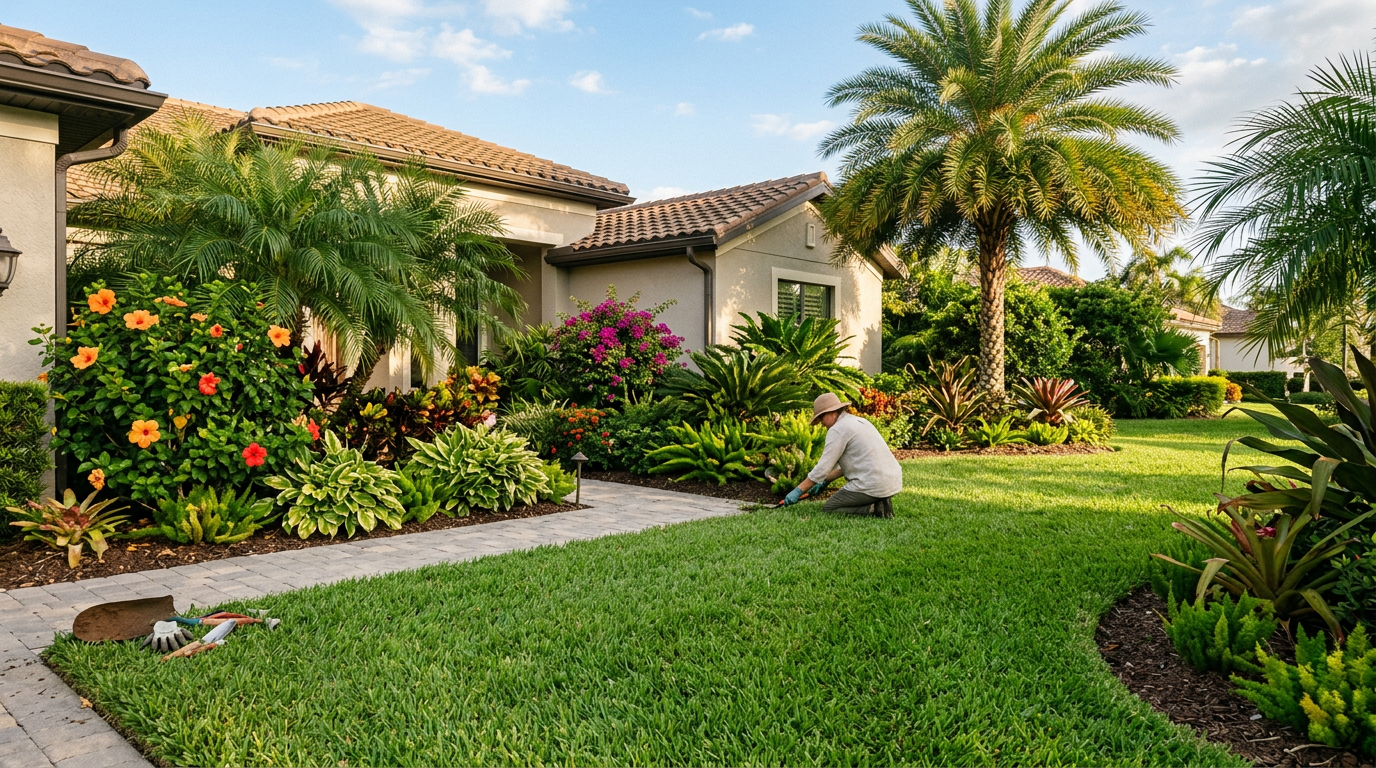
Look, we get it. You moved to the Sunshine State for the beaches and the theme parks, not to become a full-time turfgrass scientist. But then you looked at your sad, patchy lawn and realized that whatever worked up north is a recipe for disaster here. The lawn care schedule in Florida isn't just different; it's a whole other beast. Between the near-tropical heat, the sandy soil, the torrential summer rains, and the specific needs of St. Augustine or Zoysia grass, you need a plan. A real one.
This is that plan. We're not going to give you vague advice. We're giving you a month-by-month, no-nonsense schedule to get your Florida lawn looking like the 18th green at TPC Sawgrass. Let's get to work.
Why a Florida Lawn Care Schedule is Different
First, let's establish why you can't just Google a generic lawn calendar. Florida's climate is technically humid subtropical, which means we have two primary seasons: Hot & Wet (May-October) and Mild & Dry (November-April). Our grass doesn't go dormant in the same way it does up north. It just... slows down. This creates a year-round battle against weeds, pests, and fungus that other states, like our hot-weather cousins in Texas, don't face in quite the same way. Check out our Lawn Care in Texas guide to see the subtle but important differences.
The main players in Florida yards are warm-season grasses:
- St. Augustine: The undisputed king. It's thick, loves the heat, and tolerates salt spray. It's also prone to chinch bugs and fungus.
- Zoysia: A close second. It's dense, drought-tolerant, and feels great underfoot. Slower to recover from damage.
- Bahia: The tough, low-maintenance option. Often found in more rural areas, it's very drought-resistant but has a more open, weedy growth habit.
This guide is primarily focused on St. Augustine and Zoysia, the two most common choices for residential lawns.
Spring Lawn Care in Florida (March - May)
As the weather warms consistently, your lawn starts waking up and getting hungry. Spring is about giving it a strong start to handle the brutal summer ahead.
- Mowing: Start mowing weekly as growth picks up. For St. Augustine, aim for a height of 3.5-4 inches. For Zoysia, 2-3 inches is the sweet spot. Never remove more than one-third of the grass blade at a time. Bagging your clippings can help reduce the chance of fungal spread early in the season.
- Fertilizing: Once the danger of frost is gone (usually early March in Central/South FL, late March in the Panhandle), it's time for the first feeding. Use a quality slow-release fertilizer with iron. We like Sunniland St. Augustine Weed & Feed, which you can find at a Florida staple, SiteOne Landscape Supply, for around $60 for a 50lb bag. The 'weed and feed' combo tackles existing broadleaf weeds while feeding the turf.
- Weed Control: If you didn't get your pre-emergent down in February, it's not too late, but hurry. This preventative barrier is crucial for stopping summer weeds like crabgrass. If you're using a weed-and-feed product, you're covered. Otherwise, a granular product like Lesco Stonewall Crabgrass Preventer is a solid choice.
- Insect & Disease Control: Be vigilant. As temperatures rise, chinch bugs (for St. Augustine) and fungus become active. Look for yellowing, patchy areas. If you see them, apply a broad-spectrum insecticide like Spectracide Triazicide Insect Killer for Lawns and a fungicide like BioAdvanced Fungus Control for Lawns.
Summer Lawn Care in Florida (June - August)
Welcome to the gauntlet. This is when your lawn is growing at its fastest and is under the most stress from heat, humidity, insects, and disease. It's also when you have to navigate fertilizer blackout periods.
- Fertilizer Blackouts: This is CRITICAL. Many Florida counties (like Pinellas, Sarasota, and Miami-Dade) prohibit the application of nitrogen and phosphorus from June 1st to September 30th. This is to prevent fertilizer runoff from feeding toxic algae blooms in our waterways during the rainy season. Check your local county regulations! You can still apply potassium and micronutrients like iron to keep your grass green.
- Mowing: You'll be mowing every 5-7 days. Keep the mower height high (4 inches for St. Augustine). This encourages deep roots, helps the soil retain moisture, and shades out weeds. A sharp mower blade is non-negotiable; a dull blade tears grass, inviting disease.
- Watering: Water deeply and infrequently to encourage deep root growth. This means 1-2 times per week, providing about 3/4 inch of water each time. Water in the early morning (between 4 a.m. and 8 a.m.) to minimize evaporation and allow the blades to dry, which helps prevent fungus. Follow local watering restrictions!
- Pest & Disease Control: This is prime time for chinch bugs, sod webworms, and gray leaf spot fungus. I personally had a brutal fight with gray leaf spot one July in my St. Augustine lawn. The key is to catch it early. Brown spots, chewed-looking blades, or yellowing patches demand immediate action with targeted insecticide or fungicide. Don't wait.
Fall Lawn Care in Florida (September - November)
As the intense heat and rain begin to subside, your lawn switches from survival mode to recovery and preparation for the cooler, drier months.
- Fertilizing: The blackout period ends on September 30th. This is your window for the most important fertilization of the year. Use a balanced, slow-release formula. We recommend a product like Lesco 24-2-11. This helps the lawn recover from summer stress and store nutrients for the winter. This will be your last feeding of the year.
- Weed Control: Fall is the best time to control perennial broadleaf weeds like dollarweed and clover. They are actively pulling nutrients down to their roots, and they'll take the herbicide with them. A liquid post-emergent selective herbicide is most effective.
- Pre-Emergent: Around mid-October, apply your fall pre-emergent. This is to prevent winter and spring weeds like Poa annua (annual bluegrass). This single application can save you a world of headaches next spring.
- Aeration: If your soil is compacted (common with sandy Florida soil), fall is the ideal time to core aerate. This allows water, air, and nutrients to reach the root zone more effectively.
Winter Lawn Care in Florida (December - February)
While the rest of the country has packed up their mowers, our job isn't quite done. Your lawn will go semi-dormant, especially in North and Central Florida, but it's not asleep.
- Mowing: Reduce mowing frequency to every 2-3 weeks, or as needed. Don't stop completely. You can also lower the blade height slightly to allow more sunlight to reach the soil.
- Watering: Your lawn needs much less water now. Water only as needed, maybe once every 10-14 days if you don't get any rain. A good indicator is if the grass blades start to fold in half lengthwise.
- Weed Control: This is the time to spot-treat any weeds that pop up. Be careful, as herbicides can damage dormant turf.
- Pre-Emergent: February is the MOST important pre-emergent application window of the year. As the soil warms, crabgrass and other summer annuals are getting ready to germinate. Applying a pre-emergent like prodiamine or dithiopyr is the single best thing you can do to ensure a less weedy summer.
The Nitty-Gritty: Florida Mowing, Watering, and Fertilizing Rules
Let's boil it down. If you forget everything else, remember these core principles for lawn care in Florida.
Mowing: The golden rule is mow high, mow often, and never remove more than 1/3 of the blade. For St. Augustine, that's 3.5-4 inches. For Zoysia, it's 2-3 inches. A sharp blade is mandatory.
Watering: Deep and infrequent. According to the University of Florida's IFAS Extension, a typical Florida lawn requires about 3/4 of an inch of water per irrigation session to wet the top 8 inches of soil, which is where the roots are. (Source: https://edis.ifas.ufl.edu/publication/LH025). Use a rain gauge or a simple tuna can to measure how long it takes your sprinklers to put out that much water. Then, set it and stick to your county's designated watering days. Always water in the wee hours of the morning.
Fertilizing: Think of it as four key events. A spring green-up feed in March, a pre-summer feed in late May (before the blackout), a crucial recovery feed in October, and no more. Always use a slow-release fertilizer with at least 50% slow-release nitrogen. And for the love of all that is green, obey your county's summer fertilizer blackout period.
Frequently asked
When should I fertilize my lawn in Florida?+
Fertilize your Florida lawn 2-4 times per year. Key applications are in spring (March/April) for green-up and fall (October) for recovery. Avoid fertilizing with nitrogen or phosphorus from June 1 to September 30 in many counties due to blackout restrictions designed to protect waterways.
What is the fertilizer blackout period in Florida?+
The fertilizer blackout is a period, typically June 1 through September 30, when many Florida counties restrict the use of fertilizers containing nitrogen and phosphorus. This is to prevent nutrient runoff into waterways during the heavy summer rains, which can cause harmful algal blooms.
How often should I water my lawn in Florida?+
Water your Florida lawn 1-2 times per week during the hot, dry season, and less in the winter or rainy season. Apply about 3/4 inch of water per session to encourage deep roots. Always water in the early morning and follow any local watering day restrictions your county has in place.
What is the best height to mow St. Augustine grass in Florida?+
The ideal mowing height for St. Augustine grass is 3.5 to 4 inches. Mowing tall helps the grass develop a deep root system, shades out potential weeds, and makes it more resilient to drought and heat stress, which is crucial for surviving a brutal Florida summer.