
Florida Lawn Care Schedule: A Month-by-Month Guide
Forget generic advice. This is the ultimate, no-nonsense Florida lawn care schedule, built for our sandy soil, brutal sun, and ridiculous humidity.
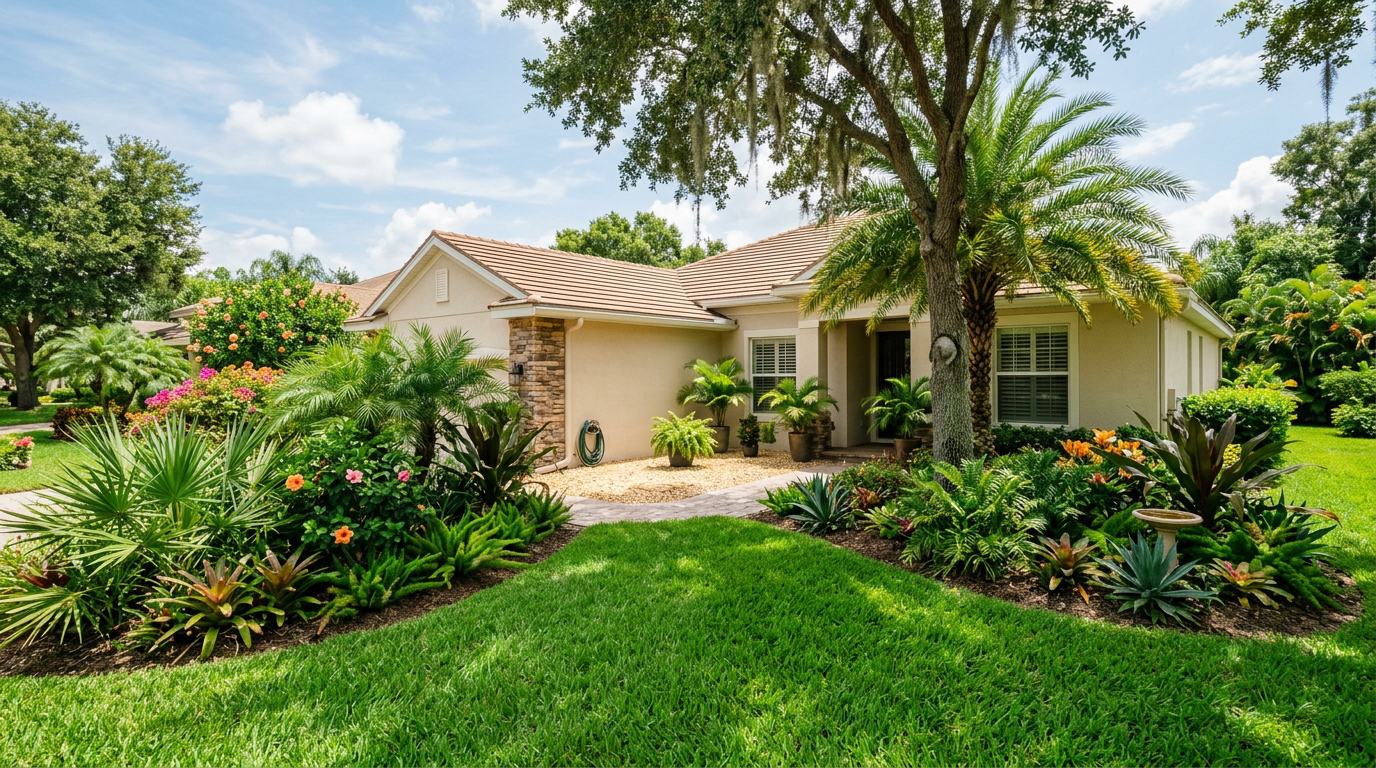
Let's be direct: maintaining a great-looking lawn in Florida is a different beast. Forget everything you've seen on TV about idyllic suburban lawns in Ohio. Down here, we're battling nine months of blast-furnace heat, humidity you can wear, sandy soil that holds nutrients like a sieve, and biblical afternoon deluges. If you've been struggling, you're not alone. The secret isn't more work; it's the right work at the right time. This is your definitive, no-gatekeeping Florida lawn care schedule.
We're not going to give you vague tips. We're giving you a month-by-month, actionable calendar with specific product recommendations to keep your yard from becoming another sad, crunchy, brown Florida cliché.
Understanding Your Florida Lawn: Grass & Soil
First, you have to know what you're working with. Most Florida lawns are one of three warm-season grass types:
- St. Augustine: The undisputed king of Florida lawns, especially its 'Floratam' cultivar. It's shade-tolerant and creates a dense, beautiful carpet. It's also a thirsty hog and susceptible to chinch bugs and fungus. It's the high-maintenance supermodel of turfgrass.
- Zoysia: A close second in popularity. It's finer-bladed, dense, and feels great underfoot. It's more drought-tolerant than St. Augustine but can be slow to recover from damage. Newer cultivars like 'Empire' are very popular.
- Bahia: The tough, low-maintenance option. You'll see it along highways. It's extremely drought-tolerant and handles our sandy soil well, but it's less dense and produces tall, ugly seed heads almost constantly. Not exactly the 'put your toes in it' kind of grass.
Knowing your grass is Step One. Step Two is accepting that your "soil" is basically beach sand. It doesn't hold water or nutrients well. That's why growing grass in Florida sand requires a specific strategy of spoon-feeding nutrients and watering correctly.
The Year-Round Florida Lawn Care Schedule
Florida doesn't really have four seasons for lawn care. It has two: the Grow-Like-Crazy Season (March-October) and the Slow-Your-Roll Season (November-February). Our schedule is built around this reality.
Spring (March-May): The Wake-Up Call
As the temperatures consistently stay above 70°F, your lawn wakes up and gets hungry. This is go time.
- Mowing: Start mowing as needed, likely every 1-2 weeks. Your first mow of the season can be slightly lower to remove any dead winter blades, but immediately raise the deck back up. Mow high: 3.5-4 inches for St. Augustine, 2-3 inches for Zoysia. Sharpen your mower blades first; dull blades tear grass, inviting disease.
- Fertilizing: This is the most important meal of the year. Around mid-March or early April, apply a quality, slow-release fertilizer. We recommend a product like Sunniland Pro Lawn Fertilizer 24-0-11 (about $45 for a 50lb bag). The "0" in the middle is Phosphorus (P) - most Florida soils have enough, and it's a major pollutant. Look for products with at least 50% slow-release nitrogen.
- Weed Control: Now is the time to prevent summer weeds. Apply a pre-emergent herbicide like Prodiamine or Dimension 2EW (Dithiopyr). This creates a barrier that stops weed seeds (like crabgrass) from germinating. It won't kill existing weeds, but it's the best defense. A 32oz bottle of concentrate will run you about $60 but will last for years.
- Pest & Disease Watch: As things warm up, chinch bugs and brown patch fungus start to stir. Get in the habit of walking your lawn and looking for problems. Early detection is everything.
Summer (June-September): Surviving the Heat, Rain & Rules in Florida
Welcome to the jungle. This is peak season for growth, pests, and thunderstorms. It's also when the government steps in.
- FERTILIZER BLACKOUT: This is critical. Many Florida counties, including Pinellas, Sarasota, Miami-Dade, and Orange, have fertilizer ordinances that ban the use of nitrogen and phosphorus fertilizers from June 1st to September 30th. This is to prevent nutrient runoff into our bays and estuaries during the heavy rainy season. Check your specific county's rules. Do not fertilize during this period. You can, however, apply micronutrients like iron or potassium if your lawn needs a boost.
- Mowing: You're mowing weekly. No excuses. Keep the height high. Mowing tall shades the soil, keeps it cooler, reduces weed competition, and encourages deep roots. Never, ever remove more than 1/3 of the grass blade at a time.
- Watering: This is the great Florida paradox. It might rain every day, but your lawn could still be thirsty. The key is to turn off your automatic sprinkler schedule. Water only when the grass shows signs of thirst (folded leaf blades, a blue-gray tint). Water deep and infrequently (1-2 times a week, max) in the early morning to saturate the root zone. This encourages roots to grow deeper, making the lawn more drought-tolerant.
- Fungus Control: Heat + humidity + rain = fungus. Brown Patch and Gray Leaf Spot will run rampant in St. Augustine if you're not careful. Look for circular brown patches or small, oblong spots on the grass blades. Apply a fungicide like Scotts DiseaseEx Lawn Fungicide (about $25 for a 10lb bag) at the first sign of trouble. Better yet, apply it preventatively in late May.
- Pest Control: Chinch bugs are public enemy #1 in summer. They suck the juice out of St. Augustine grass, leaving behind what looks like drought-stressed dead patches, often along hot concrete. Part the grass at the edge of a dead spot and look for tiny black-and-white bugs. Treat with a product like BioAdvanced Complete Insect Killer granules (~$20 for 10lbs). We learned the hard way that trying to water chinch bug damage away is like trying to fill a bucket with a hole in it. You have to kill the bugs.
Fall (October-November): Prepping for the "Cool Down" in Florida
The heat and humidity finally break, giving you and your lawn a breather. This is your window to prepare it for the (mild) winter.
- Fertilizing: Once the blackout lifts, you have a window for the year's final feeding. This is arguably more important than the spring feeding. Apply a "winterizer" or fall-blend fertilizer with lower nitrogen and higher potassium (the 'K' in N-P-K), like a 5-0-20. Potassium is crucial for stress tolerance, cold hardiness, and disease resistance. This is what helps your lawn survive until spring.
- Weed Control: Time for your second pre-emergent application. This one targets winter weeds like poa annua (annual bluegrass). Apply it in mid-October.
- Overseeding? Don't Do It: You might read about fall overseeding. That's for northern lawns with cool-season grass. In Florida, our warm-season grasses don't die; they just go semi-dormant. Overseeding with ryegrass is a messy, expensive hassle that competes with your permanent turf in the spring. It's a practice best avoided. While some folks in Texas do it with certain grasses, it's not a fit for Florida's turf types, which are more similar to the grasses used in the Carolinas than those out west. Check our guide on the best grass for North Carolina to see the similarities.
According to the University of Florida IFAS Extension, landscape irrigation accounts for over 50% of residential water use in many parts of Florida. Improper fertilization is a leading cause of nutrient pollution in Florida's springs, rivers, and estuaries, which is why fertilizer ordinances are so strict. A single pound of phosphorus can produce 500 pounds of algae in freshwater. Following this schedule doesn't just help your lawn—it helps protect the Florida we love. (Source: https://edis.ifas.ufl.edu/publication/AE495)
Winter (December-February): The So-Called Dormant Season
In South Florida, there is no dormant season. In North and Central Florida, the grass will slow way down and may lose some color, especially after a frost. Your job now is mostly maintenance.
- Mowing: Reduce frequency to every 2-4 weeks, depending on your location and the weather. Keep the mower height the same.
- Watering: Water only as needed, which might be once every few weeks, or not at all if you're getting rain.
- Cleanup: Keep leaves and debris off the lawn to prevent them from smothering the grass and creating a breeding ground for fungus.
- Get a Soil Test: Winter is the perfect time to send a soil sample to your local UF/IFAS Extension office. For about $10, they'll give you a detailed report on your soil's pH and nutrient levels, allowing you to tailor your fertilizer program perfectly next year. Don't guess, get a test!
Sticking to a schedule takes the guesswork out of Florida lawn care. It turns a frustrating chore into a manageable process with predictable, green results. Now go enjoy that beautiful yard.
Frequently asked
What is the best month to fertilize my lawn in Florida?+
The best months are March/April for a spring feeding and October for a fall feeding. Avoid fertilizing from June 1st to September 30th in many counties due to local "blackout" ordinances designed to protect Florida's waterways from nutrient runoff during the rainy season.
How often should I mow my lawn in Florida?+
During the peak growing season (April-October), you'll need to mow weekly. In the cooler months (November-March), you can reduce mowing to every 2-3 weeks. Always mow high, keeping St. Augustine at 3.5-4 inches and Zoysia at 2-3 inches to promote deep roots.
What are the signs of chinch bugs in a Florida lawn?+
Chinch bugs create yellowish-brown patches of dead grass, often near driveways or sidewalks where the turf is heat-stressed. The damage looks like drought stress but won't recover with watering. Part the grass at the edge of the dead patch and look for tiny black and white insects.
Can I use weed and feed in Florida?+
We generally advise against "weed and feed" products in Florida. The best time to apply herbicide is often different from the best time to apply fertilizer. Using them separately gives you more control and is safer for your lawn, especially with St. Augustine grass, which is sensitive to some herbicides.
How do I fix brown patch in my Florida lawn?+
Fix brown patch by applying a granular or liquid fungicide containing active ingredients like azoxystrobin or propiconazole. Also, reduce watering frequency, water only in the early morning, and ensure good air circulation. Avoid high-nitrogen fertilizers during outbreaks, as they can fuel the fungus.