
Landscaping Ideas for Colorado That Actually Work
Forget what works in glossy magazines based in California. These are real-world landscaping ideas built for Colorado's high altitude, unpredictable frosts, and intense sun.
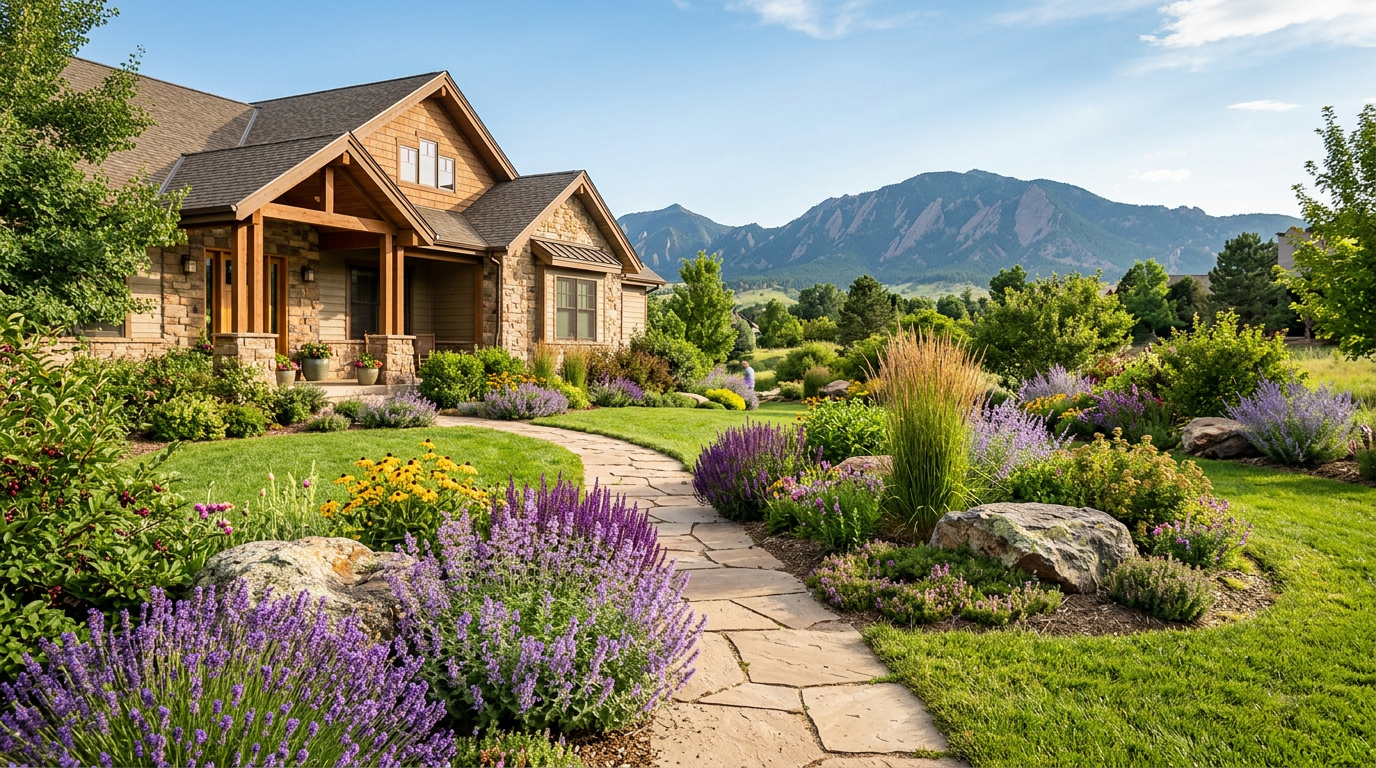
Let's get one thing straight: landscaping in Colorado is a high-stakes, high-altitude game. What works in Seattle, Miami, or even neighboring Kansas will die a sad, expensive death here. We're talking about intense UV radiation that torches delicate leaves, surprise Memorial Day snowstorms that snap new branches, clay soil that could be used to make pottery, and a semi-arid climate that laughs at your thirstiest plants.
But we don't buy into the gatekeeping that says you can't have a gorgeous yard here. You absolutely can. You just have to stop fighting Colorado and start working with it. We've thrown away enough dead perennials to know what doesn't work. Here's what does.
Stop Fighting the Climate: Xeriscaping is Your Best Friend in Colorado
Xeriscaping isn't a design style—it's a brilliant strategy. And no, a proper xeric garden is not a sad, gravel-filled moonscape with two lonely cacti. That's zero-scaping. Don't do that.
Xeriscaping is about creating a lush, vibrant landscape that uses very little supplemental water. It's the single smartest approach for any Colorado yard, from a Denver bungalow to a Fort Collins family home. The seven principles are simple:
- Plan & Design: Group plants with similar water needs together. This is called hydrozoning. Don't put a thirsty rose next to a drought-loving sage.
- Limit Turf: Reduce the size of your water-guzzling Kentucky bluegrass lawn. Keep a small, functional patch for the dog or kids, and convert the rest to garden beds.
- Use Water-Wise Plants: We'll dive deep into this in the next section.
- Improve the Soil: Our native Colorado soil is often heavy clay and alkaline. It needs organic matter. Mix in a few bags of good quality compost, like A1 Organics Eco-Gro Compost (around $8 a bag), to improve drainage and nutrient availability.
- Mulch, Mulch, Mulch: Apply 3 inches of wood chip or bark mulch over your garden beds. It holds in moisture, keeps roots cool, and suppresses weeds. Seriously, don't skip this.
- Irrigate Efficiently: Use drip lines and soaker hoses instead of sprinklers for garden beds. You'll deliver water directly to the roots and lose less to evaporation.
- Maintain Properly: A xeric garden isn't no-maintenance, but it's low-maintenance. Weeding, checking irrigation, and trimming are still on the menu, just less often.
According to a study highlighted by Colorado WaterWise, well-designed xeriscapes can slash outdoor water consumption by 60% or more, saving homeowners an average of 15,000 gallons of water per year. In a city like Denver, where water rates are around $5.00 per 1,000 gallons, that's a direct savings of $75 annually, not to mention the reduced labor and frustration. (Source: https://coloradowaterwise.org/XeriscapeColorado) This approach has a ton in common with smart desert gardening, which you can see in our guide to Arizona Desert Landscaping Ideas That Don't Suck.
The Unbeatable Colorado Native Plant Palette
Want the ultimate landscaping cheat code for Colorado? Use native plants. These are the plants that have spent thousands of years adapting to our exact conditions. They're tough, they support local pollinators, and they look right at home.
We once spent a whole season trying to grow a lush, English-style cottage garden in Highlands Ranch. It was a disaster. The water bill was higher than our mortgage and we spent every weekend fighting off pests and disease. We learned our lesson: embrace what works here.
Here are some of our favorite, bulletproof native and adapted plants for Colorado:
-
Perennials for Sun:
- Rocky Mountain Penstemon (Penstemon strictus): Tall spikes of purple-blue flowers in early summer. A hummingbird magnet.
- Blanket Flower (Gaillardia aristata): Cheerful red and yellow daisy-like flowers that bloom all summer long.
- Chocolate Flower (Berlandiera lyrata): Smells like chocolate in the morning. Need we say more?
- Ice Plant (Delosperma cooperi): Not a true native but perfectly adapted. A ground-hugging succulent with electric magenta flowers.
-
Ornamental Grasses:
- Blue Grama Grass (Bouteloua gracilis): Our state grass! Fine texture with unique, eyelash-like seed heads.
- Little Bluestem (Schizachyrium scoparium): Offers beautiful blue-green summer color that turns to a striking bronze-orange in the fall.
-
Shrubs & Trees:
- Serviceberry (Amelanchier alnifolia): A four-season superstar with white spring flowers, edible summer berries, and brilliant fall color.
- Kinnikinnick (Arctostaphylos uva-ursi): A low-growing, evergreen groundcover perfect for tough spots.
- Gambel Oak (Quercus gambelii): A rugged, drought-tolerant native oak that provides great structure and habitat.
Choosing plants for a specific region is key. What thrives here is completely different from what you'd see in a guide a like our rundown of Top Midwest Perennials for Full Sun in Illinois Gardens.
Designing for All Four (Crazy) Colorado Seasons
A great Colorado landscape looks good year-round, not just for ten weeks in the summer. You have to plan for a dynamic show.
- Spring: This season is a gamble. We get beautiful 70°F days followed by a foot of wet, heavy snow. Plant tough bulbs like daffodils and species tulips that can handle the volatility. Our native Pasque Flower (Pulsatilla nuttalliana) is one of the first to bloom, often pushing up right through a late snow.
- Summer: This is peak showtime for your perennials. Think Gaillardia, Penstemon, and Yarrow. It's also hail season. Planting more delicate things under the eaves of your house or near the canopy of a sturdy tree can offer some protection.
- Fall: While the East Coast has its maples, Colorado has its Aspens. If you have the space, their golden autumn color is iconic. But the real heroes of the fall garden are the ornamental grasses like Little Bluestem, which turn fiery shades of orange and red. This is also the perfect time to patch up your lawn; learn the basics in our guide on When to Overseed Your Lawn in Fall.
- Winter: Don't let your yard become a flat, brown expanse. Evergreens like Pinyon Pine and Juniper provide essential structure and green. Leave your ornamental grasses standing—their seed heads look incredible dusted with snow and provide food for birds.
Hardscaping That Screams 'Colorado'
Hardscaping—the non-living elements of your design—is the backbone of a Colorado yard. It adds structure, creates usable space, and can drastically reduce your water needs.
Use local stone to make your landscape feel authentic and grounded. Instead of generic concrete pavers, look for materials from local quarries. Pioneer Landscape Centers, with locations across the Front Range, is a great place to see options.
- Lyons Red Sandstone: This iconic, rich-red stone is quarried near Lyons, CO. It's perfect for rustic patios, steps, and retaining walls.
- Colorado Buff Flagstone: A classic choice with warm, tan, and gold tones that blends beautifully into the natural environment.
- River Rock: Use it to create functional and beautiful dry creek beds that channel runoff during our intense summer thunderstorms.
In foothills and mountain communities, hardscaping is a critical part of fire mitigation. Creating 'defensible space' with stone patios, gravel paths, and rock mulch beds near your home reduces fuel for wildfires. This is a core tenet of FireWise landscaping and is often encouraged or required by local ordinances.
The 'Colorado Lawn': Rethinking Your Turf Grass
We get it. Sometimes you just need a patch of grass. But the thirsty, emerald-green Kentucky Bluegrass monoculture is a relic of the past. If you need a lawn, be smart about it.
- Shrink It: Only plant as much lawn as you truly need for pets, kids, or entertaining.
- Choose a Better Grass: Look for drought-tolerant alternatives. Dog Tuff™ Grass is a sterile Bermuda grass variety that thrives in the heat, uses 75% less water than bluegrass, and stands up to traffic. Water-saver blends from local seed suppliers, often mixing Tall Fescue with a bit of bluegrass, are also a huge improvement. Even states with more rainfall are rethinking their lawns, as you can see in our look at Lawn Care in Texas.
- Water It Deeply, But Infrequently: Encourage deep roots by watering only when the grass shows signs of stress (like a dull, bluish color). Sticking to your municipality's watering schedule is the law in many places and the right thing to do everywhere else.
Local Rules & Pro-Tips for Colorado Landscapers
Finally, a few hard-won tips from the trenches:
- Know Your Water Days: Municipalities like Denver Water, Aurora Water, and Colorado Springs Utilities have strict, enforced watering schedules, usually limiting you to two or three days a week. Know your days and follow the rules. It's the most important civic duty of a Colorado gardener.
- Amend, Amend, Amend: We can't say it enough. That dense, alkaline clay soil needs help. Top-dressing your lawn and mixing compost into your garden beds every year is non-negotiable.
- Beware of Bindweed: This deep-rooted, vining weed is the ultimate villain of Colorado gardens. There is no easy fix. Be vigilant. Pull it as soon as you see it and never, ever let it go to seed. Tilling it will only chop up the roots into a million new plants.
- Altitude Matters: Landscaping in Steamboat Springs at 6,700 feet is different than in Pueblo at 4,700 feet. The growing season is shorter and the temperature swings are more extreme at higher elevations. Always check the hardiness zone for your specific location, not just 'Colorado'.
Frequently asked
What is the best low-maintenance landscaping for Colorado?+
The best low-maintenance option is xeriscaping with native Colorado plants. Group plants by water needs, use mulch to retain moisture, and reduce lawn size. This combo is adapted to the climate, requiring less water, fertilizer, and general upkeep once established.
When should I start landscaping in Colorado?+
The best time to start landscaping projects in Colorado is in the spring (April-May) after the last frost, or in the fall (September-October). Fall planting is often ideal for perennials, shrubs, and trees, as it gives their roots time to establish before winter.
What is a good ground cover for Colorado?+
Excellent ground covers for Colorado include drought-tolerant options like Creeping Thyme, Ice Plant (Delosperma), and native Kinnikinnick (Arctostaphylos uva-ursi). These handle the sun, low water conditions, and help suppress weeds while providing year-round color and texture.
How much does xeriscaping cost in Colorado?+
Xeriscaping costs in Colorado can range from $5 to $20 per square foot, depending on the complexity. DIY projects using mulch and smaller plants are cheaper, while professionally installed designs with patios, boulders, and mature plants are on the higher end.
What flowers grow best in Colorado?+
Flowers that thrive in Colorado are typically drought-tolerant and can handle intense sun. Native perennials like Rocky Mountain Penstemon, Blanket Flower (Gaillardia), and Purple Coneflower are fantastic choices that come back reliably every year with minimal fuss.