
Midwest Perennials for Full Sun in Illinois Gardens
Stop wasting money on annuals that die every year. Here are the toughest, most beautiful perennials that can handle a full-sun spot in your Illinois yard, guaranteed.
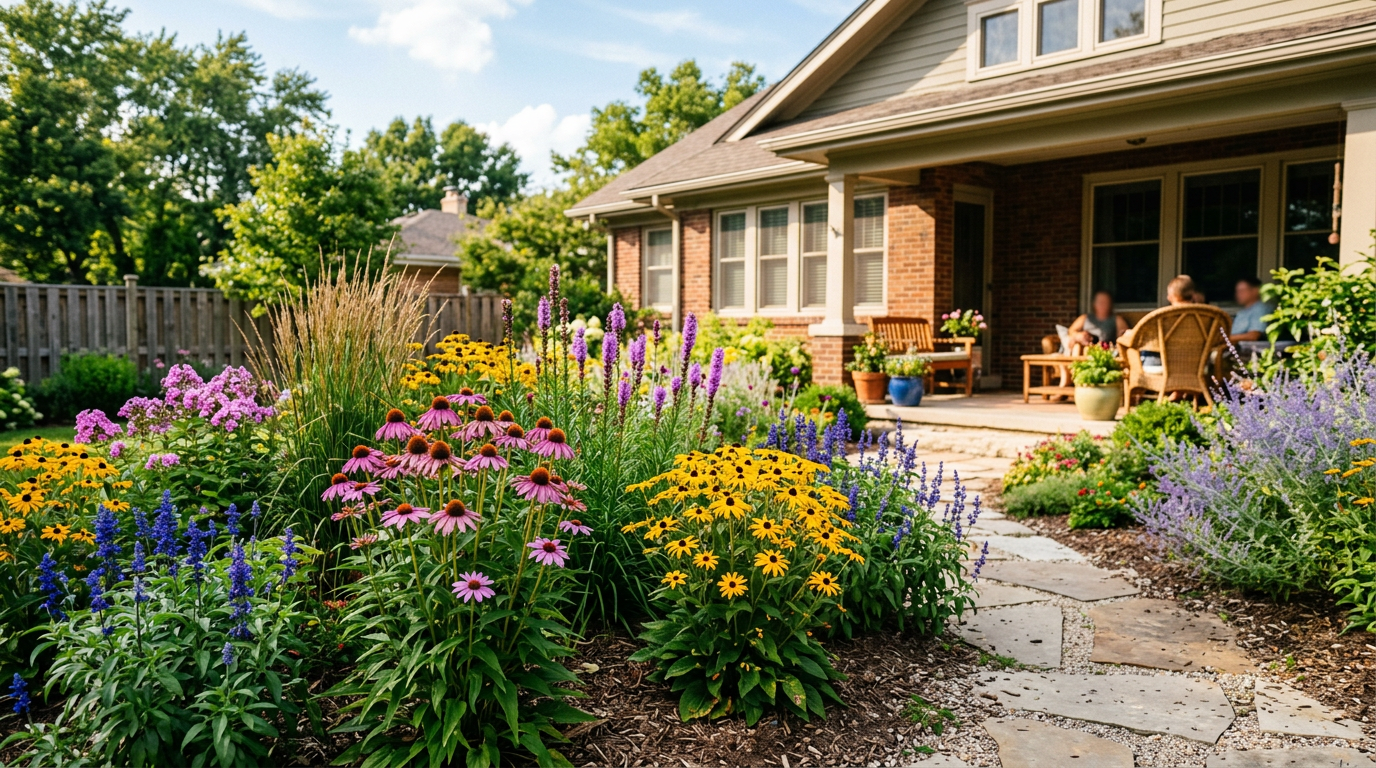
Let's get one thing straight: your garden shouldn't be a money pit. If you're trekking to the garden center every May to buy flats of annuals, only to watch them crisp up in the July sun and die in October, you're doing it wrong. We're here to save you from yourself. The answer for that relentlessly sunny spot in your Illinois yard is perennials—specifically, perennials that can handle everything our wild Midwest climate throws at them.
Here in Illinois, our plants need to be tough. They need to survive scorching, humid 95°F summers and then endure a polar vortex that plunges us to -20°F. They need to handle our clay soil that can be either brick-hard or a soupy mess. The good news? Plenty of gorgeous plants are up for the challenge. We've compiled the definitive list of sun-loving perennials that will come back year after year, bigger and better.
Why Perennials are a No-Brainer for Illinois
Annuals give you one season of color for your cash. Perennials are an investment. You buy them once, and they pay you back with years of growth and blooms. For the price of two fancy coffees, you can get a plant that will be the backbone of your garden for a decade.
Most of Illinois falls into USDA Hardiness Zones 5b and 6a, with the northernmost counties in 5a. This means our plants must be able to withstand minimum winter temperatures of -15°F to -20°F. Every plant on our list is rated for at least Zone 5, so whether you're in Chicago or Carbondale, they'll make it through the winter just fine.
Beyond the budget, perennials are just easier. Once established, they require less water, less fertilizer, and less fussing than their annual cousins. Many are native to the Illinois prairie, meaning they're genetically programmed to thrive right here. It's like finding a partner who already loves deep-dish pizza and hates the Packers; it's just meant to be.
Our Top 5 "Can't Kill 'Em" Full-Sun Perennials for Illinois
We call these the "set it and forget it" crew. Plant them in a spot with at least six hours of direct sun, and they'll do the rest. You can find most of these staples at a local independent nursery like Chalet in Wilmette or Platt Hill Nursery in Bloomingdale, where a healthy one-gallon plant will typically run you $14.99 to $24.99.
- Purple Coneflower (Echinacea purpurea): This is the undisputed champion of the Illinois sun garden. A prairie native, its big, purple-pink, daisy-like flowers bloom from June through August. They're a magnet for bees and butterflies, and the seed heads provide food for goldfinches in the fall. They're not picky about soil and are incredibly drought-tolerant once established.
- Black-Eyed Susan (Rudbeckia hirta): If you want a blast of gold and yellow from mid-summer until the first frost, this is your plant. Another Illinois native, Black-Eyed Susans are cheerful, tough, and spread politely to form a beautiful drift of color. They are the definition of low-maintenance.
- Bee Balm (Monarda didyma): Want to attract hummingbirds? Plant Bee Balm. Its bizarre, fascinating flowers come in shades of red, pink, and purple and bloom for weeks in the summer. It's in the mint family, so give it some space or be prepared for it to spread. A variety like 'Jacob Cline' is known for its mildew resistance, which is a plus in our humid summers.
- Russian Sage (Perovskia atriplicifolia): Don't let the name fool you; this plant loves the Midwest. With its silvery foliage and plumes of lavender-blue flowers from July to October, it provides an airy, cool-toned texture to the garden. It thrives on neglect and loves hot, dry spots where other plants fail. It smells amazing, too. Seriously, a great choice if you're exploring drought-tolerant landscaping that doesn't suck.
- Sedum 'Autumn Joy' (Hylotelephium telephium): This plant is a four-season superstar. It emerges in spring with fleshy, succulent-like leaves, forms broccoli-like green flower heads in summer, which then turn pink in late summer, and finally deepen to a rich copper-red in the fall. We leave the dried flower heads up all winter for structure and interest.
More All-Stars for a Sunny Illinois Garden
Once you have the core five, you can start adding more variety. These guys are also tough as nails and perform beautifully in our region.
- Daylily (Hemerocallis 'Stella de Oro'): The workhorse of the perennial world. 'Stella de Oro' is a compact variety that reblooms all summer long with cheerful yellow flowers. They'll grow anywhere.
- Shasta Daisy (Leucanthemum × superbum 'Becky'): For that classic, clean white-and-yellow daisy look, 'Becky' is the top performer. It stands up straight, doesn't get floppy, and blooms its heart out in the summer heat.
- Yarrow (Achillea millefolium): With feathery foliage and flat-topped flowers in colors from yellow to pink to red, Yarrow is another drought-tolerant winner. It's a fantastic filler plant and the pollinators love it.
It's all about picking the right plant for the right spot. The principles that make a great New England front yard are the same here: understand your climate, know your soil, and choose plants that are adapted to it.
Soil Prep: The Unsexy Secret to an Illinois Perennial Bed
We've got to talk about dirt. Much of Illinois is blessed/cursed with heavy clay soil. It holds nutrients well, but it can drain poorly, leading to root rot. We've seen it firsthand: a $5 bag of compost can save a $25 plant. Before you plant anything, you need to amend your soil.
Dig a hole twice as wide as the pot your perennial came in. Mix the clay you dug out with an equal amount of compost. We're partial to Purple Cow Classic Compost, which you can get at most local hardware stores or garden centers for about $12.99 a bag. This one step will drastically improve drainage and give your plants the organic matter they crave. Don't just dig a hole and plop the plant in. You're setting it up for failure. While you're at it, top-dress the whole bed with 2-3 inches of hardwood mulch to retain moisture and keep weeds down.
By the Numbers: Why Native Perennials Matter in Illinois
This isn't just about making your yard look pretty. Planting native perennials has a real, measurable impact on our local ecosystem. According to the University of Illinois Extension, over 99.9% of Illinois' original tallgrass prairie has been lost to agriculture and development. This catastrophic habitat loss is a primary driver of pollinator decline. Your yard, however small, can be a vital refuge. Planting just a few native Coneflowers or Black-Eyed Susans provides essential food and habitat for native bees, butterflies like the Monarch, and birds. You're not just planting a garden; you're rebuilding a piece of the prairie. (Source: https://extension.illinois.edu/global/prairie-gardening)
Planting, Watering, and Long-Term Care
Timing is key. The best times to plant perennials in Illinois are in the spring (after the last frost, usually early May) or early fall (September through mid-October). Fall planting is especially good as it gives the roots time to establish during the cooler, wetter weather. Thinking about a fall project? It might be a good time to consider when to overseed your lawn in fall, too.
Watering: For the first few weeks after planting, water them every couple of days. Once established (after the first season), most of these sun-lovers are drought-tolerant. Water them deeply once a week during hot, dry spells, but let the soil dry out between waterings. More perennials are killed by overwatering than underwatering.
Fertilizing: Don't. Seriously. If you amended your soil with compost at planting time, that's all they need. Chemical fertilizers often lead to weak, floppy growth and fewer flowers.
End-of-Season: Resist the urge to cut everything back in the fall. Leaving the stems and seed heads provides winter interest in your landscape and crucial food and shelter for birds and beneficial insects. In early spring, just as new growth starts to emerge, cut the old stems back to the ground. That's it. You're done. Now go enjoy your beautiful, low-maintenance, Illinois-proof garden.
Frequently asked
What is the best month to plant perennials in Illinois?+
The best times are spring (late April through May) after the last frost has passed, or in the fall (September to mid-October). Fall planting allows the roots to establish in cool, moist soil before winter, giving them a head start for spring.
What is the easiest perennial to grow in full sun in Illinois?+
Black-Eyed Susan (Rudbeckia) or Sedum 'Autumn Joy' are arguably the easiest. Both are native or well-adapted, incredibly drought-tolerant once established, and require virtually no care beyond initial planting. They thrive in Illinois' hot summers and cold winters.
Do I need to fertilize my perennials in Illinois?+
Generally, no. Most tough perennials prefer lean soil. Amending your heavy clay soil with a good quality compost at planting time provides all the nutrients they'll need for years. Chemical fertilizers can actually cause weak, floppy growth and fewer flowers.
How do I prepare my Illinois perennial garden for winter?+
Resist the urge to cut everything back. Leave the stems and seed heads standing through the winter. This provides visual interest, catches snow for insulation, and offers crucial food and shelter for birds and beneficial insects. Cut back the dead stems in early spring.
What flowers bloom all summer in full sun in Illinois?+
For continuous summer color, look to Purple Coneflower, Black-Eyed Susan, and reblooming Daylilies like 'Stella de Oro'. Russian Sage also has a very long bloom time, providing color from mid-summer well into the fall. Proper selection ensures a sequence of blooms.