
The Best Grass for Texas: An Expert's No-Nonsense Guide
Choosing the right grass for Texas is half the battle. We'll break down the top contenders so you can finally have a lawn that survives the brutal summer heat.
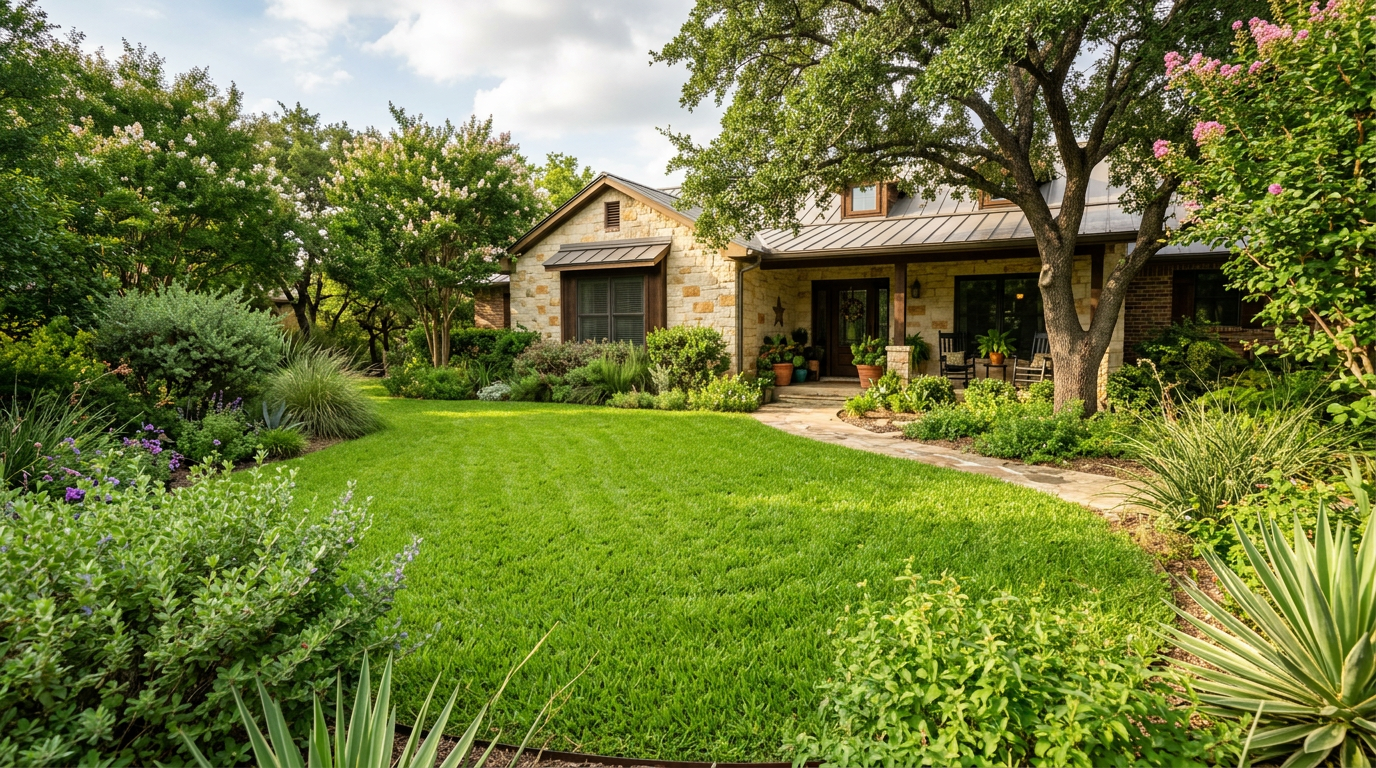
Let's be honest. Keeping a lawn alive in Texas can feel like a full-time job with mandatory, unpaid overtime. You've got scorching summers, unpredictable droughts, flash floods, and that one weird week in February where it drops to 15°F. It's a miracle anything green survives.
But here's the secret the gatekeepers won't tell you: a gorgeous Texas lawn isn't about skill. It's about selection. If you choose the right type of grass from the start, you're 90% of the way there. The other 10% is just remembering to water and mow, which you can learn all about in our Texas Lawn Care: Your Seasonal No-Nonsense Guide to a Green Lawn.
We're here to cut through the noise and give you the straight dirt on the best grass types for Texas lawns, no fluff included.
Warm-Season vs. Cool-Season: A Quick Reality Check
In the turfgrass world, there are two major teams: warm-season and cool-season.
- Warm-Season Grasses: These are the tough guys. They love heat, thrive in the sun, and go dormant (turn brown) in the winter. Think Bermuda, St. Augustine, Zoysia.
- Cool-Season Grasses: These grasses, like Fescue and Ryegrass, prefer mild temperatures. They stay green in the winter but check out and die in a typical Texas summer.
For 99% of Texas, you are planting a warm-season grass as your permanent lawn. Period. The only time we even talk about cool-season grass is for temporary winter color when we overseed in the fall.
St. Augustine Grass: The Shade-Tolerant King
Walk through any established Texas suburb, and you're likely walking on St. Augustine. It's been the go-to for decades for a reason. It creates a thick, lush, blue-green carpet that feels great underfoot and does better in partial shade than most other options.
- Pros: Best shade tolerance of the warm-season grasses (needs at least 4-5 hours of sun), spreads via aggressive above-ground runners (stolons) to fill in bare spots, feels lush.
- Cons: It's thirsty and needs consistent water to look its best. It's susceptible to pests like chinch bugs and diseases like gray leaf spot, especially in humid areas. Doesn't have great cold tolerance, making it risky for the Panhandle.
- Best For: East and South Texas, yards with large oak trees, homeowners who want that classic "suburban green" look and don't mind the water bill.
- Popular Cultivars: 'Raleigh' is the old standby. 'Palmetto' and 'Floratam' offer improved disease and drought resistance.
Bermuda Grass: The Full-Sun Workhorse
If your yard has zero trees and gets blasted by the sun all day, Bermuda is your champion. This is the stuff they use on golf courses and athletic fields for a reason: it's tough as nails and recovers from damage at lightning speed.
- Pros: Extremely drought-tolerant once established, loves full sun, handles heavy foot traffic like a champ, spreads aggressively to repair itself.
- Cons: It needs at least 8 hours of direct sun. It will not grow in shade. Its aggressive nature means it will invade flower beds if not edged properly. We've personally battled Bermuda runners trying to creep under landscape fabric—a good steel edger is non-negotiable.
- Best For: Homes in full sun, families with kids and dogs, people who want a durable lawn and don't mind mowing frequently.
- Named Product: You can find bags of
Pennington Bermudagrass Seedfor around $25-$30, which can cover up to 5,000 sq. ft. for a new lawn. Just be prepared for a long germination and establishment period.
Zoysia Grass: The Barefoot-Friendly Beauty
Zoysia is the luxury option. It's that dense, dark green, carpet-like grass that makes you want to take your shoes off. It blends the heat tolerance of Bermuda with better shade tolerance (though not as good as St. Augustine), and it feels much softer.
- Pros: Excellent drought and heat tolerance, good shade tolerance (5-6 hours of sun), very dense growth that chokes out weeds, decent cold tolerance makes it a great choice for North Texas.
- Cons: It's a slow grower. This is good for mowing (less frequent) but bad for establishment and repair. It's also one of the more expensive grasses, usually installed as sod or plugs.
- Best For: Homeowners who want a top-tier, beautiful lawn and are willing to pay for it. Good for North Texas and the I-35 corridor. It's the happy medium between St. Augustine and Bermuda.
- Cultivars: 'Palisades' and 'Zeon' are popular choices known for their beauty and durability.
Buffalo Grass: The Native, Low-Maintenance Choice
If the idea of constantly mowing, watering, and fertilizing makes you tired, meet your new best friend. Buffalo grass is the only turfgrass native to North America and it's perfectly adapted to the prairies of Central and West Texas. It's a key component in a low-water strategy, similar to what you'd see in Southern California drought landscaping.
- Pros: Extremely low water needs, requires very little fertilizer or mowing, has few pest or disease problems.
- Cons: It does not form a dense, lush turf like the others. It has a finer, wispier texture. It doesn't tolerate foot traffic well and absolutely hates shade.
- Best For: West and Central Texas, homeowners wanting a low-impact and 'wilder' native look, large properties where manicuring everything is impossible.
According to the Texas Water Development Board, outdoor water use, primarily for landscape irrigation, can account for up to 60% of total household water consumption during the summer months. (Source: https://www.twdb.texas.gov/conservation/education/doc/Outdoor_Water_Conservation_Brochure.pdf). Choosing a drought-tolerant grass like Buffalo or an established Bermuda can slash that number significantly.
So, What's the Verdict for Your Part of Texas?
Texas is a huge state. The best grass for Houston is not the best grass for Lubbock. While it's not as diverse as, say, North Carolina's distinct regions, it still matters.
- East Texas (Tyler, Longview): High humidity and ample rainfall make St. Augustine a natural fit. Its shade tolerance is also a plus under all those pines.
- North Texas (DFW, Denton): You have hot summers but also colder winters. Zoysia is a star here for its cold tolerance and beauty. Bermuda is the other top pick for full-sun lots.
- Central Texas (Austin, Hill Country): Water conservation is key. Drought-tolerant Zoysia and Bermuda are excellent choices. Buffalo grass is a fantastic option if you have the space and want a truly low-maintenance lawn.
- Gulf Coast (Houston, Corpus Christi): It's St. Augustine country. The heat, humidity, and rainfall are exactly what it's built for. Just watch out for chinch bugs.
- West Texas & Panhandle (Lubbock, Amarillo): This is where you need toughness. Buffalo grass is the native champion. Certain cultivars of Bermuda are also common for their heat and drought resilience.
The Financial Reality: Sod vs. Seed vs. Plugs
Your budget dictates your method.
- Sod: The instant lawn. It's expensive, typically running $0.60 - $1.00 per square foot installed. For a 2,000 sq. ft. yard, that's $1,200-$2,000. But you get a mature lawn overnight.
- Seed: The DIY budget route. A 5 lb bag of quality Bermuda seed costs about $40 and covers a huge area. The downside? It takes months to establish and requires constant vigilance against weeds and washouts.
- Plugs: The happy medium. You buy trays of small grass plants and install them every 12-18 inches. They will spread to fill in the area over a season or two. A tray of 72 Zoysia plugs from a site like
SodSolutions.commight run you $100. It's more work than sod, but way cheaper and more reliable than seed for Zoysia or St. Augustine.
Ultimately, the best grass for Texas is the one that fits your location, sun exposure, lifestyle, and budget. Choose wisely, and you'll spend less time fighting your lawn and more time enjoying it. And for a year-round plan, don't forget to check our complete Texas lawn care seasonal guide.
Frequently asked
What is the most low-maintenance grass for Texas?+
For true low-maintenance, Buffalo grass is the winner. It's a native grass requiring very little water, fertilizer, or mowing. For a more traditional lawn, an established Bermuda grass is very drought-tolerant and tough, requiring less water than St. Augustine once it's mature.
What grass stays green all year in Texas?+
No warm-season grass stays green all year in Texas; they all go dormant and turn brown after the first hard frost. To maintain a green lawn in winter, you can overseed your dormant Bermuda or Zoysia lawn with annual Ryegrass in the fall.
What is the most common grass in Texas?+
St. Augustine and Bermuda grass are the two most common lawn grasses in Texas. St. Augustine is popular in suburban areas with larger trees due to its shade tolerance, while Bermuda is dominant in full-sun environments, new developments, and on athletic fields.
Can I plant Kentucky Bluegrass or Fescue in Texas?+
It's not recommended. Cool-season grasses like Fescue and Kentucky Bluegrass cannot handle the intense heat of a Texas summer and will typically die off by July. The only exception is using them as a temporary winter lawn by overseeding in the fall.
Which Texas grass is best for dogs and high traffic?+
Bermuda grass is the undisputed champion for dogs and high-traffic areas. It has a deep root system and aggressive, fast-growing runners that allow it to recover quickly from damage. Zoysia is a good second choice, as it's also very dense and durable.