
Expert's Guide to the Best Grass for North Carolina
Choosing the right grass seed for your North Carolina lawn is the single most important decision you'll make. We'll show you exactly what to plant, whether you're in Asheville, Charlotte, or Wilmington.
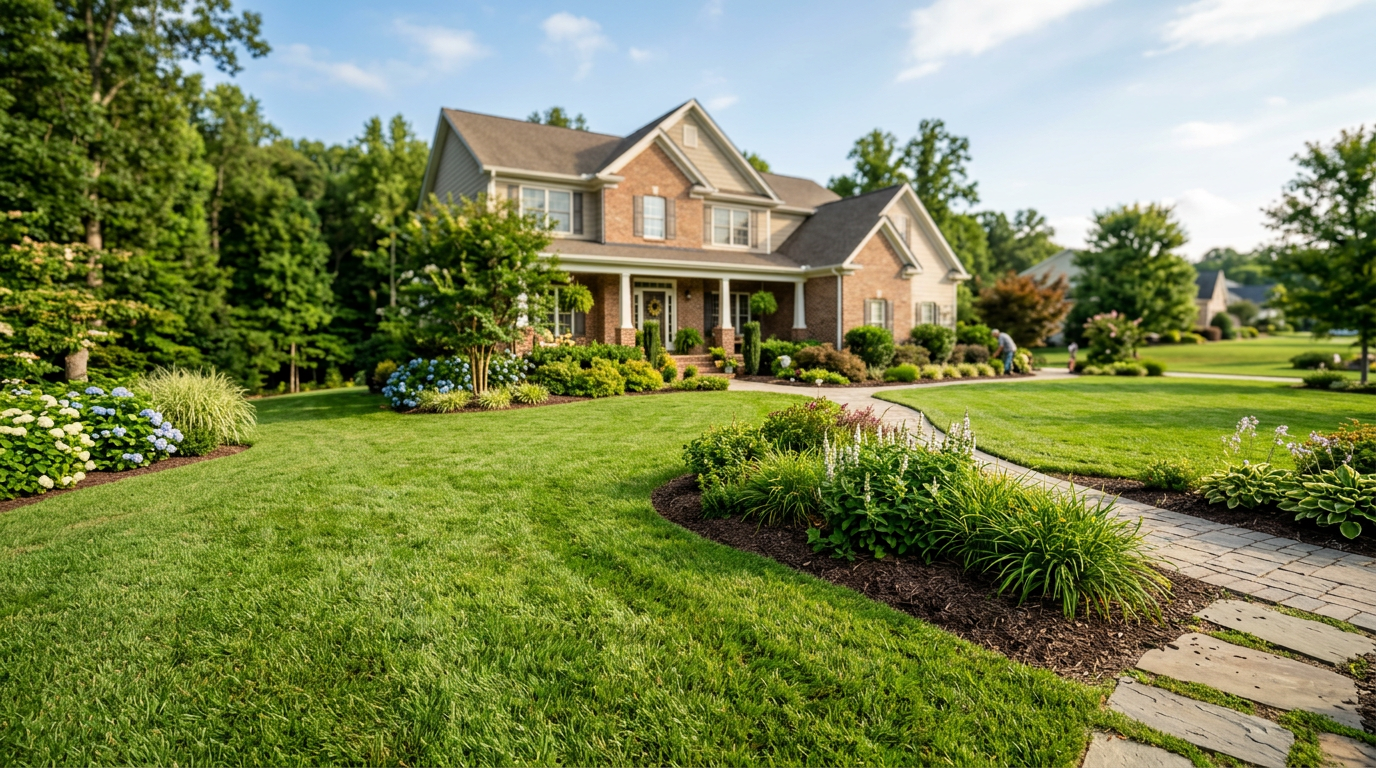
Let's be blunt: growing a great lawn in North Carolina can feel like a cruel joke. One minute you're battling scorching summer heat in Raleigh, the next you're trying to keep grass alive through a frosty spell in Asheville. This isn't a one-size-fits-all state, and your cousin's lawn care advice from Florida or Massachusetts is worse than useless here. It's actively harmful.
Welcome to the 'transition zone.' This is the battleground of American lawns, where cool-season grasses from the north clash with warm-season grasses from the south. The good news? You have options. The bad news? Picking the wrong one guarantees a patchy, weed-filled mess. We're here to cut through the noise and give you the definitive guide to the best grass for your specific corner of North Carolina.
Understanding North Carolina's Three Lawn Climates
Before you buy a single bag of seed, you need to know where you live. Not just 'North Carolina,' but which of the three distinct climate regions you're in. This is the single most important factor.
- The Mountains (Zone 1): Think Asheville, Boone, and the High Country. Here, cooler temperatures and milder summers heavily favor cool-season grasses. Winters are too cold for most warm-season types to survive reliably.
- The Piedmont (Zone 2): This is the heart of the transition zone. Stretching from Charlotte through Greensboro to the Raleigh-Durham Triangle, this region is a turfgrass tug-of-war. Summers are brutally hot and humid, but winters are cold enough to send warm-season grasses into a long, brown dormancy. This is where your decision is most critical.
- The Coastal Plain (Zone 3): From Fayetteville to Wilmington and the Outer Banks, this region is firmly in the South. Sandy soil, high humidity, and blistering, long summers make warm-season grasses the undisputed champions. Trying to grow a cool-season lawn here is setting your money on fire.
The Champ for Most of North Carolina: Tall Fescue
If you want a green lawn for the majority of the year in the Piedmont or Mountains, Tall Fescue is your answer. It's the most popular choice in North Carolina for a reason. Modern Turf-Type Tall Fescues (TTTF) are lightyears ahead of the old, clumpy 'Kentucky 31' your grandpa planted.
Why We Like Tall Fescue:
- Year-Round Green: It stays green through all but the coldest parts of winter, unlike the brown carpet of a dormant warm-season lawn.
- Shade Tolerance: It has the best shade tolerance of any common NC grass. If you have mature trees, Fescue is your best bet.
- Deep Roots: When properly cared for, it develops deep roots that help it survive summer drought better than other cool-season grasses.
The Downsides:
- Summer Stress: It doesn't love the 95°F days with 90% humidity we get in July and August. It will need more water during these months to avoid going dormant or developing brown patch disease.
- Doesn't Self-Repair: Fescue is a bunch-type grass. If you get a bare spot, you have to reseed it. It won't spread to fill in gaps. This means an annual ritual of overseeding in the fall is a must for a perfect fescue lawn.
Our Pick: Look for high-quality TTTF blends. Jonathan Green Black Beauty Ultra is a fantastic, widely available option that mixes fescue with Kentucky Bluegrass and Perennial Ryegrass for better durability and color. A 25 lb bag, which covers about 6,250 sq. ft. for overseeding, will run you about $120-$140.
Winning with Warm-Season Grass in North Carolina
If you're in the Coastal Plain, or if you have a full-sun yard in the Piedmont and can't stand the high water bills of summer, a warm-season grass is the smarter choice. These grasses thrive in the heat that stresses fescue. The trade-off is that they go completely dormant (tan-brown) after the first hard frost and don't green up until mid-spring.
Bermuda Grass: The Sun Worshipper
- Best For: Full, relentless sun. If your yard has no trees and bakes all day, Bermuda is your friend. It's incredibly drought-tolerant and heat-loving.
- Pros: Repairs itself incredibly quickly, stands up to heavy traffic (great for kids and dogs), and requires less water than fescue in summer.
- Cons: Has zero shade tolerance. It will thin out and die under a tree canopy. It's also an aggressive spreader and will invade flower beds if not edged properly.
- Top Cultivars: 'TifTuf' is the king of drought tolerance. 'Celebration' has slightly better shade tolerance (for a Bermuda) and a unique blue-green color. Expect to buy Bermuda as sod. If you're comparing notes with friends in the deep south, you'll see our advice mirrors a lot of what works for a Texas lawn care schedule.
Zoysia Grass: The Luxury Carpet
- Best For: Homeowners who want a dense, luxurious, carpet-like lawn and are willing to put in the work.
- Pros: Beautiful dark green color and very dense growth that chokes out weeds. It's fairly drought-tolerant and has better shade tolerance than Bermuda (though still less than Fescue).
- Cons: It's a slow grower, so it takes longer to establish and recovers from damage slowly. It's also prone to building up a thick layer of thatch that needs to be managed every couple of years.
- Top Cultivars: 'Zeon' is a fine-bladed Zoysia that's become a popular choice for high-end landscapes. 'Emerald' is an older but still excellent variety.
Centipede Grass: The Lazy Man's Lawn
- Best For: The sandy soils of the Coastal Plain and for people who hate fertilizing.
- Pros: Requires the least amount of fertilizer and maintenance of any NC turfgrass. It's happy in the acidic, low-fertility soils common in eastern NC. Its slow growth means less mowing. It's a bit like the lawn equivalent of the no-fuss plants in our guide to growing grass in Florida sand.
- Cons: It has a pale, apple-green color that some people don't like. It does not tolerate heavy foot traffic well and recovers from damage very slowly. It's also very sensitive to iron deficiencies and improper pH.
Pro Tip: Soil Testing in North Carolina is Dirt Cheap (or FREE)
Stop guessing. The single best thing you can do for your lawn is to get a soil test. In North Carolina, it's a no-brainer. The North Carolina Department of Agriculture & Consumer Services (NCDA&CS) offers an incredible service. You can pick up soil sample boxes and forms from your local Cooperative Extension office. From April through November, the testing is completely free. During the peak season from December to March, it's only $4 per sample. There is zero excuse not to do this.
Your report will tell you your soil's pH and nutrient levels, with specific recommendations on the exact amount of lime and fertilizer your lawn needs. Applying the wrong thing, or the right thing at the wrong time, is a waste of money and pollutes our waterways.
According to an analysis of thousands of lawn samples, the NC State Extension reports that more than 80% of unamended soils in the Piedmont and Mountain regions are too acidic for optimal turfgrass growth. This single factor can cause fertilizer to be ineffective, leading to weak, patchy turf. The only way to know if you need to apply lime is to test. (Source: https://content.ces.ncsu.edu/carolina-lawns)
So You've Picked Your Grass. Now What?
Deciding is half the battle. Now you have to get it in the ground. You have two choices: seeding or sodding.
-
Seeding: This is the most common method for Tall Fescue. The absolute best time to seed a fescue lawn in NC is early fall (September 1 to October 15). This gives the grass time to establish roots before winter and ahead of the next summer's heat. Seeding is much cheaper than sodding. You can seed Bermuda in late spring, but the results can be inconsistent.
-
Sodding: This gives you an 'instant lawn.' It's the preferred method for Zoysia, Centipede, and Bermuda. It's more expensive, but you get immediate results and fewer weeds. A pallet of sod (usually 450-500 sq. ft.) can cost anywhere from $300 to $650 in North Carolina, depending on the type and supplier. For example, a pallet of TifTuf Bermuda from a local grower like Super-Sod might run you about $350, while a pallet of premium Zeon Zoysia could be closer to $600.
We've laid our fair share of Zoysia sod in the blistering July sun around Charlotte, and trust us, paying for quality sod is worth every penny to avoid a year of patching up a seeded lawn that gets destroyed by summer storms. It's a completely different project than what our colleagues recommend in their New England landscaping guide, where the planting windows are more forgiving.
Ultimately, the best grass for North Carolina is the one that is best suited for your region, your soil, your sun exposure, and your tolerance for maintenance. Do your homework, test your soil, and you'll be on your way to a lawn that's the envy of the neighborhood.
Frequently asked
Can I mix warm-season and cool-season grass in NC?+
Generally, no. They have different maintenance, mowing, and watering needs, which results in a patchy, inconsistent look. The exception is overseeding dormant Bermuda with ryegrass for winter color, but this is a high-maintenance practice best left to sports fields.
What's the most low-maintenance grass for North Carolina?+
In the Coastal Plain and southern Piedmont, Centipede grass is the lowest maintenance, requiring less fertilizer and mowing. For the Mountains and most of the Piedmont, a high-quality Tall Fescue blend is relatively low-maintenance once established, though it requires fall overseeding.
When is the best time to plant grass seed in North Carolina?+
For cool-season grass like Fescue, plant in the early fall (September-October). This timing is crucial. For warm-season grasses like Bermuda or Centipede, seed in late spring to early summer (May-June) when soil temperatures are consistently above 70°F.
How much does sod cost in North Carolina?+
Sod prices in NC typically range from $0.65 to $1.30 per square foot. A full pallet covering 450-500 sq. ft. will generally cost between $300 for Fescue or Bermuda and up to $650 for a premium Zoysia variety like Zeon.
Is Zoysia or Fescue better for the NC Piedmont?+
It depends on your priority. Fescue offers year-round green color and better shade tolerance. Zoysia offers superior heat and drought tolerance during the summer but will be brown all winter. If you have full sun and hate high water bills, Zoysia is a great choice.