
What's the Best Grass for North Carolina? An Expert Guide
Stop guessing and start growing a lawn that thrives. We cut through the confusion to help you choose the absolute best grass for your specific spot in North Carolina.
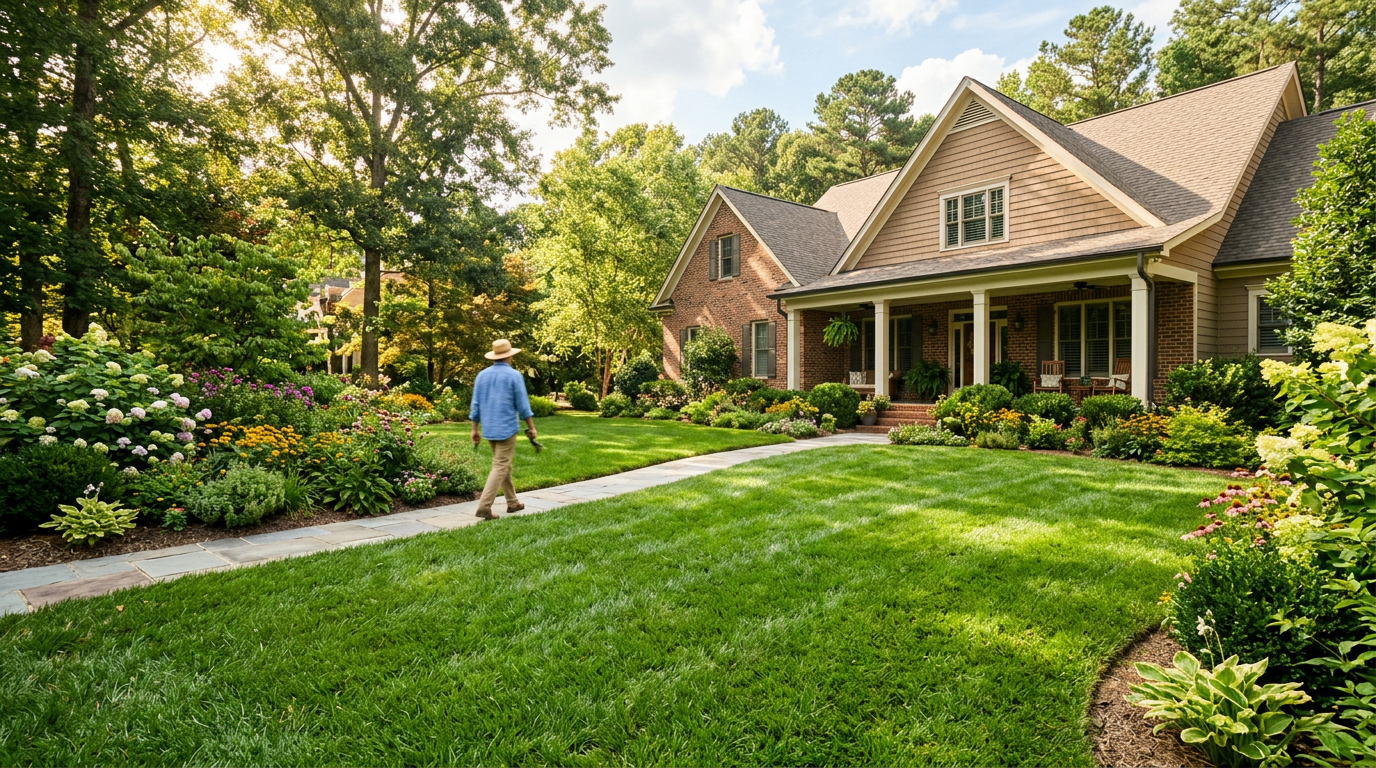
Let's get one thing straight: picking the best grass for North Carolina is a trick question. There is no single 'best' grass. Anyone who tells you otherwise is selling something. From the cool, misty mountains to the sandy, humid coast, North Carolina throws a bit of everything at a lawn. We're stuck in what landscapers call the "Transition Zone," and it's a real pain in the turf.
This zone is too hot for most cool-season grasses to survive the summer without a fight, and too cold for warm-season grasses to stay green all winter. So what's a homeowner to do? Panic? Pave the whole thing over? No. You just need a no-nonsense guide from people who've battled—and won—the lawn wars in this state. We'll break down your options, region by region, so you can finally have a lawn you don't have to curse at.
Understanding North Carolina's Transition Zone Mayhem
Think of the Transition Zone as a horticultural battleground. To the north, you have the cool-season grasses like Fescue and Kentucky Bluegrass that love mild summers. To the south, you have warm-season grasses like Bermuda and Zoysia that laugh at high heat and humidity. North Carolina is where they meet and duke it out. This is why a lawn strategy that works in Asheville might fail spectacularly in Wilmington.
Here’s the simple breakdown:
- The Mountains (Asheville, Boone): Cooler temperatures mean you're firmly in cool-season grass territory. Life is a little easier up here, lawn-wise.
- The Piedmont (Charlotte, Raleigh, Greensboro): This is the heart of the Transition Zone. The summers are brutal, but the winters are cold enough to send warm-season grasses into a deep, brown sleep. This is where the toughest choices are made.
- The Coastal Plain (Wilmington, Outer Banks): Hotter, more humid, with sandier soil and milder winters. This region heavily favors warm-season grasses.
Knowing your region is the first and most important step. Don't even think about buying a bag of seed until you know which team you're playing for.
Top Warm-Season Grasses for North Carolina
If you live in the Piedmont or Coastal Plain and you prioritize a tough, drought-tolerant lawn that shines from May to September, a warm-season grass is your ticket. Your lawn will be brown from about November to April, but during the summer, it'll be a dense, beautiful carpet.
Bermudagrass
- Best For: Full-sun properties in the Piedmont and Coast.
- Pros: Incredibly tough, heat and drought tolerant, self-repairing, and stands up to heavy foot traffic from kids and dogs. It’s aggressive.
- Cons: Needs at least 8 hours of direct sun. It will go dormant and turn brown at the first sign of frost. Its aggressive nature means it can invade flower beds if not edged properly.
- Our Pick: TifTuf™ Bermuda. Developed by UGA, it has superior drought resistance and stays green a little longer than other Bermudas. You can get a pallet of TifTuf sod (covering 450 sq. ft.) from local growers like Super-Sod for around $350-$400, or about $0.80-$0.90 per square foot. For seeding, a 5-lb bag of Pennington Bermudagrass Seed will run you about $25.
Zoysiagrass
- Best For: Homeowners wanting a high-end, dense turf with better shade tolerance than Bermuda.
- Pros: Forms an incredibly thick, carpet-like lawn that chokes out weeds. More shade tolerant than Bermuda (needs about 4-6 hours of sun). Feels great underfoot.
- Cons: Slow to establish and recover from damage. It’s also one of the priciest options. Like Bermuda, it turns a distinct straw color in the winter.
- Our Pick: Zenith Zoysia can be started from seed, which is rare and cheaper. For sod, Emerald or Zeon Zoysia are top-tier choices for that premium feel. Expect to pay a premium, often over $1.00 per square foot for sod.
Centipedegrass & St. Augustinegrass
- Best For: The Coastal Plain, especially those with sandy soil.
- Pros: Centipede is the 'lazy man's grass'—it's low maintenance and doesn't need much fertilizer. St. Augustine has excellent shade tolerance for a warm-season grass.
- Cons: Neither is cold-tolerant. We wouldn't recommend planting these north or west of I-95. They just can't handle a Piedmont winter.
The heat and humidity on the coast are a different beast, much like what you'd find further south. If you find yourself wrestling with that kind of climate, our Florida Lawn Care Schedule: A Month-by-Month Guide has some great tips that translate well to the NC coast.
The Best Cool-Season Grasses for a North Carolina Lawn
Want a green lawn on Christmas Day? You need a cool-season grass. These are the go-to for the Mountains and the most popular choice for homeowners in the Piedmont who are willing to put in a little extra work to maintain that year-round color.
Tall Fescue
- Best For: Pretty much anywhere in the Mountains and Piedmont. This is the workhorse of North Carolina.
- Pros: Stays green all year. Modern Turf-Type Tall Fescues (TTTF) have much better heat and drought tolerance than older varieties like Kentucky 31. It has a deep root system that can find water when others can't.
- Cons: It's a bunch-type grass, meaning it doesn't spread to fill in bare spots. You must overseed every fall to keep it thick. It can get stressed and patchy in extreme summer heat without proper watering.
- Our Pick: Don't buy a generic bag. You want a blend of multiple, high-quality TTTF varieties. We've had great results with Jonathan Green Black Beauty Ultra. A 25-lb bag costs about $100 and covers about 3,500 sq. ft. for overseeding. It contains fescue, rye, and Kentucky Bluegrass for quick germination, color, and fill.
Kentucky Bluegrass (KBG)
- Best For: Blending with Tall Fescue in the Piedmont; possible to use alone in high mountain elevations.
- Pros: Beautiful dark green color. It has rhizomes that allow it to spread and heal damaged areas, unlike Tall Fescue.
- Cons: It hates the heat and is high-maintenance. On its own, it would get smoked by a North Carolina summer in the Piedmont. It requires more water and fertilizer than fescue.
- Our Advice: We never recommend a pure KBG lawn in the Piedmont. But using a seed mix that includes 10-15% KBG along with Tall Fescue is a pro move. You get the heat tolerance of the fescue with the self-repairing ability of the bluegrass. Best of both worlds.
Planting Your North Carolina Lawn: Seed vs. Sod
We've laid our share of sod and scattered tons of seed, and here's our honest take. There's a time and a place for both.
Seeding is your best bet for a Tall Fescue lawn. Why? Because you need to overseed it every fall anyway, so you might as well get used to the process. The ideal time to plant or overseed Tall Fescue in NC is from mid-August to late September. The soil is warm for germination, but the cool nights give the new grass a chance to get established before winter. Seeding a warm-season grass like Bermuda or Zoysia happens in late spring (May-June).
Sodding gives you an instant lawn, which is a huge plus. It's also much better at preventing erosion on slopes. You can lay sod almost any time of year, as long as you can water it properly. It's the go-to choice for new construction or for when you're establishing a warm-season lawn like Bermuda or Zoysia, which can be tough to grow from seed. The downside is cost. Sod is 5-10 times more expensive than seed.
The financial commitment goes beyond just seed or sod. According to NC State Extension, a high-maintenance Tall Fescue lawn requires about 3-4 pounds of nitrogen per 1,000 square feet annually. In contrast, a low-maintenance grass like Centipede might only need 1 pound. This translates to real money: at around $50 for a 40lb bag of 10-10-10 fertilizer, that fescue lawn could cost you up to $100 more in fertilizer per year for an average 5,000 sq ft lawn than a centipede lawn. (Source: https://content.ces.ncsu.edu/carolinaturflawns) Lawn care is a long-term investment, no matter where you live, but some challenges are regional—our guide to Lawn Care in Texas covers a climate that makes ours look mild!
Pro Tips for North Carolina Lawn Dominance
Choosing the right grass is 70% of the battle. The other 30% is doing the right things at the right time.
-
Get a Soil Test. We will shout this from the rooftops. The N.C. Department of Agriculture & Consumer Services offers soil testing. From April through November, it's completely free. You drop off a sample (or mail it) and they send you back a detailed report on your soil's pH and nutrient levels, along with specific recommendations for what to add. This is the single most valuable, expert, and localized advice you will ever get. Do it.
-
Mow High. This is especially critical for Tall Fescue in the summer. Set your mower to the highest setting, usually 3.5 to 4 inches. Taller grass shades the soil, keeps it cooler, and prevents weed seeds from germinating. Taller grass also has a deeper root system. For Bermuda and Zoysia, you can mow much lower (1-2 inches) to encourage it to spread.
-
Water Deeply, Not Daily. A light, daily sprinkle creates shallow, weak roots. You want to water for a longer period, less frequently. The goal is to apply about 1 inch of water per week, delivered in one or two sessions. This encourages the roots to grow deep in search of water, creating a more drought-resistant plant. This principle holds true from the coast to the desert—it's similar to the strategies in use for Southern California Drought Landscaping That Doesn't Suck.
-
Time Your Applications. Don't fertilize your Tall Fescue in the spring; it just encourages weak growth that will get hammered in the summer. The main feeding time is fall. Conversely, don't fertilize your Bermuda lawn in the fall; it's getting ready to go to sleep. Feed warm-season grasses in late spring and summer. Timing fertilizer and other activities is crucial, much like knowing When to Plant Tomatoes in Georgia for a successful harvest.
So there you have it. The secret to the best grass in North Carolina isn't finding a magic seed. It's about honesty: honestly assessing your location, your soil, your sun exposure, and how much work you're willing to do. Make the right choice up front, and you'll spend more time enjoying your lawn and less time fighting it.
Frequently asked
What is the best low-maintenance grass for North Carolina?+
For the Piedmont and Coastal Plain, Centipedegrass or Bermudagrass are great low-maintenance options if you can tolerate winter dormancy. For the mountains, Tall Fescue is relatively low-maintenance, but it does require annual fall overseeding to stay thick and healthy.
Can I have a green lawn year-round in North Carolina?+
Yes. Planting a cool-season grass like Tall Fescue will keep your lawn green year-round, though it may get stressed in peak summer. Some people with warm-season Bermuda lawns will overseed with annual ryegrass in the fall for winter color, though this is a lot of work.
When is the best time to plant grass seed in NC?+
For cool-season grasses like Tall Fescue, the ideal window is late summer to early fall (mid-August to late September). For warm-season grasses like Bermuda or Zoysia, plant seed in late spring to early summer (May to June) when soil temperatures are consistently warm.
What's the best grass for shady areas in North Carolina?+
For shady areas, a blend of shade-tolerant Tall Fescue varieties is your best bet for a cool-season lawn. For warm-season lawns, Zoysia and St. Augustine have better shade tolerance than Bermuda, but still need at least 4-5 hours of direct sun to perform well.
Is Zoysia grass good for North Carolina?+
Yes, Zoysia is an excellent choice for the Piedmont and Coastal regions of North Carolina. It's heat-tolerant, dense, and has better shade tolerance than Bermuda. However, it is slow to establish, expensive, and will go dormant (turn brown) during the winter months.