
Arizona Desert Landscaping Ideas That Actually Work
Forget the sad, barren rock yards. Here's how to create a stunning, low-water landscape that actually thrives in the brutal Arizona sun.
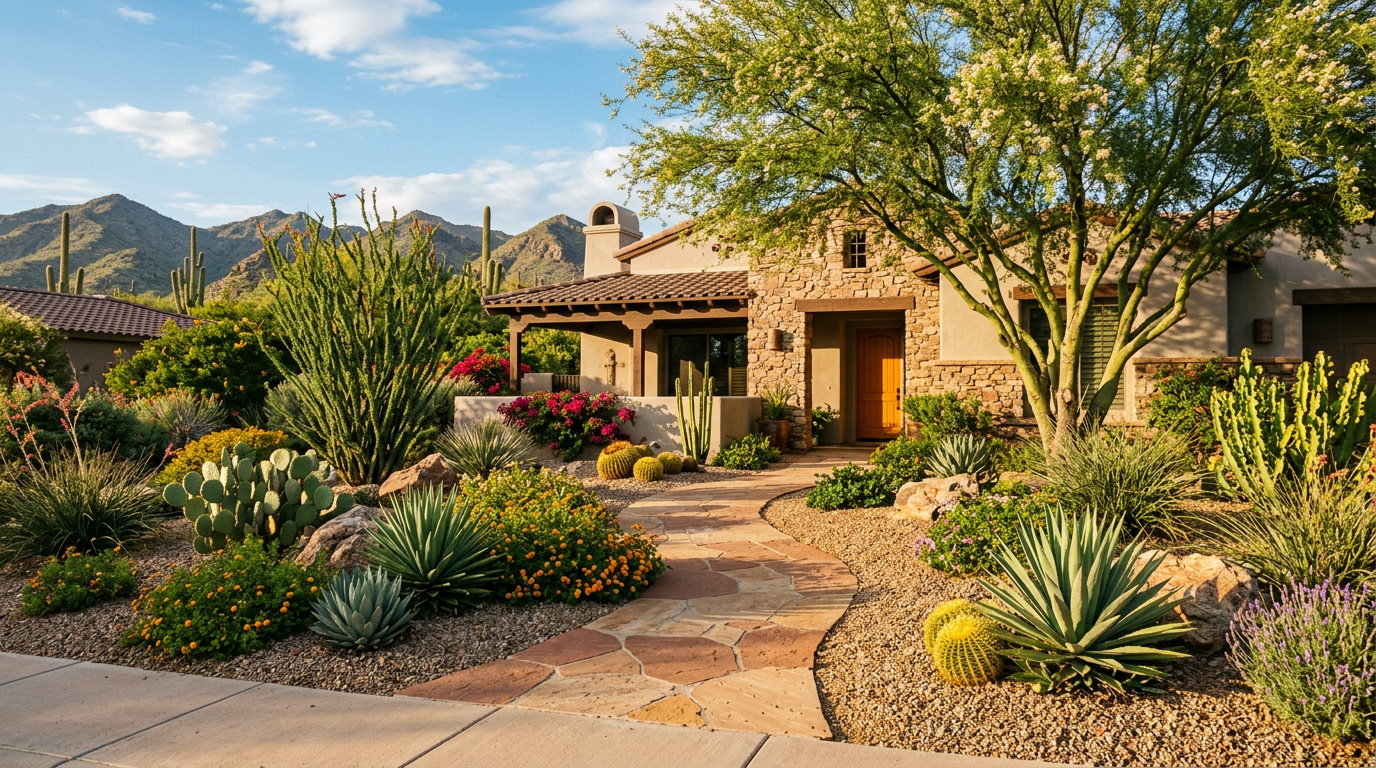
Let's be direct. Landscaping in Arizona is a different beast. If you just moved here from Ohio and think you're going to have a lush Kentucky bluegrass lawn, you're in for a world of pain and a water bill that looks like a car payment. We’re here to give you some real-world, no-nonsense Arizona desert landscaping ideas that look incredible, won't bankrupt you, and will actually survive the summer furnace. This isn't about covering your yard in an ocean of boring gray rock. It's about creating a beautiful, functional oasis that respects the Sonoran Desert we call home.
Ditch the Lawn: Smarter Groundcover for Arizona
The single biggest mistake we see homeowners make from Phoenix to Tucson is clinging to the idea of a traditional lawn. It’s a water-sucking, high-maintenance nightmare here. It's time to let it go. Trying to figure out when to overseed in fall for a winter lawn is a fool's errand when you have better options.
Your best alternatives are:
- Decomposed Granite (DG): This is our top choice. DG provides a clean, natural look that ranges in color from tan to gold to reddish-brown. It packs down firmly, creating usable patio and walkway space. A local supplier like Pioneer Sand or MDI Rock can deliver it by the ton. Expect to pay around $60-$85 per ton, and you'll typically need one ton for every 100 square feet at a 2-inch depth.
- River Rock & Boulders: Use larger rocks (3-8 inches) to create dry river beds and use massive boulders as dramatic focal points. This breaks up the monotony of flat groundcover and adds texture and height.
- Pavers: For high-traffic areas, patios, and walkways, concrete or travertine pavers are king. They’re durable and create a polished look. Professional installation in the Phoenix metro area typically runs $18-$25 per square foot, but a DIY patio is a manageable project if you're up for the work.
- High-Quality Artificial Turf: If you absolutely must have a patch of green for kids or pets, modern artificial turf is a viable, no-water option. It's not cheap—expect $10-$20 per square foot installed—but it's a one-time cost versus the endless water bills of real grass.
Plant Selection: The Best Native Plants for an Arizona Yard
Forget the delicate flowers that wilt the second it hits 100°F. Your plant palette needs to be tough, drought-tolerant, and beautiful. Sticking to native and desert-adapted plants is the only way to win. We're not gatekeeping the good stuff; head to a quality local nursery like Moon Valley Nurseries or Whitfill Nursery and ask for these by name.
-
Trees for Shade:
- Palo Verde ('Desert Museum' is a great thornless variety): The state tree! It has a sculptural green trunk and brilliant yellow flowers in the spring. A 15-gallon tree will run you about $175-$250.
- Ironwood: A slower grower, but incredibly dense and provides amazing shade. A true desert survivor.
- Mesquite (Chilean or Honey): Fast-growing and provides dappled, filtered shade that's perfect for underplanting.
-
Architectural Plants:
- Agave (Whale's Tongue, Parry's): These are living sculptures. They add dramatic form to the landscape. Just plant them away from walkways—those spines are no joke.
- Saguaro: The icon of Arizona. Buying one is a serious investment (thousands of dollars for a mature specimen) and requires permits. It's often better to design around existing ones if you're lucky enough to have them.
- Ocotillo: Looks like a bundle of dead sticks most of the year, but bursts with green leaves and fiery orange flowers after a rain. Stunning.
-
Color & Texture:
- Texas Sage (Leucophyllum frutescens): Explodes in purple flowers when humidity rises, acting as a natural barometer.
- Red Yucca (Hesperaloe parviflora): Sends up tall spikes of coral-pink flowers that attract hummingbirds all summer.
- Desert Marigold, Penstemon, Salvia: These perennials provide reliable pops of yellow, purple, and red without demanding much water.
This approach is a far cry from the challenges of Southern California drought landscaping, where the plant palette is different but the water-saving principle is the same.
Water Wisely: Why Drip Irrigation is Non-Negotiable in Arizona
If you build one thing, build a drip irrigation system. Sprinklers are a criminal waste of water in Arizona; most of it evaporates before it even hits the ground. Drip systems deliver water directly to the root zone of each plant, slowly and efficiently. According to the EPA, a household with an automatic landscape irrigation system that is not properly maintained can waste up to 25,000 gallons of water annually. In Arizona's climate, that number is likely even higher. (https://www.epa.gov/watersense/statistics-and-facts)
We've installed countless landscapes in the Valley, and the biggest mistake we see is people hand-watering. It's inconsistent and inefficient. A basic drip irrigation kit from a brand like DripWorks or Rain Bird costs around $100-$200 and can cover a significant area. Hook it up to a battery-operated timer (like the Orbit B-hyve, ~$70), set it to run in the early morning hours (4-6 AM), and you'll use up to 70% less water while keeping your plants healthier than ever. Many Arizona cities, like Phoenix and Scottsdale, even offer rebates for converting to drip systems.
Hardscaping That Beats the Arizona Heat
Your yard needs more than just plants. Hardscaping—the non-living elements—is what makes it a usable outdoor room. In Arizona, this means creating shade and comfortable living spaces.
- Pergolas and Shade Sails: A wooden or aluminum pergola over a patio is a game-changer. It defines the space and, when covered with a 90% shade cloth, makes it usable even in the summer. Shade sails are a more modern, affordable option that can be strategically placed to block the brutal afternoon sun.
- Seating Walls: Low, built-in walls made of concrete block and stucco not only define planting beds but also provide tons of informal seating for parties. They're more durable and practical than outdoor furniture that will bake and fade in the sun.
- Fire Pits: The desert gets chilly on winter nights. A gas fire pit (way easier and cleaner than wood-burning) becomes the central hub of your yard from October to April. You can get a simple prefab unit for $500 or have a custom one built for $3,000+.
The challenges here are similar to those in other arid, high-altitude places; our guide on landscaping ideas for Colorado that work touches on some of the same hardscaping principles.
Finishing Touches: Lighting and Features
Don't let your landscape disappear after sunset. Low-voltage LED landscape lighting is energy-efficient and transforms the space. It's also a huge security booster.
- Uplight Trees and Cactus: Place a spotlight at the base of your Palo Verde or Saguaro for a dramatic effect.
- Path Lighting: Use simple stake lights to safely illuminate walkways and steps.
- Wall Washing: Graze a textured stucco wall with light to bring out its texture and warmth.
A good starter kit from a pro-grade brand like VOLT Lighting will cost $400-$600 and is a surprisingly easy DIY project. The results are a thousand times better than those cheap solar lights that barely work.
Finally, consider a small, self-contained water feature. The sound of trickling water has a cooling effect on the mind, and a recirculating fountain uses very little water once filled. It provides a crucial water source for desert birds and pollinators, bringing your new Arizona desert landscaping ideas to life.
Frequently asked
How much does desert landscaping cost in Arizona?+
Costs vary wildly. A simple DIY refresh with decomposed granite and a few plants might cost $1,000-$3,000. A full professional installation with pavers, a pergola, lighting, and mature plants can easily range from $15,000 to $50,000+ for an average suburban backyard in areas like Phoenix or Scottsdale.
What is the cheapest rock for landscaping in Arizona?+
Decomposed granite (DG) or smaller gravel (around 1/2" to 3/4") is typically the most budget-friendly option. Expect to pay between $60 and $85 per ton. Larger decorative rock, river rock, and boulders will cost significantly more per ton, but you use them more sparingly as accents.
How do I maintain my Arizona desert landscape?+
Maintenance is low, but not zero. You'll need to manage weeds in granite areas (a pre-emergent herbicide helps), trim your shrubs and trees annually to maintain shape, and check your drip irrigation emitters once or twice a year to ensure they aren't clogged. It's a fraction of the work of a lawn.
Can I have desert landscaping with an HOA in Arizona?+
Almost always, yes. Most modern Arizona HOAs now encourage or even mandate xeriscaping. However, they often have specific rules about the percentage of rock vs. plant coverage, approved plant lists, and the condition of the materials. Always submit your plan for approval before starting work.