
Arizona Desert Landscaping Ideas That Don't Suck
Stop fighting the Sonoran Desert. We're showing you how to create a stunning, low-water Arizona landscape that actually thrives in the heat, without spending a fortune.
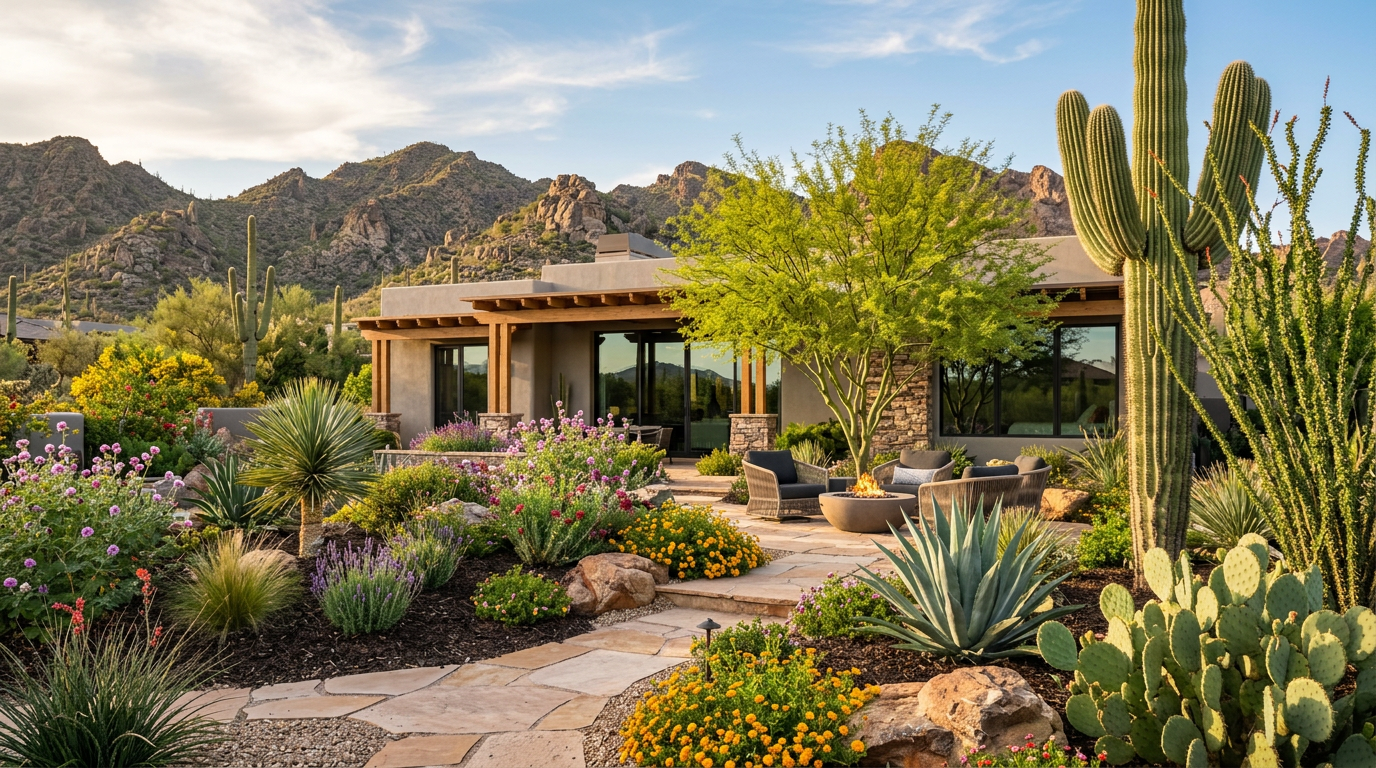
Let's be real: trying to force a lush, green English garden in the middle of the Arizona desert is a fool's errand. It's expensive, wasteful, and a constant battle against 110-degree days. We're here to tell you to stop fighting and start embracing the Sonoran Desert. A great Arizona landscape doesn't look like it belongs in Ohio. It looks like it belongs here. These are the ideas and strategies we use to create stunning, low-maintenance yards from Phoenix to Tucson that don't just survive, they thrive. And they won't require you to take out a second mortgage to pay your water bill. A smart design here shares a lot of principles with Southern California drought landscaping, but with a unique Sonoran twist.
Go Native: The Best Plants for Arizona Landscaping
Your first move is to ditch the thirsty, non-native plants that garden centers love to push. You need plants that laugh at the summer heat. We're talking about Sonoran Desert natives. Not only are they beautiful, but once they're established (after about a year of regular watering), they need very little help from you.
Our go-to choices for any Arizona yard include:
- Trees: 'Desert Museum' Palo Verde (the best, thornless, fast-growing), Ironwood, and Mesquite. A 15-gallon Palo Verde from a local spot like Moon Valley Nurseries will run you about $150-200, but it's an investment that pays off in shade and beauty.
- Shrubs: Texas Sage (Leucophyllum frutescens), Yellow Bells (Tecoma stans), and Lantana are bulletproof choices for vibrant color.
- Succulents & Cacti: Don't just plant a single Saguaro. Create clusters with varieties like the Golden Barrel, Prickly Pear (Opuntia), and Agave americana. They provide incredible architectural interest.
Building a landscape with these plants means less work, less water, and a yard that feels authentically Arizonan.
Hardscaping Ideas for a Water-Free Arizona Foundation
Grass is the enemy of a water-wise Arizona yard. The single biggest impact you can make is replacing turf with attractive hardscaping. This creates the 'bones' of your design and defines your outdoor living spaces.
- Decomposed Granite (DG): This is our secret weapon. DG is a fine, crushed rock that packs down to create a firm, natural-looking surface for patios and walkways. It's way cheaper than pavers. You can get a ton of DG (which covers about 100 sq. ft. at a 2" depth) for around $70-$90 from local suppliers like Pioneer Sand in the Phoenix area. We've laid more decomposed granite than we can count, and it's always a winner.
- River Rock & Gravel: Use larger river rock (1-3 inches) to create dry creek beds that look amazing during monsoon season and help channel rainwater. Use 1/2" gravel as a mulch around plants. It holds moisture in the soil, keeps weeds down, and doesn't blow away like bark.
- Pavers and Travertine: For a more formal patio or pool deck, pavers are a great choice. Travertine is a popular high-end option in places like Scottsdale because it stays cooler on bare feet than concrete.
According to the EPA WaterSense program, outdoor water use can account for up to 70% of a home's total water consumption in arid regions like Arizona. By swapping just 500 square feet of lawn for hardscape and native plants, you can save tens of thousands of gallons of water per year. Some cities, like Scottsdale and Mesa, even offer rebates for grass removal, so check your local water provider's website. (https://www.epa.gov/watersense/outdoors)
Get Smart: Drip Irrigation Ideas for the Desert
Forget sprinklers. In Arizona, sprinklers are just a fancy way to water the air—most of it evaporates before it ever hits the ground. The only smart way to water is with a drip irrigation system. It delivers water slowly and directly to the base of each plant, right where it's needed.
You don't need to be a pro to set one up. A kit like the Rain Bird Drip Irrigation Starter Kit from Home Depot costs about $40 and has everything you need to get started for a small garden bed. Hook it up to a simple battery-operated timer ($30) and you've automated your watering. Set it to run in the very early morning (like 4 AM) to minimize evaporation even further. This is a totally different philosophy than what's needed for the turf-heavy yards discussed in a Texas lawn care guide, and that's the point.
Create Shade to Beat the Arizona Heat
Your yard is useless if you can't actually use it for half the year. Creating shade is non-negotiable in Arizona. You have two main options: man-made and natural.
- Structures: A simple pergola over your patio can drop the perceived temperature by 15-20 degrees. Even easier, install a shade sail. You can buy a quality 12'x16' sail on Amazon for around $50. Use steel posts set in concrete for a permanent, sturdy installation.
- Trees: This is the long-term play. Plant deciduous trees like the 'Desert Museum' Palo Verde or Mesquite on the west and south sides of your house and patio. They'll provide dense shade in the summer but lose their leaves in the winter, allowing the warm sun to heat your home. It’s a similar strategy for high-altitude sun, like you'd find in our landscaping ideas for Colorado.
Finishing Touches: Color, Light, and Fire
A great Arizona landscape design engages all the senses, day and night. Once your bones are in place, add the finishing touches.
- Pops of Color: Use tough, flowering perennials like Red Yucca, Penstemon, and Bougainvillea (in a large pot or a protected spot) to add vibrant color against the neutral backdrop of your gravel and DG.
- Landscape Lighting: Don't let your yard disappear at sunset. Low-voltage LED landscape lighting is energy-efficient and easy to install. Use uplights on your architectural plants like Agaves and your feature trees. A simple kit with a transformer and a few lights can be had for under $200.
- Fire Pits: An Arizona winter evening is the perfect time for a fire. A simple steel fire pit or a more permanent gas-powered fire feature creates a natural gathering spot for friends and family.
Frequently asked
What is the best low-maintenance landscaping for Arizona?+
The best low-maintenance landscaping for Arizona uses a mix of native plants, such as Palo Verde trees and agaves, with hardscaping like decomposed granite or gravel. This approach, called xeriscaping, dramatically reduces water needs and yard work once established.
How can I make my Arizona backyard look good without grass?+
Create visual interest without grass by using a combination of materials. Design walkways with pavers or flagstone, use decorative gravel for groundcover, and create defined planting beds with boulders and colorful, drought-tolerant plants like Lantana and Red Yucca.
What is the cheapest way to landscape a yard in Arizona?+
The cheapest method is to minimize lawn and use local, affordable materials. Decomposed granite is an inexpensive surface for patios, and planting smaller, 1-gallon native plants is much cheaper than buying mature specimens. Installing your own drip irrigation also saves on labor costs.
How do I add color to my desert landscape?+
Add color with hardy, flowering plants that love the heat. Good choices for Arizona include Yellow Bells (Tecoma stans), Texas Sage, Bougainvillea, Penstemon, and various colorful succulents. Grouping them together creates a bigger visual impact.