
Arizona Desert Landscaping Ideas That Don't Suck
Stop fighting the Sonoran Desert. Here are the best, no-nonsense landscaping ideas to create a stunning, water-wise Arizona yard that actually thrives in the heat.
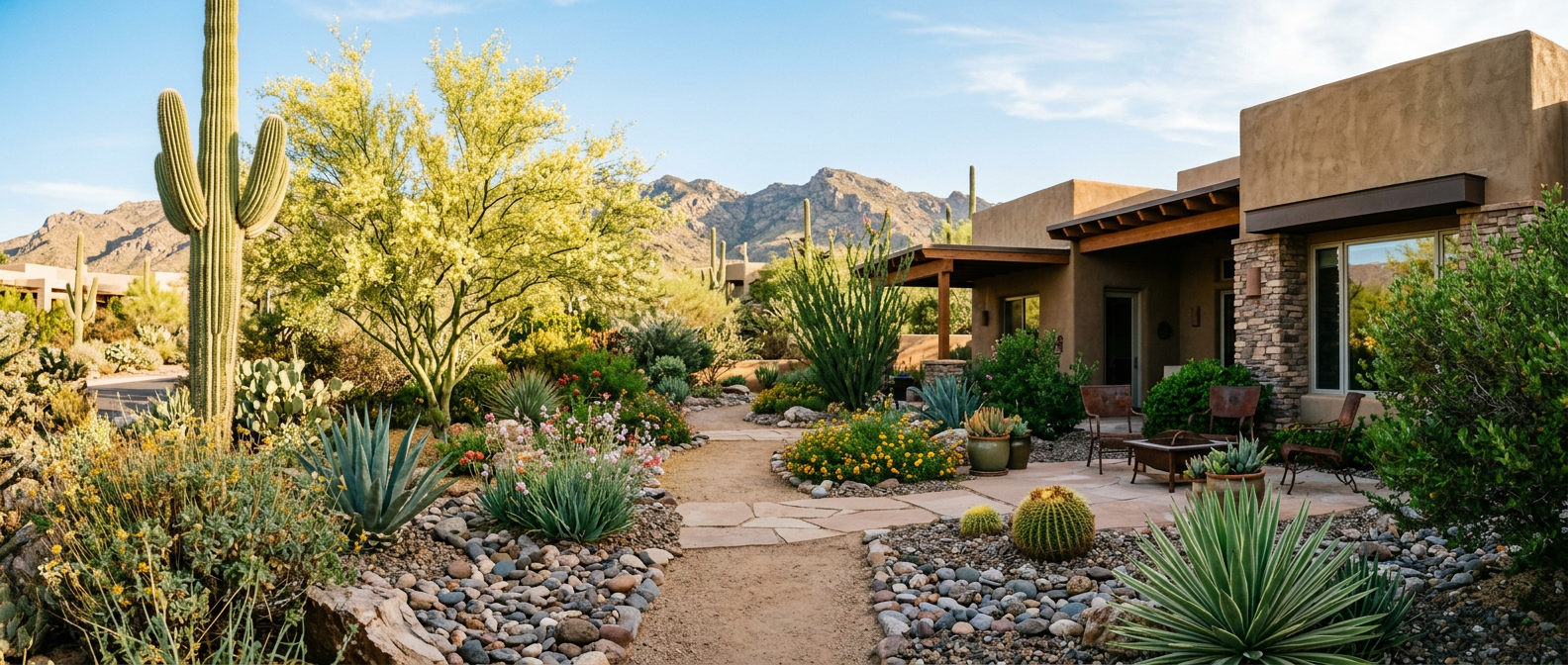
Let's be blunt. Trying to keep a traditional grass lawn alive in Phoenix, Tucson, or anywhere else in the low desert of Arizona is a fool's errand. It’s a constant battle against the sun, a massive water bill, and frankly, a waste of resources. We're here to help you embrace the stunning, rugged beauty of the Sonoran Desert and create a landscape that doesn't just survive, but thrives. These are the Arizona desert landscaping ideas that will give you a yard you love without the constant headache.
We've seen far too many well-intentioned transplants try to recreate their Midwestern backyard here, only to end up with a dusty patch of regret. The key isn't to fight the desert; it's to work with it. That means smart plant choices, strategic water use, and an emphasis on creating livable outdoor rooms.
Goodbye Lawn, Hello Gorgeous Gravel: An Arizona Staple
The single most impactful change you can make to your Arizona landscape is to get rid of the grass. A traditional lawn in this climate is an ecological and financial black hole. Replacing it with a combination of decorative gravel, boulders, and hardscaping is the foundation of xeriscaping.
- Decomposed Granite (DG): Our favorite for pathways and patio areas. It's fine, packs down tightly, and provides a soft, natural look. Colors range from tan to gold to grey. Expect to pay around $60 - $85 per ton from suppliers like Pioneer Sand in the Phoenix area. One ton typically covers about 80-100 sq. ft. at a 2-inch depth.
- Pea Gravel: Small, rounded stones that are great for a more textured look in planting beds or as a decorative accent. Less ideal for walking on. Price is similar to DG.
- River Rock: Larger, smooth stones (1-3 inches or bigger) used to create dry creek beds, define borders, or add visual interest. They help with drainage during monsoon season.
Combining different sizes and colors of rock creates depth and prevents your yard from looking like a flat, boring parking lot. This is a core concept that also works well in other hot, dry climates, from Southern California drought landscaping to West Texas.
The Best Plants for a Stunning Arizona Landscape
Plant selection is everything. You need plants that laugh at 115°F days and sip, rather than gulp, water. Thankfully, the desert provides an incredible palette of colors and textures. Focus on natives and other desert-adapted species.
Trees for Shade & Structure:
- Palo Verde ('Desert Museum' variety): The state tree! It has a green trunk, delicate leaves, and a spectacular yellow bloom in the spring. Fast-growing and provides filtered shade.
- Mesquite ('Thornless Chilean' variety): Another fast-grower that provides great shade. Deep roots make it very drought-tolerant once established.
- Ironwood: A slower-growing but incredibly tough native tree with beautiful lavender flowers.
Shrubs for Color & Coverage:
- Texas Sage (Leucophyllum frutescens): This is our go-to for a bulletproof shrub. It explodes in purple flowers after a good rain. A 5-gallon plant will run you about $25 - $40 at Lowe's or Home Depot.
- Yellow Bells (Tecoma stans): Produces bright yellow, trumpet-shaped flowers from spring through fall.
- Bougainvillea: Yes, it has thorns, but nothing provides a more spectacular pop of magenta, purple, or orange color. Loves the sun and heat.
Succulents & Accents:
- Agave (Whale's Tongue, Parry's): Architectural, dramatic, and the definition of low-water. Just be sure to plant them away from high-traffic areas.
- Prickly Pear (Spineless variety): Provides that classic desert look, produces edible fruit (tunas), and is incredibly resilient.
- Penstemon & Salvia: These flowering perennials add spikes of vibrant color (red, pink, purple) and are magnets for hummingbirds.
Water Wisely: Drip Irrigation in the Arizona Desert
If you have plants, you need to water them. But a sprinkler system is a massive waste in our climate. The intense sun and dry air can cause up to half the water from a sprinkler to evaporate before it even hits the ground. The answer is drip irrigation.
A professionally installed drip system can cost between $2,500 and $5,000 for an average-sized front and back yard. A DIY setup using parts from Rain Bird or Orbit will cost you a weekend and a few hundred dollars. It delivers water directly to the plant's root zone, with over 90% efficiency. This is non-negotiable for a successful Arizona landscape. Many cities like Scottsdale and Mesa even offer rebates for converting from sprinklers to drip.
According to the Arizona Municipal Water Users Association, converting a 1,000-square-foot lawn to a low-water xeriscape can save over 25,000 gallons of water per year. That's a huge impact on both the environment and your water bill. (Source: https://www.amwua.org/conserve-water/xeriscape)
Creating Shade: Your Key to a Usable Arizona Yard
An Arizona yard without shade is just a sun-baked plot of land you can't use for five months of the year. Creating shade is as important as choosing the right plants.
- Pergolas & Ramadas: These open-roofed structures are perfect for defining an outdoor living room or dining area. You can grow vines over them for natural, green shade. A simple wood pergola kit might start around $1,500, with custom-built steel structures going much higher.
- Shade Sails: A more modern and affordable option. These triangular or square pieces of UV-resistant fabric can be stretched across posts or attached to your house to create targeted shade. A good quality 12'x12' shade sail from a brand like Coolaroo costs about $70 - $100.
- Strategic Tree Planting: The best long-term solution. Plant deciduous trees like Mesquite on the south and west sides of your home and patio. They'll provide dense shade in the summer but lose their leaves to let the welcome winter sun through. This strategy is also effective in places with intense sun like Colorado.
Hardscaping That Sizzles (Figuratively)
Hardscaping—the patios, walkways, and walls—forms the bones of your landscape. In Arizona, material choice is critical.
- Pavers: Concrete pavers are durable and come in endless styles. However, they can get very hot. We highly recommend Travertine pavers for pool decks and patios. They are naturally porous and stay significantly cooler on bare feet than concrete or flagstone.
- Flagstone: Offers a rustic, natural look that blends beautifully with the desert. Can be set in sand, gravel, or mortared onto a concrete base.
- Built-in Seating & Fire Pits: A built-in masonry seating wall and gas fire pit can transform your patio into a year-round destination. Cooler evenings in the desert are perfect for gathering around a fire. While you see similar ideas in hot climates like the ones covered in our Texas lawn care guide, the dry Arizona air makes it even more appealing.
Building a beautiful, functional Arizona desert landscape isn't about limitations; it's about a different set of rules. By embracing local plants, smart watering, and the need for shade, you can create an outdoor space that is both stunningly beautiful and perfectly suited to our unique and wonderful climate.
Frequently asked
How much does it cost to landscape a desert yard in Arizona?+
A full professional desert landscaping conversion in Arizona can range from $7 to $20 per square foot. A typical 5,000 sq. ft. yard could cost $15,000 for basic gravel/plants up to $50,000+ for custom hardscaping, lighting, and a pergola. DIY saves significantly on labor.
What is the cheapest way to landscape a desert backyard?+
The cheapest method is a phased DIY approach. Start by removing grass. Lay down weed barrier and the most affordable local gravel (like 1/4" minus). Add a few high-impact, low-cost plants like Texas Sage. Expand with more plants and features over time as budget allows.
What can I plant in my Arizona backyard instead of grass?+
Instead of grass, use decorative gravel like decomposed granite or pea gravel as a base. Then, plant a mix of drought-tolerant plants like Palo Verde trees for shade, Bougainvillea and Texas Sage for color, and architectural succulents like Agave for modern visual interest.
Is xeriscaping mandatory in Arizona?+
While not universally mandatory for all residential properties, many new developments and most commercial properties are required to follow xeriscape principles. Many cities like Scottsdale, Mesa, and Phoenix offer significant financial rebates to homeowners who convert their grass lawns to water-wise landscapes.
What's the best ground cover for dogs in Arizona?+
Artificial turf is a popular, though expensive, option for dog areas as it stays green and is easy to clean. For a more natural option, use decomposed granite (DG) for its soft texture, or smooth, larger river rock that won't get stuck in paws. Avoid sharp, small gravel.