
Arizona Desert Landscaping Ideas That Don't Suck
Forget the endless gravel pit and sad cactus. We're showing you how to create a vibrant, modern, and genuinely cool landscape that thrives in the Arizona heat.
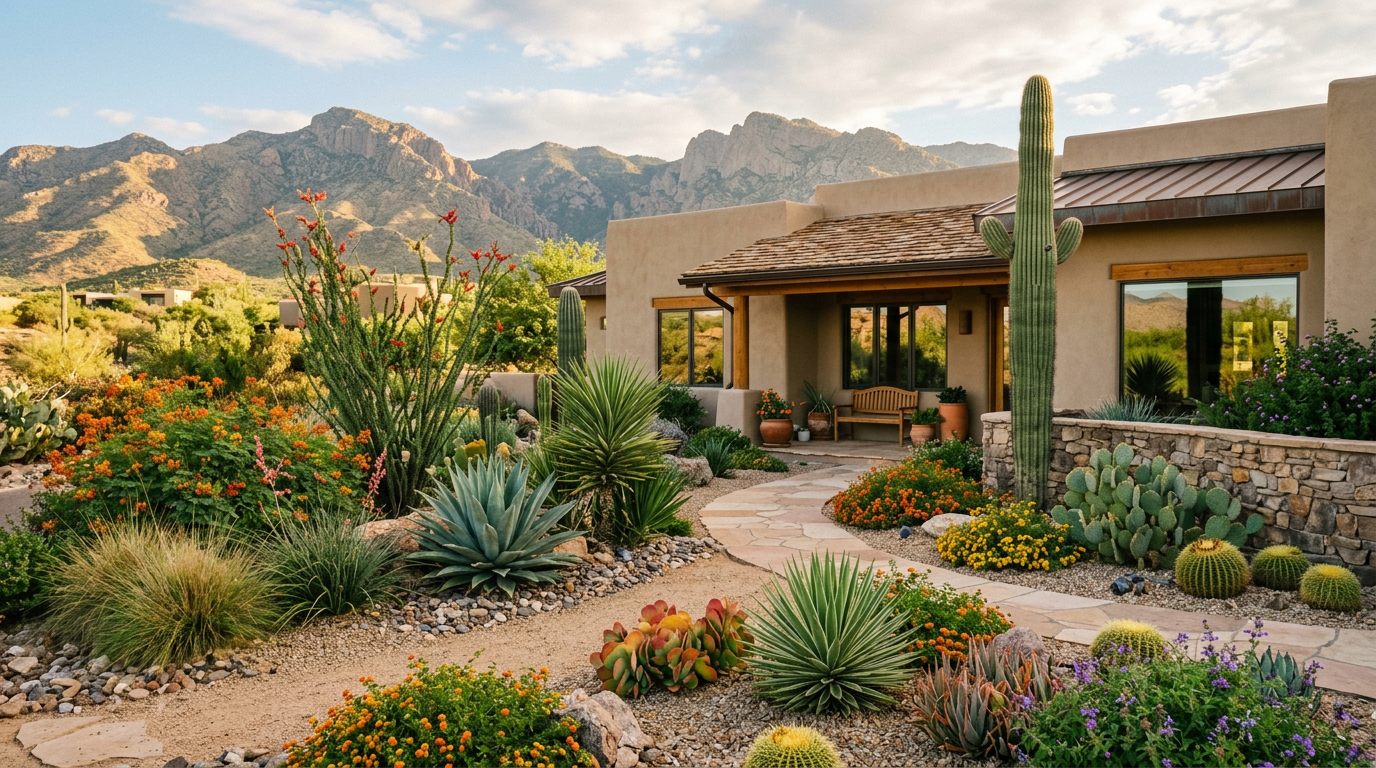
Let's be honest. When most people think of 'Arizona desert landscaping,' they picture a sea of beige gravel, a lonely saguaro, and maybe a bleached cow skull for 'character.' We're here to tell you to stop. That's not landscaping; that's giving up. Your yard in Phoenix, Tucson, or Scottsdale can be so much more than a low-effort cliché. It can be a vibrant, modern, and functional oasis that celebrates the brutal beauty of the Sonoran Desert instead of just surrendering to it.
We're not gatekeepers. We believe killer landscaping should be accessible to everyone. So, forget the cookie-cutter designs and let's dig into some real, practical Arizona desert landscaping ideas that actually work, look amazing, and won't require a second mortgage or a tanker truck of water.
Rethink 'Desert': The Modern Arizona Landscape Oasis
The first step is a mental one. Stop thinking 'lack of water' and start thinking 'abundance of sun.' Our goal isn't to mimic a parched wasteland; it's to create a curated outdoor living space that works with the Arizona climate. The Sonoran Desert isn't just brown and gray; it's full of deep greens, stunning yellows, and fiery reds. That's our inspiration.
Modern desert design is about a few key principles:
- Layering: Combine different elements—plants of varying heights, different types of rock, raised planters, and walkways—to create depth and visual interest.
- Texture: A smooth concrete patio next to coarse decomposed granite, or a spiky agave next to a feathery cassia shrub. Contrast is your best friend.
- Outdoor Rooms: Use hardscaping and plant placement to define distinct areas. Create a space for grilling, a lounge area under a pergola, a quiet corner for a morning coffee. Make the yard an extension of your home.
- Negative Space: Don't feel the need to fill every square inch. Well-placed empty space, covered in a clean groundcover like 1/2" Madison Gold rock, can make your feature plants and design elements pop.
The Holy Trinity of Arizona Hardscaping: Rock, Pavers & Shade
Hardscaping is the skeleton of your Arizona landscape. It defines the space, directs traffic, and reduces the amount of area that needs watering and maintenance. Get this right, and the rest is easy.
1. Rock & Gravel (The Right Way): We're not talking about that 3-inch river rock that looks dated and gets hotter than the surface of the sun. We're talking about smart choices.
- Decomposed Granite (DG): This is our go-to for pathways and casual patio areas. It packs down for a firm, natural-looking surface. It's affordable, typically running $50 - $70 per ton from suppliers like Pioneer Landscape Centers. Stabilized DG includes a binder that helps it firm up even more, reducing dust and tracking.
- Top-Dressing Gravel: For areas between plants, use a smaller, lighter-colored gravel (3/8" or 1/2" is ideal). Lighter colors reflect heat instead of absorbing it. We like Madison Gold, Palomino Gold, or Apache Brown. Expect to pay $60 - $90 per ton.
2. Pavers & Concrete: For high-traffic patios and clean, modern lines, you can't beat pavers or poured concrete. Large-format concrete pavers create a sleek, contemporary look. Travertine pavers are a more luxurious option that stay surprisingly cool underfoot. A simple poured concrete patio, perhaps with a broom finish for texture, is a durable and cost-effective foundation for an outdoor living room.
3. Shade Structures: A well-placed shade structure is not a luxury in Arizona; it's a necessity. A simple shade sail can create a usable space for a fraction of the cost of a full patio cover. For a bigger investment, a custom steel or wood pergola can define an entire outdoor room and provide a frame for climbing vines like bougainvillea or queen's wreath.
Plants That Thrive in the Arizona Sun (and Don't Need a Life Support System)
Plant selection is where the magic happens. The key is using plants adapted to our specific climate. We're not trying to grow thirsty East Coast hydrangeas here. Many of the principles that work for Southern California drought landscaping apply here, but with a focus on plants that can handle our more extreme heat.
We've installed hundreds of landscapes, and these are the bulletproof plants we return to again and again. You can find most of them at a quality local nursery like Moon Valley or Whitfill Nurseries.
-
Trees (for Shade and Structure):
- 'Desert Museum' Palo Verde: The gold standard. Thornless, beautiful green trunk, filtered shade, and a spectacular yellow bloom in the spring. A fast grower.
- Ironwood: A slower-growing, incredibly dense native tree. Provides deep shade and is practically indestructible once established.
- Velvet Mesquite: Classic Sonoran native. Provides light, feathery shade and is incredibly drought-tolerant.
-
Shrubs (for Massing and Color):
- Texas Sage (Leucophyllum frutescens): Explodes in purple flowers after a rain. Loves the heat, hates being overwatered.
- Lantana: A workhorse for color. Yellow, purple, orange, red—it blooms nearly year-round and attracts butterflies.
- Brittlebush (Encelia farinosa): A native powerhouse with silvery-green leaves and cheerful yellow, daisy-like flowers.
-
Succulents & Cacti (for Architectural Form):
- Whale's Tongue Agave (Agave ovatifolia): A stunning, solitary agave with broad, powdery-blue leaves. A living sculpture.
- Golden Barrel Cactus: Plant in clusters of 3 or 5 for a huge visual impact. They glow when the sun hits them from the side.
- Red Yucca (Hesperaloe parviflora): Technically not a yucca, but its long, coral-colored flower spikes are a magnet for hummingbirds. It's one of the most reliable and low-maintenance plants you can own.
Water-Wise is Wallet-Wise: Smart Irrigation in Arizona
Forget sprinklers that spray water into the hot, dry air where it evaporates instantly. In Arizona, drip irrigation is the only game in town. A properly designed drip system delivers water directly to the root zone of each plant, eliminating waste. According to the Arizona Department of Water Resources, outdoor water use can account for up to 70% of a home's total water consumption, making water-wise landscaping one of the most impactful changes a homeowner can make (source: https://new.azwater.gov/conservation/residential).
Here’s a basic setup:
- A smart controller: We love the Rachio 3. It connects to Wi-Fi, uses local weather data to adjust watering schedules automatically, and can be controlled from your phone.
- Drip tubing and emitters: Run 1/2" poly tubing as your main line, then punch in 1/4" lines to individual plants. Use specific emitters (e.g., 1-GPH, 2-GPH) tailored to each plant's needs. A big tree needs more water than a small cactus.
- Separate zones: Put trees on a separate valve from shrubs and cacti, as they have different watering needs. This is critical for long-term plant health.
This isn't like the constant watering needed for a traditional lawn in the southeast. Unlike the schedules required to maintain the best grass for North Carolina, your goal here is infrequent, deep watering that encourages roots to grow deep into the soil, making them more drought-resilient.
Light It Up: Strategic Lighting for Desert Nights
Your landscape doesn't disappear when the sun goes down. Arizona nights are magical, and good lighting transforms your yard into a 24/7 asset. Low-voltage LED lighting is safe, energy-efficient, and easy to install.
Focus on a few key techniques:
- Uplighting: Place a spotlight at the base of a 'Desert Museum' Palo Verde or a large saguaro. It turns the plant into a dramatic nighttime sculpture.
- Path Lighting: Use low-profile path lights to safely illuminate walkways made of DG or pavers.
- Backlighting: Place a light behind a plant with an interesting shape, like an agave, to create a dramatic silhouette against a wall.
A starter kit from a brand like Volt Lighting can cost around $300-$500 and is a fantastic DIY weekend project. The effect is professional and adds thousands of dollars in perceived value and usability to your home.
Creating a stunning Arizona desert landscape is about making smart, informed choices. It's about embracing the local climate, not fighting it. By combining thoughtful hardscaping, climate-appropriate plants, and efficient systems, you can build an outdoor space that is beautiful, sustainable, and a joy to live in. While some design principles are universal, the execution is specific, a lesson learned whether you're working on landscaping ideas for Colorado that actually work or right here in the Valley of the Sun.
Frequently asked
How much does desert landscaping cost in Arizona?+
Costs vary wildly. A basic DIY project with gravel and a few plants can be under $2,000. Professional, full-yard designs with pavers, pergolas, lighting, and mature plants often range from $7,000 to $25,000+ depending on the size and complexity.
What is the cheapest desert landscaping idea?+
The most budget-friendly approach is to use local decomposed granite or gravel for groundcover, buy small, young native plants that will grow over time, and focus on one small area first. Seeding native wildflowers is another very low-cost way to add seasonal color.
Can you have a lawn in Arizona desert landscaping?+
Yes, but we generally advise against it. If you must have a lawn, keep it small and functional. Use a drought-tolerant variety like Midiron Bermuda and water it responsibly. Artificial turf is a popular water-free alternative, though it can get very hot in direct sun.
What is the best rock for Arizona landscaping?+
Decomposed granite (DG) is a popular, affordable choice for pathways and patios. For decorative groundcover, lighter-colored 1/2" rock like Madison Gold is excellent as it reflects heat. Avoid dark lava rock, which absorbs and radiates excessive heat, cooking nearby plants.
How do I keep weeds out of my desert landscaping?+
Start with a high-quality, commercial-grade weed barrier fabric under your rock. Then, apply a pre-emergent herbicide (like Preen) in the fall and late winter to prevent seeds from sprouting. Spot-treat any breakthrough weeds by hand-pulling or with a targeted herbicide.