
Arizona Desert Landscaping Ideas That Don't Suck
Forget the sea of brown rocks and sad-looking cacti. We're showing you how to build a vibrant, modern, and surprisingly lush Arizona landscape that actually works.
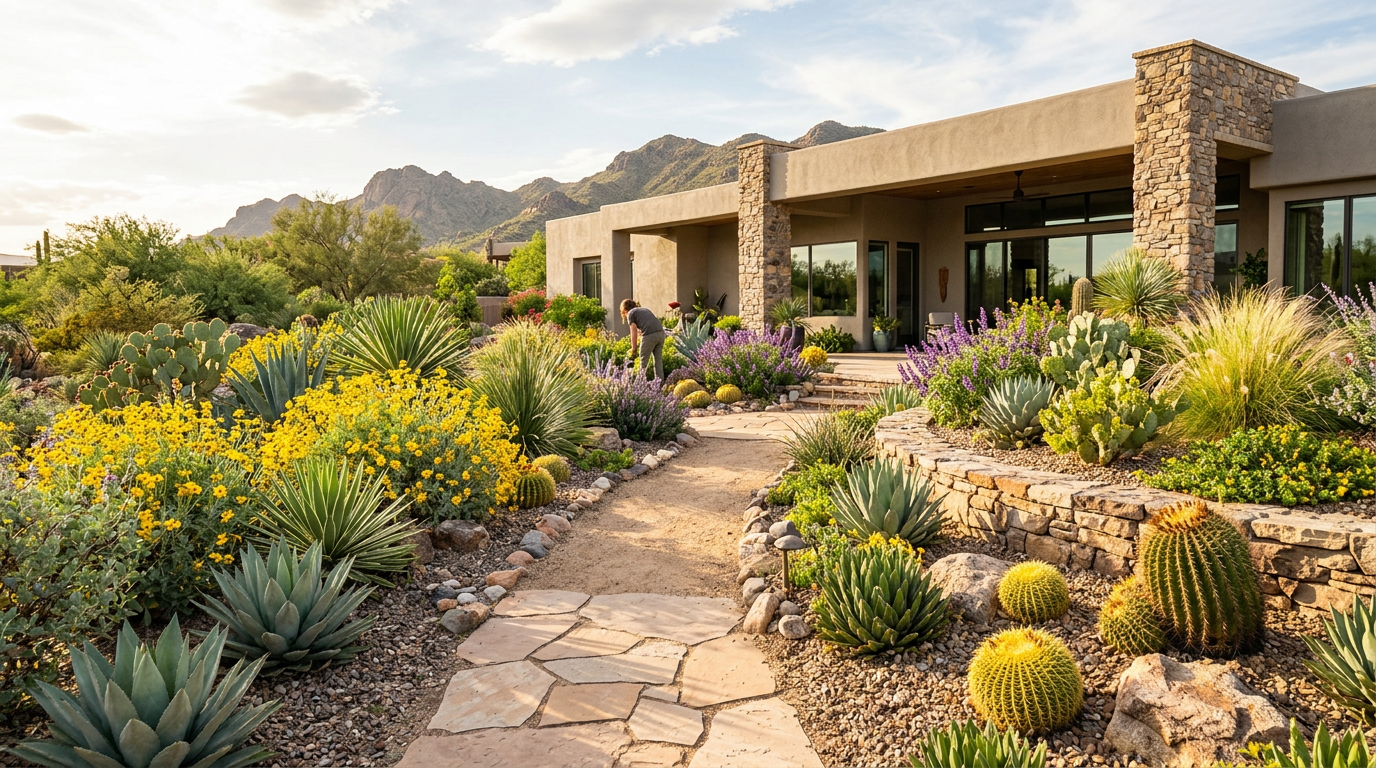
Let's be direct: most advice on Arizona desert landscaping is either boring or totally impractical. People hear 'desert' and think of a desolate moonscape of gravel with one lonely saguaro. That's a myth. We're here to show you how to create a stunning, functional, and water-wise yard in places like Phoenix, Scottsdale, and Tucson that you'll actually want to spend time in.
This isn't about gatekeeping some secret horticultural knowledge. It's about smart choices, the right materials, and understanding the unique rhythm of the Sonoran Desert. Let's get to work.
Ditch the Lawn (The Smart Way) in Arizona
Your thirsty Bermuda grass lawn is your biggest water hog. Getting rid of it is the single most impactful thing you can do. Many Arizona cities will even pay you to do it. The City of Scottsdale's Water Conservation Office, for example, offers a rebate of up to $2 per square foot for removing grass. Mesa and Tempe have similar programs. Check your local municipality's website—you're leaving money on the table if you don't.
But you don't have to go 100% grass-free. A small, well-placed patch of lawn can be a great functional space for kids or pets. We recommend a tough hybrid Bermuda like TifTuf. It uses significantly less water than older varieties. You can then overseed it for a green winter lawn. If you're going that route, our guide on When to Overseed Your Lawn in Fall has the exact timing you need.
Hardscape: The Backbone of Your Arizona Yard
Hardscape—the non-living elements like patios, paths, and rock—is crucial in Arizona. It defines spaces and cuts down on maintenance. But don't just pour a giant concrete slab. Concrete creates a massive heat island effect, making your yard even hotter.
Instead, use a combination of pavers and decorative gravel or decomposed granite (DG). Decomposed granite is a fantastic, permeable surface for paths and seating areas. A ton of 3/8" Madison Gold DG from a local supplier like MDI Rock in Phoenix will run you about $60-$80 and covers roughly 80-100 square feet at a 2-inch depth. Paired with some flagstone for a walkway, it creates a high-end look for a fraction of the cost of full concrete or travertine.
According to the Arizona Department of Water Resources, outdoor water use can account for a staggering 70% of a home's total water consumption, primarily for landscape irrigation. By replacing turf with permeable hardscape and native plants on a drip system, you can slash that number dramatically, often by more than half. (Source: https://new.azwater.gov/conservation/home-water-use)
The Right Plants for Arizona's Brutal Heat
This is where people get intimidated, but it's simple: stick to plants that evolved here. Don't fight the desert; embrace it. Nurseries like Moon Valley or Whitfill Nurseries have huge selections of desert-acclimated plants. Here are our top picks that are nearly impossible to kill:
- Trees for Shade: Desert Willow, 'Desert Museum' Palo Verde, Ironwood. A 15-gallon Palo Verde will cost around $150-$200 and provides incredible filtered shade and yellow spring blooms.
- Architectural Accents: Agave (Whale's Tongue, Parry's), Hesperaloe (Red Yucca). They provide year-round structure and require almost no water once established.
- Color & Groundcover: Lantana, Bougainvillea, Yellow Bells (Tecoma stans), and Firecracker Penstemon. These provide massive pops of color and attract hummingbirds, but they need a bit more water than a cactus to keep blooming.
We've seen folks try to plant things better suited for the midwest here and it's always a sad, expensive failure. The principles of using drought-tolerant plants are universal, whether you're in the Sonoran Desert or creating Southern California Drought Landscaping That Doesn't Suck.
Water Wisely: Arizona Drip Irrigation is Non-Negotiable
Stop using sprinklers. Just stop. In Arizona's dry air, as much as 30-50% of the water from a sprinkler can evaporate before it even hits the ground. A drip irrigation system is the only professional choice.
These systems use a network of tubes with small emitters that 'drip' water directly onto the soil at the base of each plant. It's incredibly efficient. A basic DIY setup for a front yard can be pieced together for a few hundred dollars from Home Depot or Lowe's. We've installed dozens of these systems in Scottsdale yards, and the water savings are immediate.
Get a smart timer, too. The Rachio 3 or a simpler B-hyve Smart Hose Faucet Timer (around $70) will connect to Wi-Fi and automatically adjust watering schedules based on the local weather forecast, saving even more water and money without you lifting a finger.
Create Shade and Outdoor Rooms
A beautiful Arizona yard is useless if you can't use it for 6 months of the year. The final layer of a great design is creating shade. This is how you build 'outdoor rooms.'
A simple shade sail can transform a scorching patio into a usable dining area. A 12'x12' sail costs about $40 on Amazon. For a more permanent solution, a pergola over your patio provides a structure where you can grow climbing vines like Bougainvillea or Pink Trumpet Vine for living shade.
Think about seating areas, a fire pit for cool winter nights, and landscape lighting to bring it all to life after the sun goes down. The goal is to extend your living space into the outdoors. Even in different climates, the principles of creating usable outdoor space are similar, whether you're designing for the desert or looking at Landscaping Ideas for Colorado That Actually Work.
By combining these elements—turf reduction, smart hardscaping, native plants, drip irrigation, and shade—you can build an Arizona landscape that's not just sustainable, but truly exceptional.
Frequently asked
What is the cheapest way to landscape a yard in Arizona?+
The cheapest method is to use local, native plants and materials. Opt for decomposed granite or wood mulch over expensive pavers. Buy smaller, 1-gallon or 5-gallon plants instead of mature specimens. A well-designed plan using these budget materials can look incredible while saving thousands of dollars.
How can I landscape my Arizona front yard with an HOA?+
Review your HOA's architectural guidelines first. Most HOAs in Arizona now encourage or require desert-friendly landscaping. Submit a simple plan showing plant choices and hardscape materials for approval. Focusing on neatness, clean lines, and approved native plants will almost always get a thumbs-up.
What plants provide the most color in the Arizona desert?+
For vibrant, long-lasting color, use Bougainvillea (pinks, purples, reds), Lantana (yellows, oranges), and Tecoma stans (Yellow Bells). These plants are tough, bloom profusely through the heat with proper watering, and attract pollinators like hummingbirds, adding life and color to your yard.
How do I keep my yard cool in the Phoenix summer?+
Prioritize shade. Plant deciduous trees like the Desert Willow or Palo Verde on the west and south sides of your yard. Use light-colored hardscape materials like decomposed granite instead of dark rock or concrete. Installing a shade sail or pergola over your patio is also highly effective.