
Arizona Desert Landscaping Ideas: A Local's Guide
Tired of a yard that's all brown dirt and high water bills? Here's how to create a stunning, low-maintenance Arizona landscape that actually works with the desert, not against it.
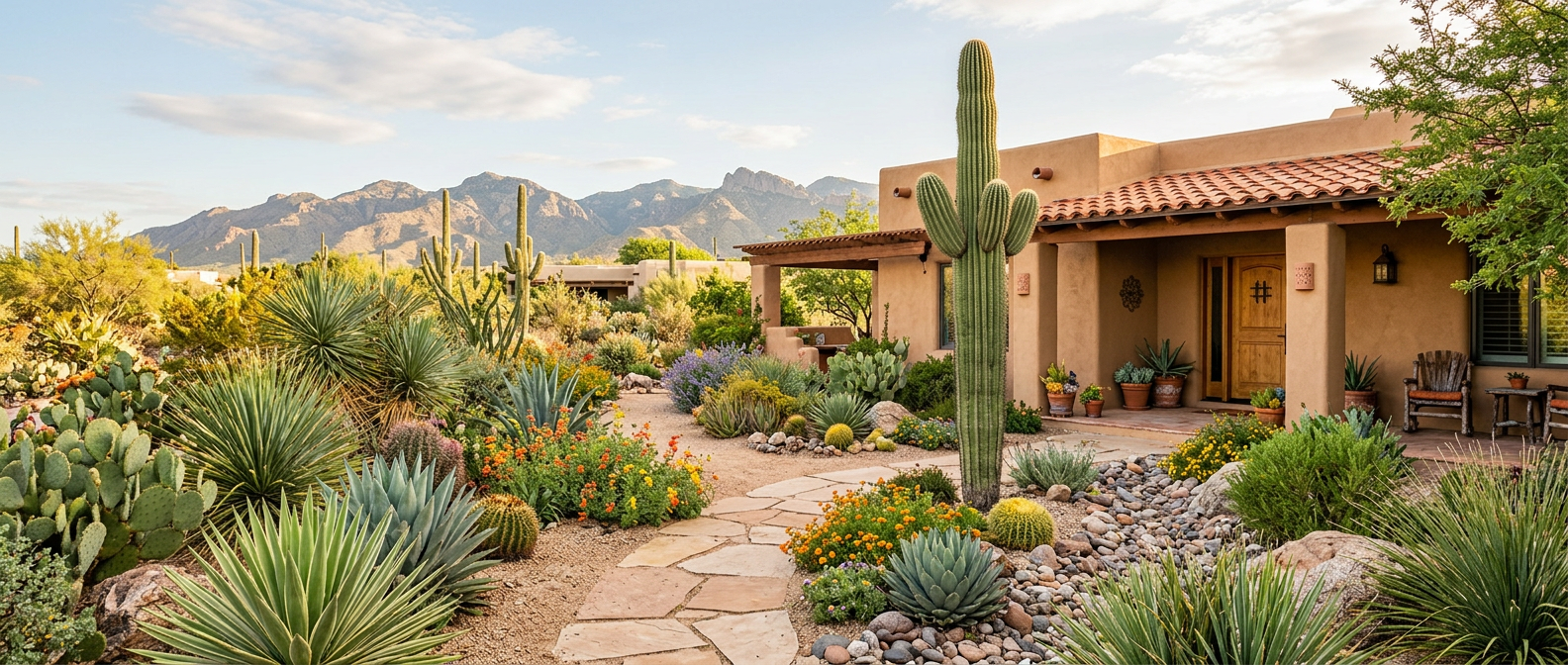
Let's be blunt: trying to maintain a lush, green Kentucky Bluegrass lawn in Arizona is a fool's errand. It's a battle against nature you will lose, and your water bill will be the first casualty. We're here to show you a better way. Creating a beautiful, functional, and sustainable landscape in the Sonoran Desert is not only possible, it's a superior way to live. These are the Arizona desert landscaping ideas that will give you a yard you're proud of, without the ridiculous upkeep or resource drain. Forget what you learned back east; you're in the desert now, and it's time to landscape like it.
Why Xeriscaping is King for Arizona Landscaping
Xeriscaping isn't just a fancy word for "rocks and cacti." It's a systematic approach to landscaping that minimizes water use. In a state where the Colorado River is shrinking and cities like Phoenix and Scottsdale are pushing for conservation, it’s not just a good idea—it’s a civic duty. The core principle is simple: work with the environment. This means swapping out water-guzzling turf for a combination of hardscape, decorative gravel, and plants that actually want to live here.
Many Arizona cities offer financial incentives to make the switch. For example, the City of Phoenix offers a rebate for homeowners who convert their grass lawns to desert-adapted landscapes. It’s a win-win: you get a beautiful, low-maintenance yard, and you get paid to do it. While the specifics change, these programs underscore the importance of water-wise design. It's a philosophy that's just as relevant in other arid climates, from Southern California drought landscaping to the high plains of Colorado.
The Holy Trinity: Rock, Plants, and Color in Arizona
A great Arizona desert landscape balances three key elements: decorative rock for ground cover, structural plants for height and interest, and flowering perennials for seasonal color.
1. Decorative Rock: This is your new lawn. It acts as a mulch, suppressing weeds and retaining soil moisture. Don't just get the cheapest stuff. Think about color and texture. A ton of 1/2" Palomino Gold granite from a local supplier like MDI Rock will run you about $70-$90 and covers roughly 100 square feet at a 2-inch depth. For a modern look, consider gray slate chips. For a classic Sonoran feel, Madison Gold is the go-to. We recommend a minimum 2-inch layer over a quality weed barrier fabric to prevent headaches later.
2. Structural Plants: These are the bones of your garden. Think beyond a single, lonely Saguaro. Create layers with different forms.
- Trees: Palo Verde ('Desert Museum' is a fantastic thornless variety), Ironwood, or Desert Willow provide crucial shade and have beautiful seasonal blooms.
- Statement Cacti & Succulents: A specimen-sized Golden Barrel cactus, a cluster of Organ Pipe cactus, or a large Agave americana provides a dramatic focal point. We've seen homeowners pay a premium for mature specimens, but you can buy a healthy 5-gallon Agave from a nursery like Moon Valley Nurseries for around $50-$70.
3. Pops of Color: Your desert yard doesn't have to be monochrome. Use flowering perennials and shrubs to add life.
- Firecracker Penstemon: Shoots up brilliant red tubular flowers that hummingbirds love.
- Bougainvillea: A beast of a plant that can cover a wall in vibrant pink, purple, or orange. Requires more water than other plants on this list, so place it wisely.
- Yellow Bells (Tecoma stans): A large shrub that produces bright yellow, trumpet-shaped flowers from spring through fall.
- Red Yucca (Hesperaloe parviflora): Not a true yucca, this plant sends up tall spikes of pinkish-red flowers and is incredibly tough.
Hardscaping That Makes Sense for Arizona Homes
Hardscaping—the non-plant elements like patios, paths, and walls—is arguably more important in Arizona than anywhere else. It’s what defines your outdoor living space.
- Patios & Walkways: Travertine pavers are a popular high-end choice because they stay cooler in the sun than concrete. For a more budget-friendly option, concrete pavers or flagstone set in decomposed granite work beautifully. Expect to pay between $18-$35 per square foot for professionally installed pavers in the Phoenix area.
- Shade Structures: A ramada or a modern shade sail is essential for creating a usable outdoor space in the summer. A permanent structure can also help cool your home by shading windows and walls.
- Fire Pits: The desert gets cold at night! A gas fire pit provides a perfect gathering spot for those beautiful Arizona evenings from October through April. It’s a feature that extends the usability of your backyard significantly.
Smart Watering: The Secret to a Thriving Arizona Garden
You can have the best plants in the world, but they'll die without a proper watering system. Sprinklers are out. Drip irrigation is the only game in town. Drip systems deliver water slowly and directly to the root zone of each plant, minimizing evaporation and runoff. We've installed hundreds of these, and a well-designed system is the single most important factor for success.
According to the EPA, drip irrigation systems use 20 to 50 percent less water than traditional pop-up sprinkler systems. For an average yard, this can translate to thousands of gallons saved per year. (Source: https://www.epa.gov/watersense/drip-irrigation) A DIY starter kit, like the Rain Bird Drip System starter kit, costs about $50 at Home Depot and can cover a small garden bed. For a whole yard, a professional installation is worth the investment. Key tips:
- Use separate zones: Group plants with similar water needs on the same valve. Your Red Yucca needs far less water than your Bougainvillea.
- Add more emitters as plants grow: A small plant might start with one 1-gallon-per-hour emitter. A mature shrub may need three or four.
- Adjust seasonally: Water deeply but infrequently in the fall and winter. During the summer heat, you'll need to water more often, but still aim for deep soakings early in the morning.
This approach is a world away from the overseeding calendar you might see for other regions. Trying to follow a guide for when to overseed in the fall is a classic mistake for new Arizona residents with Bermuda grass lawns—you don't do it! You let the Bermuda go dormant. It's about adapting to the local reality, a principle that holds true whether you're managing Arizona desert landscaping ideas that don't suck or designing for a totally different environment like the Pacific Northwest.
By embracing these principles—xeriscaping, smart plant selection, functional hardscaping, and efficient watering—you can create an Arizona landscape that is beautiful, sustainable, and a joy to live in.
Frequently asked
What is the cheapest way to landscape a desert yard in Arizona?+
The cheapest method is to focus on ground cover. Start by clearing the area and laying down a quality weed barrier. Then, cover with 2-3 inches of affordable decorative gravel like 3/4" standard granite. Add a few inexpensive, young native plants like Red Yucca or brittlebush and let them grow.
What plants do well in the full sun of an Arizona backyard?+
Plants native to the Sonoran Desert are your best bet. 'Desert Museum' Palo Verde trees, Tecoma stans (Yellow Bells), Bougainvillea, various Agave species, and cacti like the Golden Barrel and Prickly Pear all thrive in the intense Arizona sun once established.
How can I landscape my Arizona yard without any grass?+
Focus on creating 'outdoor rooms' with hardscaping like paver patios and walkways. Use decorative gravel as your primary ground cover, and create interest with boulders and raised planters. Group drought-tolerant plants in clusters to create lush-looking islands in the gravel sea.
How much does desert landscaping cost in Arizona?+
Costs vary widely. A simple DIY gravel and plant installation can be as low as $3-$5 per square foot. A basic professional installation with drip irrigation and more mature plants might be $7-$15 per square foot. High-end designs with extensive hardscaping, lighting, and large specimen plants can easily exceed $30+ per square foot.
What is the best rock for Arizona landscaping?+
There's no single 'best' rock; it depends on your budget and aesthetic. Madison Gold is a classic, popular choice that blends well with the desert environment. Palomino Gold offers a brighter look. For modern designs, gray slate chips or river rock (in dry stream beds) are excellent options.