
Arizona Desert Landscaping Ideas That Don't Suck
Forget boring gravel pits. We're showing you how to build a vibrant, modern, and surprisingly lush Arizona landscape that thrives in the extreme heat.
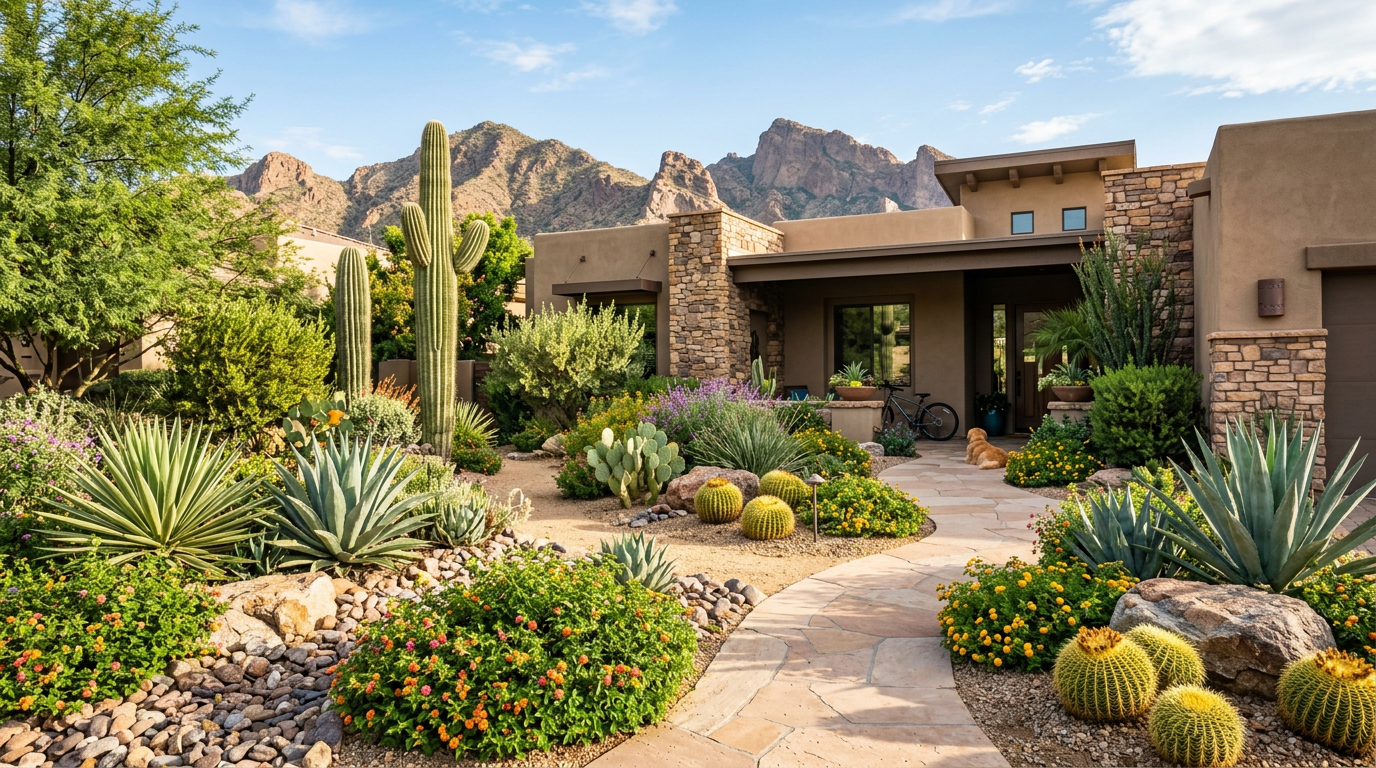
Let's be honest. When you look out at your yard in the middle of July in Arizona, it can feel less like a potential oasis and more like a dusty, sun-scorched moonscape. You see a patch of dirt, a few sad-looking weeds, and a heat shimmer that could cook a steak. But it doesn't have to be that way. We're here to tell you that creating a stunning, functional, and even lush landscape in the Arizona desert is not only possible, it's one of the most rewarding home projects you can tackle.
This isn't about fighting the desert. It's about working with it. Forget the water-guzzling lawns and fussy English garden plants that belong in a different climate zone. We're going to dive into real, practical Arizona desert landscaping ideas that save water, reduce maintenance, and give you a beautiful outdoor space you can actually use, even when it's 110°F.
Why Xeriscaping is King in Arizona
If you've spent any time in Arizona, you've heard the word "xeriscape." A lot of people think it just means "rocks and cactus." That's a myth. Xeriscaping is a smart landscaping philosophy based on seven core principles, with the main goal being water conservation. It's not zero-scape; it's about creating a vibrant, beautiful yard with minimal supplemental water. For any homeowner in Phoenix, Tucson, Scottsdale, or anywhere else in the state, this is rule number one.
Think about it this way: according to the Arizona Municipal Water Users Association (AMWUA), outdoor water use can account for up to 70% of a household's total water consumption. That's a staggering amount of a precious resource just being sprayed onto a lawn that's fighting for its life. By converting that lawn area to a well-designed xeriscape, you can cut your outdoor water use by 50-75%, saving thousands of gallons of water and hundreds of dollars on your water bill each year. (Source: https://www.amwua.org/what-you-can-do/homeowners-outdoor)
Xeriscaping in Arizona means:
- Smart Planning: Grouping plants with similar water needs together.
- Soil Improvement: Using compost to help sandy soil retain moisture.
- Practical Turf Areas: Limiting or eliminating grass in favor of other materials.
- Efficient Irrigation: Using drip systems instead of sprinklers to deliver water directly to the roots.
- Using Mulch: Applying a layer of wood chips or gravel to reduce evaporation and suppress weeds.
- Low-Water-Use Plants: This is the fun part, which we'll get to next.
- Proper Maintenance: Which, with the right design, is far less than a traditional yard.
Foundation Plants: The Best Trees and Shrubs for Arizona Landscapes
Your landscape needs good bones. In the desert, that means trees for shade and shrubs for structure and color. Picking the right ones is the difference between a yard that thrives and one that struggles. Always go for native or well-adapted plants that laugh at the summer heat.
Must-Have Trees
- Palo Verde (Parkinsonia spp.): The state tree of Arizona for a reason. Its green bark photosynthesizes, its canopy provides crucial filtered shade, and in spring, it explodes in a brilliant show of yellow flowers. A 15-gallon 'Desert Museum' Palo Verde from a local spot like Moon Valley Nurseries will run you about $150 - $250 and is worth every penny for the fast-growing shade it provides.
- Mesquite (Prosopis spp.): These trees are tough as nails. They grow quickly, are extremely drought-tolerant once established, and provide great shade. The Chilean Mesquite is a popular thornless variety. Be aware their root systems are aggressive, so plant them away from foundations and sewer lines.
- Ironwood (Olneya tesota): A true desert icon. It's a slow grower, but its dense wood and beautiful lavender flowers make it a long-term investment in your landscape. It's a protected species, so only buy from reputable nurseries.
Essential Shrubs
- Texas Sage (Leucophyllum frutescens): This isn't a true sage, but it's a desert landscaping all-star. It's an evergreen shrub with silvery foliage that erupts in purple flowers after a dose of summer humidity or rain. It's the perfect indicator that monsoon season has arrived.
- Lantana: If you want a nearly-indestructible burst of color, get Lantana. It comes in yellow, orange, purple, and white, thrives in full sun, and attracts butterflies. A 5-gallon plant is usually under $30 and will spread to cover a large area in a season or two.
- Bougainvillea: Yes, you can grow this stunning vine here. It needs a little more water than a true native and some protection from the harshest winter frosts in areas like Prescott, but the riot of color it produces is unmatched. Plant it against a south-facing wall for warmth.
Accent & Detail: Cacti, Succulents, and Wildflowers for Arizona
Now for the texture and architectural interest. Cacti and succulents are the living sculptures of your Arizona garden. They provide year-round structure and are the definition of low-water-use.
- Agave: Varieties like the Agave americana (Century Plant) or the more compact Agave parryi provide dramatic, geometric focal points. Just plant them away from walkways—those tips are sharp!
- Prickly Pear (Opuntia spp.): Incredibly useful. It produces edible pads (nopales) and fruit (tunas), and its dense growth can be used as a natural, impenetrable fence. The spineless varieties are easier to handle.
- Ocotillo (Fouquieria splendens): Looks like a bundle of dead sticks most of the year, but after a rain, it leafs out and produces fiery red-orange flowers at its tips, attracting hummingbirds from miles away.
- Golden Barrel Cactus: A classic for a reason. These spherical cacti look fantastic in clusters and add a modern, clean look to any design.
Don't forget wildflowers! A packet of Arizona native wildflower seeds scattered in the fall will reward you with a carpet of color after the winter rains. Look for mixes containing Desert Marigold, Mexican Gold Poppy, and Arroyo Lupine.
Hardscape Heroes: Building Your Arizona Outdoor Living Space
Plants are only half the story. In Arizona, your hardscape—the non-living elements like patios, walkways, and walls—is just as important. This is what makes your yard usable.
Patios & Walkways: Your biggest choice is what material to use for groundcover.
- Decomposed Granite (DG): Our top choice for a natural, budget-friendly look. It typically costs around $50-$70 per ton, packs down tightly, and provides a clean surface that complements desert plants. We've laid more decomposed granite than we can count, and our go-to for a stable, walkable surface is to use a stabilizer binder like TechniSoil G3. It costs about $150 for a 5-gallon bucket but prevents your DG from turning into a muddy mess during monsoon season.
- Flagstone: Perfect for creating a more rustic, high-end patio or pathway. Arizona flagstone comes in beautiful shades of buff, pink, and red. It's more expensive, running $300-$500 per pallet, and requires more labor to install, but the result is timeless.
- Pavers: Offer a clean, modern look but are often the most expensive option. They also retain a lot of heat, which can make your patio feel even hotter.
Shade is Not Optional: You can't have an outdoor living space in Arizona without shade. A covered patio is ideal, but if you don't have one, create it. A simple wood pergola can support a beautiful flowering vine, or for a faster, more modern solution, install a shade sail. A 12'x12' Coolaroo shade sail with 90% UV blocking can be purchased for around $100 and installed in an afternoon. It's the most impactful hundred bucks you can spend on your backyard.
Water Wisely: Irrigation and Monsoon Prep in Arizona
Stop using sprinklers. Period. In the dry Arizona air, up to half the water from a sprinkler can evaporate before it ever hits the ground. The answer is drip irrigation.
A drip system uses a network of tubing with small emitters that release water slowly, directly at the base of each plant. This allows water to soak deep into the soil, encouraging deep root growth and minimizing evaporation. You can buy a complete Rain Bird Drip Irrigation Kit at Home Depot for about $40 that will cover a small planter bed. It's a simple, scalable system that is the cornerstone of responsible Arizona landscaping.
Then comes the monsoon. From July to September, our dry climate can be interrupted by sudden, intense thunderstorms that dump a huge amount of water in a short time. Your landscape needs to be ready:
- Grading: Ensure all soil and hardscape slopes away from your house's foundation.
- Dry Creek Beds: A classic desert landscaping feature that is also highly functional. A shallow, rock-lined swale (or arroyo) can collect and channel rainwater safely through your yard, preventing erosion and flooding. It looks great year-round and becomes a beautiful water feature during a storm.
Putting It All Together: Sample Arizona Landscape Designs
Okay, we've covered the elements. How do they come together? The approach is fundamentally different from managing landscapes in other hot, sunny states. Unlike the constant battle to maintain a perfect green lawn, which is a big topic for folks following a Florida Lawn Care Schedule, Arizona landscaping is about embracing the natural environment. The goal isn't a monoculture of grass; it's a diverse, resilient ecosystem. The heat is a common factor, but the aridity here is what separates our approach from the humid challenges of Lawn Care in Texas.
Here are a few design concepts:
- The Modern Sonoran: Use a dark-colored decomposed granite for the patio and walkways. Plant a single 'Desert Museum' Palo Verde as a statement tree. Create clean lines with steel edging and use geometric plants like Barrel Cacti and Whale's Tongue Agave in minimalist groupings. A horizontal slat fence completes the look.
- The Lush Oasis: Create a sunken flagstone patio surrounded by a low wall that can also be used for seating. Use denser plantings in this zone, like Yellow Bells, Lantana, and Bougainvillea climbing a pergola over the patio. The sound of a small, recirculating water feature can make the space feel 10 degrees cooler.
- The Hacienda Revival: Embrace color. Paint a courtyard wall a vibrant terracotta or cobalt blue. Use chunky, rustic wood for a pergola and fill large terracotta pots with a mix of succulents and flowering shrubs. A Prickly Pear hedge and a gravel courtyard complete the timeless, relaxed vibe.
Building a beautiful Arizona desert landscape is a journey, not a weekend project. Start small, focus on one area at a time, and choose plants and materials that honor the magnificent Sonoran Desert. By working with nature instead of against it, you'll create a yard that is not only beautiful but also sustainable and deeply rewarding.
Frequently asked
What is the cheapest way to landscape a desert yard in Arizona?+
The cheapest method is to use locally sourced, inexpensive materials. Focus on decomposed granite for patios instead of pavers, use native wildflower seeds instead of mature plants, and source free wood chip mulch from local arborists or city programs. DIY installation will save the most money.
Can you have a real lawn in Arizona?+
Yes, but it's not recommended for large areas due to high water usage and cost. If you must have a lawn, opt for a small, functional patch of a drought-tolerant variety like Midiron or TifTuf Bermuda grass. Artificial turf is a popular, zero-water alternative.
What plants should I avoid in Arizona landscaping?+
Avoid high-water-use plants like fruitless mulberry, tropical palms (most varieties), and cool-season turf grasses like fescue. These plants struggle in the heat, demand excessive irrigation, and go against the principles of sustainable landscaping in the Sonoran Desert climate. Always check for invasive species.
How often should I water my desert landscape in Arizona?+
It depends on the plant and season. Newly established plants may need water every few days, but mature, native plants may only need a deep watering every 2-4 weeks in the summer and even less in the winter. Always water deeply and infrequently to encourage deep roots.
What's the best ground cover for a yard in Arizona?+
For a low-cost, natural look, decomposed granite (DG) is the best all-around choice. For a more manicured appearance with no water needs, high-quality artificial turf is an excellent option. Both are far more water-wise than traditional grass lawns and hold up well to the intense sun.