
Mushrooms Growing in Lawn: Causes, Risks, and Fixes
Mushrooms in your lawn are the fruiting bodies of soil fungi, not a turf apocalypse. We explain why they appear, when to worry, and how to cut them down fast and keep them from rebounding.
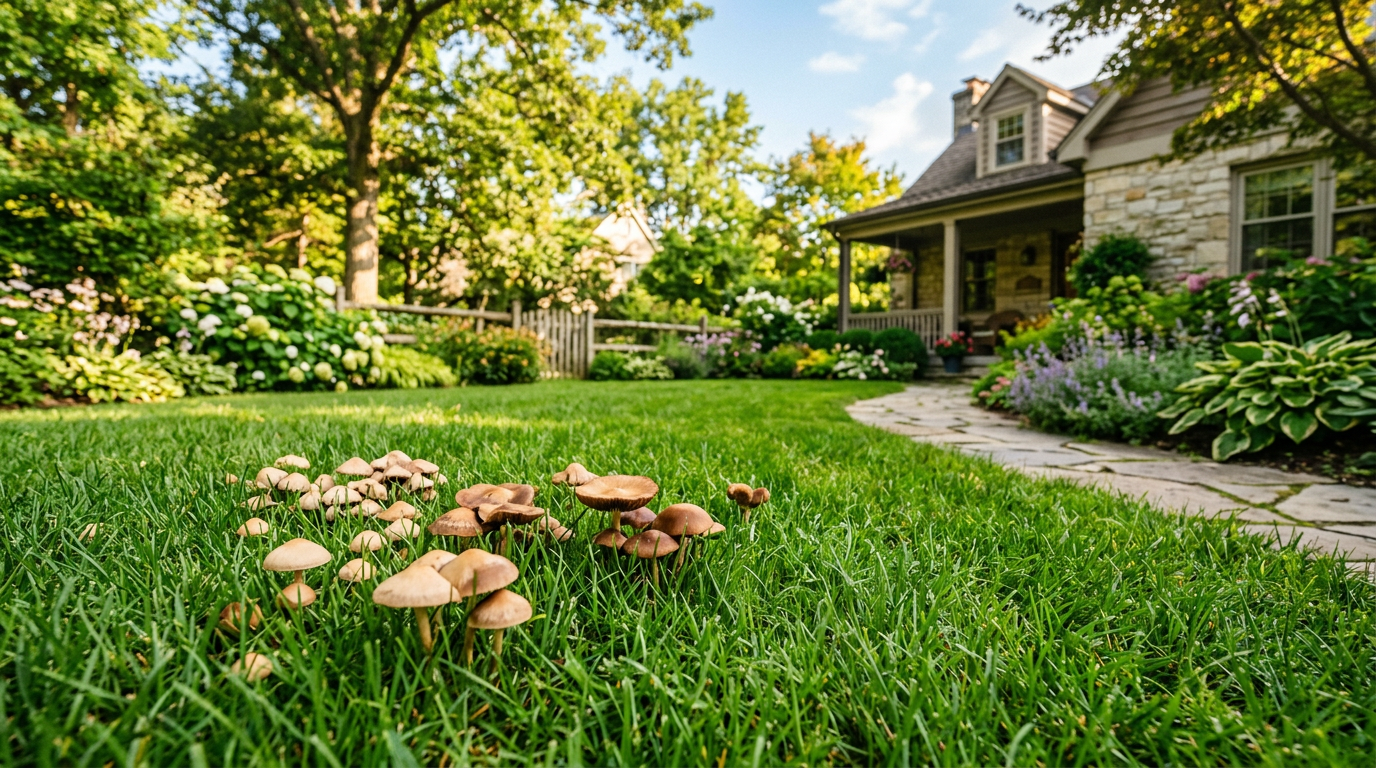
Mushrooms in your lawn aren’t the villain
If you woke up to a crop of caps, relax. Those mushrooms are the fruiting bodies of fungi already living in your soil. Most are saprophytes—decomposers chewing through buried wood, old roots, or thick thatch—so they’re often a sign of rich, moist soil, not a dying lawn. They pop after rain, irrigation, or cool, humid spells.
We’ve managed more lawns than we care to admit, and this is the pattern: moisture + buried organics + shade = mushrooms. The fix is less “spray stuff” and more “change conditions.” For fungus ID beyond mushrooms (brown patches, spots, rings), see our Lawn fungus identification guide.
Are lawn mushrooms dangerous?
To your grass: usually no. To people and pets: potentially, if eaten. Many lawn mushrooms are harmless, but some are toxic—there’s no safe “guessing” game. If you’ve got kids or dogs, pick and trash caps the day you see them. Don’t compost unknown mushrooms; spores spread.
If you see dark green arcs or rings with mushrooms, that’s likely a fairy ring. Type I fairy rings can make soil water-repellent and kill grass; Types II/III just green up or show mushrooms. We cover fairy rings deeper in our mushrooms explainer.
Quick actions to make mushrooms disappear now
- Pick and toss: Hand-pick or rake off caps, bag them, and trash. This reduces spore load and keeps pets safe.
- Bag mow for a week: Use your mower’s bagger while caps are flushing.
- Skip dish soap: It can burn turf and won’t solve the cause.
- Reduce surface moisture: Shorten sprinkler runs or delay watering 2–3 days.
- Add sun: Prune low branches to increase airflow and light—mushrooms hate it.
Gear we actually use:
- Ames Thatch Rake (~$45): Manual but effective on small areas.
- Yard Butler Core Aerator (~$40–$50): Pulls plugs to vent moisture.
How much water and thatch is too much? The numbers
Most lawns need about 1 inch of water per week, total rain + irrigation—deeper, less frequent watering is better than daily sprinkles (https://extension.umn.edu/lawn-care/watering-lawns). Thatch layers thicker than 0.5 inch often warrant dethatching or core aeration to restore air/water flow (https://extension.umd.edu/resource/thatch-lawns).
Long-term prevention: fix the conditions
- Remove the buffet
- Dig out buried construction debris, old stumps, or chunks of wood where mushrooms cluster.
- Thin thatch. If it’s over 0.5 inch, dethatch or core-aerate. Topdress with 0.25 inch of compost afterward to feed soil microbes.
- Change the moisture pattern
- Water deep and infrequent. Aim for two 0.5-inch sessions per week max during heat. Let the surface dry between cycles.
- Improve drainage. Core aerate annually in compacted areas. In stubborn wet spots, add sand/compost topdressing or install a French drain.
- Add sun and airflow
- Prune lower tree limbs and thin dense shrubs.
- Overseed with the right grass for your light level. Shade-tolerant cultivars reduce thin, damp patches.
- Feed the lawn sensibly
- Overfertilizing can overgrow thatch. We keep to modest fall feedings and skip heavy spring blasts unless the lawn is weak. If brown patches linger from winter, we break it down here: Brown patches in lawn after winter.
Do fungicides help mushrooms?
Usually not. Mushrooms are a symptom, not a disease target. Killing the fungus doesn’t remove the buried wood or wet soil inviting new fungi in. That said, for persistent Type I fairy rings causing dead zones, a fungicide plus wetting agent and aggressive aeration can help.
- BioAdvanced Fungus Control for Lawns (propiconazole) ~ $20–$25 per 10 lb bag: Broad lawn fungicide for certain ring types; follow label.
- Heritage G (azoxystrobin) ~ $120–$150 per 30 lb bag: Pro-grade for severe fairy rings; pair with a wetting agent and deep aeration.
- Hydretain Granular (wetting agent) ~ $50–$60 per 15 lb bag: Helps re-wet hydrophobic soil, often present in Type I rings.
We’ve had best results with a three-part plan: core aerate 2–3 passes, drench with a wetting agent per label, then apply azoxystrobin. Repeat in 3–4 weeks if needed. If you’re seeing tiny tunnels or grubs with the rings, check Tiny holes in lawn at night and Get rid of grubs naturally.
Related problems (and fixes)
Mushrooms love the same wet, compacted conditions that fuel other issues. If you’re battling multiple turf headaches, don’t treat in isolation. Diagnose first, then stack fixes. Our visual guides help: Lawn fungus identification. And if you want the deep dive specifically on caps and rings, head to our full mushrooms growing in lawn explainer.
Frequently asked
Will mushrooms kill my grass?+
Usually no. Most lawn mushrooms are saprophytic fungi feeding on dead organic matter, not living turf. They can coincide with fairy rings; only Type I fairy rings can cause dead zones by making soil water-repellent. Fixing moisture, thatch, and buried wood is more effective than fungicides.
Are lawn mushrooms toxic to dogs or kids?+
Some can be. Because identification is tricky, assume unknown mushrooms are toxic if ingested. Pick and trash caps as they appear, supervise pets and children, and avoid composting mushrooms to limit spore spread. Contact a vet or poison control immediately if ingestion is suspected.
How do I stop mushrooms from coming back?+
Remove the food source (buried wood, thick thatch), improve drainage with core aeration, water deeply but less often, and increase sun/airflow by pruning. Bag clippings during flushes. Fungicides rarely prevent recurrence because the underlying moisture and organic matter remain.
Do dish soap or bleach kill lawn mushrooms?+
Skip both. Dish soap can burn turf and doesn’t solve the cause. Bleach damages soil life and nearby grass. Physical removal, better drainage, and thatch reduction work. If you face persistent Type I fairy rings, use a proper fungicide and wetting agent alongside aeration per label.
Is there a best time to aerate for mushroom control?+
Yes—core aerate during your lawn’s active growth window so it recovers fast. Cool-season lawns: early fall or spring. Warm-season lawns: late spring to early summer. Multiple passes over problem zones help relieve compaction and improve drainage, which cuts mushroom flushes.