
Mushrooms Growing in Lawn? Causes, Safety, and Fixes
Mushrooms in your lawn aren’t a moral failing—they’re a sign your soil is busy. Here’s when to worry, what to do fast, and how to stop the comeback.
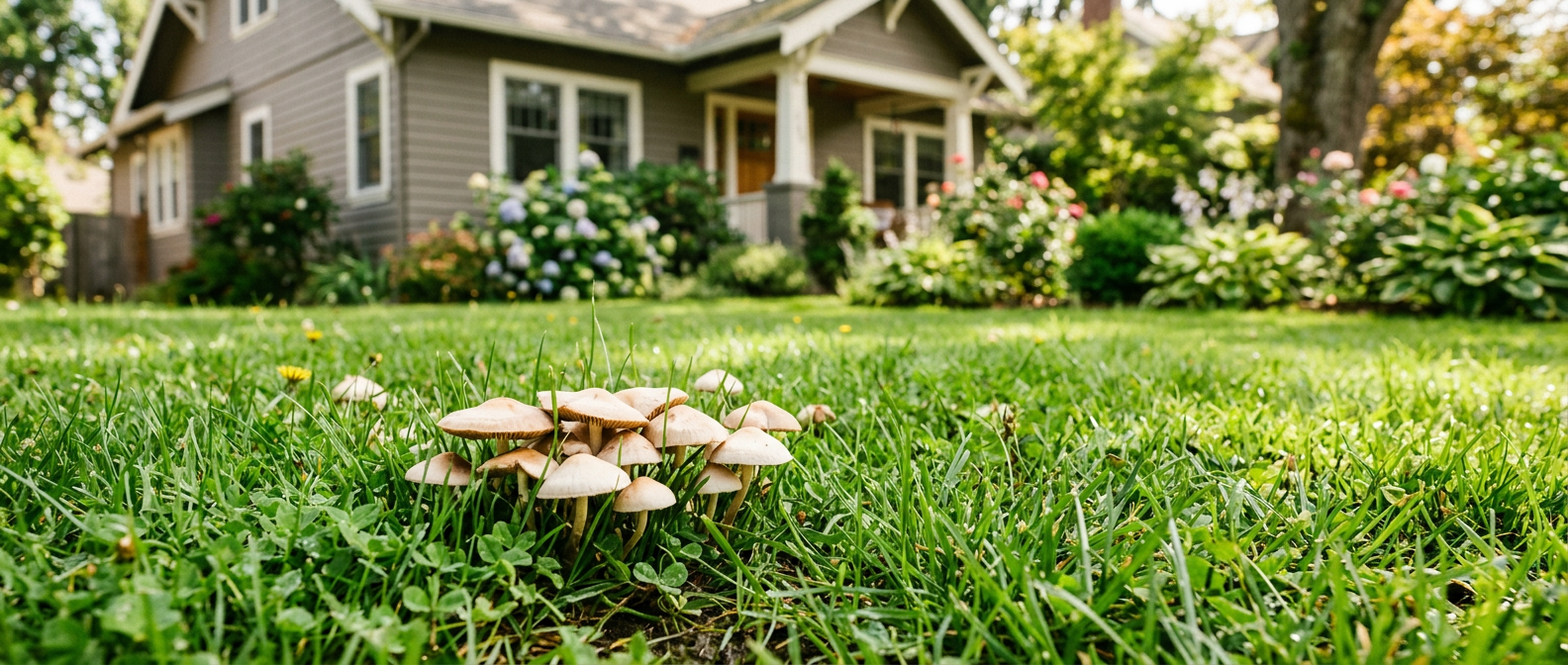
Quick take: mushrooms aren’t the enemy
If you’ve got mushrooms popping after rain, your lawn isn’t cursed. Fungi are recycling buried wood bits, heavy thatch, and clippings in damp soil. The grass usually isn’t harmed. We’ll show you when to ignore, when to act, and how to stop the constant re‑sprout.
Are mushrooms bad for your lawn?
Usually, no. The underground fungus (mycelium) is decomposing organic matter and can even improve soil structure. The visible mushrooms are just fruiting bodies. The exceptions: fairy rings forming hydrophobic circles, or huge flushes signaling thick thatch and chronic overwatering. If you’re also seeing patchy turf or weird rings, hit our Lawn fungus identification guide.
Why they show up (and keep coming back)
- Excess moisture: Frequent, shallow watering keeps the top inch soggy.
- Food source: Old roots, buried wood chips, stump grindings, heavy thatch.
- Shade + poor airflow: Dew lingers under trees/fences.
- Compaction: Water sits instead of draining; fungi love damp.
We’ve tested lawns that “mushroomed” every rain—every time, the combo was too much thatch and too little air in the soil.
Fast cleanup (today)
- Hand-pick mushrooms into a paper bag. Wear gloves. Don’t mow them; you’ll smear spores.
- Bag and trash. Don’t compost unless you hot-compost reliably.
- Keep kids and pets off until you’ve cleared the flush.
Budget tools we actually use:
- Ames Adjustable Thatch Rake — about $48
- Gorilla Grip Nitrile-Coated Gloves — about $8
- Home Depot Paper Lawn Bags (5-pack) — about $4
Fix the conditions (so they stop)
- Dethatch if needed
- Do the finger test. If thatch is >1/2 inch, it’s time. Sun Joe AJ801E Scarifier/Dethatcher (12.6", 12‑Amp) runs ~$139 and chews through small yards fast. Rake up debris.
- Core aerate compacted soil
- Pull 2–3" plugs on 2–3" spacing. Yard Butler ID‑6C Manual Core Aerator is ~$39. For big lawns, rent a gas aerator for ~$70/day.
- Water smarter
- Deep, infrequent: 1 inch/week including rain. Use tuna cans to measure and split into 1–2 sessions.
- Clean up buried food sources
- After tree work, rake out chips. Where stump grindings were, dig out 3–4" and backfill with soil/compost mix.
- Improve airflow and sun
- Raise mower to 3–4" but trim back dense shrubs to reduce all‑day dew. Morning irrigation only.
- Nudge decomposition
- Light nitrogen speeds breakdown of thatch/wood. Milorganite 32 lb (6‑4‑0) is ~$19 and gentle. Apply per label.
Numbers that matter
A thatch layer over 1/2 inch impedes water and encourages disease and mushrooms; mechanical removal is recommended when it exceeds 3/4 inch (University of Minnesota Extension: https://extension.umn.edu/maintaining-your-lawn/lawn-thatch-control). Most cool‑season lawns need roughly 1 inch of water per week, applied deeply, not daily (University of Nebraska–Lincoln Turf: https://turf.unl.edu/Wateringyourlawncorrectly).
Safety: kids, dogs, and “can I eat these?”
Treat unknown lawn mushrooms as toxic. Many LBMs (little brown mushrooms) are look‑alikes. Keep pets and kids off until you’ve cleared mushrooms. Wash hands and tools after handling. If ingestion happens, call Poison Control (U.S. 1‑800‑222‑1222) and keep a sample for ID.
Fairy rings: the special case
If you see a dark green ring, a ring of mushrooms, or a dead ring, that’s a fairy ring. Fixes:
- Deep core aeration plus heavy irrigation inside the ring to re‑wet hydrophobic soil
- Light nitrogen to mask color differences
- In severe dead-ring cases, remove the ring soil 8–12" deep and replace. Fungicides are unreliable here; cultural fixes beat sprays.
When mushrooms signal other problems
- Mushrooms plus spongy turf = thick thatch. Dethatch/aerate.
- Mushrooms plus skunk/raccoon damage may mean grubs drawing critters. See White grubs in soil identification and How to get rid of grubs in lawn naturally.
- Night digging and holes? Cross-check Tiny holes in lawn at night.
- Brown rings after snow or spring? Compare with Brown patches in lawn after winter.
Simple prevention checklist
- Water: 1"/week, mornings only, never daily “sips.” Rain Bird 32ETI in‑ground kit is ~$89 and makes scheduling easy.
- Mow: sharp blade, 3–4" height.
- Thatch: keep <1/2" with annual aeration; dethatch when needed.
- Debris: remove mulch spills and stump grindings; don’t leave heavy clippings.
- Soil test every 2–3 years (Luster Leaf Rapitest kit ~$23) and correct pH for healthy turf.
We’ve run this playbook on dozens of “mushroom lawns.” The flushes stop once moisture management and thatch are under control.
Frequently asked
Will mushrooms kill my grass?+
Not usually. They’re decomposing buried organic matter, not feeding on living turf. The exception is fairy rings that can create water-repellent soil and brown rings. Core aeration, deep watering, and light nitrogen typically resolve it; removal of heavily affected soil is a last resort.
What is the fastest way to get rid of lawn mushrooms?+
Hand-pick mushrooms into a bag, trash them, and stop overwatering. Then dethatch if the layer exceeds 1/2 inch and core aerate compacted spots. Switch to deep, infrequent watering (about 1 inch/week) and clean up buried wood or chips. That combination prevents repeat flushes.
Are lawn mushrooms poisonous to dogs and kids?+
Some are. Many lawn species are harmless, but look‑alikes make ID risky. Keep kids and pets away, promptly remove mushrooms, and wash hands/tools. If ingestion occurs, call Poison Control (1‑800‑222‑1222) and bring a sample for ID. Prevention—regular cleanup and better watering—is the safest plan.
Do fungicides stop mushrooms from returning?+
No. Fungicides don’t remove the buried food source or fix moisture problems, and they rarely prevent fruiting. You’ll get better results by reducing thatch, core aerating, improving drainage, watering deeply but infrequently, and removing wood chips or stump grindings. Use fungicides only for diagnosed turf diseases.
Why do mushrooms pop after every rain?+
Moisture triggers fruiting when fungi have a steady food source like thatch or buried wood. After rain, spores and mycelium are primed to push mushrooms within 24–72 hours. Fixing thatch, compaction, and watering habits reduces the moisture window and starves the fungus over time.