
Mushrooms Growing in Lawn: Safe? Causes and How to Stop
Mushrooms in the lawn aren’t a turf disease—they’re a symptom. Here’s why they show up, when to worry, and the exact steps to get rid of them and keep them from returning.
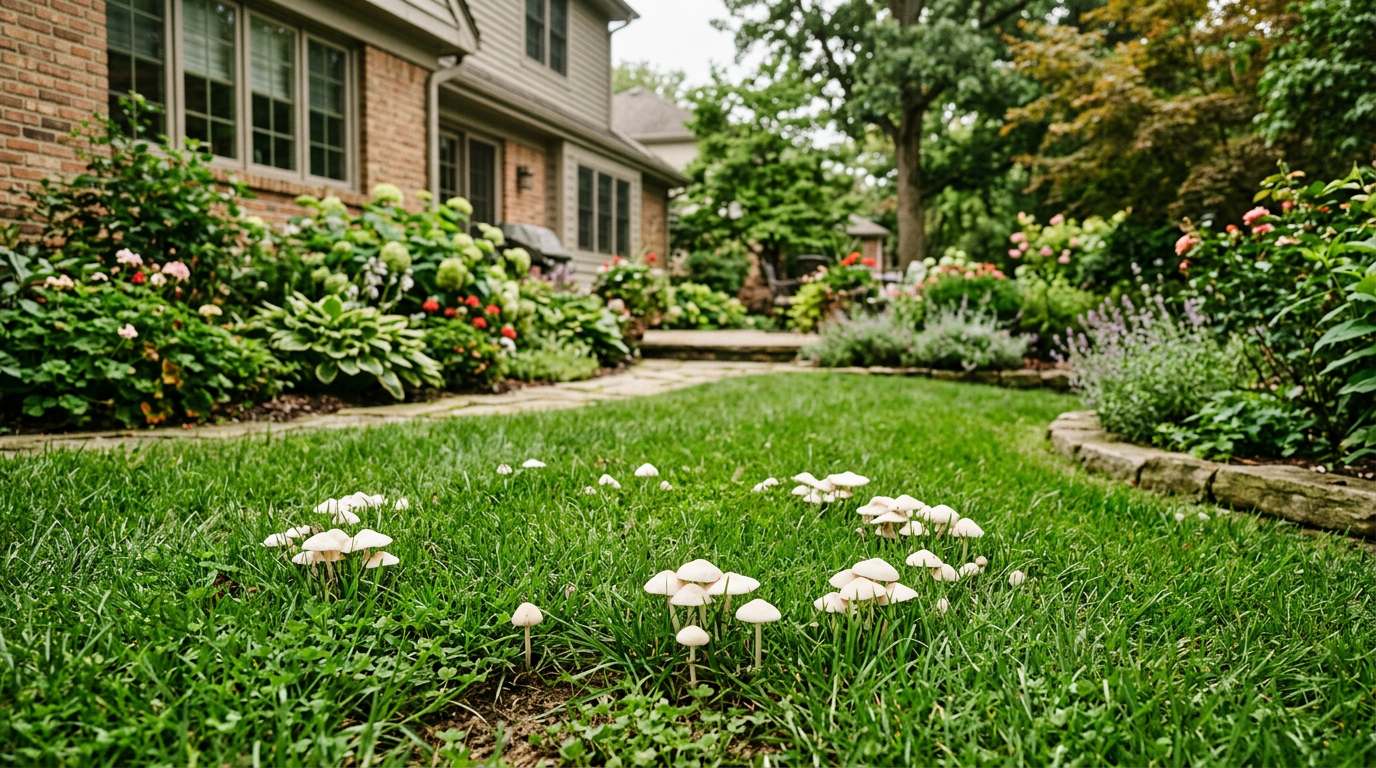
Mushrooms in your lawn: problem or just weird?
If you’ve got mushrooms growing in lawn after a rainy stretch, congrats—you’ve got active soil life. Mushrooms are the fruiting bodies of fungi that live in the soil and thatch. They’re not a lawn disease and they don’t eat living grass. They’re mostly a symptom: moisture + organic debris + shade. We’ll show you how to knock them back fast and fix the root causes.
We’ve chased fairy rings across enough client lawns to learn there’s no magic spray. But there is a plan that works.
Why mushrooms show up (and keep coming back)
- Moisture: Overwatering, poor drainage, or frequent light irrigation keeps the surface damp.
- Food: Buried roots, old stumps, wood chips under thin soil, thick thatch, or compost clumps.
- Shade: Dense tree canopies and low sun slow evaporation.
- Compaction: Water sits near the surface instead of moving down.
- Weather swings: Warm, wet spells are a spore party.
If you also see dark‑green rings, water‑repellent soil, or thinning grass in arcs, that’s a fairy ring—same concept, just more dramatic. For lawn disease look‑alikes, see our Lawn Fungus Identification.
First: safety and quick cleanup
- Don’t eat lawn mushrooms. Some species are toxic to pets and people. If kids or dogs use the yard, remove them daily.
- Wear gloves, twist/pull mushrooms at the base, and bag them. Don’t compost.
- Skip mulching blades for now; mowing mushrooms turns them into spore confetti.
Pro tip: A wide leaf rake and a 5‑gal bucket make this a 10‑minute job.
Fast fixes this week
- Adjust irrigation: Water deeply, less often. Aim for soil to dry at the surface between waterings.
- Improve airflow: Raise mower height (3–4 in) to reduce stress, then thin low branches if shade is extreme.
- Rake thatch: Lightly rake to loosen slimy caps and surface litter.
- Remove the food: If you know there’s buried wood, dig out chunks near chronic patches.
Products we actually use:
- Ames Adjustable Thatch Rake (2915100) — about $44
- Hydretain Root Zone Moisture Manager, 32 oz — about $31 (helps even out wet/dry swings)
- Nitrile gardening gloves — about $9
- Home Depot Tool Rental: Classen CA‑18 core aerator — ~ $69 for 4 hours
The numbers that make this work
Lawns generally need 1 to 1.5 inches of water per week, including rain (University of Minnesota Extension). One inch of water equals roughly 0.62 gallons per square foot (USGS). On a 2,000 sq ft lawn, that’s ~1,240 gallons in a week if it doesn’t rain. Space that into one or two deep waterings, not daily spritzes. (https://extension.umn.edu/planting-and-growing-guides/watering-lawns) (https://www.usgs.gov/special-topics/water-science-school/science/how-much-water-falls-when-it-rains)
Long‑term prevention: fix the causes
- Core aerate yearly where compacted. Pulling 2–3 in plugs improves drainage and oxygen.
- Dethatch if thatch > 1/2 inch. Thatch feeds fungi and traps moisture.
- Topdress 1/4 inch compost after aeration to boost microbial balance and help turf compete.
- Regrade soggy spots and check downspouts/irrigation leaks.
- Thin tree canopies for dappled light; reseed thin shade areas with a shade‑tolerant mix.
- Fertilize modestly to keep turf dense; heavy nitrogen isn’t a mushroom cure.
If mushrooms ride with other issues—slimy patches, odd colors, or dead spots—use our Lawn Fungus Identification guides or see Brown Patches in Lawn After Winter for seasonal damage.
Fairy rings: the stubborn cousin
You’ll notice dark‑green arcs (extra nitrogen released as fungi decompose) or even hydrophobic (water‑repellent) soil. Do this:
- Spike or core the ring area aggressively, then irrigate deeply.
- Use a hose‑end wetting agent (Hydretain, about $31) after aeration to help water penetrate.
- Keep mowing high and maintain steady moisture without overdoing it.
Fungicides? They’re expensive and rarely touch the underground fungus driving mushrooms. Save your cash unless a local extension specifically recommends a product for a confirmed pathogen. We’ve tested “lawn mushroom sprays”; they don’t move the needle.
When to worry
- Pets/kids: If in doubt, remove mushrooms daily. Call your vet/physician if ingestion is suspected.
- Widespread turf decline: That’s not mushrooms—could be grubs, drought, or disease. Start here: White Grubs in Soil Identification and How to Get Rid of Grubs in Lawn Naturally.
- Tiny pits/digging overnight: Critters hunting for grubs and worms, not mushrooms. See Tiny Holes in Lawn at Night.
Bottom line
Mushrooms are a messenger. Remove the fruiting bodies for safety and looks, then fix water, shade, thatch, and compaction. That solves 90% of mushroom outbreaks without a drop of fungicide.
Frequently asked
Will mushrooms kill my grass?+
No. Lawn mushrooms are the fruit of fungi feeding on dead organic matter, not living turf. They may indicate compaction, thatch, or excess moisture. Remove the caps for looks and safety, then fix watering, aerate, and dethatch to reduce future flushes.
Are lawn mushrooms poisonous to dogs?+
Some species can be. If pets use the yard, pick and bag mushrooms daily and supervise after rain. If your dog eats one, contact your vet or poison control immediately with photos of the mushroom and symptoms. Prevention beats identification in the backyard.
Do fungicides get rid of mushrooms in lawn?+
Usually not. Fungicides don’t reach the extensive fungal networks in soil and thatch that produce mushrooms. You’ll spend money with little impact. Focus on moisture management, aeration, dethatching, and removing buried wood for lasting results.
Why do mushrooms appear after I water?+
Frequent light watering keeps the surface perpetually damp—perfect for mushrooms. Switch to deep, infrequent irrigation (1–1.5 in/week total, including rain), water early morning, and let the surface dry between cycles. Adjust irrigation heads in shaded areas.
Will dethatching help stop mushrooms?+
If thatch is thicker than 1/2 inch, yes. Thatch holds moisture and feeds fungi. Dethatch in active growth season, then rake, overseed thin spots, and water deeply but infrequently. Pair with core aeration to improve drainage and oxygen.