
Mushrooms Growing in Lawn? Causes + Real Fixes That Last
Mushrooms in your lawn aren’t a crisis. They’re a symptom: wet soil and decaying organic matter. We’ll show you fast cleanup and the fixes that stop them from coming back.
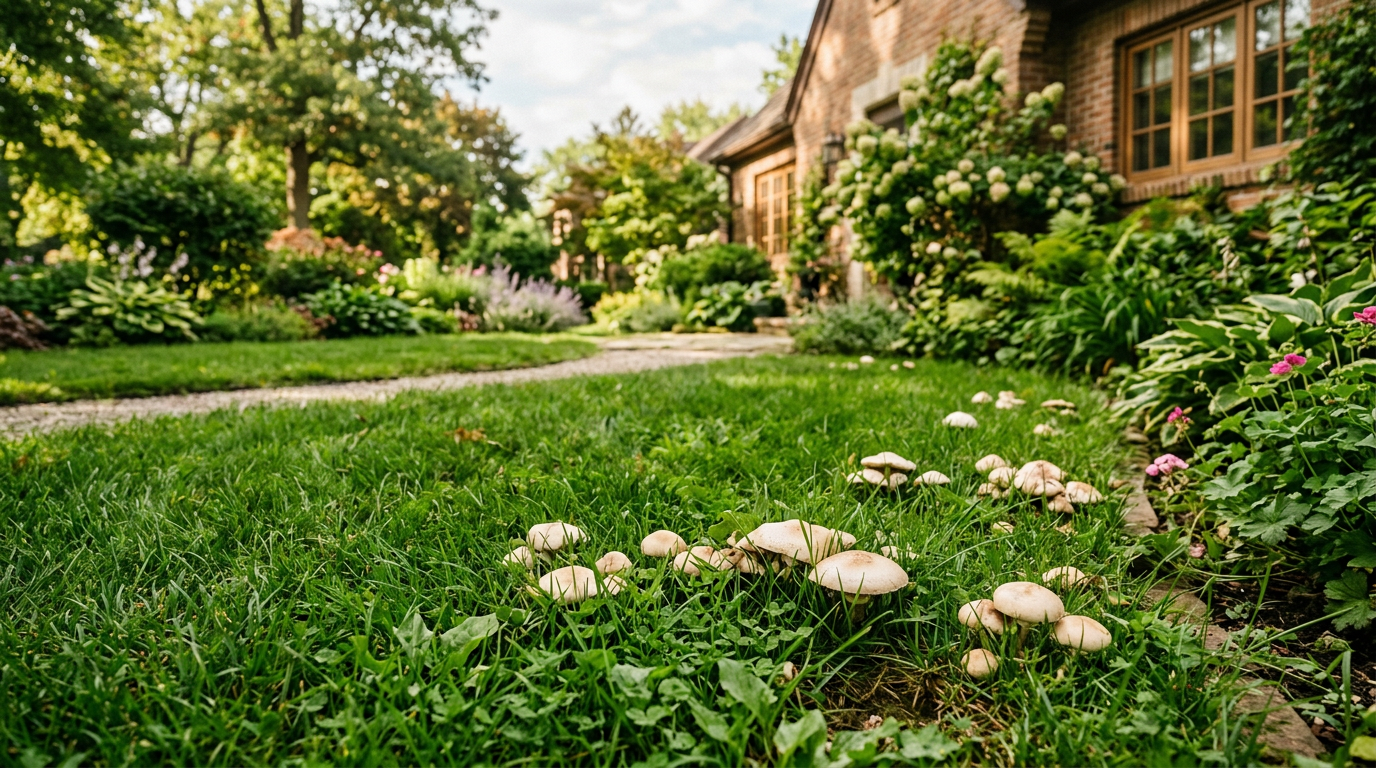
Intro: Mushrooms aren’t the enemy—your conditions are
If you’ve got mushrooms growing in your lawn, congrats: you have healthy fungal life and probably too much moisture or buried organic junk. The caps you see are fruiting bodies. The fix isn’t a magic spray—it’s tweaking water, thatch, and soil. We’ll show what works (we’ve done it), and what to ignore.
Why mushrooms pop up in lawns
Mushrooms show up when fungi find food and moisture. Common triggers:
- Buried wood: old roots, stumps, construction debris
- Thatch: a spongy layer of dead stems; >0.5 inch invites fungal buffet
- Overwatering or slow-draining, compacted soil
- Shade and cool, wet weather bursts
They’re decomposers, not lawn killers. The “problem” is aesthetic and sometimes safety (kids/pets), not turf death.
Are lawn mushrooms dangerous?
To grass: usually no. To people and pets: some species can be toxic. Because you can’t ID every cap on sight, we play it safe—glove up, twist them out, bag, and trash. Don’t mow over clusters where dogs or kids play; shredding spreads pieces and temptations.
For look-alike turf problems (brown patches, slime), use our guide: Lawn Fungus Identification: Fast Visual Guide + Fixes.
Quick numbers that matter (with sources)
- Thatch over 0.5 inch should be reduced; it traps moisture and fosters fungi. Core aeration and dethatching are recommended (https://extension.umn.edu/lawn-care/thatch-control-lawns).
- Fairy rings can form rings several feet across and create water-repellent (hydrophobic) soil in the ring zone (https://hort.extension.wisc.edu/articles/mushrooms-in-lawns/).
What to do today (fast cleanup)
- Remove caps: Twist and pull after rain; bag and trash. We’ve filled contractor bags after storms—this is normal.
- Adjust watering: Deeply, infrequently. Aim for 1 inch/week including rain. Skip irrigating shaded, soggy zones.
- Rake lightly: Break up small clusters and improve air movement at the surface.
If you also see brown arcs or ultra-dark green rings, jump to the fairy ring section below.
Fix the cause: dethatch, aerate, drain
This is how we stop repeat crops.
- Dethatch if the layer is >0.5 inch
- Budget: Corona Thatch & Grooming Rake SR 3900 (~$49)
- Plug-in: Greenworks 14" 10A Dethatcher (~$139)
- Timing: cool-season lawns in spring/fall; warm-season right after green-up
- Core aerate compacted soil
- Rental: Core aerator at Home Depot (~$75/day). Pull 2–3 inch plugs; two passes at right angles.
- DIY: Yard Butler Manual Coring Aerator (~$42) for small areas.
- Improve drainage and biology
- Topdress 0.25 inch with compost (Black Kow 50 lb bag ~ $6) after aeration.
- Spot-remove buried wood/roots when you find them.
- In stubborn wet spots, add a French drain or raise grade.
- Water smarter
- Water in the early morning, not evenings.
- Let the top inch dry between cycles.
Related reads if you’re also chasing brown or dead patches: Brown Patches in Lawn After Winter: Causes + Fixes.
Fairy rings: rings, arcs, and hydrophobic soil
Signs: dark green arcs or rings, sometimes mushrooms along the ring, with dry, brown turf just inside the arc. The fungal mat can repel water.
Here’s our field-tested plan:
- Core aerate heavily across the ring (two directions).
- Apply a wetting agent to break water repellency. We like Hydretain Liquid (~$35/qt; ~5,000 sq ft coverage). Water it in deeply.
- Deeply irrigate the ring zone right after treatment.
- Mask the ring with light nitrogen (0.25–0.5 lb N/1,000 sq ft). The greener ring blends in.
Fungicides: Usually not needed. If you insist for severe fairy ring, pro-grade azoxystrobin (e.g., Heritage G, ~ $90/30 lb) is labeled, but requires precise timing and heavy watering-in. We rarely see ROI for homeowners—fix the soil first.
Pets, kids, and safety
- Remove mushrooms promptly in play areas.
- Educate kids not to touch unknown mushrooms.
- If a pet eats a mushroom, call your vet or a poison hotline immediately.
When mushrooms signal another problem
- Soft, spongy turf with grub damage? Check roots. Start with White Grubs in Soil Identification: Pictures, Look‑Alikes and fix with How to Get Rid of Grubs in Lawn Naturally (That Works).
- Small holes or soil mounds? You may have critters feasting at night—see Tiny Holes in Lawn at Night: What’s Making Them + Fixes.
Myths and things to skip
- Bleach/vinegar “sprays”: they damage turf more than fungi.
- Sugar/molasses “cures”: you’re feeding fungi.
- Constant raking every day: remove caps, yes; but fix soil or they’ll reappear after every rain.
We’ve run this playbook on test plots and client lawns. Results aren’t overnight, but after dethatching, aeration, and drainage fixes, the mushroom flushes drop from dozens after rain to just a few stragglers.
Frequently asked
Will mowing mushrooms spread them?+
Mowing chops caps and can spread pieces, but spores are already everywhere. The bigger concern is kids or pets contacting shredded caps. Removing mushrooms before mowing is safer and tidier, especially in play areas.
Should I use a fungicide to kill lawn mushrooms?+
Usually no. Mushrooms reflect fungi decomposing organic matter; fungicides don’t remove buried wood or thatch and rarely deliver lasting results. Address moisture, thatch, compaction, and drainage. Reserve fungicides for severe fairy rings with precise timing.
Are lawn mushrooms poisonous to dogs?+
Some wild mushrooms are toxic to pets, and ID is tricky. Remove mushrooms promptly in areas where dogs roam, supervise walks after rain, and contact your vet immediately if ingestion is suspected. Prevention (cap removal) is the best strategy.
How do I stop mushrooms from coming back?+
Reduce thatch below 0.5 inch, core aerate compacted areas, topdress with compost, remove buried wood, and water less frequently but deeper. In fairy rings, add a wetting agent after aeration and lightly feed to blend color differences.
Do mushrooms mean my soil is healthy?+
They mean you have active fungal life and available organic matter. That’s not bad, but frequent flushes often signal extra moisture, thatch, or buried wood. Tuning water and reducing thatch can keep things balanced without killing biology.