
Mushrooms Growing in Lawn: Causes, Safety, and Real Fixes
Mushrooms in your lawn aren’t a turf apocalypse—they’re a moisture + organic-matter signal. Here’s what they mean, when to worry, and how we stop them fast.
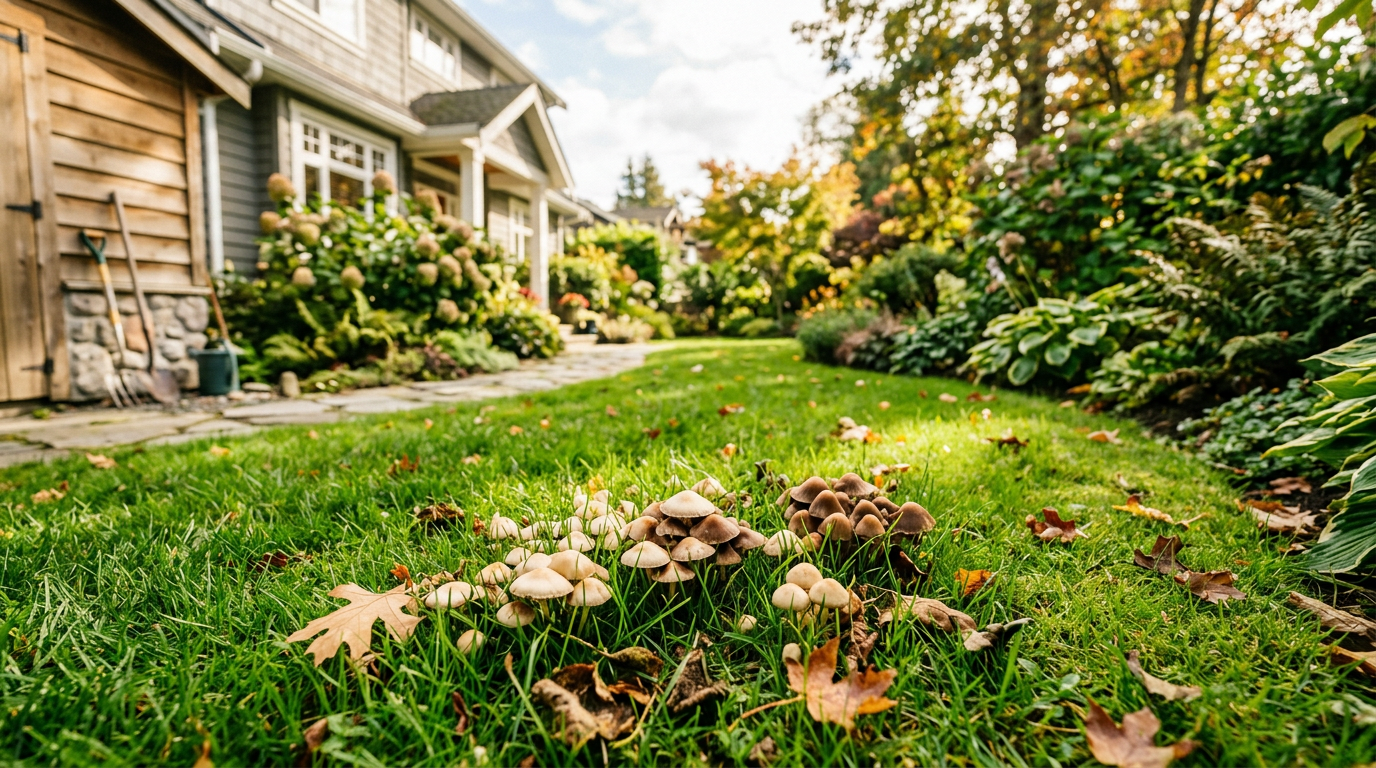
What mushrooms in your lawn really mean
If mushrooms popped up after rain or heavy watering, your soil is telling you two things: it’s moist and it’s digesting buried organic stuff (thatch, old roots, wood chips, dead tree roots). That fungal network (mycelium) is normal decomposition. The visible caps are just the fruit.
We’ve dealt with this after a week-long soaker—mushrooms everywhere. The lawn wasn’t “sick.” It was wet and loaded with old thatch. We fixed the causes and they stopped appearing.
Are lawn mushrooms dangerous?
To grass: not really. Most lawn mushrooms don’t damage turf. To people and pets: don’t play roulette. Some species are toxic. If a child or pet eats one, call Poison Control (1‑800‑222‑1222).
Numbers to keep perspective: U.S. poison centers log thousands of mushroom exposures each year; most aren’t severe, but serious cases occur (https://aapcc.org/national-poison-data-system). Fairy rings can also create hydrophobic soil and brown arcs, but that’s from water repellency, not “rot.” Typical fairy rings expand several inches per year (https://extension.okstate.edu/fact-sheets/fairy-ring-disease-in-turf.html).
Fast cleanup (today)
- Hand-pick or twist off caps and trash them (don’t compost). Wear gloves.
- Bag-mow for a week so you’re not flinging spores.
- Cut irrigation 30–50% for 7–10 days; aim for the top 1" of soil to dry between waterings.
- Rake out obvious wood bits/mulch in the turf—surprise fuel source.
Quick helpers we actually use:
- Ames Thatch Rake (~$45) to yank surface thatch and mushrooms.
- Scotts Turf Builder Lawn Food 32‑0‑4 (~$22 per 12.5 lb). A light 0.25–0.5 lb N/1,000 sq ft can speed microbial breakdown of thatch.
Fix the cause (next 2–6 weeks)
If mushrooms return after every wet spell, fix drainage + fuel.
- Dethatch: Electric dethatcher like Sun Joe AJ801E (12‑amp) runs ~ $139. Pulls thatch that feeds fungi.
- Core aerate: Yard Butler Manual Coring Aerator (~$99) opens soil so water moves down, not sideways.
- Topdress: Rake in 1/4" compost after aeration to boost good microbes.
- Watering: Deep, infrequent. 1"/week total (rain included). Morning only.
- Spot-remove buried wood: Former stump? Expect mushrooms until the root decays. Dig out what you can.
- Hydrophobic arcs (fairy ring symptom): Apply a wetting agent like Lesco Moisture Manager (~$32/qt) and water in to re-wet the ring.
If you’re also seeing odd turf diseases, compare symptoms with our Lawn Fungus Identification: Pictures, Symptoms, Fixes guide to avoid chasing the wrong problem.
Fairy ring vs. random mushrooms
- Random clusters after rain = normal decomposition.
- Recurring circles/arcs, lush dark-green rings with a brown band inside, and water beading off soil = fairy ring.
Fairy rings sometimes require a combined approach: core-aerate across the ring, apply a wetting agent, lightly fertilize the pale area, and irrigate deeply to push water through the hydrophobic zone.
Related turf weirdness after cold snaps? See Brown Patches in Lawn After Winter.
Do you need a fungicide?
Usually no. Fungicides don’t “kill mushrooms”—they suppress certain fungi and are most useful for stubborn fairy rings that resist cultural fixes.
- Scotts DiseaseEx (azoxystrobin) ~ $24: water in per label; best when combined with aeration + wetting agents.
- Natria Lawn Disease Control (bio: Bacillus) ~ $18: gentler option, multiple apps needed.
Follow labels. Even then, you’re managing symptoms until the buried organic matter is gone.
Prevention checklist (what keeps them gone)
- Mow at 3–4"; never scalp.
- Water deep 1–2x/week, mornings only; let the top inch dry.
- Fertilize modestly: 2–4 lb N/1,000 sq ft/year, split feedings. Milorganite 6‑4‑0 (~$16) is a slow, safe choice.
- Keep thatch < 1/2"; dethatch/aerate annually if needed.
- Improve sun and airflow—raise canopy, prune dense shrubs.
If critters are poking little holes overnight while chasing grubs or mushrooms, cross-check with Tiny Holes in Lawn at Night and fix the buffet. And if clover’s moving in, it can hint at low nitrogen—see How to Get Rid of Clover in Lawn.
Frequently asked
Should I remove mushrooms from my lawn or leave them?+
Remove them. Twisting off caps and bag-mowing reduces spore spread and keeps kids and pets safe. You won’t stop the underground fungus by picking caps, but you cut mess and buy time while you fix moisture and thatch—the real causes.
Are lawn mushrooms poisonous to dogs or kids?+
Some species are. Assume they are unsafe and remove them promptly. If ingestion occurs, call Poison Control at 1‑800‑222‑1222. Most cases are mild, but serious poisonings do happen. Don’t try to identify edibility from pictures; lawn species vary widely.
Will a fungicide get rid of mushrooms permanently?+
No. Fungicides don’t eliminate the fruiting bodies long-term. They can help with stubborn fairy rings if combined with aeration, wetting agents, and irrigation, but mushrooms usually stop when moisture normalizes and buried organic matter breaks down.
Why do mushrooms form a circle (fairy ring)?+
The fungus grows outward from a central point, feeding on soil organic matter and sometimes making soil water-repellent. That creates arcs or rings that expand inches per year. Fix with aeration, wetting agents, light nitrogen, and deep watering through the ring.
Do lime or baking soda stop lawn mushrooms?+
No. Changing pH doesn’t address the actual cause. Mushrooms are about moisture and decomposing organic material. Spend effort on dethatching, aeration, drainage, and watering habits instead of home remedies that don’t solve the problem.